Silicone Kitchen Utensils Factory: What to Check First
Time
Click Count
Choosing a silicone kitchen utensils factory now requires more than a quick cost comparison. Global retail standards, material scrutiny, and digital traceability are reshaping sourcing decisions across consumer goods supply chains.
Early verification of compliance, silicone grade, process control, and fulfillment resilience can prevent recalls, inconsistent batches, and avoidable reputation damage. In a market shaped by sustainability and performance, the first checks matter most.
Why the silicone kitchen utensils factory review process is changing
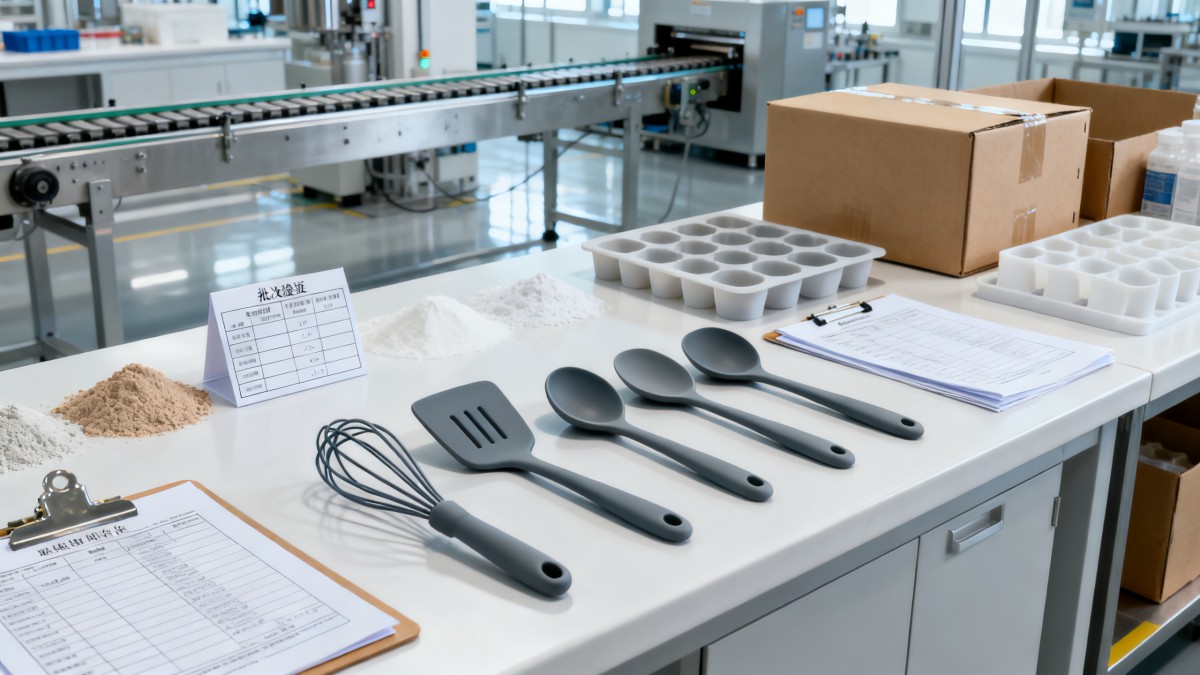
The consumer goods sector has moved into a stricter phase. Kitchen tools are expected to be safe, durable, visually refined, and supported by transparent manufacturing records.
At the same time, retailers and brands are under pressure to align product sourcing with ESG targets, certification expectations, and faster product refresh cycles.
This shift changes how a silicone kitchen utensils factory should be evaluated. The first question is no longer price. It is whether the factory can consistently meet market, regulatory, and brand-level requirements.
Trend signals appearing across global supply chains
- Food-contact material testing is becoming more visible in retailer onboarding.
- Color stability and odor control are receiving greater customer attention.
- Factories face rising requests for audit records and batch traceability.
- Packaging sustainability is now linked to overall product acceptance.
- Smaller, more frequent orders require stronger planning discipline.
The first checks at a silicone kitchen utensils factory reveal future risk
A reliable initial review should focus on signals that predict long-term performance. The earliest factory checks often reveal whether later cooperation will remain stable or become costly.
1. Material authenticity comes before design appeal
A silicone kitchen utensils factory should clearly identify silicone grade, curing method, filler use, and food-contact suitability. These details affect odor, flexibility, heat resistance, and migration risk.
Ask for documentation tied to specific raw material lots, not only generic declarations. Traceable sourcing is more valuable than broad promises.
2. Compliance capability must be operational, not decorative
Certificates alone do not prove daily control. A strong silicone kitchen utensils factory should show how testing, inspection, and recordkeeping are built into production routines.
Look for practical evidence of compliance readiness, including migration tests, LFGB or FDA relevance, and control of colorants, additives, and packaging materials.
3. Mold accuracy drives consistency across volume orders
Utensils may seem simple, but mold precision affects flash, edge quality, handle feel, and dimensional consistency. Small defects become visible at scale.
A qualified silicone kitchen utensils factory should explain mold maintenance cycles, cavity control, and rework limits. This indicates whether quality is built in or repaired later.
4. Production discipline matters more than headline capacity
High quoted capacity means little without balanced planning, skilled trimming, stable curing conditions, and controlled packaging flow.
The best silicone kitchen utensils factory often demonstrates controlled throughput, not inflated output claims. Consistency beats theoretical scale.
What is driving tighter expectations in silicone utensil sourcing
Several forces are pushing the market toward deeper factory checks. These drivers explain why sourcing standards are rising across both premium and mass consumer channels.
How factory quality signals affect broader business performance
A silicone kitchen utensils factory influences more than unit quality. It affects merchandising speed, claims rates, digital reviews, packaging efficiency, and after-sales workload.
When production control is weak, problems travel across the entire ecosystem. Delayed shipments impact launch timing. Odor complaints damage ratings. Uneven colors weaken shelf presentation and online imagery.
Operational areas most affected
- Product development timelines
- Packaging standardization
- Inventory turnover and replenishment planning
- Customer satisfaction and return rates
- Cross-border compliance confidence
This is why the silicone kitchen utensils factory assessment should be linked to overall commercial resilience, not treated as an isolated product check.
The most important points to monitor before deeper engagement
Before moving into tooling, sampling expansion, or annual agreements, several checkpoints deserve close attention. These items usually determine whether a supplier relationship can scale safely.
- Whether the silicone kitchen utensils factory uses documented incoming material inspection.
- Whether sample quality matches mass production control standards.
- Whether odor, deformation, and staining risks are tested realistically.
- Whether packaging protects shape, finish, and barcode accuracy.
- Whether lead times are based on actual scheduling logic.
- Whether subcontracting is disclosed and properly controlled.
- Whether corrective actions are documented after quality incidents.
Warning signs that should not be ignored
- Vague answers about silicone formulation or curing process
- Certificates without recent test reports
- Inconsistent samples across repeated submissions
- Poor control of trimming marks or surface defects
- Overpromised lead times without production evidence
A practical way to judge whether a silicone kitchen utensils factory can scale
The next step is to convert observations into a structured decision method. A short evaluation model helps compare suppliers using consistent commercial logic.
If a silicone kitchen utensils factory performs well in all four areas, the sourcing base is usually much stronger than a low-price option with limited transparency.
What to do next before committing resources
Start with a focused verification sequence. Request current test reports, confirm raw material traceability, compare repeated samples, and review packaging and lead-time logic.
Then map the silicone kitchen utensils factory against the broader supply chain goals of compliance, sustainability, visual consistency, and fulfillment reliability.
In today’s market, the best sourcing decisions come from early evidence, not late corrections. A disciplined first review helps protect product quality, retail performance, and long-term brand value.
News Recommendations
 Which industry categories offer the strongest export potential in Latin America?
![51a6ab95581761cc26f4318be6520c15]()
Aris Katos
Future of Carbide Coatings
 How to choose an ultra bright waterproof window display for storefronts
![51a6ab95581761cc26f4318be6520c15]()
Aris Katos
Future of Carbide Coatings
 How to verify suppliers on a trade portal for global sourcing
![51a6ab95581761cc26f4318be6520c15]()
Aris Katos
Future of Carbide Coatings
 How RoHS requirements should be stated in product specifications
![51a6ab95581761cc26f4318be6520c15]()
Aris Katos
Future of Carbide Coatings
 What affects the lead time for custom retail counter displays?
![51a6ab95581761cc26f4318be6520c15]()
Aris Katos
Future of Carbide Coatings
 What consumer packaging USA importers need to verify before ordering
![51a6ab95581761cc26f4318be6520c15]()
Aris Katos
Future of Carbide Coatings
 How commercial spaces interiors shape customer dwell time
![51a6ab95581761cc26f4318be6520c15]()
Aris Katos
Future of Carbide Coatings
 How LED commercial lighting design reduces glare in retail spaces
![51a6ab95581761cc26f4318be6520c15]()
Aris Katos
Future of Carbide Coatings
 How industrial technology information improves RFID inventory accuracy
![51a6ab95581761cc26f4318be6520c15]()
Aris Katos
Future of Carbide Coatings
 When drip garden watering systems make more sense than sprinklers
![51a6ab95581761cc26f4318be6520c15]()
Aris Katos
Future of Carbide Coatings
 When category comparison improves sourcing for industrial applications
![51a6ab95581761cc26f4318be6520c15]()
Aris Katos
Future of Carbide Coatings
 Industrial application guidance for selecting the right LED lighting
![51a6ab95581761cc26f4318be6520c15]()
Aris Katos
Future of Carbide Coatings
 Which commercial architecture standards apply to European retail fit-outs?
![51a6ab95581761cc26f4318be6520c15]()
Aris Katos
Future of Carbide Coatings
 How to verify FDA requirements for maternity care products
![51a6ab95581761cc26f4318be6520c15]()
Aris Katos
Future of Carbide Coatings
 How to verify BPA-free claims for food-contact products
![51a6ab95581761cc26f4318be6520c15]()
Aris Katos
Future of Carbide Coatings
 When does a European wholesale supplier suit modular office projects?
![51a6ab95581761cc26f4318be6520c15]()
Aris Katos
Future of Carbide Coatings
 When consumer ecosystem solutions improve the in-store shopping journey
![51a6ab95581761cc26f4318be6520c15]()
Aris Katos
Future of Carbide Coatings
 How a commercial developers network can reduce site selection risk
![51a6ab95581761cc26f4318be6520c15]()
Aris Katos
Future of Carbide Coatings
 How clear purchasing specifications prevent costly supplier deviations
![51a6ab95581761cc26f4318be6520c15]()
Aris Katos
Future of Carbide Coatings
 What an ISTA drop test lab checks before your packaging ships
![51a6ab95581761cc26f4318be6520c15]()
Aris Katos
Future of Carbide Coatings
 Which commercial furniture standards apply to workplace seating?
![51a6ab95581761cc26f4318be6520c15]()
Aris Katos
Future of Carbide Coatings
 How to evaluate smart lighting module OEM compatibility before sampling
![51a6ab95581761cc26f4318be6520c15]()
Aris Katos
Future of Carbide Coatings
 How to assess whether sustainable technology delivers real impact
![51a6ab95581761cc26f4318be6520c15]()
Aris Katos
Future of Carbide Coatings
 How to assess an OEM supplier’s quality control before ordering
![51a6ab95581761cc26f4318be6520c15]()
Aris Katos
Future of Carbide Coatings
 How consumer ecosystem solutions data can improve retail personalization
![51a6ab95581761cc26f4318be6520c15]()
Aris Katos
Future of Carbide Coatings
 When does consumer packaging design justify a higher product price?
![51a6ab95581761cc26f4318be6520c15]()
Aris Katos
Future of Carbide Coatings
 Supermarket Fixture Installation: Planning Layouts, Wiring, and Handover
![51a6ab95581761cc26f4318be6520c15]()
Aris Katos
Future of Carbide Coatings
 Automated Lighting and Smart Lighting Control in Bergerac: Key Project Considerations
![51a6ab95581761cc26f4318be6520c15]()
Aris Katos
Future of Carbide Coatings
 Segment Streetlight Controllers: Choosing Control Modes for Urban Roads
![51a6ab95581761cc26f4318be6520c15]()
Aris Katos
Future of Carbide Coatings
 IEC 62471-2 Explained: How to Assess Photobiological Risks in LED Lighting
![51a6ab95581761cc26f4318be6520c15]()
Aris Katos
Future of Carbide Coatings
 Food Grade Packaging Requirements by Product Type, Temperature, and Contact Risk
![51a6ab95581761cc26f4318be6520c15]()
Aris Katos
Future of Carbide Coatings
 Food Packaging Compliance Checklist: Tests, Records, and Labeling Before Shipment
![51a6ab95581761cc26f4318be6520c15]()
Aris Katos
Future of Carbide Coatings
 NSF Food Packaging Standards: When Certification Matters for Commercial Food Use
![51a6ab95581761cc26f4318be6520c15]()
Aris Katos
Future of Carbide Coatings
 FDA Food Grade Compliance: Which Materials and Documents Do Buyers Need?
![51a6ab95581761cc26f4318be6520c15]()
Aris Katos
Future of Carbide Coatings
 What Should a Food Grade Declaration Include for Packaging Compliance?
![51a6ab95581761cc26f4318be6520c15]()
Aris Katos
Future of Carbide Coatings
 Housewares Importing: How to Evaluate Suppliers, Costs, and Compliance Risks
![51a6ab95581761cc26f4318be6520c15]()
Aris Katos
Future of Carbide Coatings
 Why Freeze-Dried Fruit Ingredients Lose Crispness—and How to Prevent It
![51a6ab95581761cc26f4318be6520c15]()
Aris Katos
Future of Carbide Coatings
 What industry veterans look for before choosing a new supplier
![51a6ab95581761cc26f4318be6520c15]()
Aris Katos
Future of Carbide Coatings
 How material fatigue can shorten the service life of retail shelving
![51a6ab95581761cc26f4318be6520c15]()
Aris Katos
Future of Carbide Coatings