Product Specification Guidance: How to Compare Key Components
Time
Click Count
Product Specification Guidance: How to Compare Key Components

Effective product specification guidance starts with one simple idea: components decide outcomes.
A strong outer design can hide weak internal choices.
In commercial projects, that usually becomes a cost problem later.
Good product specification guidance helps compare key components before those costs appear.
That comparison is not only about price.
It covers performance, compliance, serviceability, supply continuity, and long-term operational value.
From recent market shifts, the bigger signal is clear.
Buyers now need specification decisions that work across retail, workplace, hospitality, and consumer supply environments.
That raises the bar for product specification guidance components reviews.
A component may look acceptable in isolation.
But once it interacts with load, humidity, software, packaging, or installation constraints, the real picture changes.
This is why structured comparison matters.
A practical review framework makes sourcing decisions faster and more defensible.
Start with the job each component must do
Every useful product specification guidance process begins with function.
Before comparing suppliers, define what each component is expected to deliver.
That sounds obvious, yet many evaluations skip this step.
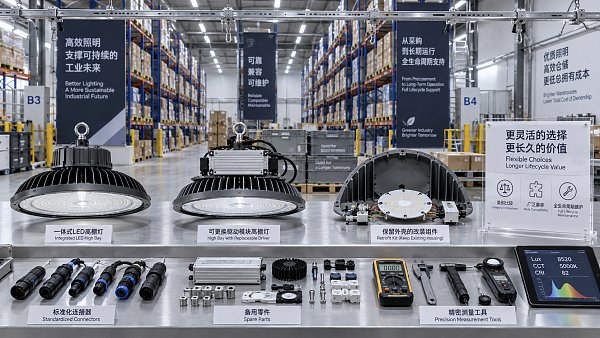
For example, a metal frame may need strength, corrosion resistance, and easy field assembly.
A POS terminal module may need thermal stability, software compatibility, and certification support.
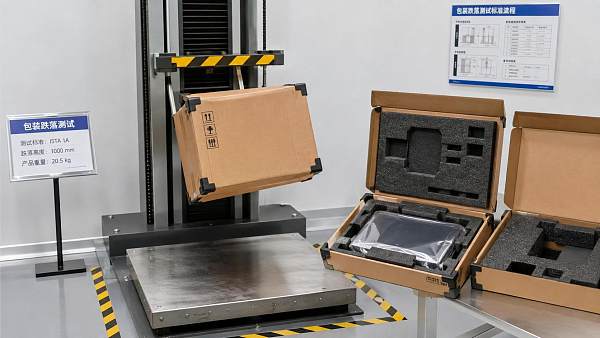
A packaging insert may need impact protection, recycled content, and dimensional consistency.
Without that functional baseline, component comparisons become subjective.
In real sourcing work, vague requirements often produce misleading samples.
A sample can perform well in a showroom and still fail on a live site.
So define the use case first, then compare key components against it.
- Load conditions and duty cycle
- Indoor, outdoor, or mixed exposure
- Required lifespan and maintenance interval
- Integration with adjacent systems
- Compliance obligations in target markets
This step creates a fair basis for product specification guidance components analysis.
Compare materials, structure, and manufacturing consistency
Once function is clear, move into the physical comparison.
This is where product specification guidance becomes concrete.
Materials should never be judged by label alone.
Steel grade, resin type, glass thickness, foam density, and coating system all affect performance differently.
Structural design matters just as much.
A stronger material can still underperform if the geometry is weak.
Likewise, an efficient structure can reduce weight and improve install speed.
More importantly, review repeatability.
One good prototype does not prove production reliability.
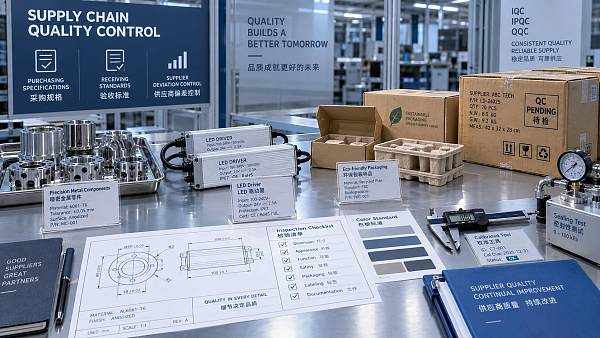
Ask how tolerances are controlled across runs and sites.
In technical evaluations, consistent output often beats a slightly better lab result.
That table is often enough to reveal weak areas early.
Treat certifications and standards as decision tools
Certifications are not just box-ticking exercises.
In strong product specification guidance, they help verify whether claims can be trusted.
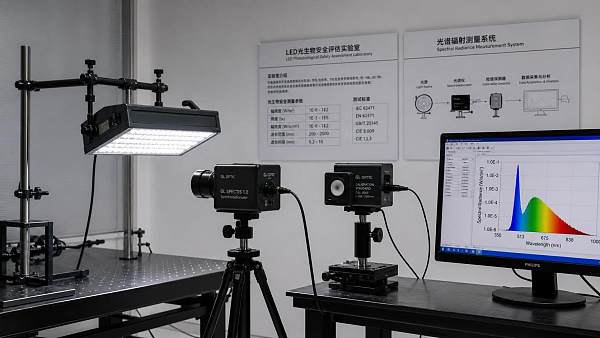
Standards such as UL, CE, and BIFMA offer a shared technical language.
They also reduce ambiguity between global buyers and manufacturing teams.
Still, certification should be interpreted carefully.
A compliant assembly does not automatically validate every component variation.
Check whether the tested version matches the version being quoted.
That point is frequently missed in component sourcing.
More practical reviews ask several direct questions.
- Which standard applies to this component and final application?
- Was the tested sample identical in material and configuration?
- Who issued the report, and is it current?
- Will market entry require additional local documentation?
This is where product specification guidance components work becomes strategic.
It prevents approval based on paperwork that does not fully match reality.
Look beyond purchase price to lifecycle value
A lower quoted cost can distort component selection.
Good product specification guidance corrects that by widening the cost view.
The smarter question is not, “What is cheapest today?”
It is, “Which component produces the lowest operational friction over time?”
That includes shipping impact, installation labor, replacement frequency, warranty exposure, and downtime risk.
For digital hardware, software support and update compatibility matter as well.
For packaging, storage efficiency and damage reduction can outweigh material price differences.
For furniture systems, fasteners and connection hardware often shape service cost more than visible surfaces do.
In practice, component comparison should include both direct and indirect cost factors.
- Unit price and tooling cost
- Freight density and packaging efficiency
- Installation time and skill requirement
- Maintenance parts availability
- Failure cost in active commercial environments
This broader lens makes product specification guidance more useful for real decision-making.
Review integration, sustainability, and supply resilience together
Modern components rarely operate alone.
A meaningful product specification guidance process tests how parts behave inside a wider system.
That applies to hardware, electronics, finishes, packaging, and data interfaces.
Integration failures are expensive because they usually appear late.
A bracket may interfere with cable routing.
A coating may conflict with adhesive behavior.
A recycled substrate may vary too much for precision printing.
At the same time, sustainability can no longer be handled as a separate note.
Material traceability, recycled content, low-emission finishes, and packaging reduction increasingly affect approvals.
Supply resilience belongs in the same review.
A technically strong component still creates risk if sole sourcing is fragile.
So compare key components across three linked questions.
- Will this component integrate cleanly with the target system?
- Does it support measurable sustainability targets?
- Can supply remain stable across volume changes and regions?
That is often where the strongest specification decisions emerge.
Use a simple scoring method to make decisions faster
Even strong reviews can stall without a decision format.
The most useful product specification guidance turns evidence into a clear ranking.
A weighted scorecard usually works well.
Keep it simple enough to use repeatedly.
Typical scoring categories include performance, compliance, manufacturability, integration, lifecycle cost, and supply stability.
Weight each category according to business impact.
A retail rollout may prioritize uptime and speed of replacement.
A premium interior program may place more weight on finish consistency and certification detail.
What matters is consistency across comparisons.
That gives procurement, engineering, and design teams a common reference point.
In the end, product specification guidance is most effective when it stays practical.
Define function clearly, compare key components rigorously, verify standards, and score lifecycle value honestly.
That approach produces decisions that are easier to defend and easier to scale.
When the next sourcing review begins, build the comparison around evidence, not assumptions.
News Recommendations
 How energy-efficient design reduces operating costs in retail lighting
![51a6ab95581761cc26f4318be6520c15]()
Aris Katos
Future of Carbide Coatings
 When commercial aluminum storefronts make sense for a retail renovation
![51a6ab95581761cc26f4318be6520c15]()
Aris Katos
Future of Carbide Coatings
 What makes LED lights durable in high-use commercial spaces?
![51a6ab95581761cc26f4318be6520c15]()
Aris Katos
Future of Carbide Coatings
 Which industry categories offer the strongest export potential in Latin America?
![51a6ab95581761cc26f4318be6520c15]()
Aris Katos
Future of Carbide Coatings
 How to choose an ultra bright waterproof window display for storefronts
![51a6ab95581761cc26f4318be6520c15]()
Aris Katos
Future of Carbide Coatings
 How to verify suppliers on a trade portal for global sourcing
![51a6ab95581761cc26f4318be6520c15]()
Aris Katos
Future of Carbide Coatings
 How RoHS requirements should be stated in product specifications
![51a6ab95581761cc26f4318be6520c15]()
Aris Katos
Future of Carbide Coatings
 What affects the lead time for custom retail counter displays?
![51a6ab95581761cc26f4318be6520c15]()
Aris Katos
Future of Carbide Coatings
 What consumer packaging USA importers need to verify before ordering
![51a6ab95581761cc26f4318be6520c15]()
Aris Katos
Future of Carbide Coatings
 How commercial spaces interiors shape customer dwell time
![51a6ab95581761cc26f4318be6520c15]()
Aris Katos
Future of Carbide Coatings
 How LED commercial lighting design reduces glare in retail spaces
![51a6ab95581761cc26f4318be6520c15]()
Aris Katos
Future of Carbide Coatings
 How industrial technology information improves RFID inventory accuracy
![51a6ab95581761cc26f4318be6520c15]()
Aris Katos
Future of Carbide Coatings
 When drip garden watering systems make more sense than sprinklers
![51a6ab95581761cc26f4318be6520c15]()
Aris Katos
Future of Carbide Coatings
 When category comparison improves sourcing for industrial applications
![51a6ab95581761cc26f4318be6520c15]()
Aris Katos
Future of Carbide Coatings
 Industrial application guidance for selecting the right LED lighting
![51a6ab95581761cc26f4318be6520c15]()
Aris Katos
Future of Carbide Coatings
 Which commercial architecture standards apply to European retail fit-outs?
![51a6ab95581761cc26f4318be6520c15]()
Aris Katos
Future of Carbide Coatings
 How to verify FDA requirements for maternity care products
![51a6ab95581761cc26f4318be6520c15]()
Aris Katos
Future of Carbide Coatings
 How to verify BPA-free claims for food-contact products
![51a6ab95581761cc26f4318be6520c15]()
Aris Katos
Future of Carbide Coatings
 When does a European wholesale supplier suit modular office projects?
![51a6ab95581761cc26f4318be6520c15]()
Aris Katos
Future of Carbide Coatings
 When consumer ecosystem solutions improve the in-store shopping journey
![51a6ab95581761cc26f4318be6520c15]()
Aris Katos
Future of Carbide Coatings
 How a commercial developers network can reduce site selection risk
![51a6ab95581761cc26f4318be6520c15]()
Aris Katos
Future of Carbide Coatings
 How clear purchasing specifications prevent costly supplier deviations
![51a6ab95581761cc26f4318be6520c15]()
Aris Katos
Future of Carbide Coatings
 What an ISTA drop test lab checks before your packaging ships
![51a6ab95581761cc26f4318be6520c15]()
Aris Katos
Future of Carbide Coatings
 Which commercial furniture standards apply to workplace seating?
![51a6ab95581761cc26f4318be6520c15]()
Aris Katos
Future of Carbide Coatings
 How to evaluate smart lighting module OEM compatibility before sampling
![51a6ab95581761cc26f4318be6520c15]()
Aris Katos
Future of Carbide Coatings
 How to assess whether sustainable technology delivers real impact
![51a6ab95581761cc26f4318be6520c15]()
Aris Katos
Future of Carbide Coatings
 How to assess an OEM supplier’s quality control before ordering
![51a6ab95581761cc26f4318be6520c15]()
Aris Katos
Future of Carbide Coatings
 How consumer ecosystem solutions data can improve retail personalization
![51a6ab95581761cc26f4318be6520c15]()
Aris Katos
Future of Carbide Coatings
 When does consumer packaging design justify a higher product price?
![51a6ab95581761cc26f4318be6520c15]()
Aris Katos
Future of Carbide Coatings
 Supermarket Fixture Installation: Planning Layouts, Wiring, and Handover
![51a6ab95581761cc26f4318be6520c15]()
Aris Katos
Future of Carbide Coatings
 Automated Lighting and Smart Lighting Control in Bergerac: Key Project Considerations
![51a6ab95581761cc26f4318be6520c15]()
Aris Katos
Future of Carbide Coatings
 Segment Streetlight Controllers: Choosing Control Modes for Urban Roads
![51a6ab95581761cc26f4318be6520c15]()
Aris Katos
Future of Carbide Coatings
 IEC 62471-2 Explained: How to Assess Photobiological Risks in LED Lighting
![51a6ab95581761cc26f4318be6520c15]()
Aris Katos
Future of Carbide Coatings
 Food Grade Packaging Requirements by Product Type, Temperature, and Contact Risk
![51a6ab95581761cc26f4318be6520c15]()
Aris Katos
Future of Carbide Coatings
 Food Packaging Compliance Checklist: Tests, Records, and Labeling Before Shipment
![51a6ab95581761cc26f4318be6520c15]()
Aris Katos
Future of Carbide Coatings
 NSF Food Packaging Standards: When Certification Matters for Commercial Food Use
![51a6ab95581761cc26f4318be6520c15]()
Aris Katos
Future of Carbide Coatings
 FDA Food Grade Compliance: Which Materials and Documents Do Buyers Need?
![51a6ab95581761cc26f4318be6520c15]()
Aris Katos
Future of Carbide Coatings
 What Should a Food Grade Declaration Include for Packaging Compliance?
![51a6ab95581761cc26f4318be6520c15]()
Aris Katos
Future of Carbide Coatings
 Housewares Importing: How to Evaluate Suppliers, Costs, and Compliance Risks
![51a6ab95581761cc26f4318be6520c15]()
Aris Katos
Future of Carbide Coatings