Glassware Factory China: Lead Time and Defect Risks
Time
Click Count
Evaluating a glassware factory china partner requires more than comparing prices. For business assessors, the real differentiators are lead-time reliability, defect risk control, and the factory’s ability to meet international quality expectations at scale. This article examines the key production, inspection, and supply chain factors that influence delivery performance and product consistency, helping sourcing teams make more informed decisions.
Why do lead time and defect risk matter so much in a glassware factory China assessment?

For commercial buyers, late shipments and unstable quality create costs far beyond unit pricing. A delayed glassware program can disrupt retail launches, hospitality openings, promotional calendars, and replenishment plans across multiple markets.
A weak glassware factory china partner may appear competitive at quotation stage, yet become expensive once rework, claims, emergency air freight, and customer complaints are included in the total sourcing equation.
What business assessors usually need to verify
- Whether the factory can convert approved samples into stable mass production without visible variation in shape, clarity, rim finish, decoration, or packing integrity.
- Whether production planning is realistic during peak seasons, especially when molds, decals, color spraying, or hand-finished steps create bottlenecks.
- Whether quality control is preventive rather than reactive, with checkpoints covering raw material consistency, hot-end forming, annealing, cold-end inspection, and final packaging.
- Whether export compliance, transit protection, and retailer-specific packaging rules are understood before the first production run begins.
This is where G-BCE adds value. Our cross-sector benchmarking approach helps sourcing directors evaluate not only a supplier’s product output, but also the commercial system behind it: process discipline, documentation quality, compliance readiness, and supply chain resilience.
Which production factors shape lead time at a glassware factory China site?
Lead time in glassware is rarely a single number. It is the result of mold readiness, batch material preparation, furnace scheduling, forming capacity, decoration queues, inspection speed, and export packing availability.
Business assessors should separate standard replenishment orders from custom development orders. A stock tumbler and a new embossed gift set may come from the same supplier, but they do not share the same scheduling risk.
Typical lead-time drivers
- Mold creation or modification. New designs often require tooling review, trial runs, and dimensional correction before stable output is possible.
- Furnace and machine allocation. High-volume lines may prioritize repeat items, leaving smaller custom orders exposed to shifting schedules.
- Decoration complexity. Printing, frosting, electroplating, hand painting, and color coating add secondary lead-time layers and increase defect exposure.
- Annealing and cooling control. Glass cannot be rushed without increasing stress-related defects and breakage risk.
- Carton and inner packaging readiness. Custom inserts, barcode labels, and multilingual retail packs frequently become hidden schedule blockers.
For a reliable glassware factory china evaluation, assessors should ask for the factory’s milestone breakdown rather than accepting a broad shipping promise. A detailed timeline exposes where delays are most likely to happen.
The table below shows a practical way to review lead-time risk across different order types when comparing factories in China.
The main insight is simple: the more customized the item, the more important process visibility becomes. A capable glassware factory china supplier should show how each stage affects the promised ship date.
What are the most common defect risks in glassware sourcing?
Defect risk in glassware extends beyond obvious breakage. Many issues only become visible after filling, washing, retail display, or cross-border transport. That is why business assessors should review both cosmetic and functional failure modes.
Defects that often affect acceptance and sell-through
- Bubbles, stones, cords, or black spots that reduce visual appeal in transparent or premium glassware.
- Rim chips, sharp edges, and uneven lip finishing that create safety concerns and customer complaints.
- Body warpage or dimensional inconsistency that prevents stable stacking, lid fit, or carton alignment.
- Stress cracks linked to poor annealing, often appearing after shipment or thermal exposure rather than at factory gate.
- Decoration adhesion failure, color deviation, print misalignment, or rubbing damage during inner-carton movement.
When a sourcing team audits a glassware factory china candidate, defect prevention should be tested at process level. Final random inspection alone is too late if upstream controls are weak.
The following table helps structure defect-risk review by linking common issue types with likely process causes and practical checkpoints.
This type of structured review is especially valuable for premium retail, foodservice, and gifting channels, where appearance variation can weaken brand presentation even when the product remains technically usable.
How should business assessors compare one glassware factory China option against another?
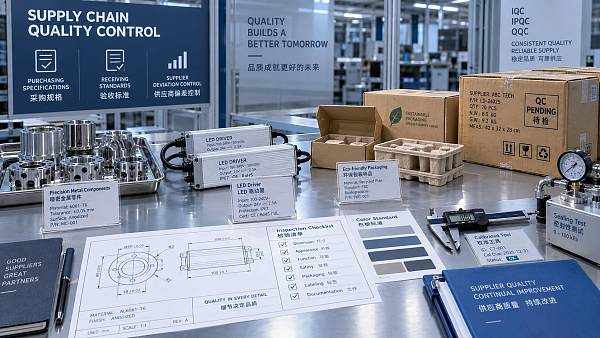
A meaningful supplier comparison should combine quality capability, planning discipline, compliance maturity, and packaging performance. Unit price alone does not show the operational risk behind a sourcing decision.
Comparison dimensions that matter in procurement reviews
- Sample-to-bulk consistency, including wall thickness feel, transparency, logo placement, and color fidelity.
- Production communication quality, such as schedule updates, deviation reporting, and action ownership when issues appear.
- Export packaging engineering, especially for long transit routes, e-commerce handling, and mixed-SKU container loading.
- Documentation support for retailer manuals, labeling rules, basic test evidence, and shipment traceability.
The table below can be used as a practical scorecard when screening a glassware factory china partner during factory visits or desktop supplier qualification.
In many cases, the best supplier is not the lowest quote. It is the factory with the most predictable conversion from design approval to delivered inventory, especially when commercial timing is non-negotiable.
What standards, compliance, and packaging checks should be reviewed?
Glassware requirements vary by destination market and end use. A glassware factory china supplier serving promotional gifting may face different expectations than one supplying hospitality chains or food-contact retail goods.
Assessors should confirm what documentation is relevant to the product category, sales region, and customer channel. The goal is not to request every possible paper, but to verify that the factory understands the compliance path.
Areas to confirm before order release
- Food-contact suitability requirements where applicable, including customer-specific declarations or test requests.
- Barcode, labeling, and outer carton mark accuracy for warehouse receiving and retail routing.
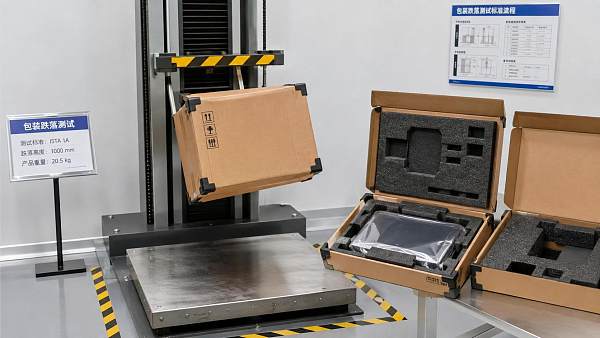
- Drop-test or transit packaging expectations for export shipping, especially for long ocean routes and cross-docking operations.
- Basic traceability practice, including date or batch linkage between production output, inspection, and shipment lots.
G-BCE’s benchmarking perspective is useful here because compliance is not isolated from design, logistics, or store operations. The same package that protects a glass item in transit must also support shelf presentation, backroom handling, and inventory efficiency.
How can assessors reduce risk before committing to a glassware factory China supplier?
The most effective risk reduction happens before mass production. Once the line starts, many errors become expensive to correct. A disciplined onboarding sequence is therefore more valuable than a fast but shallow purchase decision.
Recommended pre-order checklist
- Approve a sealed reference sample with visible defect limits, decoration position standard, and packaging method record.
- Request a milestone plan covering tooling, sample confirmation, mass production start, in-process inspection, packing, and booking readiness.
- Align on acceptance criteria for visual defects, breakage allowance, carton condition, and assortment accuracy.
- Review the supplier’s escalation method for delays, quality deviations, and material substitutions before purchase order release.
- Validate packaging by route and channel, not only by appearance. Protective design must match handling reality.
For sourcing teams managing multiple categories, this discipline supports portfolio resilience. A glassware factory china program should be assessed with the same operational rigor used for other fragile, regulated, or brand-sensitive consumer goods.
FAQ: what do buyers ask most when reviewing glassware factory China suppliers?
How long does a glassware factory China order usually take?
It depends on whether the order is a repeat item, a mold-based new development, or a decorated retail pack. Repeat programs usually move faster because tooling and process settings already exist. New custom projects need additional time for sample approval, mold adjustment, and packaging confirmation.
What is the biggest hidden defect risk in glassware?
Stress-related cracking is often underestimated because products may look acceptable at shipment stage. Problems can appear later during transport, warehousing, temperature change, or end use. That is why annealing control and packaging review matter as much as visual inspection.
Should buyers focus more on factory audits or final inspections?
Both are important, but factory process review usually creates stronger prevention. Final inspection can catch symptoms, yet it cannot fully correct unstable melting, poor rim finishing, weak decoration curing, or under-engineered packaging once production is complete.
How do assessors know if a quotation is unrealistically low?
Low pricing often hides compromises in wall consistency, decoration durability, inspection coverage, or packing protection. Compare the quote against the stated process route, packaging specification, reject handling, and lead-time commitment. If those details remain vague, the risk is usually higher than the initial savings suggest.
Why choose us for glassware factory China benchmarking and sourcing evaluation?
G-BCE supports business assessors with a broader commercial lens than a basic supplier list. We connect manufacturing review with retail execution, packaging practicality, compliance readiness, and multi-market sourcing logic so procurement teams can make decisions with fewer blind spots.
If you are reviewing a glassware factory china candidate, we can help you structure the evaluation around lead-time milestones, defect-risk checkpoints, sample-to-bulk consistency, packaging suitability, and international requirement alignment. You can consult us on product selection, specification confirmation, delivery planning, customization feasibility, documentation needs, sample review priorities, and quotation comparison before final supplier commitment.
News Recommendations
 Which industry categories offer the strongest export potential in Latin America?
![51a6ab95581761cc26f4318be6520c15]()
Aris Katos
Future of Carbide Coatings
 How to choose an ultra bright waterproof window display for storefronts
![51a6ab95581761cc26f4318be6520c15]()
Aris Katos
Future of Carbide Coatings
 How to verify suppliers on a trade portal for global sourcing
![51a6ab95581761cc26f4318be6520c15]()
Aris Katos
Future of Carbide Coatings
 How RoHS requirements should be stated in product specifications
![51a6ab95581761cc26f4318be6520c15]()
Aris Katos
Future of Carbide Coatings
 What affects the lead time for custom retail counter displays?
![51a6ab95581761cc26f4318be6520c15]()
Aris Katos
Future of Carbide Coatings
 What consumer packaging USA importers need to verify before ordering
![51a6ab95581761cc26f4318be6520c15]()
Aris Katos
Future of Carbide Coatings
 How commercial spaces interiors shape customer dwell time
![51a6ab95581761cc26f4318be6520c15]()
Aris Katos
Future of Carbide Coatings
 How LED commercial lighting design reduces glare in retail spaces
![51a6ab95581761cc26f4318be6520c15]()
Aris Katos
Future of Carbide Coatings
 How industrial technology information improves RFID inventory accuracy
![51a6ab95581761cc26f4318be6520c15]()
Aris Katos
Future of Carbide Coatings
 When drip garden watering systems make more sense than sprinklers
![51a6ab95581761cc26f4318be6520c15]()
Aris Katos
Future of Carbide Coatings
 When category comparison improves sourcing for industrial applications
![51a6ab95581761cc26f4318be6520c15]()
Aris Katos
Future of Carbide Coatings
 Industrial application guidance for selecting the right LED lighting
![51a6ab95581761cc26f4318be6520c15]()
Aris Katos
Future of Carbide Coatings
 Which commercial architecture standards apply to European retail fit-outs?
![51a6ab95581761cc26f4318be6520c15]()
Aris Katos
Future of Carbide Coatings
 How to verify FDA requirements for maternity care products
![51a6ab95581761cc26f4318be6520c15]()
Aris Katos
Future of Carbide Coatings
 How to verify BPA-free claims for food-contact products
![51a6ab95581761cc26f4318be6520c15]()
Aris Katos
Future of Carbide Coatings
 When does a European wholesale supplier suit modular office projects?
![51a6ab95581761cc26f4318be6520c15]()
Aris Katos
Future of Carbide Coatings
 When consumer ecosystem solutions improve the in-store shopping journey
![51a6ab95581761cc26f4318be6520c15]()
Aris Katos
Future of Carbide Coatings
 How a commercial developers network can reduce site selection risk
![51a6ab95581761cc26f4318be6520c15]()
Aris Katos
Future of Carbide Coatings
 How clear purchasing specifications prevent costly supplier deviations
![51a6ab95581761cc26f4318be6520c15]()
Aris Katos
Future of Carbide Coatings
 What an ISTA drop test lab checks before your packaging ships
![51a6ab95581761cc26f4318be6520c15]()
Aris Katos
Future of Carbide Coatings
 Which commercial furniture standards apply to workplace seating?
![51a6ab95581761cc26f4318be6520c15]()
Aris Katos
Future of Carbide Coatings
 How to evaluate smart lighting module OEM compatibility before sampling
![51a6ab95581761cc26f4318be6520c15]()
Aris Katos
Future of Carbide Coatings
 How to assess whether sustainable technology delivers real impact
![51a6ab95581761cc26f4318be6520c15]()
Aris Katos
Future of Carbide Coatings
 How to assess an OEM supplier’s quality control before ordering
![51a6ab95581761cc26f4318be6520c15]()
Aris Katos
Future of Carbide Coatings
 How consumer ecosystem solutions data can improve retail personalization
![51a6ab95581761cc26f4318be6520c15]()
Aris Katos
Future of Carbide Coatings
 When does consumer packaging design justify a higher product price?
![51a6ab95581761cc26f4318be6520c15]()
Aris Katos
Future of Carbide Coatings
 Supermarket Fixture Installation: Planning Layouts, Wiring, and Handover
![51a6ab95581761cc26f4318be6520c15]()
Aris Katos
Future of Carbide Coatings
 Automated Lighting and Smart Lighting Control in Bergerac: Key Project Considerations
![51a6ab95581761cc26f4318be6520c15]()
Aris Katos
Future of Carbide Coatings
 Segment Streetlight Controllers: Choosing Control Modes for Urban Roads
![51a6ab95581761cc26f4318be6520c15]()
Aris Katos
Future of Carbide Coatings
 IEC 62471-2 Explained: How to Assess Photobiological Risks in LED Lighting
![51a6ab95581761cc26f4318be6520c15]()
Aris Katos
Future of Carbide Coatings
 Food Grade Packaging Requirements by Product Type, Temperature, and Contact Risk
![51a6ab95581761cc26f4318be6520c15]()
Aris Katos
Future of Carbide Coatings
 Food Packaging Compliance Checklist: Tests, Records, and Labeling Before Shipment
![51a6ab95581761cc26f4318be6520c15]()
Aris Katos
Future of Carbide Coatings
 NSF Food Packaging Standards: When Certification Matters for Commercial Food Use
![51a6ab95581761cc26f4318be6520c15]()
Aris Katos
Future of Carbide Coatings
 FDA Food Grade Compliance: Which Materials and Documents Do Buyers Need?
![51a6ab95581761cc26f4318be6520c15]()
Aris Katos
Future of Carbide Coatings
 What Should a Food Grade Declaration Include for Packaging Compliance?
![51a6ab95581761cc26f4318be6520c15]()
Aris Katos
Future of Carbide Coatings
 Housewares Importing: How to Evaluate Suppliers, Costs, and Compliance Risks
![51a6ab95581761cc26f4318be6520c15]()
Aris Katos
Future of Carbide Coatings
 Why Freeze-Dried Fruit Ingredients Lose Crispness—and How to Prevent It
![51a6ab95581761cc26f4318be6520c15]()
Aris Katos
Future of Carbide Coatings
 What industry veterans look for before choosing a new supplier
![51a6ab95581761cc26f4318be6520c15]()
Aris Katos
Future of Carbide Coatings
 How material fatigue can shorten the service life of retail shelving
![51a6ab95581761cc26f4318be6520c15]()
Aris Katos
Future of Carbide Coatings