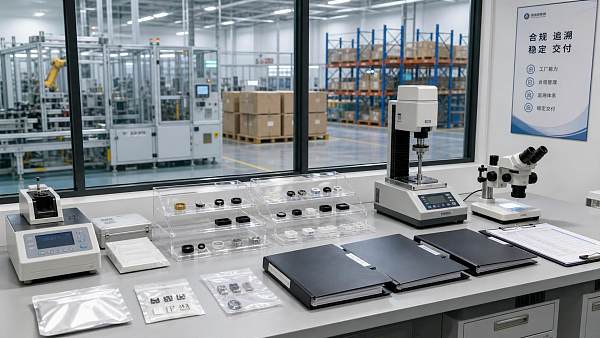
Barcode Scanner Supplier Comparison: Price, Lead Time, Support
Time
Click Count
Choosing the right barcode scanner supplier can directly affect procurement cost, deployment speed, and long-term operational reliability. For purchasing professionals, comparing suppliers goes beyond unit price—it also requires evaluating lead times, after-sales support, certification standards, and scalability. This guide outlines the key factors to help buyers make informed sourcing decisions in a competitive global market.
How should procurement teams compare a barcode scanner supplier?
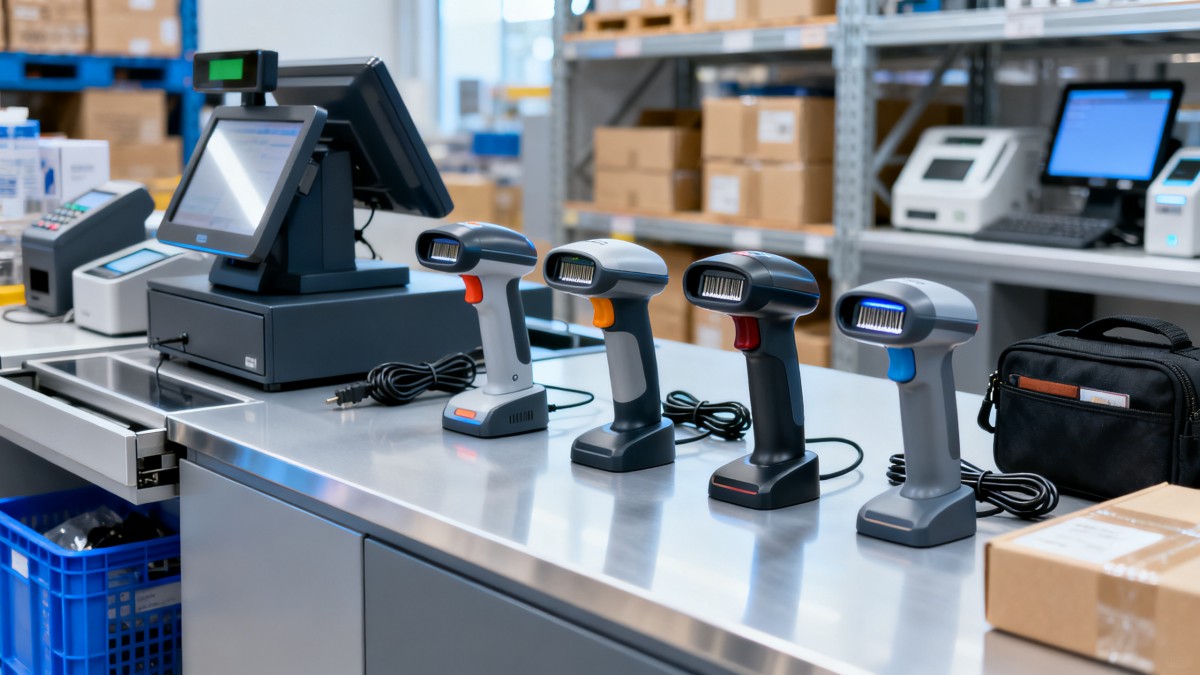
A barcode scanner supplier is not only a product source. In practice, the supplier also affects rollout schedules, integration risk, spare parts planning, and support responsiveness across stores, warehouses, checkout points, and service counters.
For buyers in cross-sector commercial environments, the best decision usually comes from balancing three variables: purchase price, lead time, and service support. Focusing on only one often creates hidden downstream cost.
At G-BCE, supplier benchmarking is approached through a broader commercial ecosystem lens. A scanner must fit into retail technology stacks, physical workspace layouts, and global sourcing requirements rather than being treated as a stand-alone device.
- Price matters because scanner programs often include main units, cradles, cables, stands, accessories, firmware configuration, and replacement stock.
- Lead time matters because store openings, seasonal promotions, and warehouse go-lives usually run on fixed schedules with little room for procurement delay.
- Support matters because installation issues, decoding errors, and compatibility gaps can disrupt operations long after the first shipment is delivered.
What evaluation criteria matter beyond unit price?
When comparing a barcode scanner supplier, purchasing teams should score suppliers across commercial, technical, and operational dimensions. This reduces the risk of choosing a low-quote vendor that cannot support long-term deployment.
The table below summarizes the most practical dimensions used in procurement reviews for barcode scanner sourcing across retail, logistics, hospitality, healthcare-adjacent service environments, and mixed commercial projects.
This type of scorecard helps procurement teams move from quote comparison to decision quality. In multi-site projects, reliability and service continuity often outweigh a small unit-price difference.
Price comparison: what is the real cost of a barcode scanner supplier?
Many buyers start with piece price, but a better method is to compare total procurement cost. For barcode scanner supplier evaluation, this means combining visible purchase cost with deployment, replacement, and support-related cost.
Direct and hidden cost components
- Hardware cost: scanner body, stand, dock, cable, battery, or adapter depending on device type.
- Deployment cost: device pairing, software configuration, POS testing, and staff onboarding.
- Operational cost: failure replacement, downtime, battery aging, and cleaning or maintenance needs.
- Supply chain cost: freight mode, customs handling, safety stock, and rush-order premiums.
The table below can be used when asking each barcode scanner supplier for a fully loaded quote instead of a narrow ex-works unit figure.
In many sourcing projects, the lowest-priced barcode scanner supplier is not the lowest-cost option over twelve to thirty-six months. Buyers should therefore compare total cost of ownership, not simply acquisition cost.
Lead time comparison: how fast can suppliers really deliver?
Lead time is often treated as a logistics issue, but it is a procurement control issue. A supplier may promise fast shipment while depending on unstable components, low finished-goods inventory, or fragmented assembly planning.
What to validate before placing a bulk order
- Ask for sample lead time and mass-order lead time separately. They are rarely the same.
- Confirm whether key parts such as scan engine, wireless module, and batteries are stocked or ordered per project.
- Check if packaging customization, labeling, or firmware presetting adds extra days or weeks.
- Verify peak-season constraints, especially before retail expansion windows or year-end shipping pressure.
For procurement teams managing regional rollouts, a barcode scanner supplier with slightly higher price but predictable lead time can reduce launch delays, penalty exposure, and emergency air freight.
G-BCE’s cross-sector benchmarking approach is useful here because scanner procurement rarely stands alone. Lead time must align with fixtures, POS terminals, signage, packaging flow, and store opening schedules.
Support comparison: what kind of service actually protects operations?
Support quality becomes visible after installation. A reliable barcode scanner supplier should offer not only warranty language, but also a clear service process for technical questions, configuration problems, and defective units.
Support capabilities buyers should review
- Pre-sales technical clarification for interface type, decoding requirement, and environment suitability.
- Deployment-stage support for setup guides, command sheets, software utilities, and integration questions.
- After-sales workflow covering fault diagnosis, RMA handling, spare units, and replacement timing.
- Documentation discipline for manuals, compliance files, packing lists, and version control.
Support is especially important when scanners are deployed across different use conditions. Front-of-house retail counters, warehouse aisles, and self-service touchpoints create different decoding and durability demands. A supplier that understands these distinctions reduces troubleshooting burden on the buyer.
Which barcode scanner supplier type fits which application?
Different procurement contexts require different supplier strengths. Some projects prioritize low-cost standardization, while others require rugged hardware, rapid replenishment, or documentation suitable for cross-border compliance review.
The table below links common application scenarios to the most relevant supplier evaluation priorities.
This scenario-based view helps buyers avoid overbuying or under-specifying. A barcode scanner supplier suitable for a fixed cashier lane may not be the best choice for distributed fulfillment or hybrid retail-service environments.
What technical and compliance checks should buyers include?
Procurement teams often inherit technical requirements from IT or operations, but they should still translate those requirements into supplier-verification questions. This is where specification discipline prevents expensive rework.
Key technical checks
- Barcode type support, including common 1D and 2D symbologies used in retail, logistics, and service workflows.
- Interface compatibility such as USB, wireless, Bluetooth, or keyboard emulation depending on system architecture.
- Environmental suitability, especially if devices will face dust, repeated drops, long shifts, or varied lighting conditions.
- Battery and charging logic for cordless units, including replacement cycle and charging accessory availability.
Compliance and documentation checks
For global projects, a barcode scanner supplier should be able to provide appropriate documentation relevant to the target market. Depending on destination and use case, buyers may need CE, UL-recognized pathways, FCC-related documentation, RoHS declarations, or battery transport records.
G-BCE’s benchmarking mindset is valuable because procurement decisions increasingly sit at the intersection of technical performance, commercial design, import compliance, and long-term supply chain resilience. That broader view reduces isolated decision-making.
Common mistakes when selecting a barcode scanner supplier
Several recurring mistakes can distort supplier comparison and create avoidable cost. These issues appear across industries whenever barcode scanners are sourced as a tactical item rather than part of operational infrastructure.
- Choosing only by lowest quote without confirming whether accessories and configuration are included.
- Approving samples quickly but skipping mass-order verification for consistency, packaging, and lead time.
- Ignoring replacement workflow until the first fault occurs in a live location.
- Using one specification for every location even when checkout, stockroom, and mobile service tasks differ.
- Treating documentation as secondary, which later causes customs, audit, or internal approval friction.
A more disciplined procurement process usually includes pilot testing, total cost review, support workflow validation, and a clear expansion path for future orders.
FAQ: practical questions buyers ask about barcode scanner suppliers
How do I compare two barcode scanner supplier quotes fairly?
Normalize the comparison first. Use the same required configuration, accessory list, shipping term, warranty condition, and documentation scope. Then compare total landed cost, not just unit cost. Also include expected replacement process and delivery reliability in the score.
What lead time is reasonable for barcode scanner procurement?
It depends on standard stock, customization, wireless modules, and order size. Buyers should ask for sample lead time, first bulk lead time, and repeat-order lead time separately. A realistic supplier will explain what is stock-based and what is build-to-order.
Which support terms matter most after delivery?
Focus on response time, fault triage method, replacement timing, spare parts availability, and firmware or setup support. These determine whether an issue stays local and manageable or spreads into site downtime.
Should procurement require certifications from every barcode scanner supplier?
Procurement should require the documentation relevant to the destination market and project environment. The exact list varies, but it is wise to confirm electrical, radio, environmental, and transport-related compliance early in the sourcing cycle.
Why choose us for barcode scanner supplier benchmarking and sourcing guidance?
G-BCE supports purchasing professionals who need more than a product list. We help connect barcode scanner supplier evaluation with the wider realities of smart retail technology, commercial space modernization, and cross-border supply chain execution.
Our value lies in structured comparison. We help buyers review specification fit, quotation completeness, lead time risk, compliance readiness, and deployment suitability across real commercial scenarios instead of isolated technical claims.
- Parameter confirmation for scanner type, decoding needs, interfaces, power format, and environmental conditions.
- Supplier comparison support covering price structure, lead time assumptions, service process, and expansion readiness.
- Certification and documentation review aligned with market-entry and procurement approval requirements.
- Sample planning and quotation communication for pilots, regional rollouts, and multi-site sourcing programs.
If you are comparing a barcode scanner supplier for a new project or a replacement cycle, contact us with your application scenario, quantity range, target market, and timeline. We can help you clarify parameters, compare supplier options, review lead time feasibility, and organize a sourcing path that is commercially practical and operationally reliable.
News Recommendations
 How to choose an ultra bright waterproof window display for storefronts
![51a6ab95581761cc26f4318be6520c15]()
Aris Katos
Future of Carbide Coatings
 How to verify suppliers on a trade portal for global sourcing
![51a6ab95581761cc26f4318be6520c15]()
Aris Katos
Future of Carbide Coatings
 How RoHS requirements should be stated in product specifications
![51a6ab95581761cc26f4318be6520c15]()
Aris Katos
Future of Carbide Coatings
 What affects the lead time for custom retail counter displays?
![51a6ab95581761cc26f4318be6520c15]()
Aris Katos
Future of Carbide Coatings
 What consumer packaging USA importers need to verify before ordering
![51a6ab95581761cc26f4318be6520c15]()
Aris Katos
Future of Carbide Coatings
 How commercial spaces interiors shape customer dwell time
![51a6ab95581761cc26f4318be6520c15]()
Aris Katos
Future of Carbide Coatings
 How LED commercial lighting design reduces glare in retail spaces
![51a6ab95581761cc26f4318be6520c15]()
Aris Katos
Future of Carbide Coatings
 How industrial technology information improves RFID inventory accuracy
![51a6ab95581761cc26f4318be6520c15]()
Aris Katos
Future of Carbide Coatings
 When drip garden watering systems make more sense than sprinklers
![51a6ab95581761cc26f4318be6520c15]()
Aris Katos
Future of Carbide Coatings
 When category comparison improves sourcing for industrial applications
![51a6ab95581761cc26f4318be6520c15]()
Aris Katos
Future of Carbide Coatings
 Industrial application guidance for selecting the right LED lighting
![51a6ab95581761cc26f4318be6520c15]()
Aris Katos
Future of Carbide Coatings
 Which commercial architecture standards apply to European retail fit-outs?
![51a6ab95581761cc26f4318be6520c15]()
Aris Katos
Future of Carbide Coatings
 How to verify FDA requirements for maternity care products
![51a6ab95581761cc26f4318be6520c15]()
Aris Katos
Future of Carbide Coatings
 How to verify BPA-free claims for food-contact products
![51a6ab95581761cc26f4318be6520c15]()
Aris Katos
Future of Carbide Coatings
 When does a European wholesale supplier suit modular office projects?
![51a6ab95581761cc26f4318be6520c15]()
Aris Katos
Future of Carbide Coatings
 When consumer ecosystem solutions improve the in-store shopping journey
![51a6ab95581761cc26f4318be6520c15]()
Aris Katos
Future of Carbide Coatings
 How a commercial developers network can reduce site selection risk
![51a6ab95581761cc26f4318be6520c15]()
Aris Katos
Future of Carbide Coatings
 How clear purchasing specifications prevent costly supplier deviations
![51a6ab95581761cc26f4318be6520c15]()
Aris Katos
Future of Carbide Coatings
 What an ISTA drop test lab checks before your packaging ships
![51a6ab95581761cc26f4318be6520c15]()
Aris Katos
Future of Carbide Coatings
 Which commercial furniture standards apply to workplace seating?
![51a6ab95581761cc26f4318be6520c15]()
Aris Katos
Future of Carbide Coatings
 How to evaluate smart lighting module OEM compatibility before sampling
![51a6ab95581761cc26f4318be6520c15]()
Aris Katos
Future of Carbide Coatings
 How to assess whether sustainable technology delivers real impact
![51a6ab95581761cc26f4318be6520c15]()
Aris Katos
Future of Carbide Coatings
 How to assess an OEM supplier’s quality control before ordering
![51a6ab95581761cc26f4318be6520c15]()
Aris Katos
Future of Carbide Coatings
 How consumer ecosystem solutions data can improve retail personalization
![51a6ab95581761cc26f4318be6520c15]()
Aris Katos
Future of Carbide Coatings
 When does consumer packaging design justify a higher product price?
![51a6ab95581761cc26f4318be6520c15]()
Aris Katos
Future of Carbide Coatings
 Supermarket Fixture Installation: Planning Layouts, Wiring, and Handover
![51a6ab95581761cc26f4318be6520c15]()
Aris Katos
Future of Carbide Coatings
 Automated Lighting and Smart Lighting Control in Bergerac: Key Project Considerations
![51a6ab95581761cc26f4318be6520c15]()
Aris Katos
Future of Carbide Coatings
 Segment Streetlight Controllers: Choosing Control Modes for Urban Roads
![51a6ab95581761cc26f4318be6520c15]()
Aris Katos
Future of Carbide Coatings
 IEC 62471-2 Explained: How to Assess Photobiological Risks in LED Lighting
![51a6ab95581761cc26f4318be6520c15]()
Aris Katos
Future of Carbide Coatings
 Food Grade Packaging Requirements by Product Type, Temperature, and Contact Risk
![51a6ab95581761cc26f4318be6520c15]()
Aris Katos
Future of Carbide Coatings
 Food Packaging Compliance Checklist: Tests, Records, and Labeling Before Shipment
![51a6ab95581761cc26f4318be6520c15]()
Aris Katos
Future of Carbide Coatings
 NSF Food Packaging Standards: When Certification Matters for Commercial Food Use
![51a6ab95581761cc26f4318be6520c15]()
Aris Katos
Future of Carbide Coatings
 FDA Food Grade Compliance: Which Materials and Documents Do Buyers Need?
![51a6ab95581761cc26f4318be6520c15]()
Aris Katos
Future of Carbide Coatings
 What Should a Food Grade Declaration Include for Packaging Compliance?
![51a6ab95581761cc26f4318be6520c15]()
Aris Katos
Future of Carbide Coatings
 Housewares Importing: How to Evaluate Suppliers, Costs, and Compliance Risks
![51a6ab95581761cc26f4318be6520c15]()
Aris Katos
Future of Carbide Coatings
 Why Freeze-Dried Fruit Ingredients Lose Crispness—and How to Prevent It
![51a6ab95581761cc26f4318be6520c15]()
Aris Katos
Future of Carbide Coatings
 What industry veterans look for before choosing a new supplier
![51a6ab95581761cc26f4318be6520c15]()
Aris Katos
Future of Carbide Coatings
 How material fatigue can shorten the service life of retail shelving
![51a6ab95581761cc26f4318be6520c15]()
Aris Katos
Future of Carbide Coatings
 What makes a global sourcing platform reliable for supplier verification?
![51a6ab95581761cc26f4318be6520c15]()
Aris Katos
Future of Carbide Coatings