Gearboxes vs Direct Drive: Which Cuts Maintenance Costs?
Time
Click Count
Gearboxes vs Direct Drive: Which Cuts Maintenance Costs?
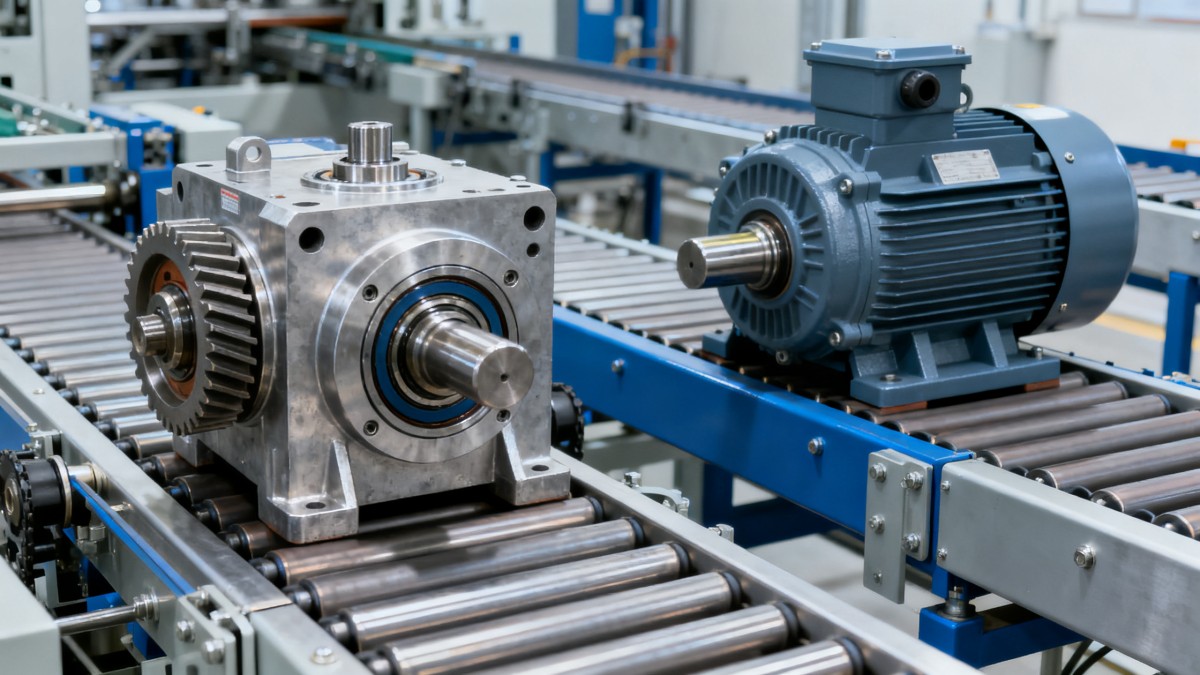
When evaluating drivetrain options for commercial equipment, buyers often compare purchase price first. That is understandable, but it rarely tells the full cost story.
The bigger question is how gearboxes and direct drive systems behave over years of use. Maintenance, downtime, spare parts, and technician access shape total ownership costs.
For sourcing decisions, this comparison matters most in equipment that runs daily. Conveyors, retail automation, smart fixtures, packaging lines, and light industrial systems all fit this pattern.
In simple terms, gearboxes reduce motor speed and increase torque through mechanical transmission. Direct drive removes that intermediate mechanical stage and connects power more directly to the load.
That design difference changes service routines, failure risk, energy loss, and replacement strategy. In actual procurement work, those details often matter more than list price.
The right answer is not universal. Some operations save more with gearboxes, while others cut maintenance costs faster with direct drive.
Why Maintenance Costs Deserve More Attention
Upfront cost is visible. Maintenance cost is slower, less obvious, and usually spread across multiple budgets. That is exactly why it gets underestimated.
A low-cost drivetrain can become expensive when lubrication intervals are frequent, seals wear early, or alignment problems keep returning. These issues raise labor expense and reduce uptime.
For many facilities, the most expensive repair is not the part itself. It is the lost production window, delayed fulfillment, or service disruption during peak operating hours.
This also means maintenance evaluation should include three layers:
- Planned service cost, including inspection and consumables
- Unplanned repair cost, including emergency labor and freight
- Business impact cost, including downtime and missed output
Once these layers are included, the gearboxes debate becomes much more practical. It moves from theory into measurable sourcing criteria.
How Gearboxes Affect Service Demands
Gearboxes remain common for a reason. They are proven, flexible, and available across a huge range of torque and speed requirements.
In many applications, gearboxes make system design easier. They allow smaller motors to deliver useful output under demanding load conditions.
Still, gearboxes add moving parts. More gears, bearings, seals, and lubricants usually mean more inspection points and more possible failure modes.
Typical maintenance tasks for gearboxes include oil checks, lubricant replacement, seal monitoring, vibration review, and periodic backlash evaluation. None is unusual, but all require discipline.
From a cost perspective, gearboxes tend to perform well when maintenance programs are mature. They become expensive when routine service is delayed or technician availability is limited.
Common gearbox-related cost drivers include:
- Lubrication schedules that require shutdown access
- Seal leaks that contaminate surrounding equipment
- Heat buildup under continuous heavy loads
- Misalignment that accelerates wear on couplings and bearings
- Spare gearbox inventory tied to multiple ratios and sizes
That said, gearboxes can still be cost-efficient. In rugged environments, a standard gearbox may be easier and cheaper to replace than a specialized direct drive assembly.
Where Direct Drive Can Reduce Maintenance
Direct drive systems are attractive because they simplify the mechanical chain. Fewer transmission components often mean fewer wear points and fewer scheduled service tasks.
In many commercial and automated settings, direct drive reduces the need for lubrication, eliminates gearbox oil changes, and lowers the chance of gear-related noise or backlash.
This is especially useful where cleanliness matters. Food-adjacent packaging, premium retail displays, and enclosed smart systems benefit from fewer leak risks and cleaner maintenance routines.
Another advantage is efficiency. Direct drive usually loses less energy through transmission, which can reduce operating heat and long-term stress on related components.
However, direct drive is not maintenance-free. Bearings, controls, sensors, and electronic drives still require monitoring. If a failure happens, replacement cost can be higher.
That is the tradeoff. Direct drive often lowers maintenance frequency, but it may increase dependence on supplier support, drive electronics quality, and application-specific engineering.
Gearboxes vs Direct Drive: Cost Comparison by Category
A side-by-side comparison helps clarify where maintenance savings really come from. The table below highlights the most relevant purchasing factors.
From a maintenance-cost view, direct drive often wins in predictable, high-usage environments. Gearboxes often remain competitive where mechanical toughness and easy field replacement matter most.
Best-Fit Scenarios for Each Option
The more useful question is not which technology is better overall. It is which option fits the operating pattern, maintenance model, and supplier ecosystem better.
Gearboxes are usually the better fit when:
- Load variation is high and torque demand changes often
- Field maintenance teams are experienced with mechanical repairs
- Replacement speed matters more than peak efficiency
- Budget limits favor standard, globally available parts
Direct drive is usually the better fit when:
- Equipment runs long hours with stable load conditions
- Cleanliness and low noise are operational priorities
- Downtime from routine maintenance is costly
- Energy performance and lifecycle cost outweigh first price
This becomes more important in modern commercial environments. Smart retail systems, automated fixtures, and compact equipment increasingly reward lower-maintenance architectures.
What to Ask Suppliers Before Comparing Prices
A strong sourcing decision depends on the quality of technical questions. Without them, gearbox and direct drive quotes are hard to compare fairly.
Use a shortlist that focuses on maintenance exposure:
- What is the expected service interval under actual duty cycles?
- Which consumables are required over three to five years?
- What are the common failure points in similar installations?
- Can local teams handle repairs, or is factory support needed?
- What spare parts should be stocked on site?
- What warranty terms apply to bearings, seals, and controllers?
- Are the components aligned with UL, CE, or other required standards?
It also helps to request lifecycle references from similar users. A supplier that only shares efficiency claims, but not field maintenance data, leaves a major decision gap.
In real projects, the best supplier is often not the one with the cheapest drivetrain. It is the one that makes total service exposure easier to predict.
A Practical Buying Framework
If the goal is lower maintenance cost, start with operating reality instead of product preference. That keeps the gearbox decision grounded in measurable value.
- Map duty cycle, environment, and access conditions first
- Estimate downtime cost per hour before comparing quotes
- Separate routine service cost from emergency repair risk
- Review local spare part access for gearboxes and direct drive units
- Score suppliers on service transparency, not only unit price
For high-uptime operations, direct drive often cuts maintenance costs by reducing service frequency and mechanical wear exposure. That advantage grows when labor is expensive.
For mixed-duty or mechanically harsh settings, gearboxes can still be the smarter commercial choice. They offer familiar repair paths and flexible sourcing across many global suppliers.
The smartest buying move is to compare gearboxes and direct drive through lifecycle evidence, not assumptions. That approach reduces surprises and supports better long-term operating margins.
When the next RFQ is prepared, ask each vendor to quantify maintenance intervals, spare strategy, and expected downtime impact. That single step makes the cost comparison far more useful.
News Recommendations
 How to verify suppliers on a trade portal for global sourcing
![51a6ab95581761cc26f4318be6520c15]()
Aris Katos
Future of Carbide Coatings
 How RoHS requirements should be stated in product specifications
![51a6ab95581761cc26f4318be6520c15]()
Aris Katos
Future of Carbide Coatings
 What affects the lead time for custom retail counter displays?
![51a6ab95581761cc26f4318be6520c15]()
Aris Katos
Future of Carbide Coatings
 What consumer packaging USA importers need to verify before ordering
![51a6ab95581761cc26f4318be6520c15]()
Aris Katos
Future of Carbide Coatings
 How commercial spaces interiors shape customer dwell time
![51a6ab95581761cc26f4318be6520c15]()
Aris Katos
Future of Carbide Coatings
 How LED commercial lighting design reduces glare in retail spaces
![51a6ab95581761cc26f4318be6520c15]()
Aris Katos
Future of Carbide Coatings
 How industrial technology information improves RFID inventory accuracy
![51a6ab95581761cc26f4318be6520c15]()
Aris Katos
Future of Carbide Coatings
 When drip garden watering systems make more sense than sprinklers
![51a6ab95581761cc26f4318be6520c15]()
Aris Katos
Future of Carbide Coatings
 When category comparison improves sourcing for industrial applications
![51a6ab95581761cc26f4318be6520c15]()
Aris Katos
Future of Carbide Coatings
 Industrial application guidance for selecting the right LED lighting
![51a6ab95581761cc26f4318be6520c15]()
Aris Katos
Future of Carbide Coatings
 Which commercial architecture standards apply to European retail fit-outs?
![51a6ab95581761cc26f4318be6520c15]()
Aris Katos
Future of Carbide Coatings
 How to verify FDA requirements for maternity care products
![51a6ab95581761cc26f4318be6520c15]()
Aris Katos
Future of Carbide Coatings
 How to verify BPA-free claims for food-contact products
![51a6ab95581761cc26f4318be6520c15]()
Aris Katos
Future of Carbide Coatings
 When does a European wholesale supplier suit modular office projects?
![51a6ab95581761cc26f4318be6520c15]()
Aris Katos
Future of Carbide Coatings
 When consumer ecosystem solutions improve the in-store shopping journey
![51a6ab95581761cc26f4318be6520c15]()
Aris Katos
Future of Carbide Coatings
 How a commercial developers network can reduce site selection risk
![51a6ab95581761cc26f4318be6520c15]()
Aris Katos
Future of Carbide Coatings
 How clear purchasing specifications prevent costly supplier deviations
![51a6ab95581761cc26f4318be6520c15]()
Aris Katos
Future of Carbide Coatings
 What an ISTA drop test lab checks before your packaging ships
![51a6ab95581761cc26f4318be6520c15]()
Aris Katos
Future of Carbide Coatings
 Which commercial furniture standards apply to workplace seating?
![51a6ab95581761cc26f4318be6520c15]()
Aris Katos
Future of Carbide Coatings
 How to evaluate smart lighting module OEM compatibility before sampling
![51a6ab95581761cc26f4318be6520c15]()
Aris Katos
Future of Carbide Coatings
 How to assess whether sustainable technology delivers real impact
![51a6ab95581761cc26f4318be6520c15]()
Aris Katos
Future of Carbide Coatings
 How to assess an OEM supplier’s quality control before ordering
![51a6ab95581761cc26f4318be6520c15]()
Aris Katos
Future of Carbide Coatings
 How consumer ecosystem solutions data can improve retail personalization
![51a6ab95581761cc26f4318be6520c15]()
Aris Katos
Future of Carbide Coatings
 When does consumer packaging design justify a higher product price?
![51a6ab95581761cc26f4318be6520c15]()
Aris Katos
Future of Carbide Coatings
 Supermarket Fixture Installation: Planning Layouts, Wiring, and Handover
![51a6ab95581761cc26f4318be6520c15]()
Aris Katos
Future of Carbide Coatings
 Automated Lighting and Smart Lighting Control in Bergerac: Key Project Considerations
![51a6ab95581761cc26f4318be6520c15]()
Aris Katos
Future of Carbide Coatings
 Segment Streetlight Controllers: Choosing Control Modes for Urban Roads
![51a6ab95581761cc26f4318be6520c15]()
Aris Katos
Future of Carbide Coatings
 IEC 62471-2 Explained: How to Assess Photobiological Risks in LED Lighting
![51a6ab95581761cc26f4318be6520c15]()
Aris Katos
Future of Carbide Coatings
 Food Grade Packaging Requirements by Product Type, Temperature, and Contact Risk
![51a6ab95581761cc26f4318be6520c15]()
Aris Katos
Future of Carbide Coatings
 Food Packaging Compliance Checklist: Tests, Records, and Labeling Before Shipment
![51a6ab95581761cc26f4318be6520c15]()
Aris Katos
Future of Carbide Coatings
 NSF Food Packaging Standards: When Certification Matters for Commercial Food Use
![51a6ab95581761cc26f4318be6520c15]()
Aris Katos
Future of Carbide Coatings
 FDA Food Grade Compliance: Which Materials and Documents Do Buyers Need?
![51a6ab95581761cc26f4318be6520c15]()
Aris Katos
Future of Carbide Coatings
 What Should a Food Grade Declaration Include for Packaging Compliance?
![51a6ab95581761cc26f4318be6520c15]()
Aris Katos
Future of Carbide Coatings
 Housewares Importing: How to Evaluate Suppliers, Costs, and Compliance Risks
![51a6ab95581761cc26f4318be6520c15]()
Aris Katos
Future of Carbide Coatings
 Why Freeze-Dried Fruit Ingredients Lose Crispness—and How to Prevent It
![51a6ab95581761cc26f4318be6520c15]()
Aris Katos
Future of Carbide Coatings
 What industry veterans look for before choosing a new supplier
![51a6ab95581761cc26f4318be6520c15]()
Aris Katos
Future of Carbide Coatings
 How material fatigue can shorten the service life of retail shelving
![51a6ab95581761cc26f4318be6520c15]()
Aris Katos
Future of Carbide Coatings
 What makes a global sourcing platform reliable for supplier verification?
![51a6ab95581761cc26f4318be6520c15]()
Aris Katos
Future of Carbide Coatings
 When are double platinum spark plugs a better choice than iridium?
![51a6ab95581761cc26f4318be6520c15]()
Aris Katos
Future of Carbide Coatings