Modular Office Workstations Wholesale: Fit-Out Savings vs Flexibility
Time
Click Count
For evaluators balancing capital efficiency with workplace agility, modular office workstations wholesale is not simply a cheaper procurement route. Its value depends on whether the system reduces initial fit-out cost and preserves future reconfiguration, compliance, and brand consistency across sites.
In practical terms, wholesale modular workstations usually outperform fixed custom millwork when an organization expects growth, phased occupancy, relocations, hybrid scheduling, or multi-location rollout. However, the savings are only real when buyers assess lifecycle cost, standards alignment, lead-time reliability, and component interoperability.
For business evaluators, the core decision is not “modular versus traditional” in the abstract. It is whether a modular platform can deliver measurable fit-out savings today without creating hidden costs in maintenance, replacement, acoustic performance, or workplace experience tomorrow.
What business evaluators are actually trying to determine

Searchers using the phrase modular office workstations wholesale are typically comparing sourcing models, not browsing design inspiration. They want to know whether wholesale modular systems provide a credible financial and operational advantage over bespoke fit-outs or piecemeal local procurement.
The target reader is usually concerned with several questions at once: How much can be saved upfront? How quickly can a site be delivered? How easy is future reconfiguration? Will quality remain consistent across locations? And what procurement risks are introduced by large-volume sourcing?
These are evaluation questions tied to capital planning, rollout efficiency, and governance. That means the most useful analysis is evidence-based: total installed cost, workplace adaptability, certification, durability, spare-part continuity, and supplier execution capability.
Where fit-out savings really come from in wholesale modular systems
Initial savings in modular office workstation wholesale programs typically come from standardization. Repeating panel sizes, desk frames, storage modules, and cable-management kits reduces engineering effort, shortens production cycles, and lowers installation complexity compared with one-off interiors.
Another savings lever is logistics efficiency. Flat-pack or semi-knockdown designs can improve container utilization and lower shipping cost per workstation. When deployment is planned at scale, packaging density, loading method, and site handling requirements can materially affect the budget.
Installation labor is also a major variable. Modular systems designed for repeat assembly can reduce on-site joinery, finishing, and correction work. For evaluators, this matters because labor volatility in many markets can erase the apparent cost advantage of low-priced but difficult-to-install furniture.
Procurement teams should also look at indirect savings. Faster installation can shorten site downtime, support earlier occupancy, and reduce disruption during renovations. In portfolio-wide projects, time savings may be as important as invoice savings, especially where rent, staffing, or launch schedules are fixed.
That said, the lowest unit price does not guarantee the best fit-out economics. A system that needs custom adapters, additional cable accessories, or local reinforcement often becomes more expensive after freight, installation, and post-install adjustments are included.
Why flexibility often matters more than the first purchase price
Many organizations overestimate the importance of day-one savings and underestimate the cost of workspace change. Teams expand, departments merge, floorplates shift, and hybrid work patterns alter how density and collaboration zones should be configured over time.
This is where modular systems earn their strategic value. A platform with interchangeable tops, screens, legs, power modules, and storage units can be reconfigured rather than fully replaced. That reduces churn cost and extends usable asset life across multiple occupancy scenarios.
For evaluators, flexibility should be measured in operational terms. Can a six-person bench become four semi-private stations without replacing the entire base structure? Can power and data be rerouted cleanly? Can privacy screens, acoustic elements, or monitor arms be added later?
The answer determines whether a wholesale purchase remains valuable after organizational changes. In dynamic offices, a rigid low-cost workstation may become obsolete faster than a slightly higher-priced modular system that adapts across departments and sites.
Flexibility also supports phased capital deployment. Buyers can standardize the platform now, then add accessories, storage, dividers, or collaboration attachments later as budgets and headcount evolve. This staged investment model is often attractive for commercial operators managing uncertain occupancy demand.
How to compare modular wholesale options beyond headline pricing
Serious evaluation requires a lifecycle framework. Instead of comparing workstation prices alone, compare the total cost across acquisition, shipping, installation, maintenance, reconfiguration, replacement components, and end-of-life handling.
A useful method is to score vendors across five dimensions: initial capex, speed to deploy, reconfiguration cost, expected service life, and standards compliance. This exposes cases where a cheap first purchase creates expensive downstream dependence on nonstandard parts or local fabrication fixes.
Ask for bill-of-material transparency. Buyers should know what is included in the base price: power rails, cable trays, modesty panels, pedestal units, screens, monitor brackets, leveling feet, and edge finishes. Ambiguity here is a common source of budget drift.
It is equally important to verify tolerance control and interchangeability. In scalable workstation systems, parts from different batches should align predictably. Poor dimensional consistency undermines one of modularity’s biggest promises: the ability to expand or reconfigure without extensive remedial work.
For cross-border buyers, warranty terms deserve close scrutiny. A five-year warranty has limited value if replacement parts are unavailable regionally or response times are undefined. Evaluation should include service structure, local support partners, and spare-component stocking strategy.
Compliance, ergonomics, and durability are not secondary issues
Business evaluators should treat compliance and user performance as core purchasing criteria, not afterthoughts. Office furniture that appears cost-efficient but fails ergonomic, structural, or material standards can create legal, reputational, and operational risks.
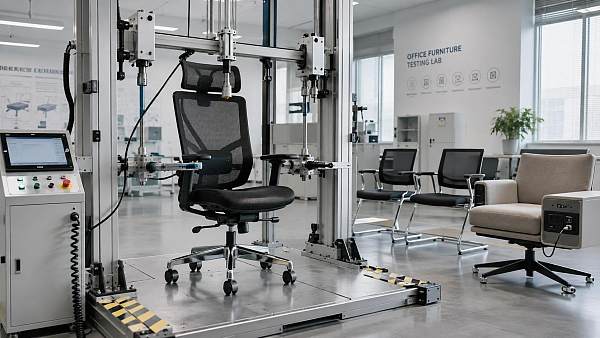
In international sourcing, recognized benchmarks such as BIFMA performance testing, CE-related electrical considerations where relevant, and material safety documentation help validate product credibility. Buyers should request test reports, not just marketing claims or certificate summaries.
Ergonomic adequacy matters because workstation quality affects concentration, comfort, and employee acceptance. This is especially relevant in environments where organizations want office attendance to remain attractive. Poor cable access, unstable surfaces, weak privacy screens, or awkward storage reduce usability fast.
Durability should be reviewed at component level. Check edge-banding performance, frame gauge, powder-coating consistency, screen attachment strength, drawer slide cycle ratings, and leveling hardware. These details determine whether a workstation survives repeated moves and daily commercial use.
Material strategy also matters. Commercial buyers increasingly require low-emission boards, recyclable content, and responsible finish specifications. Sustainable sourcing is not only an ESG issue; it can affect approvals, tenant requirements, and public procurement eligibility.
Consistency across multiple locations is a major wholesale advantage
One of the strongest arguments for modular office workstations wholesale is portfolio consistency. Standardized workstation platforms can help organizations maintain a coherent visual identity and operational specification across headquarters, branch offices, coworking suites, and regional service centers.
Consistency supports more than branding. It simplifies maintenance, training for installation teams, parts replacement, and future procurement. When every site uses a related component family, sourcing becomes easier and facility management becomes more predictable.
For evaluators in multi-site programs, this reduces specification drift. Local teams often substitute products based on availability or short-term price, resulting in mismatched aesthetics and incompatible accessories. A wholesale modular platform establishes a controlled baseline without eliminating all local adaptation.
That baseline can still allow variation in finish, screen height, storage ratio, or power configuration by department. The key is to separate what must remain standardized from what can be localized. This is a practical way to balance central governance with regional functionality.
Key risks that can cancel out the value proposition
Not every wholesale modular offer delivers true flexibility or real savings. Some suppliers market “modular” products that are only partially standardized, making expansions dependent on custom connectors or discontinued dimensions. This creates lock-in and undermines long-term usability.
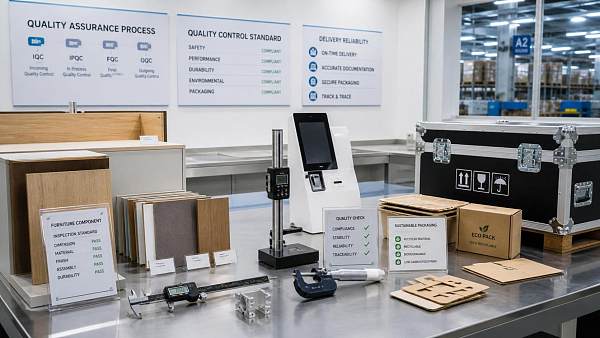
Another frequent risk is inconsistent production quality between batches. In large rollouts, small finish deviations or tolerance shifts become highly visible. Evaluators should request production controls, finish sample retention policies, and quality assurance procedures for repeat orders.
Lead-time risk is equally important. A workstation program may look attractive at quotation stage but fail under tight rollout schedules. Buyers should test supplier capacity, peak-season resilience, raw material sourcing stability, and contingency planning for shipping disruptions.
Underestimating local site conditions can also drive hidden cost. Lift access, floor unevenness, electrical routing, fire code constraints, and installation-hour restrictions all affect deployed cost. The most reliable suppliers address these variables early through pre-install documentation and coordination.
Finally, avoid evaluating furniture in isolation from the broader workplace system. Acoustic treatment, lighting, power planning, and circulation all influence whether workstation layouts actually function. A low workstation price is irrelevant if the resulting environment performs poorly.
When modular wholesale is the right strategic choice
Modular wholesale sourcing is usually strongest in repeatable commercial scenarios: new regional office networks, managed office operators, fast-growing firms, back-office environments, educational administration spaces, and companies refreshing several floors over a staged timeline.
It is also well suited to organizations pursuing hybrid workplace adaptation. When headcount patterns, touchdown ratios, and collaboration needs are still evolving, modular platforms preserve optionality. Buyers can test one configuration and modify later without scrapping the entire investment.
By contrast, highly bespoke executive spaces or architecturally signature areas may justify custom solutions where design uniqueness outweighs reconfiguration needs. Even then, many projects benefit from mixing custom front-of-house elements with modular back-of-house workstation systems.
The strategic decision often comes down to repeatability. If a buyer expects more than one site, more than one phase, or more than one layout change during the asset life, modularity usually deserves serious weighting in the evaluation model.
A practical evaluation checklist for sourcing teams
To assess modular office workstations wholesale with discipline, evaluators should ask suppliers for a clear component matrix, test documentation, lead times by volume tier, spare-part availability, installation methodology, and references from comparable multi-site commercial projects.
They should also model at least three scenarios: initial deployment, mid-cycle reconfiguration, and expansion order after twelve to twenty-four months. If the supplier cannot support all three economically, the offering may not be genuinely modular in commercial terms.
Mock-up review is strongly recommended. A sample station reveals more than catalogs do, especially regarding cable access, screen rigidity, edge quality, drawer function, and assembly speed. Pilot deployment can further validate whether promised fit-out savings are realistic under actual site conditions.
Internally, decision-makers should align procurement, facilities, design, IT, and operations before final selection. Many workstation failures are not product failures but specification failures caused by isolated purchasing decisions that ignore technology integration or workplace behavior.
Conclusion: savings matter, but usable flexibility creates the bigger return
For business evaluators, the best reading of the market is clear: modular office workstations wholesale can reduce fit-out cost, but its stronger advantage is preserving adaptability, consistency, and control across the workspace lifecycle.
The most valuable systems are not simply the cheapest to buy. They are the ones that install efficiently, comply with relevant standards, maintain quality across batches, and support change without major reinvestment. That is where real commercial resilience is built.
In other words, fit-out savings should be treated as the entry benefit, not the final objective. When evaluated through lifecycle cost, operational flexibility, and multi-site governance, modular wholesale workstations often become a strategic infrastructure decision rather than a furniture purchase alone.
News Recommendations
 How to choose an ultra bright waterproof window display for storefronts
![51a6ab95581761cc26f4318be6520c15]()
Aris Katos
Future of Carbide Coatings
 How to verify suppliers on a trade portal for global sourcing
![51a6ab95581761cc26f4318be6520c15]()
Aris Katos
Future of Carbide Coatings
 How RoHS requirements should be stated in product specifications
![51a6ab95581761cc26f4318be6520c15]()
Aris Katos
Future of Carbide Coatings
 What affects the lead time for custom retail counter displays?
![51a6ab95581761cc26f4318be6520c15]()
Aris Katos
Future of Carbide Coatings
 What consumer packaging USA importers need to verify before ordering
![51a6ab95581761cc26f4318be6520c15]()
Aris Katos
Future of Carbide Coatings
 How commercial spaces interiors shape customer dwell time
![51a6ab95581761cc26f4318be6520c15]()
Aris Katos
Future of Carbide Coatings
 How LED commercial lighting design reduces glare in retail spaces
![51a6ab95581761cc26f4318be6520c15]()
Aris Katos
Future of Carbide Coatings
 How industrial technology information improves RFID inventory accuracy
![51a6ab95581761cc26f4318be6520c15]()
Aris Katos
Future of Carbide Coatings
 When drip garden watering systems make more sense than sprinklers
![51a6ab95581761cc26f4318be6520c15]()
Aris Katos
Future of Carbide Coatings
 When category comparison improves sourcing for industrial applications
![51a6ab95581761cc26f4318be6520c15]()
Aris Katos
Future of Carbide Coatings
 Industrial application guidance for selecting the right LED lighting
![51a6ab95581761cc26f4318be6520c15]()
Aris Katos
Future of Carbide Coatings
 Which commercial architecture standards apply to European retail fit-outs?
![51a6ab95581761cc26f4318be6520c15]()
Aris Katos
Future of Carbide Coatings
 How to verify FDA requirements for maternity care products
![51a6ab95581761cc26f4318be6520c15]()
Aris Katos
Future of Carbide Coatings
 How to verify BPA-free claims for food-contact products
![51a6ab95581761cc26f4318be6520c15]()
Aris Katos
Future of Carbide Coatings
 When does a European wholesale supplier suit modular office projects?
![51a6ab95581761cc26f4318be6520c15]()
Aris Katos
Future of Carbide Coatings
 When consumer ecosystem solutions improve the in-store shopping journey
![51a6ab95581761cc26f4318be6520c15]()
Aris Katos
Future of Carbide Coatings
 How a commercial developers network can reduce site selection risk
![51a6ab95581761cc26f4318be6520c15]()
Aris Katos
Future of Carbide Coatings
 How clear purchasing specifications prevent costly supplier deviations
![51a6ab95581761cc26f4318be6520c15]()
Aris Katos
Future of Carbide Coatings
 What an ISTA drop test lab checks before your packaging ships
![51a6ab95581761cc26f4318be6520c15]()
Aris Katos
Future of Carbide Coatings
 Which commercial furniture standards apply to workplace seating?
![51a6ab95581761cc26f4318be6520c15]()
Aris Katos
Future of Carbide Coatings
 How to evaluate smart lighting module OEM compatibility before sampling
![51a6ab95581761cc26f4318be6520c15]()
Aris Katos
Future of Carbide Coatings
 How to assess whether sustainable technology delivers real impact
![51a6ab95581761cc26f4318be6520c15]()
Aris Katos
Future of Carbide Coatings
 How to assess an OEM supplier’s quality control before ordering
![51a6ab95581761cc26f4318be6520c15]()
Aris Katos
Future of Carbide Coatings
 How consumer ecosystem solutions data can improve retail personalization
![51a6ab95581761cc26f4318be6520c15]()
Aris Katos
Future of Carbide Coatings
 When does consumer packaging design justify a higher product price?
![51a6ab95581761cc26f4318be6520c15]()
Aris Katos
Future of Carbide Coatings
 Supermarket Fixture Installation: Planning Layouts, Wiring, and Handover
![51a6ab95581761cc26f4318be6520c15]()
Aris Katos
Future of Carbide Coatings
 Automated Lighting and Smart Lighting Control in Bergerac: Key Project Considerations
![51a6ab95581761cc26f4318be6520c15]()
Aris Katos
Future of Carbide Coatings
 Segment Streetlight Controllers: Choosing Control Modes for Urban Roads
![51a6ab95581761cc26f4318be6520c15]()
Aris Katos
Future of Carbide Coatings
 IEC 62471-2 Explained: How to Assess Photobiological Risks in LED Lighting
![51a6ab95581761cc26f4318be6520c15]()
Aris Katos
Future of Carbide Coatings
 Food Grade Packaging Requirements by Product Type, Temperature, and Contact Risk
![51a6ab95581761cc26f4318be6520c15]()
Aris Katos
Future of Carbide Coatings
 Food Packaging Compliance Checklist: Tests, Records, and Labeling Before Shipment
![51a6ab95581761cc26f4318be6520c15]()
Aris Katos
Future of Carbide Coatings
 NSF Food Packaging Standards: When Certification Matters for Commercial Food Use
![51a6ab95581761cc26f4318be6520c15]()
Aris Katos
Future of Carbide Coatings
 FDA Food Grade Compliance: Which Materials and Documents Do Buyers Need?
![51a6ab95581761cc26f4318be6520c15]()
Aris Katos
Future of Carbide Coatings
 What Should a Food Grade Declaration Include for Packaging Compliance?
![51a6ab95581761cc26f4318be6520c15]()
Aris Katos
Future of Carbide Coatings
 Housewares Importing: How to Evaluate Suppliers, Costs, and Compliance Risks
![51a6ab95581761cc26f4318be6520c15]()
Aris Katos
Future of Carbide Coatings
 Why Freeze-Dried Fruit Ingredients Lose Crispness—and How to Prevent It
![51a6ab95581761cc26f4318be6520c15]()
Aris Katos
Future of Carbide Coatings
 What industry veterans look for before choosing a new supplier
![51a6ab95581761cc26f4318be6520c15]()
Aris Katos
Future of Carbide Coatings
 How material fatigue can shorten the service life of retail shelving
![51a6ab95581761cc26f4318be6520c15]()
Aris Katos
Future of Carbide Coatings
 What makes a global sourcing platform reliable for supplier verification?
![51a6ab95581761cc26f4318be6520c15]()
Aris Katos
Future of Carbide Coatings