Commercial Office Seating OEM: What Impacts Long-Term Comfort
Time
Click Count
Long-term comfort in modern workspaces depends on more than soft cushioning or sleek design. In commercial office seating OEM, factors such as ergonomic engineering, material durability, adjustability, and compliance with global standards all shape how chairs perform over time. For operators and end users alike, understanding these elements is essential to selecting seating that supports health, productivity, and consistent user experience.
For sourcing teams, facility operators, and daily chair users, long-term comfort is not a cosmetic feature. It affects how people sit for 4, 6, or 8+ hours, how often chairs require service, and how well a workspace performs across multiple user profiles.
In a commercial setting, seating must satisfy three demands at once: user wellbeing, operational durability, and procurement efficiency. That is why commercial office seating OEM decisions should be based on measurable construction details rather than showroom impressions alone.
Why Long-Term Comfort Is a Technical Performance Issue

Commercial chairs are used differently from residential seating. A task chair in a shared office, retail back office, call center, or co-working environment may support 2 to 4 users in one day, with seat time ranging from 30 minutes to 10 hours.
Under that usage pattern, comfort depends on how the chair responds over thousands of adjustment cycles, repeated load shifts, and varying body sizes. In commercial office seating OEM projects, long-term comfort is closely tied to engineering consistency.
Comfort Changes Over Time, Not Just on Day One
A chair that feels comfortable in a 5-minute trial can become fatiguing after 3 months of continuous use. Foam compression, mesh sag, armrest looseness, and unstable tilt resistance are common causes of declining support in high-traffic workplaces.
Operators often discover that complaints about “comfort” are actually complaints about posture drift, poor lumbar contact, seat heat buildup, or uneven pressure across the thighs. These issues are not subjective alone; they often reflect weak design specifications.
The Main User Pain Points in Shared Work Environments
- Seat depth that is too short or too long for mixed-height users
- Lumbar support that cannot align with the lower back of users between roughly 155 cm and 185 cm
- Armrests that force shoulder elevation during keyboard work
- Foam density that loses resilience after 12 to 24 months
- Mesh tension that feels supportive initially but softens under daily use
These pain points matter because they reduce user acceptance and increase replacement pressure. In a 100-seat office, even a 10% early dissatisfaction rate can create avoidable reordering, maintenance, or productivity losses.
What Commercial Buyers Should Measure First
Before discussing style or finish, buyers should evaluate four primary comfort drivers: support geometry, adjustability range, contact material performance, and structural stability. These factors create the baseline experience that users feel every day.
The table below outlines how core engineering variables in commercial office seating OEM influence user comfort over a typical 3- to 5-year service period.
The key takeaway is simple: long-term comfort is usually the result of a balanced system, not one premium feature. A high-quality seat alone cannot compensate for poor lumbar geometry or limited adjustment range.
Core OEM Design Factors That Influence Comfort Retention
In commercial office seating OEM, comfort retention refers to how well a chair preserves support, fit, and function after repeated daily use. This is where engineering discipline matters more than visual styling.
Ergonomic Geometry Must Fit More Than One Body Type
Commercial environments rarely serve a single user profile. A practical OEM chair should accommodate a broad working range through seat height adjustment, seat depth options, synchronized recline, and lumbar positioning that remains useful across different torso lengths.
As a general procurement guide, seat height ranges around 430 to 520 mm, while backrest and lumbar systems should support neutral posture for users across a moderate height spread. Narrow fit windows often lead to complaints in shared offices.
Why Dynamic Sitting Matters
Comfort does not mean holding the body still. Good chairs enable micro-movement through recline, rocking, and responsive support. Mechanisms with 3 to 4 lock positions and consistent tension control usually perform better than rigid one-angle designs.
Materials Determine Heat, Pressure, and Lifespan
Operators often focus on whether a chair uses foam or mesh, but the real question is how the material behaves after 12, 24, and 36 months. Low-resilience foam may flatten early, while low-grade mesh may stretch and reduce support consistency.
Material selection should consider humidity, cleaning frequency, shift duration, and dress code. For example, dense woven mesh can improve airflow in warm climates, while molded foam with durable upholstery may work better in executive or multi-surface interiors.
Adjustment Quality Is More Important Than Adjustment Count
A chair with 10 advertised adjustments is not automatically better than one with 5 well-designed controls. If the levers are confusing, loose, or hard to reach, users will ignore them. In practice, intuitive controls drive actual comfort outcomes.
For daily operation, users typically benefit most from four accessible functions: seat height, recline tension, tilt lock, and armrest height. Seat depth and lumbar height become especially valuable in mixed-user areas.
Structural Stability Reduces Fatigue and Perceived Cheapness
Wobble, noise, and uneven rolling create discomfort even if the seat surface itself feels acceptable. A stable five-star base, smooth casters suited to floor type, and a well-built mechanism contribute to confidence and physical ease over long sessions.
Users notice instability quickly. In many procurement reviews, early chair rejection is linked not to the cushion, but to creaking joints, side play in armrests, or inconsistent recline response after the first 6 to 12 months.
Standards, Testing, and What They Mean for Daily Users
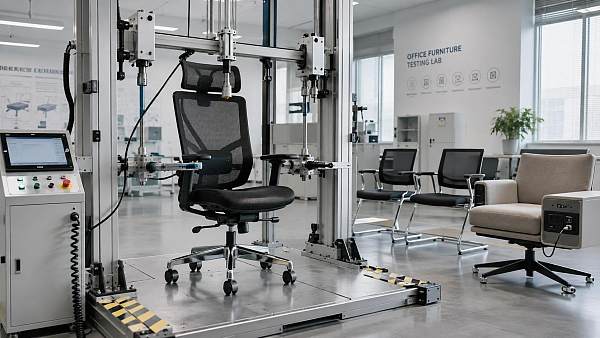
Testing standards do not guarantee that every user will love a chair, but they do provide a baseline for safety, durability, and repeatable quality. In commercial office seating OEM, this is essential for reducing procurement risk.
Why Compliance Matters in Commercial Projects
For global operators and sourcing managers, alignment with recognized standards such as BIFMA, CE-related requirements, or other applicable market norms helps verify that chairs can withstand repeated use under specified conditions.
This matters especially in chain rollouts, developer-led fit-outs, and multi-country procurement programs where 50, 200, or 1,000 units may need consistent specification and predictable service performance.
User-Relevant Tests to Ask About
Not every buyer needs laboratory detail, but several test areas directly affect long-term comfort and reliability. The table below connects common evaluation points with operational meaning.
For end users, the practical value of testing is that it reduces the chance of fast degradation. For operators, it improves confidence when comparing suppliers that appear similar in photos but differ greatly in real-world durability.
Comfort and Compliance Should Be Reviewed Together
A compliant chair can still feel poorly fitted if its geometry is wrong for the user group. Likewise, a comfortable sample chair may fail long-term if the mechanism, mesh, or upholstery lacks tested durability. The best commercial office seating OEM programs balance both sides.
How to Select the Right OEM Seating Program for Commercial Use
Selection should start with user behavior, not catalog language. A chair for a hot-desk area, design studio, manager office, and customer service floor may require different priorities even if the overall visual language stays consistent.
Match the Chair to the Use Scenario
- Task-intensive workstations: prioritize lumbar support, tilt quality, and 6 to 8 hour comfort
- Shared seating zones: prioritize intuitive controls, broad fit range, and durable surfaces
- Executive areas: prioritize refined materials, quiet mechanisms, and posture support without bulk
- Training or project rooms: prioritize mobility, easy maintenance, and moderate adjustment simplicity
Use a 5-Point Procurement Review
- Define average sitting duration by zone, such as under 2 hours, 2 to 4 hours, or 6+ hours.
- Identify user variability, including height range, shared usage, and task intensity.
- Request sample evaluation for at least 7 to 14 days instead of a brief showroom test.
- Review materials, mechanism details, and relevant testing documents.
- Confirm service parts, lead time, and replacement support before rollout.
Common Buying Mistakes
One common mistake is overvaluing visual minimalism at the expense of support range. Another is selecting the lowest unit price without considering the cost of premature failure, user complaints, or replacement within 18 to 24 months.
A third mistake is testing with decision-makers only. Actual operators and end users should be included in sample reviews because they experience the chair for the longest duration and often notice issues faster.
Questions to Ask an OEM Supplier
Ask how the chair is designed for multi-user environments, what adjustment points remain stable after repeated cycling, what replacement components are normally stocked, and what the usual production lead time looks like for standard versus customized configurations.
In many commercial projects, standard lead times may fall within 4 to 8 weeks, while custom upholstery, packaging, or branding programs can require additional time. Early confirmation prevents schedule pressure during office fit-out or chain deployment.
Maintenance, Service Life, and User Experience After Installation
Even well-designed seating loses value if maintenance is ignored. Long-term comfort depends on correct setup, periodic inspection, and replacement of wear items before performance declines become noticeable across the workspace.
Simple Maintenance Habits That Protect Comfort
- Check armrest firmness and tilt controls every 6 months in shared-use areas
- Clean mesh, fabric, or leather-contact surfaces using compatible methods
- Inspect casters for debris buildup and floor-type mismatch
- Retighten accessible fasteners where recommended by the supplier
- Replace worn gas lifts or casters before instability affects users
Why Post-Installation Setup Matters
Many users never adjust their chairs correctly. A short onboarding guide or 3-step setup card can significantly improve seat height, lumbar position, and arm support alignment. This is especially useful when rolling out 20 or more chairs at once.
For operators, that means fewer avoidable comfort complaints that are caused by incorrect setup rather than actual product defects. A good commercial office seating OEM partner should support this operational detail.
When to Repair and When to Replace
If the issue is limited to casters, gas lift performance, or arm pads, targeted replacement is usually more economical. If the seat structure, recline mechanism, or back support geometry has degraded, full replacement may be the better long-term decision.
A practical review cycle is every 12 months for standard office zones and every 6 months for heavy-use shared environments. This helps maintain comfort consistency and extends asset planning visibility.
Practical FAQ for Operators and End Users
Is mesh always better than foam for long hours?
Not always. Mesh can improve airflow and reduce heat buildup, but comfort depends on tension quality and frame design. High-quality foam may provide better pressure distribution if density and contouring are well executed.
How many adjustments are enough for commercial use?
For most task seating, 4 to 6 meaningful adjustments are sufficient if they are easy to use and structurally stable. More controls only help when users can understand and benefit from them.
How long should a commercial chair remain comfortable?
Actual service life varies by usage intensity, but buyers should expect stable daily performance over several years, not just initial comfort. This is why testing, materials, and maintenance planning all matter in commercial office seating OEM.
Long-term comfort is built through ergonomic fit, durable materials, reliable adjustment systems, and verified performance under commercial conditions. For operators and users, the best seating choice is one that stays supportive through repeated use, not just one that looks appealing in a specification sheet.
G-BCE helps commercial architects, sourcing directors, and workspace operators evaluate seating with a broader technical and supply-chain perspective, connecting product comfort to durability, standards alignment, and procurement confidence. To compare options, refine your specification, or get a tailored commercial office seating OEM solution, contact us today and explore more informed sourcing strategies.
News Recommendations
 How to choose an ultra bright waterproof window display for storefronts
![51a6ab95581761cc26f4318be6520c15]()
Aris Katos
Future of Carbide Coatings
 How to verify suppliers on a trade portal for global sourcing
![51a6ab95581761cc26f4318be6520c15]()
Aris Katos
Future of Carbide Coatings
 How RoHS requirements should be stated in product specifications
![51a6ab95581761cc26f4318be6520c15]()
Aris Katos
Future of Carbide Coatings
 What affects the lead time for custom retail counter displays?
![51a6ab95581761cc26f4318be6520c15]()
Aris Katos
Future of Carbide Coatings
 What consumer packaging USA importers need to verify before ordering
![51a6ab95581761cc26f4318be6520c15]()
Aris Katos
Future of Carbide Coatings
 How commercial spaces interiors shape customer dwell time
![51a6ab95581761cc26f4318be6520c15]()
Aris Katos
Future of Carbide Coatings
 How LED commercial lighting design reduces glare in retail spaces
![51a6ab95581761cc26f4318be6520c15]()
Aris Katos
Future of Carbide Coatings
 How industrial technology information improves RFID inventory accuracy
![51a6ab95581761cc26f4318be6520c15]()
Aris Katos
Future of Carbide Coatings
 When drip garden watering systems make more sense than sprinklers
![51a6ab95581761cc26f4318be6520c15]()
Aris Katos
Future of Carbide Coatings
 When category comparison improves sourcing for industrial applications
![51a6ab95581761cc26f4318be6520c15]()
Aris Katos
Future of Carbide Coatings
 Industrial application guidance for selecting the right LED lighting
![51a6ab95581761cc26f4318be6520c15]()
Aris Katos
Future of Carbide Coatings
 Which commercial architecture standards apply to European retail fit-outs?
![51a6ab95581761cc26f4318be6520c15]()
Aris Katos
Future of Carbide Coatings
 How to verify FDA requirements for maternity care products
![51a6ab95581761cc26f4318be6520c15]()
Aris Katos
Future of Carbide Coatings
 How to verify BPA-free claims for food-contact products
![51a6ab95581761cc26f4318be6520c15]()
Aris Katos
Future of Carbide Coatings
 When does a European wholesale supplier suit modular office projects?
![51a6ab95581761cc26f4318be6520c15]()
Aris Katos
Future of Carbide Coatings
 When consumer ecosystem solutions improve the in-store shopping journey
![51a6ab95581761cc26f4318be6520c15]()
Aris Katos
Future of Carbide Coatings
 How a commercial developers network can reduce site selection risk
![51a6ab95581761cc26f4318be6520c15]()
Aris Katos
Future of Carbide Coatings
 How clear purchasing specifications prevent costly supplier deviations
![51a6ab95581761cc26f4318be6520c15]()
Aris Katos
Future of Carbide Coatings
 What an ISTA drop test lab checks before your packaging ships
![51a6ab95581761cc26f4318be6520c15]()
Aris Katos
Future of Carbide Coatings
 Which commercial furniture standards apply to workplace seating?
![51a6ab95581761cc26f4318be6520c15]()
Aris Katos
Future of Carbide Coatings
 How to evaluate smart lighting module OEM compatibility before sampling
![51a6ab95581761cc26f4318be6520c15]()
Aris Katos
Future of Carbide Coatings
 How to assess whether sustainable technology delivers real impact
![51a6ab95581761cc26f4318be6520c15]()
Aris Katos
Future of Carbide Coatings
 How to assess an OEM supplier’s quality control before ordering
![51a6ab95581761cc26f4318be6520c15]()
Aris Katos
Future of Carbide Coatings
 How consumer ecosystem solutions data can improve retail personalization
![51a6ab95581761cc26f4318be6520c15]()
Aris Katos
Future of Carbide Coatings
 When does consumer packaging design justify a higher product price?
![51a6ab95581761cc26f4318be6520c15]()
Aris Katos
Future of Carbide Coatings
 Supermarket Fixture Installation: Planning Layouts, Wiring, and Handover
![51a6ab95581761cc26f4318be6520c15]()
Aris Katos
Future of Carbide Coatings
 Automated Lighting and Smart Lighting Control in Bergerac: Key Project Considerations
![51a6ab95581761cc26f4318be6520c15]()
Aris Katos
Future of Carbide Coatings
 Segment Streetlight Controllers: Choosing Control Modes for Urban Roads
![51a6ab95581761cc26f4318be6520c15]()
Aris Katos
Future of Carbide Coatings
 IEC 62471-2 Explained: How to Assess Photobiological Risks in LED Lighting
![51a6ab95581761cc26f4318be6520c15]()
Aris Katos
Future of Carbide Coatings
 Food Grade Packaging Requirements by Product Type, Temperature, and Contact Risk
![51a6ab95581761cc26f4318be6520c15]()
Aris Katos
Future of Carbide Coatings
 Food Packaging Compliance Checklist: Tests, Records, and Labeling Before Shipment
![51a6ab95581761cc26f4318be6520c15]()
Aris Katos
Future of Carbide Coatings
 NSF Food Packaging Standards: When Certification Matters for Commercial Food Use
![51a6ab95581761cc26f4318be6520c15]()
Aris Katos
Future of Carbide Coatings
 FDA Food Grade Compliance: Which Materials and Documents Do Buyers Need?
![51a6ab95581761cc26f4318be6520c15]()
Aris Katos
Future of Carbide Coatings
 What Should a Food Grade Declaration Include for Packaging Compliance?
![51a6ab95581761cc26f4318be6520c15]()
Aris Katos
Future of Carbide Coatings
 Housewares Importing: How to Evaluate Suppliers, Costs, and Compliance Risks
![51a6ab95581761cc26f4318be6520c15]()
Aris Katos
Future of Carbide Coatings
 Why Freeze-Dried Fruit Ingredients Lose Crispness—and How to Prevent It
![51a6ab95581761cc26f4318be6520c15]()
Aris Katos
Future of Carbide Coatings
 What industry veterans look for before choosing a new supplier
![51a6ab95581761cc26f4318be6520c15]()
Aris Katos
Future of Carbide Coatings
 How material fatigue can shorten the service life of retail shelving
![51a6ab95581761cc26f4318be6520c15]()
Aris Katos
Future of Carbide Coatings
 What makes a global sourcing platform reliable for supplier verification?
![51a6ab95581761cc26f4318be6520c15]()
Aris Katos
Future of Carbide Coatings