Vietnam Mandates RFID in Hospitality Furniture from May 2026
Time
Click Count
Effective 1 May 2026, Vietnam will enforce a new regulatory requirement mandating that all imported hospitality furniture — including beds, desks, chairs, and built-in fixtures supplied to hotels, resorts, and serviced apartments — be pre-equipped with ISO 18000-63–compliant RFID asset tracking modules. The measure targets enhanced customs traceability, post-import inventory oversight, and anti-smuggling controls. It directly impacts exporters, component suppliers, and contract manufacturers serving the Vietnamese hospitality sector — particularly those based in China, Malaysia, and Vietnam’s domestic industrial zones.
Event Overview
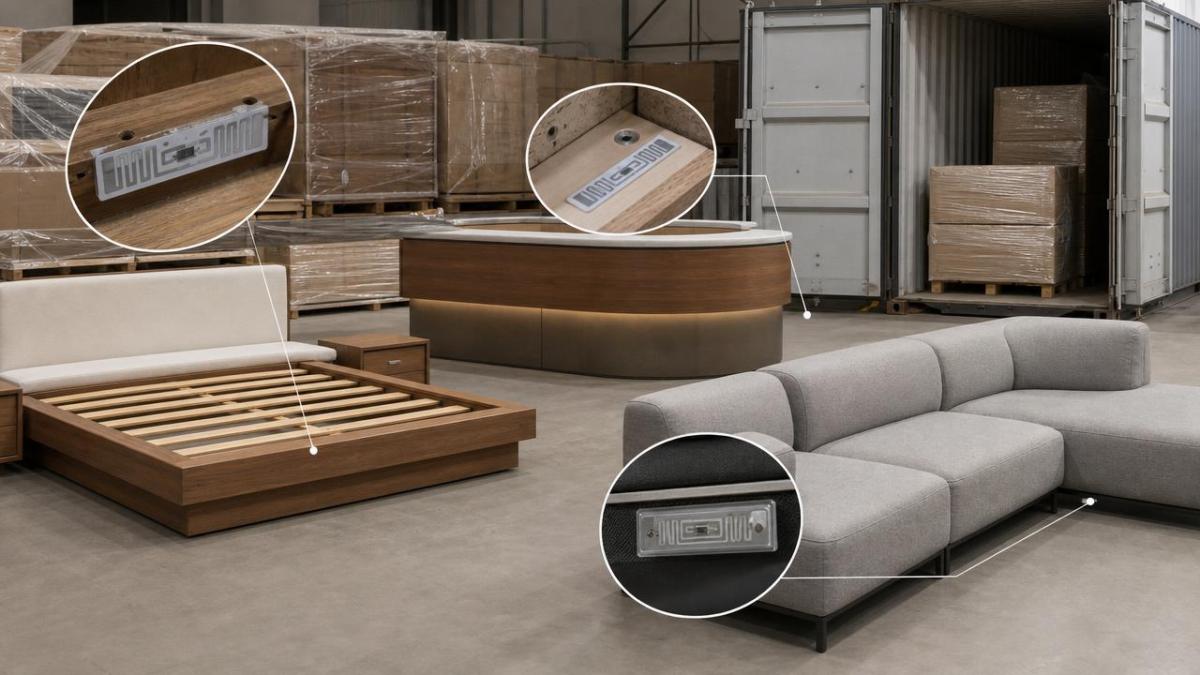
Vietnam’s General Department of Vietnam Customs, in coordination with the Ministry of Industry and Trade, announced the mandatory integration of passive UHF RFID tags (ISO/IEC 18000-63 compliant) into all hospitality furniture units entering the country for commercial use. The regulation takes effect on 1 May 2026, with no grace period for non-compliant shipments. Each unit must carry a unique, tamper-evident RFID tag readable at warehouse, port, and facility entry points; data must be interoperable with Vietnam’s National Asset Tracking Platform (NATP), launched in Q4 2025.
Industries Affected
Direct Exporters (e.g., Chinese OEMs & Trading Companies)
Exporters supplying hospitality furniture to Vietnam face immediate compliance risk: non-RFID–equipped consignments will be rejected at customs clearance. Impact manifests in three areas — documentation lead time (additional certification verification), unit-level tagging cost (estimated USD 1.20–2.80/unit), and delivery cycle extension (7–12 days for tag programming and validation). Firms without prior RFID integration workflows report higher rework rates during pre-shipment audits.
Raw Material & Component Suppliers (e.g., Foam, Upholstery, Metal Frame Producers)
Suppliers are indirectly but significantly affected due to upstream specification shifts. Tier-1 furniture assemblers now require RFID-ready substrates — e.g., laminated panels with embedded antenna zones, or foam blocks with pre-drilled tag cavities. This triggers revised material specs, new testing protocols (tag read-range consistency under compression/humidity), and renegotiation of MOQs. Suppliers lacking ISO 18000-63 design support may lose allocation to high-volume OEMs prioritizing Vietnam-bound lines.
Contract Manufacturers & Assemblers (e.g., Vietnam-based Joint Ventures & Domestic Factories)
Local assemblers face dual pressure: they must verify RFID functionality per unit before final packaging, adding line-side quality checkpoints; and absorb calibration costs for RFID encoding stations (approx. USD 15,000–22,000 per station). Those already certified under ISO/IEC 15408 (for secure tag provisioning) report faster ramp-up, while smaller workshops cite workforce upskilling gaps — especially in tag placement tolerance (±2 mm) and EPC memory writing accuracy.
Supply Chain Service Providers (e.g., Customs Brokers, Logistics Integrators, Digital Compliance Platforms)
Service providers must upgrade systems to validate RFID metadata (EPC, TID, user memory blocks) against NATP schema pre-clearance. Brokers now need RFID test reports signed by accredited labs (e.g., SGS, Bureau Veritas Vietnam); logistics platforms must integrate real-time tag-read logs from bonded warehouses. Providers offering ‘RFID-ready shipment packages’ — bundling tag sourcing, encoding, and certificate generation — are gaining market share, particularly among mid-tier exporters.
Key Focus Areas & Recommended Actions
Validate Tag Certification Pathway Early
Confirm whether your RFID module is certified by an ISO/IEC 17065–accredited body recognized by Vietnam Customs (e.g., VinaCert, QUATEST 3). Self-declared conformity is insufficient. Start lab engagement no later than Q3 2025 to avoid backlog delays.
Map Tag Integration into Existing BOM & Assembly Flow
Assess whether RFID embedding requires redesign (e.g., recessed mounting, conductive shielding) or can be retrofitted inline. Prioritize units with stable geometry (bed frames > upholstered sofas) for initial pilot batches. Document placement logic per SKU to support audit trails.
Secure Interoperability with Vietnam’s NATP
Register with the NATP developer portal (https://natp.gov.vn/developer) and obtain API keys for EPC data submission. Test data formatting using sandbox environment — mismatches in UTF-8 encoding or timestamp zone handling caused 63% of early-stage rejection cases in pilot trials (Q1 2025).
Editorial Perspective / Industry Observation
Observably, this regulation is less about surveillance than about infrastructure modernization: Vietnam’s hospitality sector accounts for over 38% of annual furniture imports, yet historically suffered from fragmented asset visibility across multi-property operators. Analysis shows the RFID mandate aligns with broader ASEAN digital customs harmonization efforts — notably the ASEAN Single Window (ASW) Phase III rollout scheduled for late 2026. From industry perspective, the rule functions more as a catalyst for export discipline than a trade barrier: firms already investing in digital twin-enabled manufacturing (e.g., real-time BOM + tag mapping) report 22–35% faster order-to-clearance cycles in Vietnam versus peers relying on manual compliance.
Conclusion
This policy marks a structural shift — not merely a technical add-on. It signals Vietnam’s intent to treat imported capital goods as digitally native assets from entry onward. For global suppliers, compliance is a near-term operational necessity; longer term, it serves as a litmus test for scalability in increasingly data-conditioned emerging markets. A rational interpretation is that the regulation favors vertically integrated players with embedded digital capabilities — but does not preclude agile SMEs that partner strategically with certified tag integrators and compliance platforms.
Source Attribution & Ongoing Monitoring
Primary source: Circular No. 12/2025/TT-BCT issued by Vietnam’s Ministry of Industry and Trade (published 15 October 2025); supporting technical annexes published by General Department of Vietnam Customs (Decision No. 2179/QD-TCHQ, 28 November 2025). Key items under observation: (1) final NATP API versioning timeline; (2) list of accredited RFID testing labs updated quarterly; (3) potential extension of scope to include second-hand hospitality furniture (currently excluded but flagged for review in Q2 2026).
News Recommendations
 When commercial aluminum storefronts make sense for a retail renovation
![51a6ab95581761cc26f4318be6520c15]()
Aris Katos
Future of Carbide Coatings
 What makes LED lights durable in high-use commercial spaces?
![51a6ab95581761cc26f4318be6520c15]()
Aris Katos
Future of Carbide Coatings
 Which industry categories offer the strongest export potential in Latin America?
![51a6ab95581761cc26f4318be6520c15]()
Aris Katos
Future of Carbide Coatings
 How to choose an ultra bright waterproof window display for storefronts
![51a6ab95581761cc26f4318be6520c15]()
Aris Katos
Future of Carbide Coatings
 How to verify suppliers on a trade portal for global sourcing
![51a6ab95581761cc26f4318be6520c15]()
Aris Katos
Future of Carbide Coatings
 How RoHS requirements should be stated in product specifications
![51a6ab95581761cc26f4318be6520c15]()
Aris Katos
Future of Carbide Coatings
 What affects the lead time for custom retail counter displays?
![51a6ab95581761cc26f4318be6520c15]()
Aris Katos
Future of Carbide Coatings
 What consumer packaging USA importers need to verify before ordering
![51a6ab95581761cc26f4318be6520c15]()
Aris Katos
Future of Carbide Coatings
 How commercial spaces interiors shape customer dwell time
![51a6ab95581761cc26f4318be6520c15]()
Aris Katos
Future of Carbide Coatings
 How LED commercial lighting design reduces glare in retail spaces
![51a6ab95581761cc26f4318be6520c15]()
Aris Katos
Future of Carbide Coatings
 How industrial technology information improves RFID inventory accuracy
![51a6ab95581761cc26f4318be6520c15]()
Aris Katos
Future of Carbide Coatings
 When drip garden watering systems make more sense than sprinklers
![51a6ab95581761cc26f4318be6520c15]()
Aris Katos
Future of Carbide Coatings
 When category comparison improves sourcing for industrial applications
![51a6ab95581761cc26f4318be6520c15]()
Aris Katos
Future of Carbide Coatings
 Industrial application guidance for selecting the right LED lighting
![51a6ab95581761cc26f4318be6520c15]()
Aris Katos
Future of Carbide Coatings
 Which commercial architecture standards apply to European retail fit-outs?
![51a6ab95581761cc26f4318be6520c15]()
Aris Katos
Future of Carbide Coatings
 How to verify FDA requirements for maternity care products
![51a6ab95581761cc26f4318be6520c15]()
Aris Katos
Future of Carbide Coatings
 How to verify BPA-free claims for food-contact products
![51a6ab95581761cc26f4318be6520c15]()
Aris Katos
Future of Carbide Coatings
 When does a European wholesale supplier suit modular office projects?
![51a6ab95581761cc26f4318be6520c15]()
Aris Katos
Future of Carbide Coatings
 When consumer ecosystem solutions improve the in-store shopping journey
![51a6ab95581761cc26f4318be6520c15]()
Aris Katos
Future of Carbide Coatings
 How a commercial developers network can reduce site selection risk
![51a6ab95581761cc26f4318be6520c15]()
Aris Katos
Future of Carbide Coatings
 How clear purchasing specifications prevent costly supplier deviations
![51a6ab95581761cc26f4318be6520c15]()
Aris Katos
Future of Carbide Coatings
 What an ISTA drop test lab checks before your packaging ships
![51a6ab95581761cc26f4318be6520c15]()
Aris Katos
Future of Carbide Coatings
 Which commercial furniture standards apply to workplace seating?
![51a6ab95581761cc26f4318be6520c15]()
Aris Katos
Future of Carbide Coatings
 How to evaluate smart lighting module OEM compatibility before sampling
![51a6ab95581761cc26f4318be6520c15]()
Aris Katos
Future of Carbide Coatings
 How to assess whether sustainable technology delivers real impact
![51a6ab95581761cc26f4318be6520c15]()
Aris Katos
Future of Carbide Coatings
 How to assess an OEM supplier’s quality control before ordering
![51a6ab95581761cc26f4318be6520c15]()
Aris Katos
Future of Carbide Coatings
 How consumer ecosystem solutions data can improve retail personalization
![51a6ab95581761cc26f4318be6520c15]()
Aris Katos
Future of Carbide Coatings
 When does consumer packaging design justify a higher product price?
![51a6ab95581761cc26f4318be6520c15]()
Aris Katos
Future of Carbide Coatings
 Supermarket Fixture Installation: Planning Layouts, Wiring, and Handover
![51a6ab95581761cc26f4318be6520c15]()
Aris Katos
Future of Carbide Coatings
 Automated Lighting and Smart Lighting Control in Bergerac: Key Project Considerations
![51a6ab95581761cc26f4318be6520c15]()
Aris Katos
Future of Carbide Coatings
 Segment Streetlight Controllers: Choosing Control Modes for Urban Roads
![51a6ab95581761cc26f4318be6520c15]()
Aris Katos
Future of Carbide Coatings
 IEC 62471-2 Explained: How to Assess Photobiological Risks in LED Lighting
![51a6ab95581761cc26f4318be6520c15]()
Aris Katos
Future of Carbide Coatings
 Food Grade Packaging Requirements by Product Type, Temperature, and Contact Risk
![51a6ab95581761cc26f4318be6520c15]()
Aris Katos
Future of Carbide Coatings
 Food Packaging Compliance Checklist: Tests, Records, and Labeling Before Shipment
![51a6ab95581761cc26f4318be6520c15]()
Aris Katos
Future of Carbide Coatings
 NSF Food Packaging Standards: When Certification Matters for Commercial Food Use
![51a6ab95581761cc26f4318be6520c15]()
Aris Katos
Future of Carbide Coatings
 FDA Food Grade Compliance: Which Materials and Documents Do Buyers Need?
![51a6ab95581761cc26f4318be6520c15]()
Aris Katos
Future of Carbide Coatings
 What Should a Food Grade Declaration Include for Packaging Compliance?
![51a6ab95581761cc26f4318be6520c15]()
Aris Katos
Future of Carbide Coatings
 Housewares Importing: How to Evaluate Suppliers, Costs, and Compliance Risks
![51a6ab95581761cc26f4318be6520c15]()
Aris Katos
Future of Carbide Coatings
 Why Freeze-Dried Fruit Ingredients Lose Crispness—and How to Prevent It
![51a6ab95581761cc26f4318be6520c15]()
Aris Katos
Future of Carbide Coatings