Commercial Environments Design: What Actually Improves Store Flow
Time
Click Count
In commercial environments design, better store flow is not achieved by guesswork but by aligning layout logic, fixture placement, lighting, signage, and shopper behavior with operational goals. For project managers and engineering leads, the real advantage lies in creating spaces that move people efficiently, support brand experience, and improve long-term performance across retail, mixed-use, and high-traffic commercial settings.
What does “better store flow” actually mean in commercial environments design?
In practical terms, store flow is the way people enter, orient themselves, move through a space, pause at key zones, interact with products, and reach checkout or service points without friction. In strong commercial environments design, flow is not only about circulation width or aisle geometry. It also includes visual guidance, decision-making speed, queue behavior, accessibility, replenishment routes, and staff efficiency.
For project leaders, this matters because poor flow creates measurable losses. Shoppers skip product zones, congestion forms near promotional displays, checkout lines block browsing, and service teams spend more time solving avoidable spatial problems. By contrast, effective commercial environments design improves dwell time in the right locations, reduces dead corners, supports maintenance access, and makes merchandising easier to update.
The most useful way to define flow is by outcome. Ask whether the layout helps people do what the business needs them to do: discover, compare, select, pay, and return. If the answer is inconsistent across dayparts or traffic peaks, the design may look attractive but still underperform operationally.
Which design elements have the biggest impact on store flow?
Several factors shape movement, but not all of them have equal influence. In commercial environments design, the strongest drivers usually work together rather than independently. Layout planning sets the base logic, while fixtures, lighting, and signage reinforce or weaken that logic.
The first high-impact factor is entry transition. Customers need an immediate understanding of where they are, what the store offers, and where they should go next. Overloaded decompression zones, aggressive promotional clutter, or confusing entrance sightlines often reduce orientation in the first few seconds.
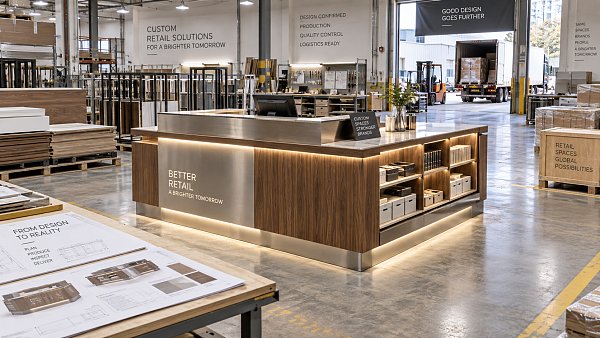
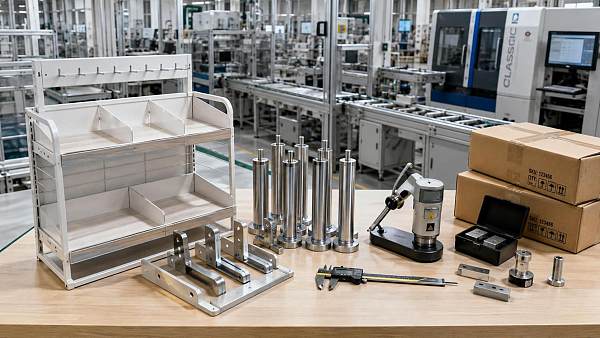
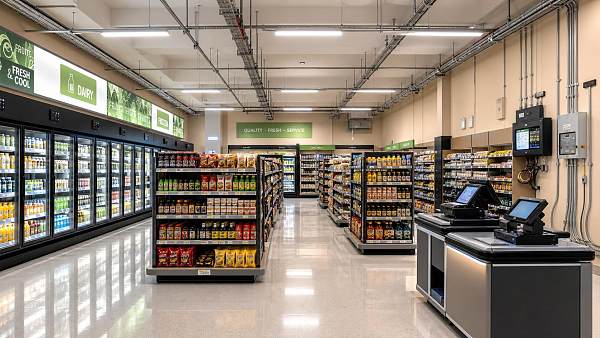
The second is fixture placement. Gondolas, tables, service desks, and display walls should guide behavior rather than interrupt it. Poorly placed fixtures create bottlenecks, cut off sightlines, and force unnatural path changes. High-performing commercial environments design treats fixtures as traffic tools as much as merchandising tools.
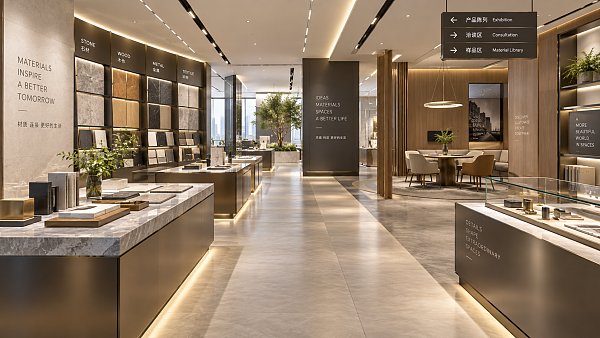
The third factor is layered wayfinding. Signage, material contrast, lighting emphasis, and digital touchpoints should work together. Customers should not need to stop repeatedly to figure out categories, service areas, or checkout direction.

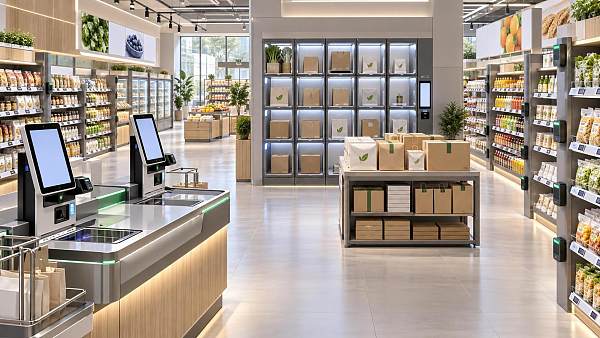
The fourth is checkout and service positioning. If payment, pickup, returns, consultation, or self-service zones are placed without considering queue spillover, the entire floor can become unstable during busy periods. This is especially important in mixed-use commercial settings where retail interfaces with food, hospitality, or public circulation.
Quick judgment table: what usually improves flow most?
How should project managers evaluate commercial environments design before construction starts?
A common mistake is reviewing design packages mainly for finishes, aesthetics, or budget line items. For project managers, the better approach is to assess commercial environments design as an operational system. Start with circulation logic. Where do customers enter, slow down, cross paths, and make decisions? Then compare that to service, replenishment, safety, and maintenance routes.
Next, test the design against peak scenarios. A layout that works during moderate traffic may fail during promotions, seasonal surges, or mixed-use overlap periods. Engineering leads should review turning radii, queue depth, fixture edge conditions, lighting maintenance access, power distribution for smart retail devices, and compatibility with required standards such as UL, CE, or BIFMA depending on the component category.
It is also useful to ask whether the plan supports future updates. Strong commercial environments design is not frozen. Product categories change, digital interfaces evolve, and sustainability targets become stricter. Modular fixture systems, adaptable lighting tracks, flexible signage integration, and durable materials typically deliver better lifecycle value than visually impressive but rigid solutions.
What should be confirmed in pre-construction review?
Before sign-off, confirm five practical points: whether sightlines support key merchandise and service zones, whether circulation remains legible during queue formation, whether staff can replenish without disrupting customers, whether smart devices and POS infrastructure fit the layout, and whether lighting and signage reinforce the intended customer journey. These checks often reveal hidden risks earlier than visual mockups do.
Does better store flow mean pushing customers through faster?
Not necessarily. One of the most persistent misunderstandings in commercial environments design is treating flow as pure speed. In reality, better flow means reducing unproductive friction while preserving productive engagement. A luxury showroom, premium beauty counter, or consultation-led store may intentionally slow customers in key experience zones. A convenience-focused format may prioritize speed and direct access. Both can have excellent flow if the movement pattern matches the business objective.
Project teams should therefore distinguish between hesitation and exploration. Hesitation comes from confusion, blocked paths, or visual overload. Exploration comes from clear choices, comfortable spacing, and meaningful product storytelling. Effective commercial environments design removes the first and supports the second.
This distinction is especially important in high-traffic environments. If all zones are optimized only for throughput, the space may become efficient but forgettable. If all zones are optimized only for experience, the operation may collapse under volume. The right balance depends on merchandise type, dwell expectations, staffing model, and service complexity.
What are the most common design mistakes that hurt flow in commercial settings?
Many issues come from treating individual components in isolation. A beautiful fixture package can still fail if it ignores path continuity. Smart screens can create distraction instead of guidance. Lighting can make merchandise pop while making navigation harder. In commercial environments design, local optimization often damages overall performance.
One frequent mistake is overfilling the floor. Teams try to maximize display density, but excessive fixtures reduce visibility, tighten movement, and increase collision points. Another is weak zoning. When product categories, service desks, and promotional islands compete without a clear hierarchy, customer behavior becomes less predictable and staff intervention increases.
A third mistake is underestimating support functions. Storage access, waste handling, maintenance paths, and digital hardware servicing are often treated as back-of-house issues, yet they directly affect front-of-house flow. If replenishment carts need to cross major customer routes or if power access forces awkward equipment placement, the space loses efficiency quickly.
Finally, some teams copy layout trends from another market or format without validating local shopper behavior. Commercial environments design should be benchmarked, but not blindly duplicated. Cultural shopping patterns, basket size, payment habits, and accessibility expectations all influence what “good flow” looks like.
How do lighting, signage, and smart retail tools improve commercial environments design?
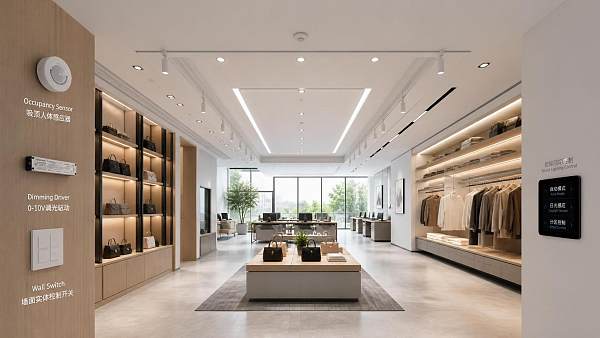
These elements improve flow when they reduce cognitive load. Lighting should create hierarchy, not just brightness. Customers should be able to detect destination zones, focal displays, service counters, and transition points at a glance. Accent lighting can pull movement forward, while consistent ambient lighting supports comfort and legibility.
Signage is most effective when it answers practical questions early: what is here, where should I go, what can I do next? Good wayfinding in commercial environments design uses layered communication, from overhead direction to shelf-level confirmation to digital prompts. It should serve first-time visitors as well as repeat shoppers who want speed.
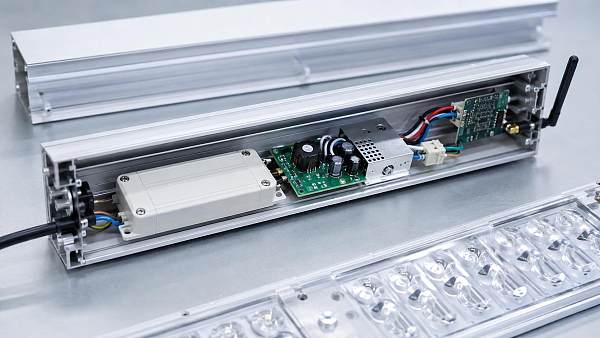
Smart retail tools can further improve decision speed and reduce friction, but only if they are integrated physically and operationally. Self-checkout, AI-enabled POS, digital price display, pickup notification, and occupancy sensing can all support better store flow. However, they should not be inserted as isolated technology features. Their location, power, maintenance access, user interface visibility, and queue impact must be planned from the start.
What implementation factors matter most for cost, timeline, and long-term performance?
From a delivery perspective, the best commercial environments design is one that remains buildable, maintainable, and adaptable. Cost control does not mean reducing every specification. It means investing where performance compounds over time. Durable fixture systems, standards-compliant hardware, efficient lighting infrastructure, and sustainable materials often reduce replacement cycles and service disruption.
Timeline risk usually increases when design intent and technical coordination are disconnected. For example, custom signage without installation logic, smart devices without coordinated power and data planning, or imported fixtures without compliance verification can delay procurement and commissioning. This is where a benchmarking-driven approach adds value. Comparing components against international standards and proven deployment conditions helps teams reduce uncertainty before orders are placed.
Long-term performance should also be measured beyond opening day. Ask how the space will perform after six months of traffic, seasonal resets, and staffing changes. Commercial environments design that supports modular updates, cleaner maintenance routines, and stable customer navigation tends to outperform more theatrical concepts that age poorly under operational pressure.
What should teams ask before choosing a design direction or supplier?
If you are selecting a concept, fixture package, or implementation partner, the first question is not simply whether the proposal looks modern. Ask whether it improves circulation clarity, supports merchandise logic, fits real shopper behavior, and remains practical for installation and maintenance. In commercial environments design, visual appeal should confirm the flow strategy, not replace it.
Project managers and engineering leads should also confirm whether the supplier understands the full commercial ecosystem: fixtures, digital systems, signage, lighting, materials compliance, and supply chain coordination. This cross-functional understanding is essential when spaces need both aesthetic consistency and measurable operational reliability.
If you need to move from concept to execution, it is wise to begin with a focused discussion around traffic patterns, category zoning, queue scenarios, standards compliance, modularity, maintenance access, and rollout schedule. Those questions will reveal much faster than a mood board whether a proposed commercial environments design can actually improve store flow in your specific setting.
News Recommendations
 How to choose an ultra bright waterproof window display for storefronts
![51a6ab95581761cc26f4318be6520c15]()
Aris Katos
Future of Carbide Coatings
 How to verify suppliers on a trade portal for global sourcing
![51a6ab95581761cc26f4318be6520c15]()
Aris Katos
Future of Carbide Coatings
 How RoHS requirements should be stated in product specifications
![51a6ab95581761cc26f4318be6520c15]()
Aris Katos
Future of Carbide Coatings
 What affects the lead time for custom retail counter displays?
![51a6ab95581761cc26f4318be6520c15]()
Aris Katos
Future of Carbide Coatings
 What consumer packaging USA importers need to verify before ordering
![51a6ab95581761cc26f4318be6520c15]()
Aris Katos
Future of Carbide Coatings
 How commercial spaces interiors shape customer dwell time
![51a6ab95581761cc26f4318be6520c15]()
Aris Katos
Future of Carbide Coatings
 How LED commercial lighting design reduces glare in retail spaces
![51a6ab95581761cc26f4318be6520c15]()
Aris Katos
Future of Carbide Coatings
 How industrial technology information improves RFID inventory accuracy
![51a6ab95581761cc26f4318be6520c15]()
Aris Katos
Future of Carbide Coatings
 When drip garden watering systems make more sense than sprinklers
![51a6ab95581761cc26f4318be6520c15]()
Aris Katos
Future of Carbide Coatings
 When category comparison improves sourcing for industrial applications
![51a6ab95581761cc26f4318be6520c15]()
Aris Katos
Future of Carbide Coatings
 Industrial application guidance for selecting the right LED lighting
![51a6ab95581761cc26f4318be6520c15]()
Aris Katos
Future of Carbide Coatings
 Which commercial architecture standards apply to European retail fit-outs?
![51a6ab95581761cc26f4318be6520c15]()
Aris Katos
Future of Carbide Coatings
 How to verify FDA requirements for maternity care products
![51a6ab95581761cc26f4318be6520c15]()
Aris Katos
Future of Carbide Coatings
 How to verify BPA-free claims for food-contact products
![51a6ab95581761cc26f4318be6520c15]()
Aris Katos
Future of Carbide Coatings
 When does a European wholesale supplier suit modular office projects?
![51a6ab95581761cc26f4318be6520c15]()
Aris Katos
Future of Carbide Coatings
 When consumer ecosystem solutions improve the in-store shopping journey
![51a6ab95581761cc26f4318be6520c15]()
Aris Katos
Future of Carbide Coatings
 How a commercial developers network can reduce site selection risk
![51a6ab95581761cc26f4318be6520c15]()
Aris Katos
Future of Carbide Coatings
 How clear purchasing specifications prevent costly supplier deviations
![51a6ab95581761cc26f4318be6520c15]()
Aris Katos
Future of Carbide Coatings
 What an ISTA drop test lab checks before your packaging ships
![51a6ab95581761cc26f4318be6520c15]()
Aris Katos
Future of Carbide Coatings
 Which commercial furniture standards apply to workplace seating?
![51a6ab95581761cc26f4318be6520c15]()
Aris Katos
Future of Carbide Coatings
 How to evaluate smart lighting module OEM compatibility before sampling
![51a6ab95581761cc26f4318be6520c15]()
Aris Katos
Future of Carbide Coatings
 How to assess whether sustainable technology delivers real impact
![51a6ab95581761cc26f4318be6520c15]()
Aris Katos
Future of Carbide Coatings
 How to assess an OEM supplier’s quality control before ordering
![51a6ab95581761cc26f4318be6520c15]()
Aris Katos
Future of Carbide Coatings
 How consumer ecosystem solutions data can improve retail personalization
![51a6ab95581761cc26f4318be6520c15]()
Aris Katos
Future of Carbide Coatings
 When does consumer packaging design justify a higher product price?
![51a6ab95581761cc26f4318be6520c15]()
Aris Katos
Future of Carbide Coatings
 Supermarket Fixture Installation: Planning Layouts, Wiring, and Handover
![51a6ab95581761cc26f4318be6520c15]()
Aris Katos
Future of Carbide Coatings
 Automated Lighting and Smart Lighting Control in Bergerac: Key Project Considerations
![51a6ab95581761cc26f4318be6520c15]()
Aris Katos
Future of Carbide Coatings
 Segment Streetlight Controllers: Choosing Control Modes for Urban Roads
![51a6ab95581761cc26f4318be6520c15]()
Aris Katos
Future of Carbide Coatings
 IEC 62471-2 Explained: How to Assess Photobiological Risks in LED Lighting
![51a6ab95581761cc26f4318be6520c15]()
Aris Katos
Future of Carbide Coatings
 Food Grade Packaging Requirements by Product Type, Temperature, and Contact Risk
![51a6ab95581761cc26f4318be6520c15]()
Aris Katos
Future of Carbide Coatings
 Food Packaging Compliance Checklist: Tests, Records, and Labeling Before Shipment
![51a6ab95581761cc26f4318be6520c15]()
Aris Katos
Future of Carbide Coatings
 NSF Food Packaging Standards: When Certification Matters for Commercial Food Use
![51a6ab95581761cc26f4318be6520c15]()
Aris Katos
Future of Carbide Coatings
 FDA Food Grade Compliance: Which Materials and Documents Do Buyers Need?
![51a6ab95581761cc26f4318be6520c15]()
Aris Katos
Future of Carbide Coatings
 What Should a Food Grade Declaration Include for Packaging Compliance?
![51a6ab95581761cc26f4318be6520c15]()
Aris Katos
Future of Carbide Coatings
 Housewares Importing: How to Evaluate Suppliers, Costs, and Compliance Risks
![51a6ab95581761cc26f4318be6520c15]()
Aris Katos
Future of Carbide Coatings
 Why Freeze-Dried Fruit Ingredients Lose Crispness—and How to Prevent It
![51a6ab95581761cc26f4318be6520c15]()
Aris Katos
Future of Carbide Coatings
 What industry veterans look for before choosing a new supplier
![51a6ab95581761cc26f4318be6520c15]()
Aris Katos
Future of Carbide Coatings
 How material fatigue can shorten the service life of retail shelving
![51a6ab95581761cc26f4318be6520c15]()
Aris Katos
Future of Carbide Coatings
 What makes a global sourcing platform reliable for supplier verification?
![51a6ab95581761cc26f4318be6520c15]()
Aris Katos
Future of Carbide Coatings