Sustainable Materials for Packaging: Which Options Hold Up in Transit
Time
Click Count
Choosing sustainable materials for packaging is no longer just a branding decision—it is a quality, safety, and logistics issue. For QC and safety managers, the real challenge is identifying materials that reduce environmental impact while still protecting products through compression, vibration, moisture, and long-distance transit. This guide examines which options truly perform under shipping stress and where technical trade-offs matter most.
Why transit performance changes from one packaging scene to another
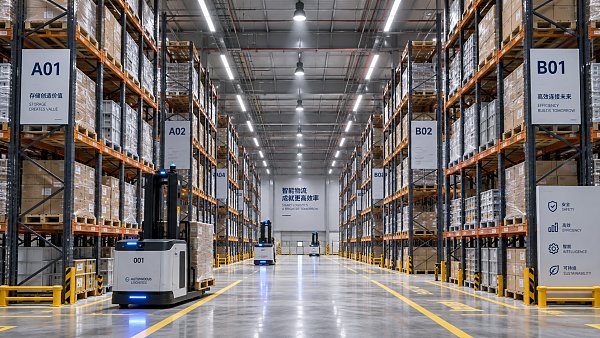
For quality control and safety teams, the phrase sustainable materials for packaging cannot be evaluated in isolation. A mailer that performs well for lightweight apparel may fail for glass bottles, electronics, or ambient food. The stress profile changes with every logistics scene: parcel networks create repeated drops and corner impacts, palletized freight creates stacking pressure, export shipments add humidity swings and long dwell times, and omnichannel retail often combines several of these conditions in one journey.
That is why material selection should start with use case mapping rather than sustainability claims alone. In practice, the best solution is usually not the “greenest-looking” substrate, but the one that achieves a verified balance between recycled content, recoverability, product protection, regulatory safety, and total damage cost. For G-BCE-aligned sourcing and benchmarking workflows, this means comparing packaging options against actual handling scenarios, failure modes, and compliance expectations.
A practical scene-based view of sustainable packaging options
Before choosing among paper, molded fiber, bioplastics, corrugated formats, or hybrid systems, QC managers should classify the shipping environment. The table below shows how common categories of sustainable materials for packaging align with typical transit conditions.
The main lesson is simple: no single material wins every transport environment. Sustainable packaging success depends on matching the damage risk profile to the material’s real mechanical behavior, not to marketing language.
Scene 1: Parcel e-commerce needs lightweight protection, not just recyclability
In parcel networks, products face multiple touchpoints, conveyor transfers, random orientation, and frequent drops. This scene rewards lightweight sustainable materials for packaging, but only if they maintain puncture resistance and enough cushioning to absorb impact. For apparel, books, and other low-fragility goods, paper mailers and right-sized recycled corrugated boxes often perform well. For glass, beauty products, or electronics, molded fiber inserts inside corrugated outers usually provide a better safety margin.
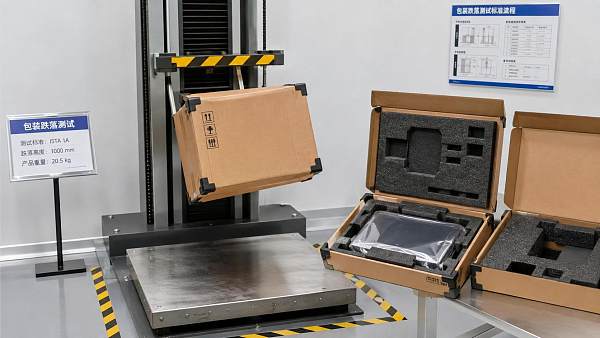
A common QC mistake is replacing plastic protective components with paper alternatives without retesting the full pack system. Paper may look equivalent at rest but fail during edge impact, moisture exposure, or compression after repeated handling. Parcel environments therefore require drop testing, seal integrity checks, and abuse simulation before any sustainability conversion is approved.

Scene 2: Export and long-distance freight demand moisture discipline
International shipping creates a different challenge. Products may sit in containers, warehouses, and ports for extended periods while facing humidity, temperature fluctuation, and heavy stacking. In this scene, sustainable materials for packaging must hold up structurally over time, not just during short-cycle delivery. Recycled corrugated board can still work well, but flute profile, board grade, coatings, and pallet configuration become critical.
Molded fiber may be suitable as internal protection, but it must be reviewed for moisture absorption and dimensional drift. Where moisture barrier is non-negotiable, flexible mono-material films or hybrid solutions may be more reliable than fully paper-based systems. Safety managers should also verify whether adhesives, inks, and barrier layers affect recyclability or compliance in destination markets. The sustainable choice in export is often the material that prevents product loss and repacking waste, even if it is not the simplest substrate on paper.
Scene 3: Retail-ready and premium consumer packaging must survive both transit and presentation
For premium brands and retail display programs, packaging has to deliver a dual function: shipping protection plus shelf appearance. Here, sustainable materials for packaging are judged not only by compression and shock performance, but also by finish quality, scuff resistance, dimensional consistency, and unboxing experience. High-recycled-content boards, molded pulp trays, and paper-based protective forms can work very well when engineered for precise fit.
However, this scene is less forgiving of deformation. A small warp, fiber dust issue, or edge crush can damage brand perception even if the product remains intact. QC teams should inspect not just pass/fail transit outcomes, but also cosmetic thresholds after shipping. For retail-facing programs, sustainable packaging should be benchmarked against appearance retention standards in addition to mechanical protection.
Scene 4: Food, personal care, and sensitive goods require safety compatibility first
When products have direct or indirect contact implications, material sustainability must be filtered through safety compliance. This is especially relevant for food, personal care, wellness products, and household chemicals. In these scenes, sustainable materials for packaging must be checked for migration risk, odor transfer, particulate generation, and compatibility with barrier needs. A highly recyclable paper format is not automatically suitable if the product is moisture-sensitive or aroma-sensitive.
For QC and safety managers, the correct sequence is: confirm contact safety and barrier requirements, validate transit durability, then optimize environmental profile. Compostable or bio-based materials can be appealing, but if they soften under storage heat, interact with product formulas, or fail seal integrity, the sustainability gain disappears through spoilage and returns.
How to judge fit by scene: a working checklist for QC and safety teams
A scene-based evaluation framework helps teams avoid costly material swaps. Instead of asking whether one option is “better,” ask whether it is better for the shipment profile you actually run.
Key questions before approving sustainable materials for packaging
- What are the dominant risks: drop, vibration, stacking, puncture, humidity, or contamination?
- Is the package used for direct parcel shipping, palletized freight, export, or retail display replenishment?
- Does the product have fragile edges, liquid contents, sharp corners, or temperature sensitivity?
- How much performance variation is acceptable across production lots with recycled or bio-based inputs?
- Can the chosen material pass relevant transit tests and still align with local recovery infrastructure?
Common misjudgments when companies switch to greener packaging
The most frequent failure is assuming that material substitution alone delivers sustainability. In reality, poor-fit sustainable materials for packaging can increase damage rates, reverse logistics, overboxing, and emergency repacks. That creates more waste, more emissions, and more safety incidents. Another common mistake is using lab claims without validating full-system performance. A strong board grade may still fail if closure method, insert geometry, or pallet pattern is weak.
Teams also underestimate regional recovery differences. A package may be technically recyclable but practically unrecovered in the target market. For global brands and sourcing directors, sustainability claims should therefore be tied to destination reality, not only material composition. This is one reason G-BCE-style benchmarking is valuable: it connects materials data, transit performance, and commercial deployment conditions into one decision framework.
What a stronger approval process looks like in real business use
For organizations managing broad product portfolios, approval should move through four layers. First, classify shipment scenes and product vulnerabilities. Second, shortlist sustainable materials for packaging that match those scenes. Third, validate them through transit, humidity, compression, and compatibility testing. Fourth, review total cost of quality, including returns, breakage, labor, and disposal outcomes. This approach prevents sustainability from being treated as a separate marketing project and places it where it belongs: inside risk management and supply chain design.
The strongest programs also maintain a material performance library by use case. Over time, this creates a technical benchmarking repository that helps buyers, packaging engineers, QC leaders, and safety managers make faster decisions with less trial-and-error. In a global ecosystem where retail, e-commerce, and export channels overlap, that discipline becomes a competitive advantage.
FAQ: scene-based questions about sustainable packaging performance
Are paper-based materials always the best sustainable option for shipping?
No. They are often effective, especially for low-fragility and recyclable systems, but they may underperform in wet, puncture-prone, or highly fragile transit scenes unless properly engineered.
Is molded fiber strong enough for electronics or premium goods?
Often yes, particularly for inserts and trays, but only when geometry, wall thickness, and fit are validated through real drop and vibration testing. Cosmetic integrity should also be checked for premium applications.
Do compostable materials automatically improve environmental performance?
Not automatically. If disposal systems are unavailable or transit failure increases product waste, the overall result may be worse than a durable recyclable alternative.
Final decision guidance for QC and safety managers
The best sustainable materials for packaging are the ones that fit the shipment scene, protect the product consistently, and align with realistic recovery pathways. For QC and safety professionals, the right question is not “Which material is most sustainable?” but “Which material is most sustainable for this exact transit profile, risk level, and compliance requirement?” Start with scene mapping, verify with testing, and benchmark options against actual business conditions. That is how sustainable packaging holds up in transit—and in procurement decisions that have to perform at scale.
News Recommendations
 How to choose an ultra bright waterproof window display for storefronts
![51a6ab95581761cc26f4318be6520c15]()
Aris Katos
Future of Carbide Coatings
 How to verify suppliers on a trade portal for global sourcing
![51a6ab95581761cc26f4318be6520c15]()
Aris Katos
Future of Carbide Coatings
 How RoHS requirements should be stated in product specifications
![51a6ab95581761cc26f4318be6520c15]()
Aris Katos
Future of Carbide Coatings
 What affects the lead time for custom retail counter displays?
![51a6ab95581761cc26f4318be6520c15]()
Aris Katos
Future of Carbide Coatings
 What consumer packaging USA importers need to verify before ordering
![51a6ab95581761cc26f4318be6520c15]()
Aris Katos
Future of Carbide Coatings
 How commercial spaces interiors shape customer dwell time
![51a6ab95581761cc26f4318be6520c15]()
Aris Katos
Future of Carbide Coatings
 How LED commercial lighting design reduces glare in retail spaces
![51a6ab95581761cc26f4318be6520c15]()
Aris Katos
Future of Carbide Coatings
 How industrial technology information improves RFID inventory accuracy
![51a6ab95581761cc26f4318be6520c15]()
Aris Katos
Future of Carbide Coatings
 When drip garden watering systems make more sense than sprinklers
![51a6ab95581761cc26f4318be6520c15]()
Aris Katos
Future of Carbide Coatings
 When category comparison improves sourcing for industrial applications
![51a6ab95581761cc26f4318be6520c15]()
Aris Katos
Future of Carbide Coatings
 Industrial application guidance for selecting the right LED lighting
![51a6ab95581761cc26f4318be6520c15]()
Aris Katos
Future of Carbide Coatings
 Which commercial architecture standards apply to European retail fit-outs?
![51a6ab95581761cc26f4318be6520c15]()
Aris Katos
Future of Carbide Coatings
 How to verify FDA requirements for maternity care products
![51a6ab95581761cc26f4318be6520c15]()
Aris Katos
Future of Carbide Coatings
 How to verify BPA-free claims for food-contact products
![51a6ab95581761cc26f4318be6520c15]()
Aris Katos
Future of Carbide Coatings
 When does a European wholesale supplier suit modular office projects?
![51a6ab95581761cc26f4318be6520c15]()
Aris Katos
Future of Carbide Coatings
 When consumer ecosystem solutions improve the in-store shopping journey
![51a6ab95581761cc26f4318be6520c15]()
Aris Katos
Future of Carbide Coatings
 How a commercial developers network can reduce site selection risk
![51a6ab95581761cc26f4318be6520c15]()
Aris Katos
Future of Carbide Coatings
 How clear purchasing specifications prevent costly supplier deviations
![51a6ab95581761cc26f4318be6520c15]()
Aris Katos
Future of Carbide Coatings
 What an ISTA drop test lab checks before your packaging ships
![51a6ab95581761cc26f4318be6520c15]()
Aris Katos
Future of Carbide Coatings
 Which commercial furniture standards apply to workplace seating?
![51a6ab95581761cc26f4318be6520c15]()
Aris Katos
Future of Carbide Coatings
 How to evaluate smart lighting module OEM compatibility before sampling
![51a6ab95581761cc26f4318be6520c15]()
Aris Katos
Future of Carbide Coatings
 How to assess whether sustainable technology delivers real impact
![51a6ab95581761cc26f4318be6520c15]()
Aris Katos
Future of Carbide Coatings
 How to assess an OEM supplier’s quality control before ordering
![51a6ab95581761cc26f4318be6520c15]()
Aris Katos
Future of Carbide Coatings
 How consumer ecosystem solutions data can improve retail personalization
![51a6ab95581761cc26f4318be6520c15]()
Aris Katos
Future of Carbide Coatings
 When does consumer packaging design justify a higher product price?
![51a6ab95581761cc26f4318be6520c15]()
Aris Katos
Future of Carbide Coatings
 Supermarket Fixture Installation: Planning Layouts, Wiring, and Handover
![51a6ab95581761cc26f4318be6520c15]()
Aris Katos
Future of Carbide Coatings
 Automated Lighting and Smart Lighting Control in Bergerac: Key Project Considerations
![51a6ab95581761cc26f4318be6520c15]()
Aris Katos
Future of Carbide Coatings
 Segment Streetlight Controllers: Choosing Control Modes for Urban Roads
![51a6ab95581761cc26f4318be6520c15]()
Aris Katos
Future of Carbide Coatings
 IEC 62471-2 Explained: How to Assess Photobiological Risks in LED Lighting
![51a6ab95581761cc26f4318be6520c15]()
Aris Katos
Future of Carbide Coatings
 Food Grade Packaging Requirements by Product Type, Temperature, and Contact Risk
![51a6ab95581761cc26f4318be6520c15]()
Aris Katos
Future of Carbide Coatings
 Food Packaging Compliance Checklist: Tests, Records, and Labeling Before Shipment
![51a6ab95581761cc26f4318be6520c15]()
Aris Katos
Future of Carbide Coatings
 NSF Food Packaging Standards: When Certification Matters for Commercial Food Use
![51a6ab95581761cc26f4318be6520c15]()
Aris Katos
Future of Carbide Coatings
 FDA Food Grade Compliance: Which Materials and Documents Do Buyers Need?
![51a6ab95581761cc26f4318be6520c15]()
Aris Katos
Future of Carbide Coatings
 What Should a Food Grade Declaration Include for Packaging Compliance?
![51a6ab95581761cc26f4318be6520c15]()
Aris Katos
Future of Carbide Coatings
 Housewares Importing: How to Evaluate Suppliers, Costs, and Compliance Risks
![51a6ab95581761cc26f4318be6520c15]()
Aris Katos
Future of Carbide Coatings
 Why Freeze-Dried Fruit Ingredients Lose Crispness—and How to Prevent It
![51a6ab95581761cc26f4318be6520c15]()
Aris Katos
Future of Carbide Coatings
 What industry veterans look for before choosing a new supplier
![51a6ab95581761cc26f4318be6520c15]()
Aris Katos
Future of Carbide Coatings
 How material fatigue can shorten the service life of retail shelving
![51a6ab95581761cc26f4318be6520c15]()
Aris Katos
Future of Carbide Coatings
 What makes a global sourcing platform reliable for supplier verification?
![51a6ab95581761cc26f4318be6520c15]()
Aris Katos
Future of Carbide Coatings