Lumen per watt benchmarks: what counts as efficient?
Time
Click Count
What qualifies as efficient lighting today goes far beyond raw lumen output per watt benchmarks. Buyers and specifiers also compare unified glare rating (UGR) standards, color rendering index (CRI) data, and control compatibility across solutions such as dali lighting control system, smart street light controller, and dimmable led driver supplier options. This guide helps researchers, operators, and procurement teams assess real-world performance, compliance, and sourcing value with greater confidence.
How should lumen per watt benchmarks be interpreted in real projects?
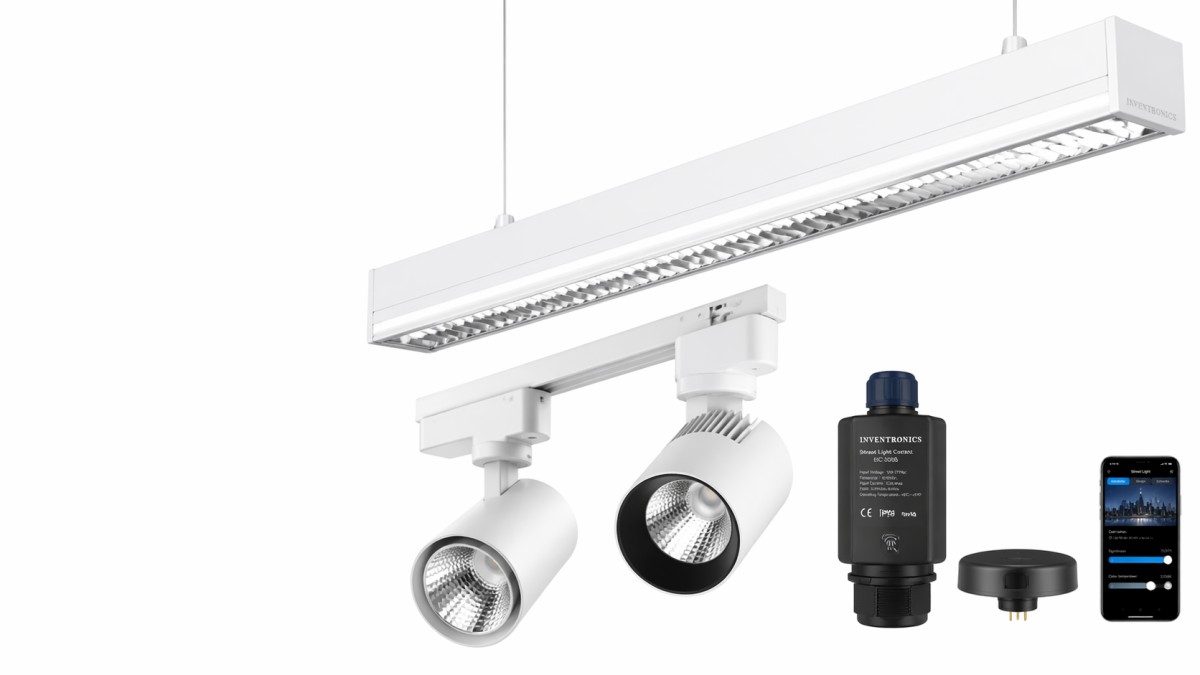
Lumen per watt is still one of the fastest ways to compare lighting efficiency, but it should never be treated as a stand-alone purchasing metric. In commercial lighting and signage projects, a fixture with very high lm/W may still underperform if it produces poor visual comfort, weak color accuracy, or limited control compatibility. For procurement teams, the right question is not simply “What is the highest efficacy?” but “What efficacy level is efficient for this application and operating profile?”
In typical market practice, many indoor commercial LED products are assessed across a broad range such as 90–160 lm/W at fixture level, while outdoor roadway or area lighting may target higher system efficacy depending on optics and mounting height. However, fixture-level values are more useful than chip-level claims because they reflect real thermal losses, driver losses, diffuser losses, and optical control. A sourcing decision made on package LED numbers alone can distort lifecycle expectations within the first 12–24 months of use.
For information researchers and business evaluators, benchmark interpretation also depends on environment. Retail shelves, offices, hospitality zones, parking areas, and smart streets all prioritize different outcomes. A back-of-house warehouse may accept lower CRI and moderate glare control to gain energy savings, while a premium showroom often requires stronger CRI performance and better beam uniformity even if final lm/W is slightly lower. Efficient lighting is therefore a balance between delivered light, user comfort, and operating economics.
This is where G-BCE adds value. By organizing benchmark logic across commercial furniture, smart retail technology, supply chain performance, commercial lighting, and signage, G-BCE helps specifiers compare not only nominal efficiency but also integration fit. In projects that combine luminaires, sensors, controls, signage, and store systems, evaluating lighting in isolation often creates hidden cost in commissioning, maintenance, and rework over a 2–4 week rollout window.
Three benchmark layers procurement teams should separate
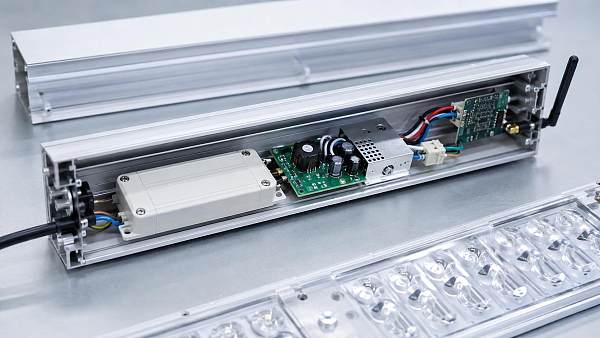
When teams review lumen per watt claims, they should separate at least 3 layers of performance: light source efficacy, luminaire efficacy, and application efficacy. Light source efficacy describes the LED package. Luminaire efficacy reflects the full fixture with driver and optics. Application efficacy asks whether the installed system achieves the target lux level with acceptable spacing, glare, and controls. The third layer is the one most closely tied to business value.
- Light source efficacy: useful for engineering reference, but not sufficient for purchasing because it excludes fixture losses and installation conditions.
- Luminaire efficacy: a stronger comparison basis for tenders, especially when paired with photometric files, driver specifications, and thermal data.
- Application efficacy: the most practical layer for operators, because it links fixture selection to lux targets, dimming behavior, occupancy patterns, and annual energy use.
A supplier may present a 170 lm/W LED engine, yet the finished luminaire could land below 120 lm/W after optical shaping and driver conversion. That is not necessarily poor performance. If the fixture delivers better UGR control, consistent CCT, and reliable dimming through a dali lighting control system, it may produce a stronger commercial result than a nominally higher-efficacy alternative.
What counts as efficient across retail, office, street, and signage applications?
Different applications reward different performance mixes, so “efficient” should be defined by task, occupancy pattern, and customer experience. In a modern retail environment, the target is often not the maximum lumen output but effective merchandising visibility, vertical illumination, and visual comfort across 10–16 operating hours per day. In offices, glare and color stability can outweigh the last 10–15 lm/W of efficacy improvement because user fatigue and productivity are also part of project value.
Outdoor projects follow another logic. A smart street light controller can reduce energy use significantly through scheduled dimming, adaptive operation, or remote fault monitoring. In such cases, a moderately efficient luminaire paired with robust controls may outperform a higher-lm/W fixture that lacks intelligent management. Procurement teams should evaluate the system, not only the fixture head, especially where maintenance crews manage hundreds or thousands of points.
Signage and decorative commercial lighting add another layer. Here, beam precision, color consistency, weather resistance, and driver reliability are often more decisive than top-end efficacy. A dimmable led driver supplier may be critical for façade accents, hospitality environments, and premium brand spaces where smooth dimming from 100% to 10% or lower matters more than a narrow efficacy headline.
The table below summarizes typical efficiency expectations by application type. These are not mandatory standards but practical benchmark ranges used during early screening. Final acceptance should always be based on full photometric review, environmental conditions, controls strategy, and relevant compliance requirements.
These ranges show why a single benchmark can mislead. For example, a retail spotlight at 95 lm/W with CRI 90+ and precise beam control may be the right choice, while the same efficacy in roadway lighting might be considered weak. Efficient lighting must be judged against the application’s visual task, operating schedule, and control logic.
Scenario questions buyers should ask
Before shortlisting vendors, teams should clarify four points: target lux level, daily operating hours, dimming or sensor strategy, and priority between comfort and energy reduction. These 4 inputs can eliminate unsuitable products early and shorten bid evaluation time by several days. They also help align technical review with finance and operations teams.
Typical use-case filters
- Retail chain rollouts: favor CRI, aiming accuracy, dimming compatibility, and fast repeatability across multiple stores.
- Office upgrades: prioritize UGR thresholds, flicker performance, and driver consistency for long-duration occupancy.
- Municipal or campus roads: compare luminaire efficacy together with smart street light controller functions and maintenance reporting.
- Brand signage: review driver footprint, outdoor protection, and color consistency over replacement cycles of 3–5 years.
For global sourcing teams, G-BCE’s cross-sector view is especially relevant because lighting performance often intersects with store fixtures, digital systems, and packaging presentation. The right benchmark is therefore operational, not purely electrical.
Which technical indicators matter beyond lumen per watt?
A serious technical review should include at least 5 additional indicators beyond lm/W: UGR, CRI, correlated color temperature, driver compatibility, and thermal management. For users and operators, these factors directly affect comfort, merchandising quality, and fault rates. For purchasers, they determine whether low initial price will convert into acceptable lifecycle performance.
UGR matters in offices, classrooms, healthcare waiting areas, and retail circulation zones where occupants remain in the field of view for extended periods. Lower glare can improve perceived quality even if luminaire efficacy drops slightly because of louver or diffuser design. CRI is equally important where product color, food presentation, finishes, and brand identity must be rendered accurately. Many buyers now separate basic utility lighting from presentation lighting instead of forcing one specification across every zone.
Control compatibility is another major screening point. A dali lighting control system can support grouping, dimming, scene setting, and future expansion, but only if driver selection is matched correctly. Likewise, a dimmable led driver supplier should be reviewed for protocol support, dimming depth, start-up behavior, and replacement consistency. Poor driver matching can create flicker, buzzing, or commissioning delays even when the luminaire itself appears efficient on paper.
The table below provides a procurement-oriented view of these parameters. It is designed for teams comparing multiple offers within a 2–3 round tender process and needing a practical shortlist method rather than an engineering-only specification sheet.
For business evaluators, this table reinforces a practical truth: efficient lighting is multidimensional. When G-BCE benchmarks commercial hardware against international reference frameworks such as UL, CE, and BIFMA-related project environments, the goal is not to elevate one metric but to clarify how technical trade-offs affect sourcing risk, installation quality, and user experience.
A simple 5-point technical review checklist
- Confirm whether efficacy is stated at source, module, or finished luminaire level.
- Check if CRI and UGR align with the intended task rather than a generic building-wide spec.
- Verify control protocol and dimming behavior, especially when working with a dimmable led driver supplier.
- Review ambient conditions, surge needs, and expected operating hours per day or per week.
- Request documentation that supports compliance, maintenance planning, and replacement consistency.
This checklist is especially useful in mixed portfolios where offices, retail units, outdoor zones, and branded touchpoints are sourced under one commercial program. It reduces the chance that procurement will prioritize a single metric while overlooking installation and performance fit.
How can buyers compare suppliers, cost, and compliance without oversimplifying?
Buyers often face three simultaneous pressures: limited budget, compressed delivery schedules, and high documentation expectations. In practice, comparing lighting offers only by unit price and lumen per watt is risky. A lower-priced offer may exclude driver details, photometric files, compatibility data, or realistic lead times. That creates uncertainty during sample review, pilot installation, and final commissioning, especially in cross-border supply chains.
A stronger procurement method is to score suppliers across 4 dimensions: technical fit, compliance readiness, delivery reliability, and service responsiveness. This approach suits information researchers and sourcing managers who need a defendable comparison model. It also works well for business evaluators preparing internal recommendations for capital expenditure or renovation approval.
Compliance should be treated as a practical workflow, not a box-ticking exercise. Depending on market destination and project type, teams may need evidence related to electrical safety, EMC expectations, labeling, material declarations, or performance documentation. While exact documentation varies, early alignment can prevent 7–15 day delays in export preparation, customs clarification, or site acceptance.
G-BCE is positioned to support this process because benchmarking across commercial lighting, signage, retail technology, and supply chain disciplines helps buyers see where quoted value is incomplete. A luminaire linked to a smart street light controller or integrated store control platform should be assessed for interoperability and service process, not only for product cost.
Supplier comparison factors that matter in B2B sourcing
- Documentation depth: Can the supplier provide datasheets, driver details, dimming information, and installation instructions in a usable format for technical review?
- Sample and pilot support: Is there a structured sample process for 1–3 pilot locations before full deployment across a larger network?
- Lead time visibility: Are typical cycles stated clearly, such as 2–4 weeks for standard production and longer for customized optics or finishes?
- Replacement continuity: Can drivers and optical components be matched in later batches to avoid visible inconsistency?
- Controls and integration readiness: Does the supplier understand how the fixture interacts with a dali lighting control system or other control architecture?
Common cost traps to avoid
The lowest quoted lm/W product is not always the lowest operating-cost choice. If poor optical control forces higher fixture counts, or if a weak driver design increases failure risk, total cost can rise over the first service cycle. Likewise, an aggressive value-engineered product may create inconsistency in color temperature or dimming behavior across stores, which matters for premium retail and branded environments.
A useful rule is to compare at least 3 cost layers: acquisition cost, commissioning cost, and maintenance cost over the first 24–36 months. That time window is often enough to expose the practical difference between a well-balanced commercial lighting package and a low-price offer built around incomplete specifications.
FAQ: what do researchers, operators, and procurement teams ask most often?
The questions below reflect common search intent from buyers and project teams who need clear answers before requesting samples, comparing bids, or standardizing specifications. They also show why lumen per watt benchmarks should be linked to actual project outcomes rather than isolated as a marketing number.
Is a higher lumen per watt value always better?
No. Higher efficacy can be beneficial, but only if visual comfort, color quality, and control compatibility remain suitable for the application. In offices and customer-facing interiors, better glare control or higher CRI may justify a lower efficacy band. In street lighting, a smart street light controller may create greater overall savings than chasing the highest fixture lm/W alone.
What is a reasonable benchmark for indoor commercial lighting?
For many indoor commercial applications, fixture-level values around 100–140 lm/W are common, but the right target depends on task and design intent. Retail accent lighting may sit below that range because beam precision and CRI are prioritized. General office lighting may land within that band while also needing suitable UGR performance and dimming stability over long operating hours.
When should a dali lighting control system be part of the selection process?
It should be considered early whenever the project needs zoning, scene setting, scheduled dimming, occupancy strategies, or future flexibility. If controls are discussed only after fixture selection, driver incompatibility can appear late and add rework. Early coordination is especially important in offices, chain retail programs, mixed-use developments, and high-end commercial refurbishments.
How do I evaluate a dimmable led driver supplier?
Check dimming protocol support, dimming range, start-up smoothness, compatibility with the chosen control system, and replacement consistency across future batches. Also review thermal conditions, service access, and documentation quality. For projects with 10+ hours of daily use, stable driver behavior can matter as much as nominal fixture efficiency.
What is the most common mistake in lighting procurement?
The most common mistake is selecting on price and headline efficacy without checking application fit. This can lead to glare complaints, poor merchandising, control issues, or early maintenance needs. A disciplined review covering 4 areas technical fit, controls, compliance, and lifecycle cost is usually more reliable than ranking offers by unit price alone.
Why work with G-BCE when benchmarking efficient lighting options?
Efficient lighting decisions now sit inside a larger commercial ecosystem. Chain operators, developers, sourcing directors, and brand teams do not only need fixture data. They need to understand how lighting interacts with store layouts, digital systems, signage, packaging presentation, and cross-border supply execution. G-BCE is built for that broader decision context.
Because G-BCE connects Asian manufacturing precision with the functional and aesthetic expectations of global commercial environments, buyers gain a more practical benchmarking lens. Instead of viewing lumen per watt in isolation, teams can compare performance, controls readiness, compliance considerations, and sourcing feasibility across multiple categories. This is especially useful when one project includes indoor luminaires, smart street light controller programs, signage lighting, and dimmable led driver supplier evaluation under one procurement framework.
If you are defining an efficient lighting benchmark for a retail rollout, office upgrade, commercial exterior, or mixed-use program, G-BCE can support the next step with focused guidance. You can discuss parameter confirmation, application-based product selection, control compatibility, typical lead times, certification expectations, sample planning, and quotation comparison. That helps reduce specification ambiguity before it turns into site-level cost.
Contact us when you need a structured review of lumen per watt benchmarks, UGR and CRI priorities, dali lighting control system matching, smart street light controller integration, or dimmable led driver supplier screening. A clear benchmarking framework at the beginning of the process can save time during tendering, avoid avoidable redesign, and improve confidence in final commercial lighting decisions.
- commercial furniture
- smart retail
- supply chain
- commercial lighting
- signage
- commercial hardware
- retail technology
- manufacturing precision
- commercial environments
- smart retail technology
- dali lighting control system
- dimmable led driver supplier
- smart street light controller
- lumen output per watt benchmarks
- color rendering index (CRI) data
- unified glare rating (UGR) standards
News Recommendations
 How to choose an ultra bright waterproof window display for storefronts
![51a6ab95581761cc26f4318be6520c15]()
Aris Katos
Future of Carbide Coatings
 How to verify suppliers on a trade portal for global sourcing
![51a6ab95581761cc26f4318be6520c15]()
Aris Katos
Future of Carbide Coatings
 How RoHS requirements should be stated in product specifications
![51a6ab95581761cc26f4318be6520c15]()
Aris Katos
Future of Carbide Coatings
 What affects the lead time for custom retail counter displays?
![51a6ab95581761cc26f4318be6520c15]()
Aris Katos
Future of Carbide Coatings
 What consumer packaging USA importers need to verify before ordering
![51a6ab95581761cc26f4318be6520c15]()
Aris Katos
Future of Carbide Coatings
 How commercial spaces interiors shape customer dwell time
![51a6ab95581761cc26f4318be6520c15]()
Aris Katos
Future of Carbide Coatings
 How LED commercial lighting design reduces glare in retail spaces
![51a6ab95581761cc26f4318be6520c15]()
Aris Katos
Future of Carbide Coatings
 How industrial technology information improves RFID inventory accuracy
![51a6ab95581761cc26f4318be6520c15]()
Aris Katos
Future of Carbide Coatings
 When drip garden watering systems make more sense than sprinklers
![51a6ab95581761cc26f4318be6520c15]()
Aris Katos
Future of Carbide Coatings
 When category comparison improves sourcing for industrial applications
![51a6ab95581761cc26f4318be6520c15]()
Aris Katos
Future of Carbide Coatings
 Industrial application guidance for selecting the right LED lighting
![51a6ab95581761cc26f4318be6520c15]()
Aris Katos
Future of Carbide Coatings
 Which commercial architecture standards apply to European retail fit-outs?
![51a6ab95581761cc26f4318be6520c15]()
Aris Katos
Future of Carbide Coatings
 How to verify FDA requirements for maternity care products
![51a6ab95581761cc26f4318be6520c15]()
Aris Katos
Future of Carbide Coatings
 How to verify BPA-free claims for food-contact products
![51a6ab95581761cc26f4318be6520c15]()
Aris Katos
Future of Carbide Coatings
 When does a European wholesale supplier suit modular office projects?
![51a6ab95581761cc26f4318be6520c15]()
Aris Katos
Future of Carbide Coatings
 When consumer ecosystem solutions improve the in-store shopping journey
![51a6ab95581761cc26f4318be6520c15]()
Aris Katos
Future of Carbide Coatings
 How a commercial developers network can reduce site selection risk
![51a6ab95581761cc26f4318be6520c15]()
Aris Katos
Future of Carbide Coatings
 How clear purchasing specifications prevent costly supplier deviations
![51a6ab95581761cc26f4318be6520c15]()
Aris Katos
Future of Carbide Coatings
 What an ISTA drop test lab checks before your packaging ships
![51a6ab95581761cc26f4318be6520c15]()
Aris Katos
Future of Carbide Coatings
 Which commercial furniture standards apply to workplace seating?
![51a6ab95581761cc26f4318be6520c15]()
Aris Katos
Future of Carbide Coatings
 How to evaluate smart lighting module OEM compatibility before sampling
![51a6ab95581761cc26f4318be6520c15]()
Aris Katos
Future of Carbide Coatings
 How to assess whether sustainable technology delivers real impact
![51a6ab95581761cc26f4318be6520c15]()
Aris Katos
Future of Carbide Coatings
 How to assess an OEM supplier’s quality control before ordering
![51a6ab95581761cc26f4318be6520c15]()
Aris Katos
Future of Carbide Coatings
 How consumer ecosystem solutions data can improve retail personalization
![51a6ab95581761cc26f4318be6520c15]()
Aris Katos
Future of Carbide Coatings
 When does consumer packaging design justify a higher product price?
![51a6ab95581761cc26f4318be6520c15]()
Aris Katos
Future of Carbide Coatings
 Supermarket Fixture Installation: Planning Layouts, Wiring, and Handover
![51a6ab95581761cc26f4318be6520c15]()
Aris Katos
Future of Carbide Coatings
 Automated Lighting and Smart Lighting Control in Bergerac: Key Project Considerations
![51a6ab95581761cc26f4318be6520c15]()
Aris Katos
Future of Carbide Coatings
 Segment Streetlight Controllers: Choosing Control Modes for Urban Roads
![51a6ab95581761cc26f4318be6520c15]()
Aris Katos
Future of Carbide Coatings
 IEC 62471-2 Explained: How to Assess Photobiological Risks in LED Lighting
![51a6ab95581761cc26f4318be6520c15]()
Aris Katos
Future of Carbide Coatings
 Food Grade Packaging Requirements by Product Type, Temperature, and Contact Risk
![51a6ab95581761cc26f4318be6520c15]()
Aris Katos
Future of Carbide Coatings
 Food Packaging Compliance Checklist: Tests, Records, and Labeling Before Shipment
![51a6ab95581761cc26f4318be6520c15]()
Aris Katos
Future of Carbide Coatings
 NSF Food Packaging Standards: When Certification Matters for Commercial Food Use
![51a6ab95581761cc26f4318be6520c15]()
Aris Katos
Future of Carbide Coatings
 FDA Food Grade Compliance: Which Materials and Documents Do Buyers Need?
![51a6ab95581761cc26f4318be6520c15]()
Aris Katos
Future of Carbide Coatings
 What Should a Food Grade Declaration Include for Packaging Compliance?
![51a6ab95581761cc26f4318be6520c15]()
Aris Katos
Future of Carbide Coatings
 Housewares Importing: How to Evaluate Suppliers, Costs, and Compliance Risks
![51a6ab95581761cc26f4318be6520c15]()
Aris Katos
Future of Carbide Coatings
 Why Freeze-Dried Fruit Ingredients Lose Crispness—and How to Prevent It
![51a6ab95581761cc26f4318be6520c15]()
Aris Katos
Future of Carbide Coatings
 What industry veterans look for before choosing a new supplier
![51a6ab95581761cc26f4318be6520c15]()
Aris Katos
Future of Carbide Coatings
 How material fatigue can shorten the service life of retail shelving
![51a6ab95581761cc26f4318be6520c15]()
Aris Katos
Future of Carbide Coatings
 What makes a global sourcing platform reliable for supplier verification?
![51a6ab95581761cc26f4318be6520c15]()
Aris Katos
Future of Carbide Coatings