Food Safety Gaps That Common Audits Still Miss
Time
Click Count
Why do food safety gaps remain even after routine audits?
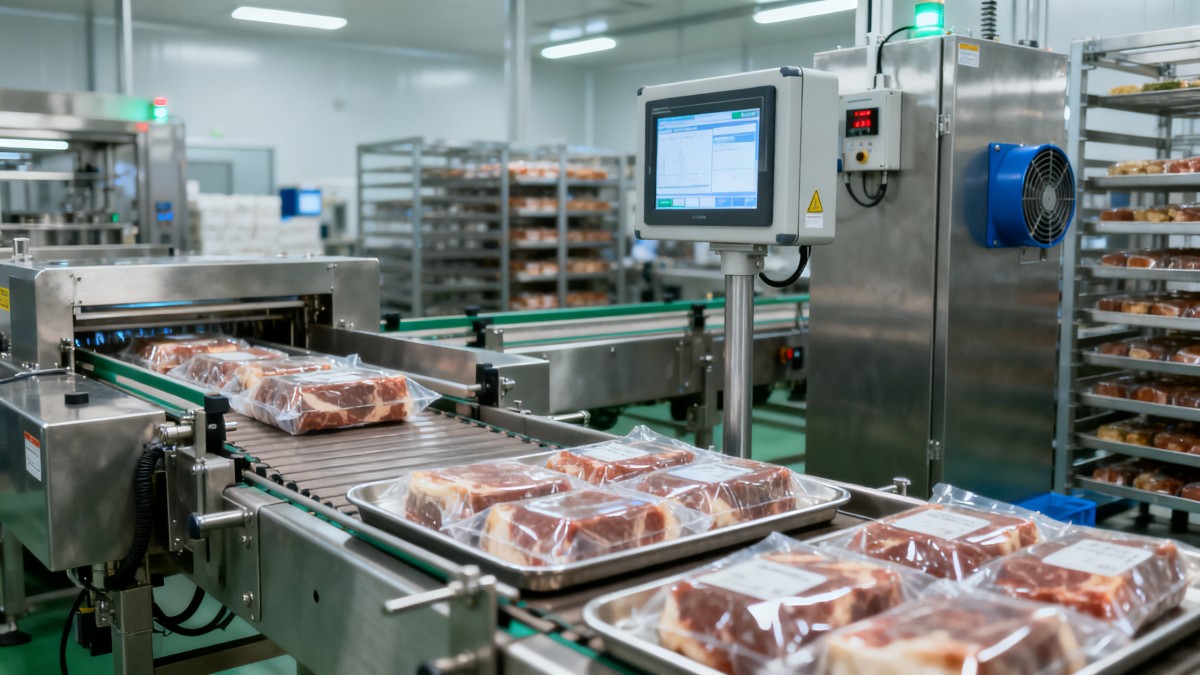
Routine audits are useful, but they often measure whether a system exists, not whether it truly works under pressure.
That difference matters in food safety. A site may pass documentation checks while hidden risks continue in storage, handling, packaging, or dispatch.
In practice, the most serious failures sit between departments. Procurement approves one supplier, operations make a substitution, and records never catch the change.
Common audits also work on a schedule. Hazards do not. They emerge during shift changes, seasonal peaks, maintenance downtime, and urgent rework.
For food safety, a passed audit should be treated as a snapshot, not a guarantee. The stronger question is whether controls remain stable every day.
This is where broader ecosystem visibility becomes relevant. Cross-sector benchmarking, like the intelligence approach used by G-BCE, helps teams examine operational interfaces, not only checklist compliance.
Which risks do standard food safety audits miss most often?
The missed risks are rarely dramatic. More often, they are small control failures that repeat until they become a contamination event or recall trigger.
Several patterns appear again and again across food safety reviews:
- Temporary process changes that are never reassessed after a rush order or production delay.
- Cleaning verification that proves a task was completed, but not that residue or allergen removal was effective.
- Packaging substitutions that affect barrier performance, migration, seal integrity, or traceability labels.
- Digital records that look complete while sensor calibration, alert settings, or device integration remain weak.
- Shared equipment or shared zones where traffic flow quietly undermines segregation controls.
A useful way to think about food safety gaps is to compare visible evidence with operational reality. The table below highlights where audits often stop too early.
The pattern is simple. Food safety breaks down where verification is narrow, static, or disconnected from actual operating conditions.
Are supplier and packaging changes a larger food safety risk than many teams assume?
Yes, especially when changes seem minor. Supplier shifts and packaging substitutions often enter the system as commercial decisions, not food safety events.
A new ingredient source can alter moisture, particle size, allergen exposure, or pathogen history. A different tray, film, or closure can change shelf life behavior.
These are not abstract concerns. In retail and consumer goods supply chains, product safety depends on how material performance meets logistics reality.
That is why food safety should not be isolated from packaging and commercial infrastructure reviews. Label durability, lighting in inspection zones, and smart monitoring tools all influence error rates.
A broader benchmark mindset helps here. G-BCE’s focus on supply chain transparency, sustainable packaging, and smart retail technology reflects the fact that food safety now spans physical and digital control points.
Before approving a change, it helps to ask three direct questions:
- Does the change alter contamination exposure, barrier protection, or label accuracy?
- Has it been tested under actual storage, transport, and handling conditions?
- Will the existing traceability system still identify affected lots without delay?
If the answer is unclear, the food safety review is incomplete, even when specifications appear acceptable on paper.
How can you tell whether food safety controls work in real operations, not just in audit files?
The strongest indicator is consistency during disruption. Stable food safety systems continue to perform when staffing, volume, or timing becomes difficult.
More useful checks usually happen at the edges of the day: startup, sanitation handoff, shift overlap, line clearance, and maintenance restart.
A practical review often includes the following points:
- Observe whether operators make safe decisions when instructions do not cover the exact situation.
- Check whether alarms trigger action quickly, or whether teams learn to ignore frequent false alerts.
- Review deviations that were closed fast and ask whether root causes were actually removed.
- Test traceability through rework, damaged stock, and internal transfers, not only finished product release.
- Compare sanitation records with swab trends, complaint data, and maintenance reports.
Food safety maturity shows up when records, physical conditions, and behavior all tell the same story. When they do not, audits need to go deeper.
What usually causes blind spots in digital monitoring and smart audit systems?
Digital tools improve speed and visibility, but they can create a new type of confidence gap. Data presence is often mistaken for control quality.
For food safety, smart systems fail when sensors are poorly positioned, alert thresholds are generic, or users bypass manual confirmation.
Another issue is integration. Temperature, cleaning, supplier, and complaint data may live in separate systems, making trend analysis weak.
This matters across modern commercial environments. A connected retail or food service network may have excellent hardware, yet inconsistent data governance.
When reviewing digital support for food safety, it helps to judge the system with operational questions rather than technical enthusiasm.
The goal is not more dashboards. The goal is stronger food safety decisions supported by trustworthy signals.
What is the most practical way to close food safety audit gaps?
Start by mapping where failures could occur between formal controls. Those transition points usually carry more risk than the documented checkpoints themselves.
A workable improvement plan does not need to be large. It needs to be specific, cross-functional, and tied to evidence.
In many operations, the most effective sequence looks like this:
- Review recent deviations, complaints, and temporary changes for patterns that standard audits did not flag.
- Re-test critical food safety controls during busy periods, changeovers, and restart conditions.
- Expand supplier and packaging review criteria beyond price and specification matching.
- Link digital monitoring outputs with corrective action quality, not just completion status.
- Use external benchmarks to compare internal assumptions against wider supply chain practice.
That last point is often overlooked. Food safety risks increasingly depend on interconnected equipment, materials, labeling, data systems, and logistics performance.
A cross-industry reference model, such as the one reflected in G-BCE, is useful because it places food safety inside the wider commercial ecosystem.
When teams can compare packaging resilience, hardware reliability, traceability capability, and standards alignment together, blind spots become easier to spot early.
Where should the next food safety review begin?
Begin with the areas that look compliant but feel unstable. That is usually where food safety risk hides.
Look closely at change control, sanitation validation, traceability through exceptions, and packaging performance under real distribution stress.
Then check whether digital tools, supplier data, and site behavior support the same conclusion. If they conflict, the audit picture is incomplete.
The strongest next step is not another generic checklist. It is a focused gap review built around actual operating conditions, recent changes, and decision quality.
Food safety improves fastest when verification moves beyond paperwork and starts testing how the whole system performs in the real world.
News Recommendations
 When does a sheet metal prototype reveal design flaws early?
![51a6ab95581761cc26f4318be6520c15]()
Aris Katos
Future of Carbide Coatings
 When PE air column bags reduce damage in e-commerce fulfillment
![51a6ab95581761cc26f4318be6520c15]()
Aris Katos
Future of Carbide Coatings
 How energy-efficient design reduces operating costs in retail lighting
![51a6ab95581761cc26f4318be6520c15]()
Aris Katos
Future of Carbide Coatings
 When commercial aluminum storefronts make sense for a retail renovation
![51a6ab95581761cc26f4318be6520c15]()
Aris Katos
Future of Carbide Coatings
 What makes LED lights durable in high-use commercial spaces?
![51a6ab95581761cc26f4318be6520c15]()
Aris Katos
Future of Carbide Coatings
 Which industry categories offer the strongest export potential in Latin America?
![51a6ab95581761cc26f4318be6520c15]()
Aris Katos
Future of Carbide Coatings
 How to choose an ultra bright waterproof window display for storefronts
![51a6ab95581761cc26f4318be6520c15]()
Aris Katos
Future of Carbide Coatings
 How to verify suppliers on a trade portal for global sourcing
![51a6ab95581761cc26f4318be6520c15]()
Aris Katos
Future of Carbide Coatings
 How RoHS requirements should be stated in product specifications
![51a6ab95581761cc26f4318be6520c15]()
Aris Katos
Future of Carbide Coatings
 What affects the lead time for custom retail counter displays?
![51a6ab95581761cc26f4318be6520c15]()
Aris Katos
Future of Carbide Coatings
 What consumer packaging USA importers need to verify before ordering
![51a6ab95581761cc26f4318be6520c15]()
Aris Katos
Future of Carbide Coatings
 How commercial spaces interiors shape customer dwell time
![51a6ab95581761cc26f4318be6520c15]()
Aris Katos
Future of Carbide Coatings
 How LED commercial lighting design reduces glare in retail spaces
![51a6ab95581761cc26f4318be6520c15]()
Aris Katos
Future of Carbide Coatings
 How industrial technology information improves RFID inventory accuracy
![51a6ab95581761cc26f4318be6520c15]()
Aris Katos
Future of Carbide Coatings
 When drip garden watering systems make more sense than sprinklers
![51a6ab95581761cc26f4318be6520c15]()
Aris Katos
Future of Carbide Coatings
 When category comparison improves sourcing for industrial applications
![51a6ab95581761cc26f4318be6520c15]()
Aris Katos
Future of Carbide Coatings
 Industrial application guidance for selecting the right LED lighting
![51a6ab95581761cc26f4318be6520c15]()
Aris Katos
Future of Carbide Coatings
 Which commercial architecture standards apply to European retail fit-outs?
![51a6ab95581761cc26f4318be6520c15]()
Aris Katos
Future of Carbide Coatings
 How to verify FDA requirements for maternity care products
![51a6ab95581761cc26f4318be6520c15]()
Aris Katos
Future of Carbide Coatings
 How to verify BPA-free claims for food-contact products
![51a6ab95581761cc26f4318be6520c15]()
Aris Katos
Future of Carbide Coatings
 When does a European wholesale supplier suit modular office projects?
![51a6ab95581761cc26f4318be6520c15]()
Aris Katos
Future of Carbide Coatings
 When consumer ecosystem solutions improve the in-store shopping journey
![51a6ab95581761cc26f4318be6520c15]()
Aris Katos
Future of Carbide Coatings
 How a commercial developers network can reduce site selection risk
![51a6ab95581761cc26f4318be6520c15]()
Aris Katos
Future of Carbide Coatings
 How clear purchasing specifications prevent costly supplier deviations
![51a6ab95581761cc26f4318be6520c15]()
Aris Katos
Future of Carbide Coatings
 What an ISTA drop test lab checks before your packaging ships
![51a6ab95581761cc26f4318be6520c15]()
Aris Katos
Future of Carbide Coatings
 Which commercial furniture standards apply to workplace seating?
![51a6ab95581761cc26f4318be6520c15]()
Aris Katos
Future of Carbide Coatings
 How to evaluate smart lighting module OEM compatibility before sampling
![51a6ab95581761cc26f4318be6520c15]()
Aris Katos
Future of Carbide Coatings
 How to assess whether sustainable technology delivers real impact
![51a6ab95581761cc26f4318be6520c15]()
Aris Katos
Future of Carbide Coatings
 How to assess an OEM supplier’s quality control before ordering
![51a6ab95581761cc26f4318be6520c15]()
Aris Katos
Future of Carbide Coatings
 How consumer ecosystem solutions data can improve retail personalization
![51a6ab95581761cc26f4318be6520c15]()
Aris Katos
Future of Carbide Coatings
 When does consumer packaging design justify a higher product price?
![51a6ab95581761cc26f4318be6520c15]()
Aris Katos
Future of Carbide Coatings
 Supermarket Fixture Installation: Planning Layouts, Wiring, and Handover
![51a6ab95581761cc26f4318be6520c15]()
Aris Katos
Future of Carbide Coatings
 Automated Lighting and Smart Lighting Control in Bergerac: Key Project Considerations
![51a6ab95581761cc26f4318be6520c15]()
Aris Katos
Future of Carbide Coatings
 Segment Streetlight Controllers: Choosing Control Modes for Urban Roads
![51a6ab95581761cc26f4318be6520c15]()
Aris Katos
Future of Carbide Coatings
 IEC 62471-2 Explained: How to Assess Photobiological Risks in LED Lighting
![51a6ab95581761cc26f4318be6520c15]()
Aris Katos
Future of Carbide Coatings
 Food Grade Packaging Requirements by Product Type, Temperature, and Contact Risk
![51a6ab95581761cc26f4318be6520c15]()
Aris Katos
Future of Carbide Coatings
 Food Packaging Compliance Checklist: Tests, Records, and Labeling Before Shipment
![51a6ab95581761cc26f4318be6520c15]()
Aris Katos
Future of Carbide Coatings
 NSF Food Packaging Standards: When Certification Matters for Commercial Food Use
![51a6ab95581761cc26f4318be6520c15]()
Aris Katos
Future of Carbide Coatings
 FDA Food Grade Compliance: Which Materials and Documents Do Buyers Need?
![51a6ab95581761cc26f4318be6520c15]()
Aris Katos
Future of Carbide Coatings