How to Choose a Compostable Mailer Manufacturer
Time
Click Count
Choosing the right compostable mailer manufacturer goes far beyond price—it affects product performance, compliance, brand credibility, and long-term sourcing efficiency. For buyers comparing biodegradable packaging wholesale options, the key is to assess material integrity, certification standards, production capacity, and supply chain transparency. This guide helps researchers, operators, and procurement teams identify reliable manufacturing partners with confidence.
What should you evaluate first when choosing a compostable mailer manufacturer?
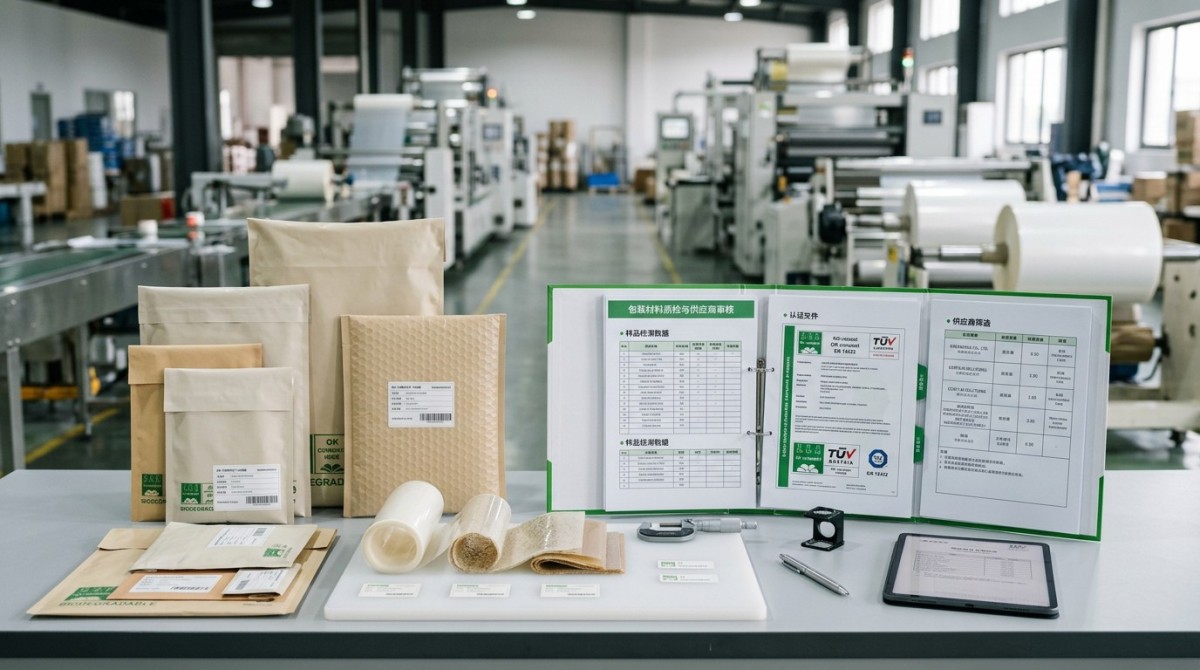
For most sourcing teams, the first challenge is not finding a supplier, but separating a real compostable mailer manufacturer from a converter, trader, or packaging reseller. That distinction matters because lead time control, raw material consistency, and technical accountability often depend on whether the supplier manages extrusion, film conversion, printing, and bag making in-house or across 2–4 external partners.
A reliable manufacturer should be able to explain the mailer structure clearly: resin type, thickness range, seal design, print limitations, storage conditions, and expected use scenario. If the answer stays at the level of “eco-friendly” or “biodegradable packaging wholesale,” procurement teams should dig deeper. Compostable packaging is a technical category, not just a marketing label.
For operators and end users, the practical questions are simple. Will the mailer survive packing, handling, and last-mile delivery? Will it seal consistently in daily operations? Will it perform in a warehouse stored at typical ambient conditions for 3–6 months? These usage questions should be addressed before price negotiation starts.
At G-BCE, packaging evaluation is viewed through a broader commercial ecosystem lens. Sustainable packaging decisions are connected to retail presentation, supply chain reliability, consumer perception, and cross-border compliance. That is especially relevant for chain operators and premium consumer brands that need both environmental positioning and operational predictability.
The 4 early-stage checks that reduce sourcing risk
- Verify whether the supplier is a true compostable mailer manufacturer with defined production scope, not only a trading company offering multiple unrelated packaging lines.
- Ask for material composition details, common thickness options such as 50–80 microns, and intended shipping application ranges from light apparel to moderately heavy soft goods.
- Confirm standard sample lead time and production lead time. In many projects, samples may take 7–15 days, while bulk orders can range from 2–6 weeks depending on print complexity and order volume.
- Review communication responsiveness across technical, quality, and commercial teams. Slow answers during quotation often signal slower issue resolution after purchase orders are placed.
These basic checks help information researchers and business evaluators narrow the field quickly. A supplier that can explain process capability, compliance scope, and use-case limits usually offers a more dependable path than one competing only on unit price.
How do material, structure, and performance affect real shipping results?
Compostable mailers are expected to balance two demands that often pull in opposite directions: controlled end-of-life behavior and sufficient in-use durability. That is why evaluating material performance is essential. Procurement teams should not assume all compostable mailers behave the same simply because they carry similar green claims.
In practical terms, performance starts with film structure. A mailer for lightweight fashion fulfillment may require flexibility, puncture resistance, and legible printing, while a mailer for boxed cosmetics inserts may need stronger seals and better stiffness. Even within the same category, thickness, bag dimensions, and closure design can affect pack-out speed and damage rates.
Storage is another critical factor. Compostable mailers are typically sensitive to heat, humidity, and storage duration. If a manufacturer cannot recommend a common storage window such as 6–12 months under cool, dry conditions, the buyer lacks the information needed for inventory planning. This becomes especially important in global supply chains with ocean transit and regional warehousing.
The table below helps teams compare key technical and operational questions when reviewing biodegradable packaging wholesale offers from different suppliers.
This comparison shows why technical clarity is not optional. Two suppliers may quote similar-looking compostable mailers, yet one may be suitable for automated fulfillment and international transit, while the other may fit only short domestic routes and low-load products.
Performance checkpoints for operators and quality teams
Packing-line usability
Operators should test opening ease, bag loading speed, adhesive liner handling, and closure consistency across at least 3 common SKU types. A mailer that slows each pack cycle by even a few seconds can create bottlenecks at medium and high order volumes.
Transit suitability
Ask whether the mailer is intended for light, medium, or mixed retail shipments. A good manufacturer will not promise one structure for every use case. Instead, it will define where the mailer performs well and where a padded, paper-based, or hybrid format may be more appropriate.
Warehouse behavior
In many distribution environments, packaging may sit for 30–90 days before use. Manufacturers should provide storage guidance covering carton stacking, sunlight exposure, moisture control, and FIFO practices so the material stays stable during normal warehouse rotation.
Which certifications and compliance points should buyers check?
Certification is one of the most misunderstood areas in compostable packaging. Many buyers see terms like “degradable,” “bioplastic,” or “eco mailer” and assume they indicate the same compliance level. They do not. A qualified compostable mailer manufacturer should explain which standards apply to the product and what those standards actually cover.
For global sourcing teams, the focus should be on recognized compostability frameworks, test scope, declaration consistency, and claim accuracy in sales materials. Certifications relate to compostability conditions, not to every aspect of shipping durability or every disposal environment. That nuance matters in legal review, private-label branding, and downstream customer communication.
Commercial buyers should also distinguish between material-level compliance and finished-product control. A supplier may reference certified resin inputs, but the final printed mailer still requires consistent manufacturing, traceability, and label discipline. In practice, purchasing teams should review certification copies, claim wording, artwork compliance, and batch-level documentation together.
The following table provides a practical compliance checklist for teams comparing compostable mailer manufacturer options across regions and channels.
This compliance view is especially important for business evaluators. In cross-border projects, the lowest quote can become the highest total cost if artwork is blocked, claims are challenged, or documentation is incomplete at the approval stage.
A practical 5-point certification review
- Match the standard reference to the intended market and disposal claim.
- Check whether the certificate applies to material, finished product, or both.
- Review how logos, statements, and disposal instructions appear on the printed mailer.
- Ask how often documentation is updated and who signs off internally.
- Confirm traceability practices from raw resin to shipped carton labels.
These five steps usually reveal whether a supplier understands compliance as an operating discipline rather than a sales talking point.
How should procurement teams compare price, MOQ, lead time, and service?
When buyers compare biodegradable packaging wholesale offers, unit price is only one layer. Total procurement value includes minimum order quantity, tooling or plate cost, print complexity, replenishment speed, defect response, and shipment coordination. A slightly lower unit cost may not be beneficial if MOQs force overstock or if repeat orders require 5–6 weeks during peak season.
For small and mid-volume brands, MOQ flexibility often matters more than the absolute lowest price. If demand is uncertain, a supplier that supports pilot quantities, artwork revisions, and staged reorders can reduce working capital pressure. For larger retail programs, by contrast, production stability, forecast alignment, and multi-batch consistency become the top priorities.
Service capability should also be measured in operational terms. Can the manufacturer support 3-step sample approval, pre-production confirmation, and shipment document checks? Can it explain what happens if seal failure, print deviation, or carton labeling errors are found after arrival? These are procurement issues, not afterthoughts.
The checklist below can help purchasing teams score suppliers more objectively during RFQ and vendor review.
A 6-point supplier comparison checklist
- MOQ fit: confirm whether the minimum quantity matches your forecast for the next 1–2 quarters, not just the launch month.
- Lead time realism: compare quoted production windows with print approval, raw material availability, and shipping mode.
- Sampling discipline: check if the supplier offers blank samples, printed mockups, and pre-production sign-off options.
- Quality control points: ask how many in-process checks are used for dimensions, seals, print registration, and carton packing.
- Claim support: confirm documentation for compostable mailer labeling and any region-specific communication limits.
- Issue response process: understand escalation contacts, response timing, and how corrective action is documented.
Within G-BCE’s cross-sector benchmarking approach, this procurement view matters because packaging should serve the larger retail and consumer goods supply chain. The right compostable mailer manufacturer supports not only packaging procurement, but also launch timing, merchandising consistency, and sustainability positioning across markets.
Common commercial ranges to expect
Although exact figures vary by specification and region, buyers commonly see sample preparation in 7–15 days, bulk production in 2–6 weeks, and MOQ structures that differ between plain stock sizes and custom printed runs. Understanding these ranges helps teams build more realistic sourcing calendars.
What mistakes do buyers make, and what should they ask before placing an order?
One common mistake is assuming compostable mailers can replace every poly mailer application without adjustment. In reality, some heavy, sharp-edged, or long-storage products may require a different format or a reinforced specification. A responsible manufacturer should clarify suitability boundaries instead of pushing a one-size-fits-all answer.
Another mistake is skipping trial validation. Even if specifications look acceptable on paper, the mailer should be tested in a live or simulated workflow for pack speed, sealing, handling, and shipping durability. For many teams, a simple 3-stage review—sample inspection, packing-line test, and shipment trial—can prevent costly rollout issues.
Buyers also underestimate messaging risk. If printed claims about compostability or disposal are vague or too broad, the commercial issue may extend beyond packaging performance into customer service, marketplace policy, or legal review. This is why marketing, compliance, and sourcing should align before final artwork approval.
Below are frequently asked questions that reflect real search intent from researchers, operators, and procurement professionals evaluating a compostable mailer manufacturer.
How do I know whether a compostable mailer manufacturer is technically reliable?
Ask for three things first: material specification details, certification-related documentation, and a clear explanation of production scope. Then request samples and compare how the supplier answers questions about storage, use limits, and print constraints. Technical reliability often shows up in the clarity of answers, not just in the quotation sheet.
Are compostable mailers suitable for all e-commerce products?
No. They are often well suited to apparel, soft accessories, and selected lightweight consumer goods, but product shape, edge profile, and shipment distance matter. For heavier or damage-sensitive items, buyers may need to evaluate thicker structures, alternate formats, or hybrid protective packaging.
What is a reasonable lead time for custom biodegradable packaging wholesale orders?
A common planning range is 7–15 days for samples and 2–6 weeks for mass production after artwork and specifications are approved. Shipping time is separate and should be added based on transport mode, customs process, and destination region.
What should be confirmed before issuing a purchase order?
Confirm 6 items: size, thickness, seal format, print artwork, storage guidance, and documentation scope. Also verify carton labeling, order tolerance, and who approves any pre-production sample. Small mismatches in these details can lead to large operational problems after arrival.
Why work with G-BCE when evaluating compostable mailer manufacturers?
G-BCE supports sourcing decisions by connecting sustainable packaging evaluation with the wider realities of commercial development and consumer product supply chains. That means buyers do not assess a compostable mailer manufacturer in isolation. They assess how that supplier fits packaging performance, retail standards, compliance expectations, and international procurement workflows.
Our value lies in structured benchmarking. Across sustainable packaging and adjacent commercial categories, we help teams compare technical specifications, supplier communication quality, compliance readiness, and sourcing practicality. This is particularly useful for global chains, developers, and premium brands that need alignment between Asian manufacturing capability and international commercial requirements.
If you are screening biodegradable packaging wholesale suppliers, we can help clarify 5 decision areas: material and format suitability, certification review, supplier capability, lead-time planning, and commercial risk points. That shortens evaluation cycles and helps teams avoid selecting a supplier based only on price or marketing claims.
Contact us if you need support with compostable mailer parameter confirmation, supplier comparison, sample review planning, certification requirement checks, customization feasibility, production lead-time evaluation, or quote communication. For sourcing teams handling multi-market retail or consumer goods programs, a more disciplined front-end review often leads to stronger packaging outcomes and fewer downstream surprises.
News Recommendations
 How to choose an ultra bright waterproof window display for storefronts
![51a6ab95581761cc26f4318be6520c15]()
Aris Katos
Future of Carbide Coatings
 How to verify suppliers on a trade portal for global sourcing
![51a6ab95581761cc26f4318be6520c15]()
Aris Katos
Future of Carbide Coatings
 How RoHS requirements should be stated in product specifications
![51a6ab95581761cc26f4318be6520c15]()
Aris Katos
Future of Carbide Coatings
 What affects the lead time for custom retail counter displays?
![51a6ab95581761cc26f4318be6520c15]()
Aris Katos
Future of Carbide Coatings
 What consumer packaging USA importers need to verify before ordering
![51a6ab95581761cc26f4318be6520c15]()
Aris Katos
Future of Carbide Coatings
 How commercial spaces interiors shape customer dwell time
![51a6ab95581761cc26f4318be6520c15]()
Aris Katos
Future of Carbide Coatings
 How LED commercial lighting design reduces glare in retail spaces
![51a6ab95581761cc26f4318be6520c15]()
Aris Katos
Future of Carbide Coatings
 How industrial technology information improves RFID inventory accuracy
![51a6ab95581761cc26f4318be6520c15]()
Aris Katos
Future of Carbide Coatings
 When drip garden watering systems make more sense than sprinklers
![51a6ab95581761cc26f4318be6520c15]()
Aris Katos
Future of Carbide Coatings
 When category comparison improves sourcing for industrial applications
![51a6ab95581761cc26f4318be6520c15]()
Aris Katos
Future of Carbide Coatings
 Industrial application guidance for selecting the right LED lighting
![51a6ab95581761cc26f4318be6520c15]()
Aris Katos
Future of Carbide Coatings
 Which commercial architecture standards apply to European retail fit-outs?
![51a6ab95581761cc26f4318be6520c15]()
Aris Katos
Future of Carbide Coatings
 How to verify FDA requirements for maternity care products
![51a6ab95581761cc26f4318be6520c15]()
Aris Katos
Future of Carbide Coatings
 How to verify BPA-free claims for food-contact products
![51a6ab95581761cc26f4318be6520c15]()
Aris Katos
Future of Carbide Coatings
 When does a European wholesale supplier suit modular office projects?
![51a6ab95581761cc26f4318be6520c15]()
Aris Katos
Future of Carbide Coatings
 When consumer ecosystem solutions improve the in-store shopping journey
![51a6ab95581761cc26f4318be6520c15]()
Aris Katos
Future of Carbide Coatings
 How a commercial developers network can reduce site selection risk
![51a6ab95581761cc26f4318be6520c15]()
Aris Katos
Future of Carbide Coatings
 How clear purchasing specifications prevent costly supplier deviations
![51a6ab95581761cc26f4318be6520c15]()
Aris Katos
Future of Carbide Coatings
 What an ISTA drop test lab checks before your packaging ships
![51a6ab95581761cc26f4318be6520c15]()
Aris Katos
Future of Carbide Coatings
 Which commercial furniture standards apply to workplace seating?
![51a6ab95581761cc26f4318be6520c15]()
Aris Katos
Future of Carbide Coatings
 How to evaluate smart lighting module OEM compatibility before sampling
![51a6ab95581761cc26f4318be6520c15]()
Aris Katos
Future of Carbide Coatings
 How to assess whether sustainable technology delivers real impact
![51a6ab95581761cc26f4318be6520c15]()
Aris Katos
Future of Carbide Coatings
 How to assess an OEM supplier’s quality control before ordering
![51a6ab95581761cc26f4318be6520c15]()
Aris Katos
Future of Carbide Coatings
 How consumer ecosystem solutions data can improve retail personalization
![51a6ab95581761cc26f4318be6520c15]()
Aris Katos
Future of Carbide Coatings
 When does consumer packaging design justify a higher product price?
![51a6ab95581761cc26f4318be6520c15]()
Aris Katos
Future of Carbide Coatings
 Supermarket Fixture Installation: Planning Layouts, Wiring, and Handover
![51a6ab95581761cc26f4318be6520c15]()
Aris Katos
Future of Carbide Coatings
 Automated Lighting and Smart Lighting Control in Bergerac: Key Project Considerations
![51a6ab95581761cc26f4318be6520c15]()
Aris Katos
Future of Carbide Coatings
 Segment Streetlight Controllers: Choosing Control Modes for Urban Roads
![51a6ab95581761cc26f4318be6520c15]()
Aris Katos
Future of Carbide Coatings
 IEC 62471-2 Explained: How to Assess Photobiological Risks in LED Lighting
![51a6ab95581761cc26f4318be6520c15]()
Aris Katos
Future of Carbide Coatings
 Food Grade Packaging Requirements by Product Type, Temperature, and Contact Risk
![51a6ab95581761cc26f4318be6520c15]()
Aris Katos
Future of Carbide Coatings
 Food Packaging Compliance Checklist: Tests, Records, and Labeling Before Shipment
![51a6ab95581761cc26f4318be6520c15]()
Aris Katos
Future of Carbide Coatings
 NSF Food Packaging Standards: When Certification Matters for Commercial Food Use
![51a6ab95581761cc26f4318be6520c15]()
Aris Katos
Future of Carbide Coatings
 FDA Food Grade Compliance: Which Materials and Documents Do Buyers Need?
![51a6ab95581761cc26f4318be6520c15]()
Aris Katos
Future of Carbide Coatings
 What Should a Food Grade Declaration Include for Packaging Compliance?
![51a6ab95581761cc26f4318be6520c15]()
Aris Katos
Future of Carbide Coatings
 Housewares Importing: How to Evaluate Suppliers, Costs, and Compliance Risks
![51a6ab95581761cc26f4318be6520c15]()
Aris Katos
Future of Carbide Coatings
 Why Freeze-Dried Fruit Ingredients Lose Crispness—and How to Prevent It
![51a6ab95581761cc26f4318be6520c15]()
Aris Katos
Future of Carbide Coatings
 What industry veterans look for before choosing a new supplier
![51a6ab95581761cc26f4318be6520c15]()
Aris Katos
Future of Carbide Coatings
 How material fatigue can shorten the service life of retail shelving
![51a6ab95581761cc26f4318be6520c15]()
Aris Katos
Future of Carbide Coatings
 What makes a global sourcing platform reliable for supplier verification?
![51a6ab95581761cc26f4318be6520c15]()
Aris Katos
Future of Carbide Coatings