EU Proposes Cybersecurity Certification for Smart Lighting Controls
Time
Click Count
On 30 April 2026, the European Commission submitted a proposal to the European Parliament requiring all smart lighting controls — including those using DALI-2, Bluetooth Mesh, and Matter protocols — to obtain EN 303 645:2025 cybersecurity certification before entering the EU market. The measure directly impacts lighting OEMs, IoT device manufacturers, importers, and distributors operating in or exporting to the EU.
Event Overview
On 30 April 2026, the European Commission formally submitted the proposal ‘On Strengthening Cybersecurity Oversight for Networked Lighting Control Systems’ to the European Parliament. The proposal mandates that all Smart Lighting Controls placed on the EU market must comply with EN 303 645:2025 and carry the ‘EU Cyber Verified’ label. A pre-assessment channel is currently open. Formal adoption is expected in Q1 2027.
Industries Affected by This Proposal
Lighting Equipment Manufacturers (OEM/ODM)
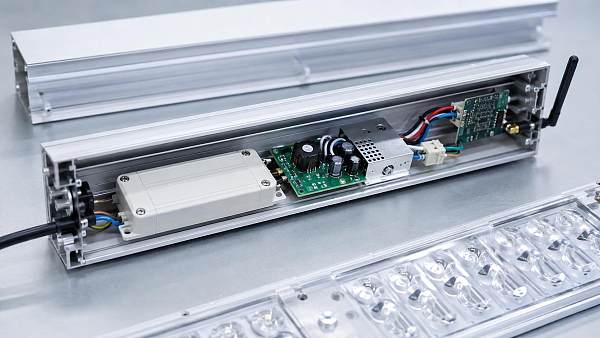
Manufacturers producing smart lighting control devices — such as DALI-2 gateways, Bluetooth Mesh lighting controllers, or Matter-enabled dimmers — will face mandatory conformity assessment prior to CE marking. Impact includes extended time-to-market, revised product documentation, and potential redesign of firmware security architecture to meet EN 303 645:2025 requirements.
Importers and EU Authorised Representatives
Importers placing non-EU-manufactured smart lighting controls on the EU market become legally responsible for verifying compliance under the proposed regulation. This shifts liability from suppliers to importers, increasing due diligence obligations — especially for products already in distribution pipelines but not yet certified.
Distribution and Channel Partners
Wholesalers, e-commerce platforms, and system integrators selling smart lighting controls in the EU may face inventory devaluation risks for uncertified stock post-enactment. Shelf-ready labeling (e.g., ‘EU Cyber Verified’) becomes a prerequisite for listing or resale, affecting procurement cycles and catalog management.
Testing and Certification Service Providers
Accredited labs offering EN 303 645 assessments are likely to see increased demand. However, only bodies designated under the EU Cybersecurity Act framework will be accepted — limiting eligibility to a subset of current testing providers. Capacity constraints and lead-time extensions are foreseeable.
What Relevant Enterprises or Practitioners Should Monitor and Do Now
Track official updates from the European Commission and ETSI
The proposal remains subject to parliamentary review and possible amendment. Stakeholders should monitor the European Parliament’s legislative file (e.g., REF: COM(2026) 287 final) and any technical guidance issued by ETSI or CEN-CENELEC regarding EN 303 645:2025 implementation timelines and scope clarifications.
Identify affected product categories and assess certification readiness
Companies should map their smart lighting control portfolio against the defined scope: devices with network connectivity (wired or wireless), remote configuration capability, or cloud interaction fall under the proposal. Prioritize high-volume or high-risk SKUs — especially those shipping to EU customers in H2 2026 — for early pre-assessment via the open channel.
Distinguish between policy signal and enforceable requirement
As of now, the proposal is not law. Enforcement begins only after formal adoption in Q1 2027 and application dates are set. Current obligations are limited to voluntary pre-assessment. Avoid premature retooling or contractual commitments based solely on the proposal’s current status.
Prepare internal alignment across R&D, compliance, and supply chain teams
Initiate cross-functional reviews to identify firmware update needs, documentation gaps (e.g., security development lifecycle records), and supplier dependencies (e.g., chipset vendors’ security attestations). Where third-party components are used, verify whether they already support EN 303 645:2025-aligned security features.
Editorial Perspective / Industry Observation
Observably, this proposal signals a structural shift — from voluntary cybersecurity best practices to mandatory, harmonised conformity for connected building infrastructure. It does not yet constitute binding law, but reflects growing regulatory attention on embedded IoT systems beyond consumer electronics. Analysis shows the inclusion of DALI-2, Bluetooth Mesh, and Matter explicitly indicates the EU’s intent to cover both legacy industrial protocols and emerging interoperability standards. From an industry perspective, this is less a near-term compliance deadline and more a medium-term strategic inflection point: companies that treat cybersecurity as a post-design add-on may face disproportionate adaptation costs once the regulation enters force.
Current more appropriate interpretation is that the proposal serves as a strong anticipatory signal — one that validates long-standing industry concerns about fragmentation in IoT security assurance, while also exposing gaps in current supply chain accountability models for networked lighting hardware.
Conclusion
This proposal marks a formal step toward embedding cybersecurity into the regulatory baseline for smart lighting controls in the EU. Its significance lies not in immediate enforcement, but in establishing clear expectations for product design, responsibility allocation, and market access criteria well ahead of legal implementation. For stakeholders, it is best understood today as a preparatory milestone — not a trigger for urgent action, but a definitive cue to initiate structured, evidence-based readiness planning.
Information Sources
Main source: European Commission Proposal COM(2026) 287 final, submitted 30 April 2026. Pre-assessment channel status confirmed via official EU Cybersecurity Act portal. Note: Legislative timeline (Q1 2027 adoption) and final scope details remain subject to ongoing parliamentary deliberation and are therefore under continuous observation.
News Recommendations
 How to choose an ultra bright waterproof window display for storefronts
![51a6ab95581761cc26f4318be6520c15]()
Aris Katos
Future of Carbide Coatings
 How to verify suppliers on a trade portal for global sourcing
![51a6ab95581761cc26f4318be6520c15]()
Aris Katos
Future of Carbide Coatings
 How RoHS requirements should be stated in product specifications
![51a6ab95581761cc26f4318be6520c15]()
Aris Katos
Future of Carbide Coatings
 What affects the lead time for custom retail counter displays?
![51a6ab95581761cc26f4318be6520c15]()
Aris Katos
Future of Carbide Coatings
 What consumer packaging USA importers need to verify before ordering
![51a6ab95581761cc26f4318be6520c15]()
Aris Katos
Future of Carbide Coatings
 How commercial spaces interiors shape customer dwell time
![51a6ab95581761cc26f4318be6520c15]()
Aris Katos
Future of Carbide Coatings
 How LED commercial lighting design reduces glare in retail spaces
![51a6ab95581761cc26f4318be6520c15]()
Aris Katos
Future of Carbide Coatings
 How industrial technology information improves RFID inventory accuracy
![51a6ab95581761cc26f4318be6520c15]()
Aris Katos
Future of Carbide Coatings
 When drip garden watering systems make more sense than sprinklers
![51a6ab95581761cc26f4318be6520c15]()
Aris Katos
Future of Carbide Coatings
 When category comparison improves sourcing for industrial applications
![51a6ab95581761cc26f4318be6520c15]()
Aris Katos
Future of Carbide Coatings
 Industrial application guidance for selecting the right LED lighting
![51a6ab95581761cc26f4318be6520c15]()
Aris Katos
Future of Carbide Coatings
 Which commercial architecture standards apply to European retail fit-outs?
![51a6ab95581761cc26f4318be6520c15]()
Aris Katos
Future of Carbide Coatings
 How to verify FDA requirements for maternity care products
![51a6ab95581761cc26f4318be6520c15]()
Aris Katos
Future of Carbide Coatings
 How to verify BPA-free claims for food-contact products
![51a6ab95581761cc26f4318be6520c15]()
Aris Katos
Future of Carbide Coatings
 When does a European wholesale supplier suit modular office projects?
![51a6ab95581761cc26f4318be6520c15]()
Aris Katos
Future of Carbide Coatings
 When consumer ecosystem solutions improve the in-store shopping journey
![51a6ab95581761cc26f4318be6520c15]()
Aris Katos
Future of Carbide Coatings
 How a commercial developers network can reduce site selection risk
![51a6ab95581761cc26f4318be6520c15]()
Aris Katos
Future of Carbide Coatings
 How clear purchasing specifications prevent costly supplier deviations
![51a6ab95581761cc26f4318be6520c15]()
Aris Katos
Future of Carbide Coatings
 What an ISTA drop test lab checks before your packaging ships
![51a6ab95581761cc26f4318be6520c15]()
Aris Katos
Future of Carbide Coatings
 Which commercial furniture standards apply to workplace seating?
![51a6ab95581761cc26f4318be6520c15]()
Aris Katos
Future of Carbide Coatings
 How to evaluate smart lighting module OEM compatibility before sampling
![51a6ab95581761cc26f4318be6520c15]()
Aris Katos
Future of Carbide Coatings
 How to assess whether sustainable technology delivers real impact
![51a6ab95581761cc26f4318be6520c15]()
Aris Katos
Future of Carbide Coatings
 How to assess an OEM supplier’s quality control before ordering
![51a6ab95581761cc26f4318be6520c15]()
Aris Katos
Future of Carbide Coatings
 How consumer ecosystem solutions data can improve retail personalization
![51a6ab95581761cc26f4318be6520c15]()
Aris Katos
Future of Carbide Coatings
 When does consumer packaging design justify a higher product price?
![51a6ab95581761cc26f4318be6520c15]()
Aris Katos
Future of Carbide Coatings
 Supermarket Fixture Installation: Planning Layouts, Wiring, and Handover
![51a6ab95581761cc26f4318be6520c15]()
Aris Katos
Future of Carbide Coatings
 Automated Lighting and Smart Lighting Control in Bergerac: Key Project Considerations
![51a6ab95581761cc26f4318be6520c15]()
Aris Katos
Future of Carbide Coatings
 Segment Streetlight Controllers: Choosing Control Modes for Urban Roads
![51a6ab95581761cc26f4318be6520c15]()
Aris Katos
Future of Carbide Coatings
 IEC 62471-2 Explained: How to Assess Photobiological Risks in LED Lighting
![51a6ab95581761cc26f4318be6520c15]()
Aris Katos
Future of Carbide Coatings
 Food Grade Packaging Requirements by Product Type, Temperature, and Contact Risk
![51a6ab95581761cc26f4318be6520c15]()
Aris Katos
Future of Carbide Coatings
 Food Packaging Compliance Checklist: Tests, Records, and Labeling Before Shipment
![51a6ab95581761cc26f4318be6520c15]()
Aris Katos
Future of Carbide Coatings
 NSF Food Packaging Standards: When Certification Matters for Commercial Food Use
![51a6ab95581761cc26f4318be6520c15]()
Aris Katos
Future of Carbide Coatings
 FDA Food Grade Compliance: Which Materials and Documents Do Buyers Need?
![51a6ab95581761cc26f4318be6520c15]()
Aris Katos
Future of Carbide Coatings
 What Should a Food Grade Declaration Include for Packaging Compliance?
![51a6ab95581761cc26f4318be6520c15]()
Aris Katos
Future of Carbide Coatings
 Housewares Importing: How to Evaluate Suppliers, Costs, and Compliance Risks
![51a6ab95581761cc26f4318be6520c15]()
Aris Katos
Future of Carbide Coatings
 Why Freeze-Dried Fruit Ingredients Lose Crispness—and How to Prevent It
![51a6ab95581761cc26f4318be6520c15]()
Aris Katos
Future of Carbide Coatings
 What industry veterans look for before choosing a new supplier
![51a6ab95581761cc26f4318be6520c15]()
Aris Katos
Future of Carbide Coatings
 How material fatigue can shorten the service life of retail shelving
![51a6ab95581761cc26f4318be6520c15]()
Aris Katos
Future of Carbide Coatings
 What makes a global sourcing platform reliable for supplier verification?
![51a6ab95581761cc26f4318be6520c15]()
Aris Katos
Future of Carbide Coatings