How to Compare a Commercial Materials Supplier Without Costly Mistakes
Time
Click Count
Choosing the right commercial materials supplier can directly impact project quality, compliance, timelines, and long-term cost control. For procurement professionals, comparing suppliers goes far beyond price—it requires evaluating certifications, production consistency, supply chain reliability, and fit with commercial performance standards. This guide helps you avoid costly mistakes by focusing on the factors that truly determine supplier value.
Why is choosing a commercial materials supplier more complex than comparing quotes?
Many procurement teams begin with unit price, minimum order quantity, and lead time. Those are necessary data points, but they are not enough when evaluating a commercial materials supplier for retail, hospitality, office, public infrastructure, or branded environments. In commercial projects, materials affect structural durability, appearance consistency, installation speed, maintenance cycles, safety compliance, and even customer experience.
A supplier that looks affordable on paper may create hidden costs through batch variation, missing test reports, poor packaging, inaccurate dimensions, unstable color matching, or delayed replenishment. For buyers responsible for multi-site rollouts or long-term procurement programs, those issues can quickly turn into rework, claims, schedule overruns, and damaged stakeholder trust.
That is why a serious comparison process must examine whether the commercial materials supplier can support commercial-grade performance standards, documentation needs, and repeatable delivery at scale. In practice, procurement should compare total value, not only initial cost.
What should procurement teams evaluate first when comparing a commercial materials supplier?
Start with fit-for-purpose capability. Before asking for the lowest price, confirm whether the commercial materials supplier is truly aligned with your use case. A supplier strong in residential finishes may not be suitable for high-traffic commercial interiors. A factory experienced in generic manufacturing may struggle with branding precision, international compliance, or chain-store standardization.
Procurement can usually narrow risk early by checking six fundamentals:
- Relevant product specialization in commercial applications
- Certification readiness such as UL, CE, BIFMA, fire ratings, or regional compliance files
- Material consistency across production batches
- Engineering support for drawings, samples, revisions, and substitutions
- Supply chain visibility, including raw material sourcing and backup planning
- After-sales responsiveness for claims, replacements, and replenishment orders
If a commercial materials supplier cannot answer these points clearly, price comparison is premature. At that stage, procurement is still validating basic suitability.
How can you tell whether a commercial materials supplier is actually qualified for commercial-grade projects?
A qualified supplier does more than share a brochure and a sample board. Commercial buyers should ask for proof that the supplier can meet the performance and documentation standards expected in real projects. This includes formal test reports, manufacturing records, quality checkpoints, and examples of past commercial installations.
For example, if the material will be used in office furniture systems, fixture assemblies, wall panels, display units, or customer-facing retail environments, the procurement team should confirm whether the supplier understands durability, finish tolerance, wear resistance, environmental exposure, and code-related requirements. A dependable commercial materials supplier should be able to explain not just what they sell, but where it performs best and where it should not be used.
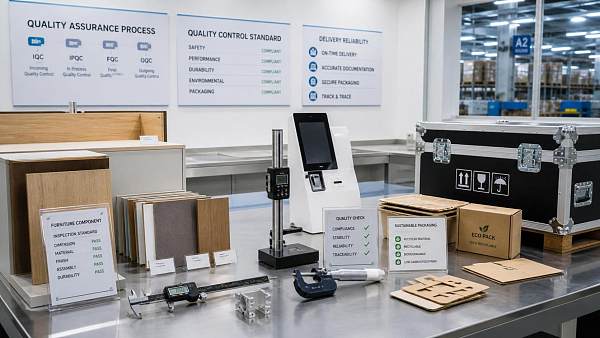
You should also look at process maturity. Does the supplier maintain incoming material inspection, in-process control, final inspection, and shipment records? Can they provide a consistent SKU structure and revision control? Can they match approved samples over time? These details matter when projects are replicated across regions or phases.

Quick supplier comparison checklist
How do certifications and standards affect supplier comparison?
Certifications are not just marketing badges. They are part of risk control. Depending on the category, a commercial materials supplier may need to provide evidence related to safety, flammability, structural performance, emissions, electrical integration, or environmental compliance. Procurement professionals should verify whether the documents are current, relevant to the exact product, and issued by credible testing bodies.
This is especially important in cross-border sourcing. Standards may vary by region, but commercial buyers still need traceable documentation. A supplier that casually says “we can pass any test” without showing existing records should be treated cautiously. Testing after production can delay a project and expose the buyer to expensive redesign if the material fails.
Platforms such as G-BCE add value by benchmarking suppliers and commercial hardware against international standards and commercial performance expectations. For procurement teams, this kind of intelligence helps move the conversation beyond claims and toward measurable suitability. When comparing a commercial materials supplier, documented compliance is often a stronger predictor of long-term reliability than a marginal price advantage.
What hidden cost drivers do buyers often miss?
The most expensive supplier is not always the one with the highest unit price. In many commercial sourcing programs, hidden costs come from operational friction. A cheaper commercial materials supplier may require more supervision, more incoming inspection, more sample approvals, and more corrective action. Those costs sit outside the quote, but they still affect total procurement performance.
Common hidden cost drivers include frequent quality disputes, poor packaging that leads to transit damage, incomplete labeling, unannounced specification changes, slow response to engineering questions, and weak replenishment capability. For chain operators and developers, inconsistency between initial rollout and follow-up orders can be particularly costly because it disrupts visual standards and forces mixed-site conditions.
Another overlooked factor is change management. If the supplier does not maintain drawing versions, sample records, and approved substitutions clearly, procurement may end up paying for confusion during manufacturing and installation. A reliable commercial materials supplier reduces these administrative risks by providing document discipline as well as material quality.
How can you compare supply chain reliability before placing a major order?
Supply chain reliability is best tested before volume commitment. Procurement should ask where key inputs come from, whether the factory depends on a single source, what inventory buffers exist, and how seasonal fluctuations are managed. This matters even more when materials are tied to retail openings, office fit-outs, or brand launch calendars.
A dependable commercial materials supplier should be able to discuss capacity planning, backup suppliers, quality traceability, and export readiness. If the supplier is vague about container planning, packaging standards, customs documentation, or replenishment lead times, the risk is not only late delivery but also poor continuity after the first shipment.
One practical approach is to run a staged validation process: sample review, pilot order, performance feedback, then scaled release. This gives procurement a way to verify consistency and communication under real conditions. It also helps compare suppliers using objective data instead of sales presentations.
What are the most common mistakes when selecting a commercial materials supplier?
The first mistake is treating all suppliers as interchangeable. Commercial sourcing is application-specific. Materials for premium retail fixtures, modular office systems, smart store equipment, or sustainable packaging each involve different performance and documentation needs. Procurement should compare suppliers against the project context, not against a generic checklist alone.
The second mistake is overvaluing samples. A beautiful sample does not prove scalable manufacturing. Ask whether the commercial materials supplier can reproduce the same finish, tolerance, and packaging standard across batches and across time. Sample excellence without process control is a warning sign.
The third mistake is skipping cross-functional review. Procurement, design, engineering, compliance, and operations often judge suppliers differently. If purchasing compares price while technical teams compare performance, decisions become fragmented. A better approach is to create a shared scorecard with weighted criteria.
The fourth mistake is ignoring post-award support. A supplier may win the first order but perform poorly when replacements, warranty handling, or urgent replenishment are needed. In commercial environments, lifecycle responsiveness is part of supplier value.
Common mistakes and better alternatives
Which questions should you ask before shortlisting a commercial materials supplier?
A strong shortlist comes from sharp questions. Ask the commercial materials supplier to describe similar commercial projects, common failure points in the category, normal production tolerances, and the controls used to prevent batch inconsistency. Request documentation examples, not just verbal assurance.
You should also ask how they manage product changes, whether they offer engineering support during specification refinement, and how they handle urgent replacements. For international sourcing, clarify Incoterms, export packaging, customs files, and communication windows. These details reveal whether the supplier is operationally prepared for serious commercial work.
For buyers working in modernized commercial ecosystems, it is also worth exploring whether the supplier understands sustainability expectations, digital tracking, and integration with broader project standards. Commercial environments increasingly require materials that support performance, appearance, compliance, and responsible sourcing at the same time.
How should procurement make the final decision without costly mistakes?
The safest decision model combines data, application fit, and controlled validation. Instead of selecting a commercial materials supplier based on sales confidence or price pressure, use a weighted comparison framework. Score each candidate on compliance readiness, product suitability, quality consistency, lead time stability, technical support, and long-term supply resilience. Then test the top candidates through samples, pilot orders, and documentation review.
For procurement professionals, the goal is not merely to buy material. It is to secure dependable commercial performance with minimum disruption over the project lifecycle. This is where intelligence-led benchmarking becomes valuable. By comparing suppliers against recognized standards and real-world commercial requirements, teams can reduce avoidable risk before contracts are signed.
If you need to confirm a specific solution, parameters, lead time, quotation logic, or cooperation model, start by discussing these priorities with any potential commercial materials supplier: required standards, intended application, expected order frequency, acceptable variation, packaging method, replenishment expectations, and claim-handling process. Those early conversations often reveal more than the first quotation ever will.
News Recommendations
 How to choose an ultra bright waterproof window display for storefronts
![51a6ab95581761cc26f4318be6520c15]()
Aris Katos
Future of Carbide Coatings
 How to verify suppliers on a trade portal for global sourcing
![51a6ab95581761cc26f4318be6520c15]()
Aris Katos
Future of Carbide Coatings
 How RoHS requirements should be stated in product specifications
![51a6ab95581761cc26f4318be6520c15]()
Aris Katos
Future of Carbide Coatings
 What affects the lead time for custom retail counter displays?
![51a6ab95581761cc26f4318be6520c15]()
Aris Katos
Future of Carbide Coatings
 What consumer packaging USA importers need to verify before ordering
![51a6ab95581761cc26f4318be6520c15]()
Aris Katos
Future of Carbide Coatings
 How commercial spaces interiors shape customer dwell time
![51a6ab95581761cc26f4318be6520c15]()
Aris Katos
Future of Carbide Coatings
 How LED commercial lighting design reduces glare in retail spaces
![51a6ab95581761cc26f4318be6520c15]()
Aris Katos
Future of Carbide Coatings
 How industrial technology information improves RFID inventory accuracy
![51a6ab95581761cc26f4318be6520c15]()
Aris Katos
Future of Carbide Coatings
 When drip garden watering systems make more sense than sprinklers
![51a6ab95581761cc26f4318be6520c15]()
Aris Katos
Future of Carbide Coatings
 When category comparison improves sourcing for industrial applications
![51a6ab95581761cc26f4318be6520c15]()
Aris Katos
Future of Carbide Coatings
 Industrial application guidance for selecting the right LED lighting
![51a6ab95581761cc26f4318be6520c15]()
Aris Katos
Future of Carbide Coatings
 Which commercial architecture standards apply to European retail fit-outs?
![51a6ab95581761cc26f4318be6520c15]()
Aris Katos
Future of Carbide Coatings
 How to verify FDA requirements for maternity care products
![51a6ab95581761cc26f4318be6520c15]()
Aris Katos
Future of Carbide Coatings
 How to verify BPA-free claims for food-contact products
![51a6ab95581761cc26f4318be6520c15]()
Aris Katos
Future of Carbide Coatings
 When does a European wholesale supplier suit modular office projects?
![51a6ab95581761cc26f4318be6520c15]()
Aris Katos
Future of Carbide Coatings
 When consumer ecosystem solutions improve the in-store shopping journey
![51a6ab95581761cc26f4318be6520c15]()
Aris Katos
Future of Carbide Coatings
 How a commercial developers network can reduce site selection risk
![51a6ab95581761cc26f4318be6520c15]()
Aris Katos
Future of Carbide Coatings
 How clear purchasing specifications prevent costly supplier deviations
![51a6ab95581761cc26f4318be6520c15]()
Aris Katos
Future of Carbide Coatings
 What an ISTA drop test lab checks before your packaging ships
![51a6ab95581761cc26f4318be6520c15]()
Aris Katos
Future of Carbide Coatings
 Which commercial furniture standards apply to workplace seating?
![51a6ab95581761cc26f4318be6520c15]()
Aris Katos
Future of Carbide Coatings
 How to evaluate smart lighting module OEM compatibility before sampling
![51a6ab95581761cc26f4318be6520c15]()
Aris Katos
Future of Carbide Coatings
 How to assess whether sustainable technology delivers real impact
![51a6ab95581761cc26f4318be6520c15]()
Aris Katos
Future of Carbide Coatings
 How to assess an OEM supplier’s quality control before ordering
![51a6ab95581761cc26f4318be6520c15]()
Aris Katos
Future of Carbide Coatings
 How consumer ecosystem solutions data can improve retail personalization
![51a6ab95581761cc26f4318be6520c15]()
Aris Katos
Future of Carbide Coatings
 When does consumer packaging design justify a higher product price?
![51a6ab95581761cc26f4318be6520c15]()
Aris Katos
Future of Carbide Coatings
 Supermarket Fixture Installation: Planning Layouts, Wiring, and Handover
![51a6ab95581761cc26f4318be6520c15]()
Aris Katos
Future of Carbide Coatings
 Automated Lighting and Smart Lighting Control in Bergerac: Key Project Considerations
![51a6ab95581761cc26f4318be6520c15]()
Aris Katos
Future of Carbide Coatings
 Segment Streetlight Controllers: Choosing Control Modes for Urban Roads
![51a6ab95581761cc26f4318be6520c15]()
Aris Katos
Future of Carbide Coatings
 IEC 62471-2 Explained: How to Assess Photobiological Risks in LED Lighting
![51a6ab95581761cc26f4318be6520c15]()
Aris Katos
Future of Carbide Coatings
 Food Grade Packaging Requirements by Product Type, Temperature, and Contact Risk
![51a6ab95581761cc26f4318be6520c15]()
Aris Katos
Future of Carbide Coatings
 Food Packaging Compliance Checklist: Tests, Records, and Labeling Before Shipment
![51a6ab95581761cc26f4318be6520c15]()
Aris Katos
Future of Carbide Coatings
 NSF Food Packaging Standards: When Certification Matters for Commercial Food Use
![51a6ab95581761cc26f4318be6520c15]()
Aris Katos
Future of Carbide Coatings
 FDA Food Grade Compliance: Which Materials and Documents Do Buyers Need?
![51a6ab95581761cc26f4318be6520c15]()
Aris Katos
Future of Carbide Coatings
 What Should a Food Grade Declaration Include for Packaging Compliance?
![51a6ab95581761cc26f4318be6520c15]()
Aris Katos
Future of Carbide Coatings
 Housewares Importing: How to Evaluate Suppliers, Costs, and Compliance Risks
![51a6ab95581761cc26f4318be6520c15]()
Aris Katos
Future of Carbide Coatings
 Why Freeze-Dried Fruit Ingredients Lose Crispness—and How to Prevent It
![51a6ab95581761cc26f4318be6520c15]()
Aris Katos
Future of Carbide Coatings
 What industry veterans look for before choosing a new supplier
![51a6ab95581761cc26f4318be6520c15]()
Aris Katos
Future of Carbide Coatings
 How material fatigue can shorten the service life of retail shelving
![51a6ab95581761cc26f4318be6520c15]()
Aris Katos
Future of Carbide Coatings
 What makes a global sourcing platform reliable for supplier verification?
![51a6ab95581761cc26f4318be6520c15]()
Aris Katos
Future of Carbide Coatings