Smart Fitting Room Tech: Setup Challenges to Know
Time
Click Count
Smart fitting room tech can raise conversion, reduce fitting room friction, and generate valuable store intelligence.
Yet many deployments struggle because the real challenge is not the screen, mirror, or sensor alone.
Successful setup depends on power planning, fixture design, software integration, privacy controls, calibration, and long-term maintenance.
For modern commercial environments, smart fitting room tech must work as part of a wider retail ecosystem, not as an isolated gadget.
This guide explains common setup barriers, practical decisions, and ways to reduce delays before installation begins.
What does smart fitting room tech actually include?
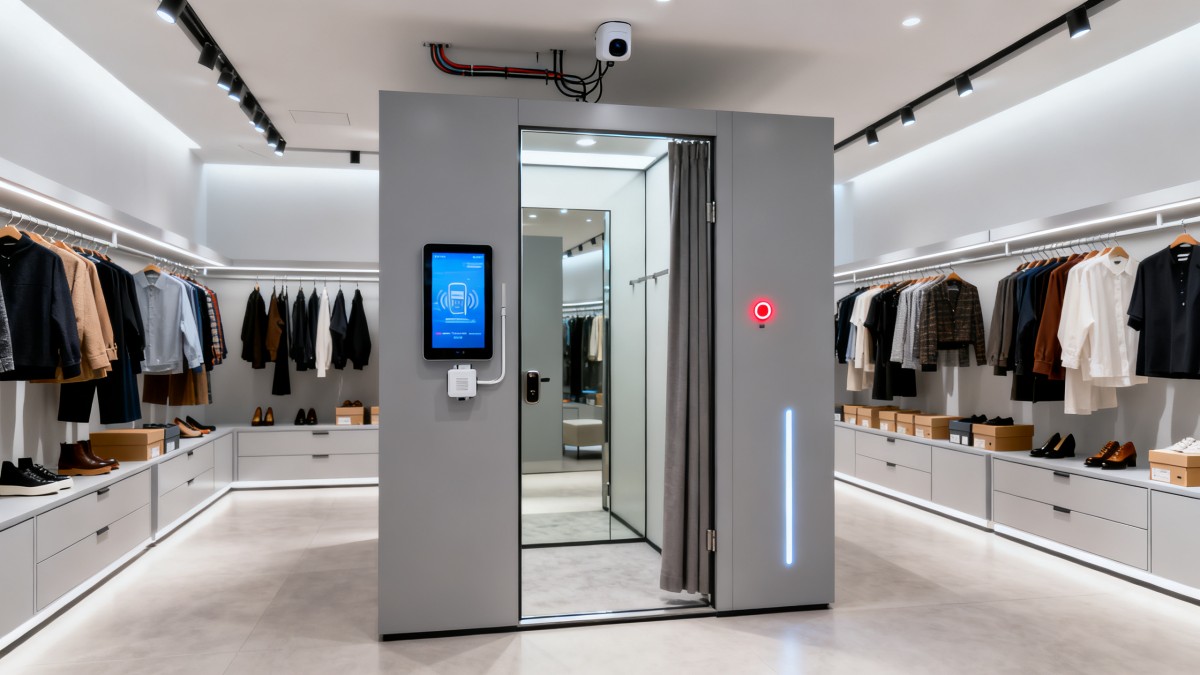
The term smart fitting room tech covers several connected systems inside and around the changing area.
It may include smart mirrors, RFID readers, motion sensors, occupancy indicators, touch displays, staff call functions, and analytics dashboards.
Some systems connect to POS software, inventory tools, customer apps, or recommendation engines.
Others focus on queue management, lighting scenes, or fitting room usage data.
Because of this variety, setup challenges differ sharply between simple assistance tools and full omnichannel smart fitting room tech platforms.
A mirror with passive content needs less coordination than a room with garment recognition, stock lookup, and associate alerts.
Clear scope definition is the first protection against rework.
Key components often overlooked
- Edge devices that process local sensor data
- Cable routing inside millwork and wall cavities
- Ventilation for enclosed electronics
- Service access panels for maintenance
- Fallback operation during network loss
Why do integration issues delay smart fitting room tech projects?
Integration is often the most underestimated part of smart fitting room tech deployment.
The room may look ready physically, while data exchange remains incomplete.
A common problem is mismatch between legacy retail software and new fitting room applications.
Product identifiers, inventory timing, and API rules may not align.
That creates delays in item recognition, recommendation accuracy, or staff notifications.
Another issue appears when multiple vendors own different layers of the stack.
One supplier may handle hardware, another software, and another store network controls.
Without a shared integration matrix, troubleshooting becomes slow and expensive.
Practical ways to reduce integration risk
- Map every data flow before procurement begins.
- Confirm API availability, rate limits, and update frequency.
- Define who owns testing for each interface.
- Run a pilot using actual store inventory data.
- Document offline behavior for service continuity.
In complex commercial programs, integration planning should start alongside fixture engineering, not after construction drawings are finished.
How should power, network, and fixture coordination be planned?
Many smart fitting room tech failures begin with poor infrastructure assumptions.
Displays, sensors, controllers, and lighting all require reliable power and accessible routing paths.
If electrical points are placed too late, millwork may need redesign.
If Wi-Fi is weak inside enclosed fitting rooms, response times can frustrate users.
Mirrors with embedded displays also generate heat, which affects lifespan when ventilation is ignored.
Commercial interiors add another layer of complexity.
Door swings, mirror angles, wall reinforcement, and cleaning access all shape how smart fitting room tech performs over time.
Infrastructure checklist
Early coordination between digital hardware and physical fixture teams is essential for durable smart fitting room tech installation.
What calibration and user-experience problems appear after installation?
Installation does not guarantee readiness.
Smart fitting room tech often requires calibration in real operating conditions.
RFID read zones may overlap with adjacent rooms.
Motion sensors may react poorly to reflective surfaces, curtains, or changing light patterns.
Touch interfaces can feel slow if the software stack is heavy or the network path is long.
A system that works in a lab may fail in a busy store with noise, crowds, and constant garment movement.
User experience issues also affect adoption.
If shoppers need too many steps to request another size, the feature may be ignored.
If staff alerts arrive late, trust in the system declines quickly.
Useful acceptance tests
- Recognition accuracy with full and partial garment loads
- Screen readability under peak lighting conditions
- Response time during store traffic peaks
- Alert delivery from room to associate device
- Recovery behavior after power or network interruption
These tests help smart fitting room tech move from technical installation to dependable retail performance.
How do privacy, compliance, and data governance affect setup?
Privacy is not a final legal checkbox.
It shapes hardware choices, sensor policies, signage, and data retention rules from the beginning.
Some smart fitting room tech solutions use cameras, while others rely on RFID, weight, or occupancy sensing.
The difference matters in sensitive fitting spaces.
Regional compliance expectations may require clear notice, limited collection, secure storage, and auditable access controls.
Physical security also matters.
Unprotected ports, exposed devices, or default passwords can create avoidable vulnerabilities in commercial environments.
Privacy and compliance questions to ask
- What data is collected, and is all of it necessary?
- How long is data stored, and where?
- Can the system function with low-data modes?
- Who can access analytics or event logs?
- How are updates, credentials, and device hardening managed?
Thoughtful privacy design often improves brand trust while making smart fitting room tech easier to approve internally.
What costs, timelines, and mistakes should be expected?
The visible hardware cost is only one part of the investment.
Smart fitting room tech budgets should include software licensing, integration work, fixture modifications, testing, training, and support.
Lead times can expand if imported components, custom mirrors, or certification needs are involved.
Retrofit projects usually take longer than new-build deployments because existing power and wall conditions are less predictable.
One frequent mistake is scaling too early.
A pilot should validate business logic, maintenance load, and user behavior before chain-wide rollout.
Another mistake is focusing only on feature count.
Reliable core functions often outperform complex smart fitting room tech that is difficult to maintain.
FAQ summary table
Smart fitting room tech delivers the most value when digital systems, commercial fixtures, and operational workflows are planned together.
The strongest projects define scope early, validate infrastructure, test integration, and treat privacy as part of design.
Before committing to broader deployment, build a pilot checklist covering data flow, hardware access, calibration, and maintenance responsibility.
That practical step can turn smart fitting room tech from an attractive concept into a stable, measurable in-store asset.
News Recommendations
 How to Choose Commercial Signage Boards for High-Visibility Retail Fronts
![51a6ab95581761cc26f4318be6520c15]()
Aris Katos
Future of Carbide Coatings
 EU PPWR Takes Full Effect for EU-Bound Packaging
![51a6ab95581761cc26f4318be6520c15]()
Aris Katos
Future of Carbide Coatings
 How to Evaluate Autonomous Driving Sensors for Range, Weather, and Redundancy
![51a6ab95581761cc26f4318be6520c15]()
Aris Katos
Future of Carbide Coatings
 EU PPWR Takes Full Effect for EU-Bound Packaging
![51a6ab95581761cc26f4318be6520c15]()
Aris Katos
Future of Carbide Coatings
 How to Evaluate a Catalysts Manufacturer for Quality, Scale, and Compliance
![51a6ab95581761cc26f4318be6520c15]()
Aris Katos
Future of Carbide Coatings
 EU EPR Rule Takes Effect for Packaged Goods Clearance
![51a6ab95581761cc26f4318be6520c15]()
Aris Katos
Future of Carbide Coatings
 What Affects Bedding Sets Price Most: Fabric, Thread Count, or Size?
![51a6ab95581761cc26f4318be6520c15]()
Aris Katos
Future of Carbide Coatings
 FDA Updates Food-Contact Compliance List, Effective Immediately
![51a6ab95581761cc26f4318be6520c15]()
Aris Katos
Future of Carbide Coatings
 How to Compare a Retail Shelving Supplier in Europe on Lead Time, Compliance, and Total Cost
![51a6ab95581761cc26f4318be6520c15]()
Aris Katos
Future of Carbide Coatings
 EU PPWR EPR Rule Takes Effect for Packaging Exports
![51a6ab95581761cc26f4318be6520c15]()
Aris Katos
Future of Carbide Coatings
 How to Evaluate a Custom Retail Counters Factory in the Middle East
![51a6ab95581761cc26f4318be6520c15]()
Aris Katos
Future of Carbide Coatings
 FDA Tightens Rules for Imported Kitchenware
![51a6ab95581761cc26f4318be6520c15]()
Aris Katos
Future of Carbide Coatings
 How to Evaluate DALI Lighting Control in Europe for Compliance and Scalability
![51a6ab95581761cc26f4318be6520c15]()
Aris Katos
Future of Carbide Coatings
 EN 16890:2026 Takes Effect for EU Commercial Lighting
![51a6ab95581761cc26f4318be6520c15]()
Aris Katos
Future of Carbide Coatings
 How Wellness Driven Commercial Interiors Affect Employee Focus and Space Planning
![51a6ab95581761cc26f4318be6520c15]()
Aris Katos
Future of Carbide Coatings
 CPSC Rule Takes Effect for Imported Kitchenware
![51a6ab95581761cc26f4318be6520c15]()
Aris Katos
Future of Carbide Coatings
 Are Solar Water Heaters Worth It? Cost, Climate, and Payback Factors
![51a6ab95581761cc26f4318be6520c15]()
Aris Katos
Future of Carbide Coatings
 EU Packaging EPR Registration Takes Effect on August 5
![51a6ab95581761cc26f4318be6520c15]()
Aris Katos
Future of Carbide Coatings
 How to Evaluate Outdoor Digital Kiosk Factory Wholesale Pricing and IP Ratings
![51a6ab95581761cc26f4318be6520c15]()
Aris Katos
Future of Carbide Coatings
 FDA Mandates LTL Certification for Food-Contact Exports
![51a6ab95581761cc26f4318be6520c15]()
Aris Katos
Future of Carbide Coatings
 How to Evaluate a Clinic Furniture Supplier for Compliance, Lead Time, and After-Sales Support
![51a6ab95581761cc26f4318be6520c15]()
Aris Katos
Future of Carbide Coatings
 EU Packaging EPR Rule Takes Effect Aug. 1
![51a6ab95581761cc26f4318be6520c15]()
Aris Katos
Future of Carbide Coatings
 What Drives Cost and Lead Time in Custom Sheet Metal Orders?
![51a6ab95581761cc26f4318be6520c15]()
Aris Katos
Future of Carbide Coatings
 FDA LCA Filing Rule Raises U.S. Entry Bar for Exporters
![51a6ab95581761cc26f4318be6520c15]()
Aris Katos
Future of Carbide Coatings
 How AI-Driven POS Terminals Reduce Checkout Errors and Labor Costs
![51a6ab95581761cc26f4318be6520c15]()
Aris Katos
Future of Carbide Coatings
 EU Packaging EPR Rule Becomes Mandatory on August 1
![51a6ab95581761cc26f4318be6520c15]()
Aris Katos
Future of Carbide Coatings
 What Drives Catalysts Price: Raw Materials, Loading, and Supply Risk
![51a6ab95581761cc26f4318be6520c15]()
Aris Katos
Future of Carbide Coatings
 FDA FCN Rule Reshapes U.S. Kitchenware Imports
![51a6ab95581761cc26f4318be6520c15]()
Aris Katos
Future of Carbide Coatings
 What Global Chain Visibility Means for Inventory Risk and Lead Times
![51a6ab95581761cc26f4318be6520c15]()
Aris Katos
Future of Carbide Coatings
 EU Packaging EPR Rule Takes Effect on August 1
![51a6ab95581761cc26f4318be6520c15]()
Aris Katos
Future of Carbide Coatings
 How to Audit Retail Technology Standards for Digital Signage Compliance
![51a6ab95581761cc26f4318be6520c15]()
Aris Katos
Future of Carbide Coatings
 FDA Requires Supply-Chain Compliance Declarations for Imported Kitchenware
![51a6ab95581761cc26f4318be6520c15]()
Aris Katos
Future of Carbide Coatings
 Silicone Kitchen Utensils Factory Price: Cost Factors and Quality Trade-Offs
![51a6ab95581761cc26f4318be6520c15]()
Aris Katos
Future of Carbide Coatings
 EU EPR Rule to Mandate Registration for Imported Home Goods
![51a6ab95581761cc26f4318be6520c15]()
Aris Katos
Future of Carbide Coatings
 Automation Product Information: What to Compare Before System Integration
![51a6ab95581761cc26f4318be6520c15]()
Aris Katos
Future of Carbide Coatings
 CPSC Rule Adds New Tests for Imported Kitchenware
![51a6ab95581761cc26f4318be6520c15]()
Aris Katos
Future of Carbide Coatings
 Biodegradable Packaging Wholesale USA: Cost, MOQ, and Compliance Checklist
![51a6ab95581761cc26f4318be6520c15]()
Aris Katos
Future of Carbide Coatings
 EU Packaging EPR Registration Becomes Mandatory on Aug 1
![51a6ab95581761cc26f4318be6520c15]()
Aris Katos
Future of Carbide Coatings
 Product Information Resources: How to Verify Specs Before Sourcing
![51a6ab95581761cc26f4318be6520c15]()
Aris Katos
Future of Carbide Coatings