How to Improve Consumer Goods Display Results
Time
Click Count
In today’s modern marketplace, improving consumer goods display results requires more than attractive layouts. It depends on smart signage, advanced retail technology, efficient POS terminals, and a responsive supply chain supported by sustainable materials and sustainable packaging. For operators, researchers, and high-end brands shaping commercial spaces, the right display strategy can strengthen product visibility, elevate user experience, and drive measurable performance.
For most businesses, better display results do not come from adding more fixtures or making shelves look fuller. They come from improving how shoppers notice, understand, trust, and act on what they see. In practice, that means aligning product placement, retail lighting, signage, digital tools, and replenishment systems so the display performs both visually and operationally. If your displays look good but fail to convert, the issue is usually not decoration—it is a mismatch between shopper behavior, store execution, and supply chain support.
What Actually Improves Consumer Goods Display Results?

The core search intent behind this topic is practical: readers want to know which factors directly improve display performance in real commercial settings. They are usually evaluating how to increase visibility, shopper engagement, conversion, and consistency across locations without creating unnecessary complexity.
For information researchers and operational users, the biggest concerns are straightforward:
- Why some displays attract attention but fail to drive sales
- How fixture design, signage, lighting, and technology affect shopper decisions
- How to measure whether a display is performing well
- How to reduce operational issues such as poor restocking, damaged packaging, or inconsistent execution
- How sustainable materials and packaging influence both presentation and brand perception
The strongest display results usually come from five combined improvements:
- Clear visual hierarchy so shoppers immediately understand what the product is, why it matters, and where to find key variants
- Fixture and layout optimization that improves accessibility, facing quality, and traffic flow
- Effective lighting and signage that increase product recognition without visual overload
- Smart retail technology such as digital labeling, AI-supported analytics, and integrated POS feedback
- Reliable supply chain and packaging performance to keep displays full, clean, and retail-ready
In other words, display performance is not only a merchandising issue. It is a system issue.
Why Good-Looking Displays Still Underperform
One of the most common mistakes in commercial display planning is focusing too much on aesthetics alone. A display may appear premium in design reviews but fail in live retail conditions because shoppers do not process it the way planners expect.
Typical causes of underperformance include:
- Too many messages at once: If pricing, promotion, brand story, and product features compete for attention, customers often ignore all of them.
- Poor eye-level strategy: High-priority products placed outside natural sightlines lose visibility.
- Weak replenishment logic: Fast-moving items go out of stock, making the display look neglected.
- Inconsistent packaging dimensions: Products do not sit neatly, reducing perceived quality.
- Bad lighting balance: Glare, shadows, or incorrect color temperature can distort product appearance.
- Disconnected digital tools: POS terminals, pricing systems, and display analytics may not share useful data.
For operators, this means display improvement should begin with diagnosing where breakdowns happen: shopper attention, product understanding, physical access, stock continuity, or checkout conversion.
How to Design Displays Around Real Shopper Behavior
If the goal is to improve results, displays should be built around how people scan, compare, and decide—not around what looks visually impressive in isolation.
Several design principles consistently help:
Prioritize fast comprehension
Shoppers often make initial judgments in seconds. They should be able to identify the category, brand, price range, and key product benefit almost immediately. This is especially important in high-choice environments.
Use visual hierarchy deliberately
Lead products, hero SKUs, or high-margin items should have the strongest visibility. Use controlled contrast in color, placement, lighting, or signage size to direct attention.
Reduce decision friction
Too many variants grouped without logic can reduce conversion. Organize products by shopper-relevant categories such as use case, benefit, size, or premium level.
Support touch and interaction when appropriate
For many consumer goods, handling matters. If the product category benefits from trial, the display should allow safe and easy interaction while maintaining order.
Design for maintenance
The best display concept is one store staff can keep accurate, clean, and fully stocked. Operational simplicity is part of display performance.
This is where commercial furniture and fixtures matter. Durable, ergonomic, and properly dimensioned systems make it easier to maintain product facings, signage alignment, and shopper accessibility over time.
Which Store Elements Have the Biggest Impact on Display Performance?
Not every upgrade produces the same return. For most commercial environments, these elements have the highest practical impact:
1. Signage
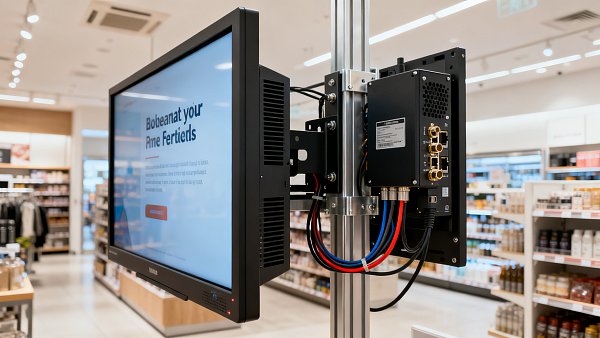
Smart signage improves display results by translating visual interest into understanding. Good signage answers three questions quickly: What is this? Why should I care? What should I do next? Digital signage can add flexibility, but only if content is relevant and not distracting.
2. Lighting
Commercial lighting affects product clarity, perceived quality, and zone emphasis. Accent lighting can help hero products stand out, while consistent ambient lighting prevents dead visual areas. In categories where color fidelity matters, lighting specifications should be aligned with product presentation goals.
3. POS integration
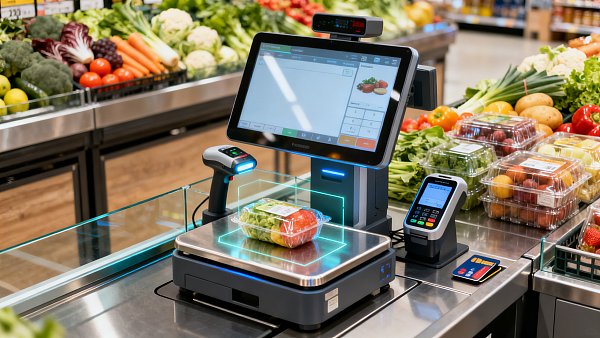
Advanced POS terminals do more than process transactions. When integrated with display strategy, they can provide insight into which promotions, zones, or product groupings actually convert. This closes the gap between visual merchandising and sales evidence.
4. Fixtures and shelving systems
Display structures should support category logic, weight requirements, shopper reach, and branding. Poor fixture proportions can waste premium space or create clutter, while high-performance systems improve both presentation and replenishment efficiency.
5. Packaging
Sustainable packaging and retail-ready packaging can directly improve shelf results when designed well. Stable dimensions, strong front-facing presentation, easy opening, and durable materials all help displays stay organized and attractive.
How Smart Retail Technology Helps Improve Display Results
Retail technology is increasingly important because it turns display management from subjective judgment into measurable performance improvement.
Examples of useful applications include:
- Electronic shelf labels for faster pricing updates and promotion consistency
- Footfall and dwell-time analytics to understand where shoppers stop and which displays are ignored
- Computer vision or image recognition to detect out-of-stock conditions, misplaced products, or planogram non-compliance
- AI-assisted merchandising insights to identify high-converting placement patterns
- Integrated POS reporting to compare display exposure with actual product sales
For researchers and operators, the key value is not technology for its own sake. It is the ability to answer practical questions faster:
- Which display zones create real uplift?
- Which products need more facings?
- Which signage messages improve conversion?
- Where is execution inconsistent across stores?
In global chain environments, this data also supports benchmarking across regions, formats, and suppliers.
Why Supply Chain Execution Matters More Than Many Teams Expect
Even an excellent display concept will fail if the supply chain cannot support it. This is especially true for fast-moving consumer goods, seasonal launches, premium branded displays, and multi-location rollouts.
Display performance depends on supply chain quality in several ways:
- On-time replenishment: Empty spaces damage both conversion and brand trust
- Packaging durability: Damaged cartons or crushed retail units weaken presentation
- Dimensional consistency: Products that vary in fit disrupt shelf alignment
- Display-ready delivery: Faster setup reduces labor and execution errors
- Sustainable material performance: Eco-friendly solutions must still meet strength, finish, and handling requirements
This is where technical benchmarking becomes highly valuable. When fixtures, signage components, packaging materials, and retail hardware are evaluated against relevant international standards such as UL, CE, or BIFMA where applicable, teams gain more confidence in safety, durability, and deployment suitability.
For commercial developers and sourcing teams, better display results are often tied to better specification discipline—not just better creative ideas.
How to Evaluate Whether a Consumer Goods Display Is Working
Many teams assess displays too vaguely. To improve results consistently, performance should be reviewed through both shopper-facing and operational metrics.
Useful indicators include:
- Sales uplift by display zone or campaign
- Conversion rate for featured products
- Dwell time and engagement levels
- Out-of-stock frequency
- Planogram compliance rate
- Restocking labor time
- Packaging damage rate
- Customer feedback on findability and clarity
A useful approach is to review displays through three lenses:
- Visibility: Are shoppers noticing the products?
- Usability: Can they understand, access, and compare them easily?
- Operational resilience: Can the display stay effective throughout the trading cycle?
If one of these three is weak, display results usually suffer regardless of design quality.
Practical Steps to Improve Consumer Goods Display Results
For teams looking for a realistic improvement plan, the most effective sequence is usually:
- Audit current display performance using shopper observation, POS data, and stock checks
- Identify the biggest friction point such as visibility, messaging, replenishment, or packaging instability
- Redesign visual hierarchy so top products and key information are easier to process
- Upgrade critical hardware including shelving, signage holders, lighting, or smart retail tools where needed
- Improve retail-ready packaging to support cleaner and faster presentation
- Test in pilot locations before scaling changes across multiple stores
- Benchmark results by store format, product category, and region
This process helps avoid a common mistake: investing broadly before knowing which variable actually limits performance.
Conclusion: Better Display Results Come from Better Systems, Not Just Better Styling
To improve consumer goods display results, businesses need to think beyond shelf appearance. The strongest results come from combining shopper-centered merchandising, reliable commercial fixtures, effective signage, appropriate lighting, smart retail technology, and a supply chain capable of keeping displays accurate and attractive.
For researchers, this means evaluating display performance as part of a wider commercial ecosystem. For operators, it means focusing on what can be executed consistently and measured clearly. When display design is supported by data, technical benchmarking, and operational readiness, it becomes far more than a visual exercise—it becomes a repeatable driver of retail performance.
In a market where commercial spaces must be efficient, sustainable, and digitally informed, the best display strategy is one that looks strong, works reliably, and proves its value in real-world conditions.
- commercial furniture
- smart retail
- POS terminals
- supply chain
- consumer goods
- commercial lighting
- signage
- sustainable packaging
- retail technology
- commercial spaces
- commercial developers
- global chain
- high-end brands
- commercial environments
- international standards
- modern marketplace
- technical benchmarking
- sustainable materials
- smart retail technology
News Recommendations
 How to Evaluate Autonomous Driving Sensors for Range, Weather, and Redundancy
![51a6ab95581761cc26f4318be6520c15]()
Aris Katos
Future of Carbide Coatings
 EU PPWR Takes Full Effect for EU-Bound Packaging
![51a6ab95581761cc26f4318be6520c15]()
Aris Katos
Future of Carbide Coatings
 How to Evaluate a Catalysts Manufacturer for Quality, Scale, and Compliance
![51a6ab95581761cc26f4318be6520c15]()
Aris Katos
Future of Carbide Coatings
 EU EPR Rule Takes Effect for Packaged Goods Clearance
![51a6ab95581761cc26f4318be6520c15]()
Aris Katos
Future of Carbide Coatings
 What Affects Bedding Sets Price Most: Fabric, Thread Count, or Size?
![51a6ab95581761cc26f4318be6520c15]()
Aris Katos
Future of Carbide Coatings
 FDA Updates Food-Contact Compliance List, Effective Immediately
![51a6ab95581761cc26f4318be6520c15]()
Aris Katos
Future of Carbide Coatings
 How to Compare a Retail Shelving Supplier in Europe on Lead Time, Compliance, and Total Cost
![51a6ab95581761cc26f4318be6520c15]()
Aris Katos
Future of Carbide Coatings
 EU PPWR EPR Rule Takes Effect for Packaging Exports
![51a6ab95581761cc26f4318be6520c15]()
Aris Katos
Future of Carbide Coatings
 How to Evaluate a Custom Retail Counters Factory in the Middle East
![51a6ab95581761cc26f4318be6520c15]()
Aris Katos
Future of Carbide Coatings
 FDA Tightens Rules for Imported Kitchenware
![51a6ab95581761cc26f4318be6520c15]()
Aris Katos
Future of Carbide Coatings
 How to Evaluate DALI Lighting Control in Europe for Compliance and Scalability
![51a6ab95581761cc26f4318be6520c15]()
Aris Katos
Future of Carbide Coatings
 EN 16890:2026 Takes Effect for EU Commercial Lighting
![51a6ab95581761cc26f4318be6520c15]()
Aris Katos
Future of Carbide Coatings
 How Wellness Driven Commercial Interiors Affect Employee Focus and Space Planning
![51a6ab95581761cc26f4318be6520c15]()
Aris Katos
Future of Carbide Coatings
 CPSC Rule Takes Effect for Imported Kitchenware
![51a6ab95581761cc26f4318be6520c15]()
Aris Katos
Future of Carbide Coatings
 Are Solar Water Heaters Worth It? Cost, Climate, and Payback Factors
![51a6ab95581761cc26f4318be6520c15]()
Aris Katos
Future of Carbide Coatings
 EU Packaging EPR Registration Takes Effect on August 5
![51a6ab95581761cc26f4318be6520c15]()
Aris Katos
Future of Carbide Coatings
 How to Evaluate Outdoor Digital Kiosk Factory Wholesale Pricing and IP Ratings
![51a6ab95581761cc26f4318be6520c15]()
Aris Katos
Future of Carbide Coatings
 FDA Mandates LTL Certification for Food-Contact Exports
![51a6ab95581761cc26f4318be6520c15]()
Aris Katos
Future of Carbide Coatings
 How to Evaluate a Clinic Furniture Supplier for Compliance, Lead Time, and After-Sales Support
![51a6ab95581761cc26f4318be6520c15]()
Aris Katos
Future of Carbide Coatings
 EU Packaging EPR Rule Takes Effect Aug. 1
![51a6ab95581761cc26f4318be6520c15]()
Aris Katos
Future of Carbide Coatings
 What Drives Cost and Lead Time in Custom Sheet Metal Orders?
![51a6ab95581761cc26f4318be6520c15]()
Aris Katos
Future of Carbide Coatings
 FDA LCA Filing Rule Raises U.S. Entry Bar for Exporters
![51a6ab95581761cc26f4318be6520c15]()
Aris Katos
Future of Carbide Coatings
 How AI-Driven POS Terminals Reduce Checkout Errors and Labor Costs
![51a6ab95581761cc26f4318be6520c15]()
Aris Katos
Future of Carbide Coatings
 EU Packaging EPR Rule Becomes Mandatory on August 1
![51a6ab95581761cc26f4318be6520c15]()
Aris Katos
Future of Carbide Coatings
 What Drives Catalysts Price: Raw Materials, Loading, and Supply Risk
![51a6ab95581761cc26f4318be6520c15]()
Aris Katos
Future of Carbide Coatings
 FDA FCN Rule Reshapes U.S. Kitchenware Imports
![51a6ab95581761cc26f4318be6520c15]()
Aris Katos
Future of Carbide Coatings
 What Global Chain Visibility Means for Inventory Risk and Lead Times
![51a6ab95581761cc26f4318be6520c15]()
Aris Katos
Future of Carbide Coatings
 EU Packaging EPR Rule Takes Effect on August 1
![51a6ab95581761cc26f4318be6520c15]()
Aris Katos
Future of Carbide Coatings
 How to Audit Retail Technology Standards for Digital Signage Compliance
![51a6ab95581761cc26f4318be6520c15]()
Aris Katos
Future of Carbide Coatings
 FDA Requires Supply-Chain Compliance Declarations for Imported Kitchenware
![51a6ab95581761cc26f4318be6520c15]()
Aris Katos
Future of Carbide Coatings
 Silicone Kitchen Utensils Factory Price: Cost Factors and Quality Trade-Offs
![51a6ab95581761cc26f4318be6520c15]()
Aris Katos
Future of Carbide Coatings
 EU EPR Rule to Mandate Registration for Imported Home Goods
![51a6ab95581761cc26f4318be6520c15]()
Aris Katos
Future of Carbide Coatings
 Automation Product Information: What to Compare Before System Integration
![51a6ab95581761cc26f4318be6520c15]()
Aris Katos
Future of Carbide Coatings
 CPSC Rule Adds New Tests for Imported Kitchenware
![51a6ab95581761cc26f4318be6520c15]()
Aris Katos
Future of Carbide Coatings
 Biodegradable Packaging Wholesale USA: Cost, MOQ, and Compliance Checklist
![51a6ab95581761cc26f4318be6520c15]()
Aris Katos
Future of Carbide Coatings
 EU Packaging EPR Registration Becomes Mandatory on Aug 1
![51a6ab95581761cc26f4318be6520c15]()
Aris Katos
Future of Carbide Coatings
 Product Information Resources: How to Verify Specs Before Sourcing
![51a6ab95581761cc26f4318be6520c15]()
Aris Katos
Future of Carbide Coatings
 CPSC Rule Takes Effect for Imported Kitchenware
![51a6ab95581761cc26f4318be6520c15]()
Aris Katos
Future of Carbide Coatings
 Portable Oxygen Concentrators: Common Mistakes to Avoid Before You Buy
![51a6ab95581761cc26f4318be6520c15]()
Aris Katos
Future of Carbide Coatings