Hotel furniture manufacturers are rethinking durability in guest rooms
Time
Click Count
Hotel guest room furniture is no longer being evaluated only on appearance or initial unit price. Across branded hotels, serviced apartments, and mixed-use hospitality projects, buyers are asking a harder question: how long will this furniture perform under real operating pressure without undermining guest experience, maintenance efficiency, or brand standards? That shift is why hotel furniture manufacturers are rethinking durability in much more measurable terms.
For procurement teams, operators, and project evaluators, durability now means lifecycle value, not just “strong construction.” It includes frame integrity, surface wear resistance, stain performance, hardware reliability, cleanability, VOC emissions, fire compliance, and the consistency of replacement parts over multiple project phases. A guest room chair that looks acceptable on delivery but loosens within a year is not durable in any meaningful commercial sense.
The practical takeaway is clear: the best hotel furniture manufacturer is increasingly the one that can prove performance with testing data, engineering discipline, and supply chain control. In today’s market, commercial-grade hotel furniture must support lower total cost of ownership, faster refurbishment planning, and more predictable brand execution across properties and regions.
Why durability has become a strategic issue in hotel guest rooms
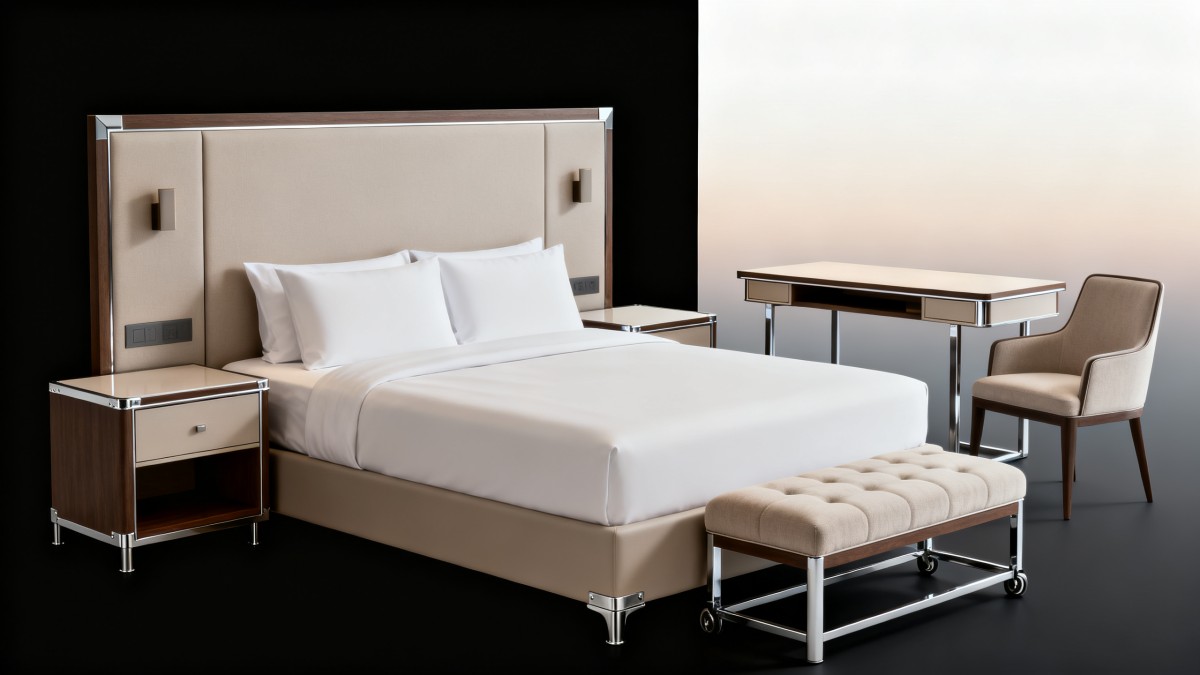
Guest rooms now carry more operational pressure than many furniture specifications from ten years ago anticipated. Occupancy turnover is faster, cleaning cycles are more intensive, guests travel with more devices and luggage, and furniture is expected to support work, dining, lounging, and storage in one compact environment. As a result, products that once passed a visual inspection may fail much earlier in actual use.
Hotel operators are also under pressure to protect rate integrity and review scores. Visible wear on nightstands, delaminating casegoods, unstable headboards, chipped powder coated steel frames, or upholstered seating with early fabric pilling can directly affect guest perception. Durability is therefore tied not only to maintenance budgets but also to revenue protection and brand trust.
Another major factor is capital planning. Owners no longer want to replace guest room furniture on a schedule driven by preventable product failure. They want longer usable life, phased refurbishment compatibility, and dependable replenishment. That is pushing contract furniture suppliers to engineer products for repeatable performance instead of relying on showroom appeal alone.
What buyers really mean when they ask for “durable hotel furniture”
In hospitality procurement, durability is best understood as a combination of structural endurance, surface resilience, safety compliance, and maintenance practicality. A solid wood commercial grade frame may sound strong, but buyers still need to know how joints are reinforced, how moisture movement is managed, and whether the assembly can withstand repeated loading and relocation.
For metal-based products, a powder coated steel frame is often preferred for certain applications because it can provide excellent stability and finish longevity. But durability depends on more than the material label. Coating thickness, weld quality, corrosion resistance, corner impact performance, and touch-up limitations all influence whether the furniture will age well in a high-use guest room setting.
Soft seating and bed-related upholstery require another layer of scrutiny. Buyers increasingly ask for Martindale abrasion test results, seam strength data, foam density specifications, and cleanability guidance. High abrasion numbers alone are not enough if the fabric hand feel conflicts with the brand experience or if the backing system fails under repeated use. Good procurement decisions balance test performance with actual hospitality application.
Which product areas fail first in guest rooms and why
In many hotels, seating is one of the earliest categories to show weakness. Desk chairs, lounge chairs, and benches are subjected to concentrated weight, side loading, luggage impact, and frequent repositioning by guests and housekeeping teams. If the frame engineering, glides, or fasteners are under-specified, wobble and structural fatigue appear quickly.
Casegoods often fail more slowly but more visibly. Luggage benches, writing desks, media consoles, and bedside tables are exposed to moisture from cleaning, heat from appliances, abrasion from hard-shell luggage, and edge impacts during daily operations. Low-quality substrate choices, weak edge banding, or insufficient finish systems can produce swelling, chipping, and surface breakdown long before the expected lifecycle ends.
Headboards and integrated panels create another risk zone. These components must remain visually stable while tolerating repeated room turnover, wall interface movement, and occasional improper use. If anchoring details are poorly designed or replacement access is not considered, even minor repairs can become costly and disruptive. This is why experienced hotel furniture manufacturers increasingly design for serviceability as part of durability.
How leading manufacturers are changing design and engineering decisions
The strongest shift in the market is from generic specification language to application-specific engineering. Instead of selling a product as simply “hospitality grade,” advanced manufacturers now map each furniture item to expected use conditions. They ask whether a desk will be fixed or movable, whether the wardrobe base is exposed to wet mopping, and whether a bench doubles as luggage support. That use-case analysis changes structure, finish, and hardware choices.
Frame construction is being revisited in detail. On wood products, that can mean upgraded joinery, hidden metal reinforcement, better moisture control in material selection, and design geometry that reduces stress concentration. On metal products, it can include thicker wall sections in critical points, improved welding consistency, and powder coating systems selected for hospitality cleaning chemicals rather than showroom conditions.
Manufacturers are also simplifying unnecessary decorative complexity. Deep reveals, fragile applied trims, and hard-to-clean mixed-material transitions may look premium at first, but they often create wear points and maintenance inefficiencies. Durable guest room furniture increasingly favors refined forms that preserve the intended aesthetic while reducing damage risk and replacement complexity.
What test data and benchmarks should procurement teams ask for
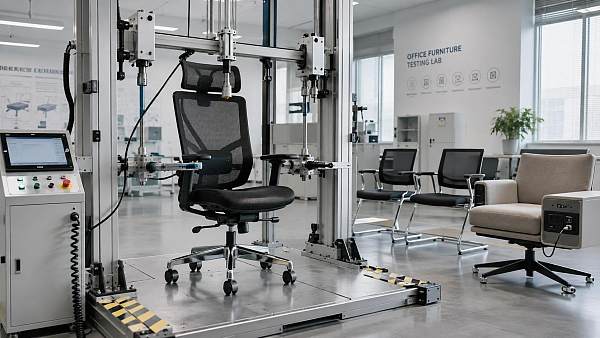
If durability claims are not supported by data, buyers are forced to make decisions on marketing language. A more reliable process is to request benchmark-based documentation. Depending on the item category, that may include BIFMA-related performance references, load testing records, finish adhesion results, edge impact performance, drawer cycle testing, caster or glide performance, and third-party reports where relevant.
For upholstery, Martindale abrasion test results remain a common screening tool, but they should be interpreted correctly. A high score indicates abrasion resistance under test conditions, not universal real-life superiority. Procurement teams should also ask about pilling behavior, colorfastness, seam slippage, stain response, and the ease of field replacement for upholstery components.
Indoor air quality and safety are now part of the durability conversation as well. VOC emission levels in furniture matter because guest rooms are enclosed environments with immediate occupant exposure. Low-emission materials, compliant adhesives, and documented environmental performance reduce both reputational risk and post-installation complaints. Buyers should also verify applicable fire and regulatory requirements by market, because durability without compliance is not usable value.
How to evaluate lifecycle value instead of only comparing initial price
Initial purchase price is still important, but it is a weak standalone indicator for hotel guest room furniture. A lower-cost product that requires higher maintenance labor, more frequent replacement, or inconsistent replenishment can become the more expensive option within a short operating cycle. Lifecycle value analysis gives sourcing teams a more accurate basis for decision-making.
A useful comparison model should include expected service life, installation complexity, spare parts availability, local repair feasibility, lead time for replacements, warranty scope, and brand consistency over future orders. Even simple differences, such as whether a damaged drawer front can be replaced independently, can significantly change operating cost across dozens or hundreds of rooms.
For commercial developers and hotel groups, consistency across properties adds another layer of value. A contract furniture supplier with stable quality systems and documented specifications helps operators avoid “design drift” during expansions or phased renovations. That consistency supports brand recognition, simplifies approvals, and reduces the risk of mismatched touchpoints across markets.
What sourcing teams should ask a hotel furniture manufacturer before approval
First, ask how the manufacturer defines the use case for each guest room item. If the answer stays at a generic brochure level, that is a warning sign. A capable supplier should be able to explain where they expect impact stress, how they selected materials for cleaning exposure, and which design details were modified for hospitality-specific performance.
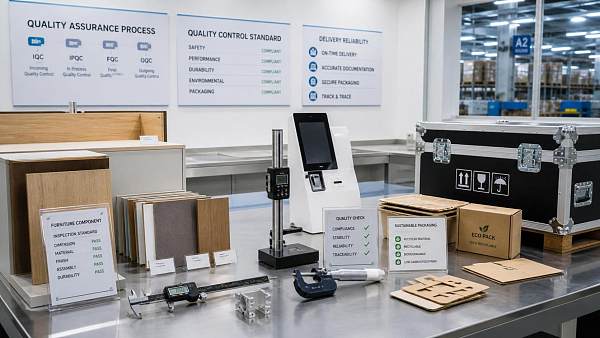
Second, request evidence of process control. This includes material traceability, finish application standards, incoming quality checks, hardware consistency, packaging validation, and corrective action procedures. Durability is not created only in design; it is preserved through manufacturing discipline. The same drawing can produce very different field outcomes depending on factory execution.
Third, evaluate post-delivery support. Hotels need replacement parts, finish matching, and predictable communication during operational issues. A supplier that can provide technical drawings, maintenance recommendations, and replenishment planning is often more valuable than one offering only attractive pricing. In practice, durability and service readiness are closely connected.
How operators and end users can protect durability after installation
Even well-engineered furniture can underperform if operating teams are not aligned with the product’s maintenance needs. Housekeeping procedures should match finish specifications, especially where aggressive chemicals, wet mopping, or abrasive tools may shorten surface life. Clear care instructions from the manufacturer should be part of handover documentation, not an afterthought.
Routine inspection also matters. Small issues such as loosening fasteners, damaged glides, or early edge chips are much cheaper to address before they become structural failures or visible guest complaints. Operators should integrate furniture checks into preventive maintenance rather than waiting for room downtime to reveal the problem.
Training is especially relevant in high-turnover environments. Staff who move furniture during cleaning or room reconfiguration need to understand lift points, weight limits, and vulnerable components. Protecting durability is not only a sourcing task; it is an operational habit supported by product design, documentation, and communication.
The new benchmark for durable hotel furniture
Hotel furniture manufacturers are rethinking durability because the market is demanding proof, not promises. Guest room furniture must now satisfy a more complex brief: perform structurally, preserve visual quality, support brand consistency, meet safety and VOC expectations, and deliver measurable lifecycle value. This is a higher standard than traditional “commercial grade” claims.
For information researchers, operators, procurement teams, and business evaluators, the most effective approach is to judge products through evidence-based questions. Look beyond material labels and styling language. Ask how the item will age, how it will be maintained, what test results support its claims, and how easily it can be repaired or replenished across the asset lifecycle.
Ultimately, the right hotel furniture manufacturer is one that understands durability as a business outcome. When engineering, testing, compliance, and supply chain reliability are aligned, guest room furniture stops being a recurring problem and becomes a long-term operational asset. That is the standard the hospitality sector is now moving toward, and it is reshaping how serious buyers evaluate every contract furniture decision.
News Recommendations
 How to choose an ultra bright waterproof window display for storefronts
![51a6ab95581761cc26f4318be6520c15]()
Aris Katos
Future of Carbide Coatings
 How to verify suppliers on a trade portal for global sourcing
![51a6ab95581761cc26f4318be6520c15]()
Aris Katos
Future of Carbide Coatings
 How RoHS requirements should be stated in product specifications
![51a6ab95581761cc26f4318be6520c15]()
Aris Katos
Future of Carbide Coatings
 What affects the lead time for custom retail counter displays?
![51a6ab95581761cc26f4318be6520c15]()
Aris Katos
Future of Carbide Coatings
 What consumer packaging USA importers need to verify before ordering
![51a6ab95581761cc26f4318be6520c15]()
Aris Katos
Future of Carbide Coatings
 How commercial spaces interiors shape customer dwell time
![51a6ab95581761cc26f4318be6520c15]()
Aris Katos
Future of Carbide Coatings
 How LED commercial lighting design reduces glare in retail spaces
![51a6ab95581761cc26f4318be6520c15]()
Aris Katos
Future of Carbide Coatings
 How industrial technology information improves RFID inventory accuracy
![51a6ab95581761cc26f4318be6520c15]()
Aris Katos
Future of Carbide Coatings
 When drip garden watering systems make more sense than sprinklers
![51a6ab95581761cc26f4318be6520c15]()
Aris Katos
Future of Carbide Coatings
 When category comparison improves sourcing for industrial applications
![51a6ab95581761cc26f4318be6520c15]()
Aris Katos
Future of Carbide Coatings
 Industrial application guidance for selecting the right LED lighting
![51a6ab95581761cc26f4318be6520c15]()
Aris Katos
Future of Carbide Coatings
 Which commercial architecture standards apply to European retail fit-outs?
![51a6ab95581761cc26f4318be6520c15]()
Aris Katos
Future of Carbide Coatings
 How to verify FDA requirements for maternity care products
![51a6ab95581761cc26f4318be6520c15]()
Aris Katos
Future of Carbide Coatings
 How to verify BPA-free claims for food-contact products
![51a6ab95581761cc26f4318be6520c15]()
Aris Katos
Future of Carbide Coatings
 When does a European wholesale supplier suit modular office projects?
![51a6ab95581761cc26f4318be6520c15]()
Aris Katos
Future of Carbide Coatings
 When consumer ecosystem solutions improve the in-store shopping journey
![51a6ab95581761cc26f4318be6520c15]()
Aris Katos
Future of Carbide Coatings
 How a commercial developers network can reduce site selection risk
![51a6ab95581761cc26f4318be6520c15]()
Aris Katos
Future of Carbide Coatings
 How clear purchasing specifications prevent costly supplier deviations
![51a6ab95581761cc26f4318be6520c15]()
Aris Katos
Future of Carbide Coatings
 What an ISTA drop test lab checks before your packaging ships
![51a6ab95581761cc26f4318be6520c15]()
Aris Katos
Future of Carbide Coatings
 Which commercial furniture standards apply to workplace seating?
![51a6ab95581761cc26f4318be6520c15]()
Aris Katos
Future of Carbide Coatings
 How to evaluate smart lighting module OEM compatibility before sampling
![51a6ab95581761cc26f4318be6520c15]()
Aris Katos
Future of Carbide Coatings
 How to assess whether sustainable technology delivers real impact
![51a6ab95581761cc26f4318be6520c15]()
Aris Katos
Future of Carbide Coatings
 How to assess an OEM supplier’s quality control before ordering
![51a6ab95581761cc26f4318be6520c15]()
Aris Katos
Future of Carbide Coatings
 How consumer ecosystem solutions data can improve retail personalization
![51a6ab95581761cc26f4318be6520c15]()
Aris Katos
Future of Carbide Coatings
 When does consumer packaging design justify a higher product price?
![51a6ab95581761cc26f4318be6520c15]()
Aris Katos
Future of Carbide Coatings
 Supermarket Fixture Installation: Planning Layouts, Wiring, and Handover
![51a6ab95581761cc26f4318be6520c15]()
Aris Katos
Future of Carbide Coatings
 Automated Lighting and Smart Lighting Control in Bergerac: Key Project Considerations
![51a6ab95581761cc26f4318be6520c15]()
Aris Katos
Future of Carbide Coatings
 Segment Streetlight Controllers: Choosing Control Modes for Urban Roads
![51a6ab95581761cc26f4318be6520c15]()
Aris Katos
Future of Carbide Coatings
 IEC 62471-2 Explained: How to Assess Photobiological Risks in LED Lighting
![51a6ab95581761cc26f4318be6520c15]()
Aris Katos
Future of Carbide Coatings
 Food Grade Packaging Requirements by Product Type, Temperature, and Contact Risk
![51a6ab95581761cc26f4318be6520c15]()
Aris Katos
Future of Carbide Coatings
 Food Packaging Compliance Checklist: Tests, Records, and Labeling Before Shipment
![51a6ab95581761cc26f4318be6520c15]()
Aris Katos
Future of Carbide Coatings
 NSF Food Packaging Standards: When Certification Matters for Commercial Food Use
![51a6ab95581761cc26f4318be6520c15]()
Aris Katos
Future of Carbide Coatings
 FDA Food Grade Compliance: Which Materials and Documents Do Buyers Need?
![51a6ab95581761cc26f4318be6520c15]()
Aris Katos
Future of Carbide Coatings
 What Should a Food Grade Declaration Include for Packaging Compliance?
![51a6ab95581761cc26f4318be6520c15]()
Aris Katos
Future of Carbide Coatings
 Housewares Importing: How to Evaluate Suppliers, Costs, and Compliance Risks
![51a6ab95581761cc26f4318be6520c15]()
Aris Katos
Future of Carbide Coatings
 Why Freeze-Dried Fruit Ingredients Lose Crispness—and How to Prevent It
![51a6ab95581761cc26f4318be6520c15]()
Aris Katos
Future of Carbide Coatings
 What industry veterans look for before choosing a new supplier
![51a6ab95581761cc26f4318be6520c15]()
Aris Katos
Future of Carbide Coatings
 How material fatigue can shorten the service life of retail shelving
![51a6ab95581761cc26f4318be6520c15]()
Aris Katos
Future of Carbide Coatings
 What makes a global sourcing platform reliable for supplier verification?
![51a6ab95581761cc26f4318be6520c15]()
Aris Katos
Future of Carbide Coatings