Commercial Furniture Design Ideas That Improve Guest Flow
Time
Click Count
Effective commercial furniture design shapes more than aesthetics—it directs movement, reduces friction, and improves how guests experience a space. For business decision-makers, the right layout and fixture strategy can increase efficiency, strengthen brand perception, and support long-term operational goals. This article explores practical design ideas that help commercial environments create smoother guest flow while aligning with modern performance and customer expectations.
In retail, hospitality, showrooms, mixed-use developments, and branded service spaces, guest flow is not a minor design detail. It affects dwell time, queue behavior, staff productivity, accessibility compliance, and even how efficiently inventory, digital touchpoints, and merchandising zones work together. For operators managing multiple sites or planning refurbishments across regions, commercial furniture design must balance visual consistency with measurable operational outcomes.
From G-BCE’s cross-sector perspective, high-performing commercial environments are built through coordination between furniture, fixtures, lighting, signage, technology, and supply chain reliability. That is why furniture decisions should not be treated as isolated decor purchases. They should be evaluated as part of a broader spatial system shaped by durability standards, maintenance cycles, lead times, material sustainability, and guest movement patterns.
Why Guest Flow Starts with Spatial Furniture Planning
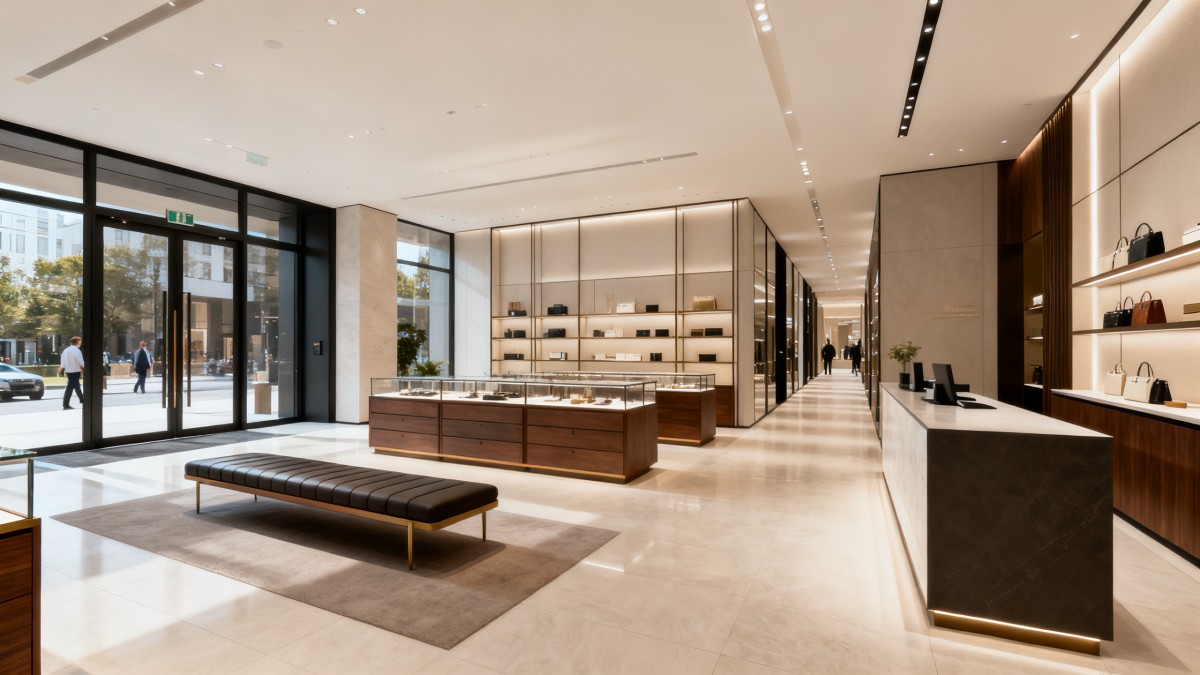
Commercial furniture design influences how quickly guests understand a space within the first 3 to 7 seconds. If entry zones feel crowded, sightlines are blocked, or seating clusters interrupt intuitive circulation, users hesitate. That hesitation can create bottlenecks at reception counters, displays, payment points, and transition corridors. For high-traffic formats, even a 300 mm to 600 mm misjudgment in clearance can change how people queue or turn.
Business decision-makers often focus on finish quality and unit price, but movement efficiency depends on deeper planning variables. These include aisle width, furniture height, corner radius, modular flexibility, and the relationship between fixed and movable elements. In practical terms, furniture should support 4 spatial goals: guide entry, distribute traffic, create pause points, and keep service zones unobstructed.
Key Flow Problems Caused by Poor Furniture Layout
When layouts are designed only for visual symmetry, several operational issues usually follow. Waiting lines spill into circulation paths, promotional islands reduce visibility, oversized lounge pieces discourage turnover, and low-quality modular units become unstable after repeated reconfiguration. These problems are especially costly in chain environments where one flawed prototype may be repeated across 20, 50, or 200 locations.
- Entrance congestion caused by oversized statement fixtures within the first 2 meters
- Cross-traffic conflicts between browsing guests and payment or service queues
- Insufficient ADA or local accessibility clearance around seating and counters
- Dead zones where guests stop but do not convert because sightlines are blocked
- High maintenance burden from materials unsuitable for daily commercial wear cycles
Typical Planning Benchmarks for Commercial Circulation
The table below outlines common planning ranges that sourcing teams, architects, and operations leaders can use during early-stage evaluation. These ranges are not universal code requirements, but they are practical benchmarks for aligning commercial furniture design with smoother guest movement in modern business environments.
The main takeaway is simple: furniture dimensions must be assessed relative to circulation behavior, not as isolated product specifications. A chair that performs well in a catalog setting may fail in a service corridor. A display unit that looks premium in a rendering may reduce usable aisle width below a workable threshold during daily operations.
Why Modular Systems Outperform Static Layouts
For commercial operators facing seasonal campaigns, product rotation, or evolving service models, modular furniture systems often provide better lifecycle value than fully fixed compositions. Reconfigurable benches, nesting display tables, mobile queue dividers, and standardized fixture footprints allow teams to test multiple flow patterns over a 12- to 36-month period without complete replacement.
This flexibility is especially important where digital retail technology, self-service kiosks, or hybrid fulfillment models are introduced in phases. As more commercial spaces combine physical engagement with digital interaction, furniture must be able to absorb change without creating visual disorder or operational inefficiency.
Commercial Furniture Design Ideas for Better Guest Movement
Improving guest flow does not always require a full rebuild. In many projects, targeted furniture interventions can produce immediate gains. The most effective commercial furniture design strategies usually focus on sequencing: what the guest sees first, where they pause next, how they receive service, and how they exit or continue into adjacent zones. Small spatial corrections can significantly reduce confusion and staff intervention.
Use Furniture to Create a Clear Decompression Zone
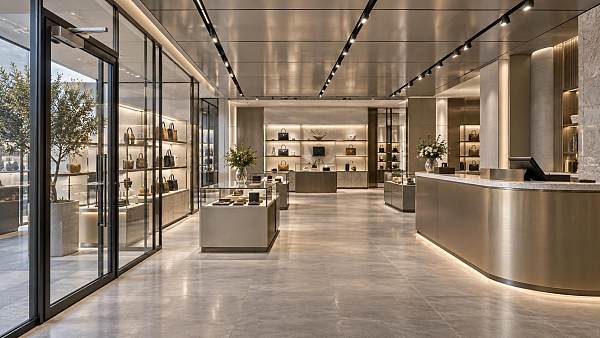
The first 1.5 to 3 meters after entry should usually remain visually open. This is the decompression zone where guests orient themselves, scan signage, and decide whether to move left, right, forward, or toward a staffed point. Furniture in this area should be low-profile, highly stable, and limited in quantity. Tall displays, bulky waiting benches, or promotional stacks often increase hesitation instead of engagement.
Recommended design moves
- Keep fixture heights in entry zones lower than major back-wall displays where possible
- Use one primary focal element rather than 3 or 4 competing furniture statements
- Separate waiting and browsing functions so arriving guests are not blocked by seated users
Define High-Intent Paths with Fixture Orientation
A common mistake in commercial furniture design is placing feature tables or seating groups perpendicular to the natural direction of movement. This interrupts traffic and forces guests to detour. In contrast, fixtures aligned with the desired walking path can gently steer behavior without visible barriers. Angled merchandising tables, linear banquettes, and open-end shelving often perform better than bulky central islands in medium-sized commercial footprints.
In branded service environments, orientation also affects staff efficiency. When furniture guides guests naturally toward consultation counters, fitting zones, pickup points, or payment stations, staff spend less time redirecting traffic and more time serving high-value interactions.
Match Furniture Type to Dwell-Time Strategy
Not every commercial space benefits from maximizing dwell time. In quick-service formats, high turnover may be more valuable than extended seating comfort. In premium retail, showroom, or hospitality-adjacent environments, longer visits can support stronger engagement and higher basket value. The choice of seat height, cushion depth, table spacing, and arm support should reflect the intended average stay, whether that is 5 minutes, 20 minutes, or 45 minutes.
The following comparison helps procurement and design teams choose furniture based on flow objectives rather than purely on style preferences.
The choice should reflect business model, footfall variation, and service format. Furniture that slows traffic in a convenience-led environment may be ideal in a premium appointment-led setting. The design goal is not universal comfort; it is strategic alignment between user behavior and operational intent.
Reduce Friction at Hybrid Service Points
Many commercial spaces now combine physical browsing with digital actions such as self-check-in, mobile pickup, assisted checkout, or QR-triggered product discovery. These hybrid points require furniture that supports technology integration without clutter. Counter depth, cable management, under-counter storage, standing versus seated interaction height, and device protection all matter. Poorly resolved hardware integration often creates visible disorder and slower transactions.
A practical rule is to reserve enough surrounding space for at least 2 user states: active use and waiting. If a kiosk only fits one active user but no adjacent waiting position, the queue immediately spills into the circulation route. In high-density settings, that can reduce both guest comfort and conversion performance.
How Decision-Makers Should Evaluate Furniture Before Procurement
Selecting the right commercial furniture design solution requires more than reviewing finishes and quotations. Procurement leaders, developers, and operations teams should assess each furniture package through a multi-factor decision lens. In most projects, at least 5 dimensions should be reviewed together: flow performance, durability, maintenance, compliance, and supply continuity.
Five Procurement Checks That Protect Long-Term Performance
- Verify whether the furniture footprint matches real circulation needs, not just layout drawings.
- Confirm material suitability for cleaning frequency, impact exposure, and humidity conditions.
- Check benchmark alignment with relevant standards such as UL, CE, or BIFMA where applicable.
- Review modular replacement options so damaged units can be swapped without full redesign.
- Assess lead times, packaging method, and installation sequencing for multi-site rollout plans.
For enterprise buyers, supply chain transparency is especially important. A visually strong design concept can lose value if replacement lead time extends beyond 8 to 12 weeks, if finish consistency varies by batch, or if components arrive without coordinated installation logic. This is where technical benchmarking and supplier comparability become strategic advantages rather than administrative details.
Common Cost Mistakes in Furniture-Led Flow Optimization
One of the most expensive errors is underinvesting in high-contact components while overspending on decorative statement pieces. Another is choosing custom-built forms for every site, even when 70% to 80% of the required function could be delivered through standardized modular elements. Bespoke solutions have value, but too much customization can slow rollout, increase spare-part complexity, and reduce operational agility.
Decision-makers should also account for the hidden cost of poor flow: extra labor to manage queues, reduced browsing efficiency, lower service throughput, and more frequent layout corrections. In many commercial settings, a well-planned furniture scheme pays back not through dramatic capital savings, but through smoother daily performance over 3 to 5 years.
A Practical Evaluation Matrix for Project Teams
The matrix below can be used during concept review, mock-up approval, or tender comparison. It gives decision-makers a structured way to judge commercial furniture design proposals against operational needs.
Using a structured matrix reduces subjective decision-making. It also helps design, sourcing, and operations teams speak a shared language when comparing proposals from multiple suppliers or manufacturing regions.
Implementation Tips for Multi-Site and Future-Ready Commercial Spaces
For chain operators and developers, the best commercial furniture design ideas are those that can scale. A strong pilot layout should be documented with measurable rules: fixture spacing, service counter geometry, seating densities, material specifications, and technology integration details. This reduces inconsistency when rolling out across 10 or more locations.
Build Around a Three-Stage Rollout Method
A practical deployment approach includes 3 stages. First, validate circulation through mock-ups or temporary layouts. Second, finalize standardized components and logistics packaging. Third, track post-installation performance for 30 to 90 days. This process allows teams to identify whether guest flow issues come from furniture dimensions, signage placement, or service behavior before scaling the concept.
Post-installation review points
- Queue spillover during peak periods
- Unplanned guest stopping points or confusion zones
- Furniture wear at high-contact corners within the first 60 days
- Staff workarounds that indicate layout friction
Plan for Sustainability Without Sacrificing Function
Sustainable material choices are increasingly relevant, but they must still meet the realities of commercial use. Recycled content, low-emission finishes, repairable construction, and packaging efficiency all matter. However, decision-makers should ask whether these benefits are paired with adequate structural durability and maintenance practicality. A sustainable product that requires early replacement may undermine both environmental and financial goals.
G-BCE’s broader ecosystem view is useful here because furniture performance is linked to adjacent categories such as lighting, signage, smart retail hardware, and packaging logistics. Durable, adaptable furniture systems are more valuable when they are specified as part of a coordinated commercial environment rather than purchased as standalone visual assets.
Well-executed commercial furniture design improves guest flow by making movement intuitive, service zones efficient, and spatial experiences easier to manage across the full lifecycle of a commercial site. For enterprise decision-makers, the strongest results come from combining circulation logic, modularity, compliance awareness, and supply chain transparency into one procurement strategy.
If you are planning a new commercial environment, upgrading an existing layout, or benchmarking suppliers for multi-site deployment, G-BCE can help you evaluate furniture and fixture solutions against global performance expectations. Contact us today to get a tailored strategy, review technical benchmarks, and explore more solutions for building resilient, high-function commercial spaces.
News Recommendations
 How to choose an ultra bright waterproof window display for storefronts
![51a6ab95581761cc26f4318be6520c15]()
Aris Katos
Future of Carbide Coatings
 How to verify suppliers on a trade portal for global sourcing
![51a6ab95581761cc26f4318be6520c15]()
Aris Katos
Future of Carbide Coatings
 How RoHS requirements should be stated in product specifications
![51a6ab95581761cc26f4318be6520c15]()
Aris Katos
Future of Carbide Coatings
 What affects the lead time for custom retail counter displays?
![51a6ab95581761cc26f4318be6520c15]()
Aris Katos
Future of Carbide Coatings
 What consumer packaging USA importers need to verify before ordering
![51a6ab95581761cc26f4318be6520c15]()
Aris Katos
Future of Carbide Coatings
 How commercial spaces interiors shape customer dwell time
![51a6ab95581761cc26f4318be6520c15]()
Aris Katos
Future of Carbide Coatings
 How LED commercial lighting design reduces glare in retail spaces
![51a6ab95581761cc26f4318be6520c15]()
Aris Katos
Future of Carbide Coatings
 How industrial technology information improves RFID inventory accuracy
![51a6ab95581761cc26f4318be6520c15]()
Aris Katos
Future of Carbide Coatings
 When drip garden watering systems make more sense than sprinklers
![51a6ab95581761cc26f4318be6520c15]()
Aris Katos
Future of Carbide Coatings
 When category comparison improves sourcing for industrial applications
![51a6ab95581761cc26f4318be6520c15]()
Aris Katos
Future of Carbide Coatings
 Industrial application guidance for selecting the right LED lighting
![51a6ab95581761cc26f4318be6520c15]()
Aris Katos
Future of Carbide Coatings
 Which commercial architecture standards apply to European retail fit-outs?
![51a6ab95581761cc26f4318be6520c15]()
Aris Katos
Future of Carbide Coatings
 How to verify FDA requirements for maternity care products
![51a6ab95581761cc26f4318be6520c15]()
Aris Katos
Future of Carbide Coatings
 How to verify BPA-free claims for food-contact products
![51a6ab95581761cc26f4318be6520c15]()
Aris Katos
Future of Carbide Coatings
 When does a European wholesale supplier suit modular office projects?
![51a6ab95581761cc26f4318be6520c15]()
Aris Katos
Future of Carbide Coatings
 When consumer ecosystem solutions improve the in-store shopping journey
![51a6ab95581761cc26f4318be6520c15]()
Aris Katos
Future of Carbide Coatings
 How a commercial developers network can reduce site selection risk
![51a6ab95581761cc26f4318be6520c15]()
Aris Katos
Future of Carbide Coatings
 How clear purchasing specifications prevent costly supplier deviations
![51a6ab95581761cc26f4318be6520c15]()
Aris Katos
Future of Carbide Coatings
 What an ISTA drop test lab checks before your packaging ships
![51a6ab95581761cc26f4318be6520c15]()
Aris Katos
Future of Carbide Coatings
 Which commercial furniture standards apply to workplace seating?
![51a6ab95581761cc26f4318be6520c15]()
Aris Katos
Future of Carbide Coatings
 How to evaluate smart lighting module OEM compatibility before sampling
![51a6ab95581761cc26f4318be6520c15]()
Aris Katos
Future of Carbide Coatings
 How to assess whether sustainable technology delivers real impact
![51a6ab95581761cc26f4318be6520c15]()
Aris Katos
Future of Carbide Coatings
 How to assess an OEM supplier’s quality control before ordering
![51a6ab95581761cc26f4318be6520c15]()
Aris Katos
Future of Carbide Coatings
 How consumer ecosystem solutions data can improve retail personalization
![51a6ab95581761cc26f4318be6520c15]()
Aris Katos
Future of Carbide Coatings
 When does consumer packaging design justify a higher product price?
![51a6ab95581761cc26f4318be6520c15]()
Aris Katos
Future of Carbide Coatings
 Supermarket Fixture Installation: Planning Layouts, Wiring, and Handover
![51a6ab95581761cc26f4318be6520c15]()
Aris Katos
Future of Carbide Coatings
 Automated Lighting and Smart Lighting Control in Bergerac: Key Project Considerations
![51a6ab95581761cc26f4318be6520c15]()
Aris Katos
Future of Carbide Coatings
 Segment Streetlight Controllers: Choosing Control Modes for Urban Roads
![51a6ab95581761cc26f4318be6520c15]()
Aris Katos
Future of Carbide Coatings
 IEC 62471-2 Explained: How to Assess Photobiological Risks in LED Lighting
![51a6ab95581761cc26f4318be6520c15]()
Aris Katos
Future of Carbide Coatings
 Food Grade Packaging Requirements by Product Type, Temperature, and Contact Risk
![51a6ab95581761cc26f4318be6520c15]()
Aris Katos
Future of Carbide Coatings
 Food Packaging Compliance Checklist: Tests, Records, and Labeling Before Shipment
![51a6ab95581761cc26f4318be6520c15]()
Aris Katos
Future of Carbide Coatings
 NSF Food Packaging Standards: When Certification Matters for Commercial Food Use
![51a6ab95581761cc26f4318be6520c15]()
Aris Katos
Future of Carbide Coatings
 FDA Food Grade Compliance: Which Materials and Documents Do Buyers Need?
![51a6ab95581761cc26f4318be6520c15]()
Aris Katos
Future of Carbide Coatings
 What Should a Food Grade Declaration Include for Packaging Compliance?
![51a6ab95581761cc26f4318be6520c15]()
Aris Katos
Future of Carbide Coatings
 Housewares Importing: How to Evaluate Suppliers, Costs, and Compliance Risks
![51a6ab95581761cc26f4318be6520c15]()
Aris Katos
Future of Carbide Coatings
 Why Freeze-Dried Fruit Ingredients Lose Crispness—and How to Prevent It
![51a6ab95581761cc26f4318be6520c15]()
Aris Katos
Future of Carbide Coatings
 What industry veterans look for before choosing a new supplier
![51a6ab95581761cc26f4318be6520c15]()
Aris Katos
Future of Carbide Coatings
 How material fatigue can shorten the service life of retail shelving
![51a6ab95581761cc26f4318be6520c15]()
Aris Katos
Future of Carbide Coatings
 What makes a global sourcing platform reliable for supplier verification?
![51a6ab95581761cc26f4318be6520c15]()
Aris Katos
Future of Carbide Coatings