
Sustainable Consumer Goods Trends Shaping Product Choices in 2026
Time
Click Count
As sustainability moves from brand promise to procurement priority, sustainable consumer goods trends now shape product evaluation across retail, hospitality, workplace, and packaging environments.
In 2026, product choices depend on material performance, traceable sourcing, compliance readiness, lifecycle cost, and customer-facing credibility across complex commercial ecosystems.
For organizations navigating global supply networks, the smartest path is not buying the greenest-looking option. It is selecting solutions that fit the right operational scene.
That is why the most important sustainable consumer goods trends should be read through application context, risk exposure, and long-term supply resilience.
Why application context now determines sustainable product value
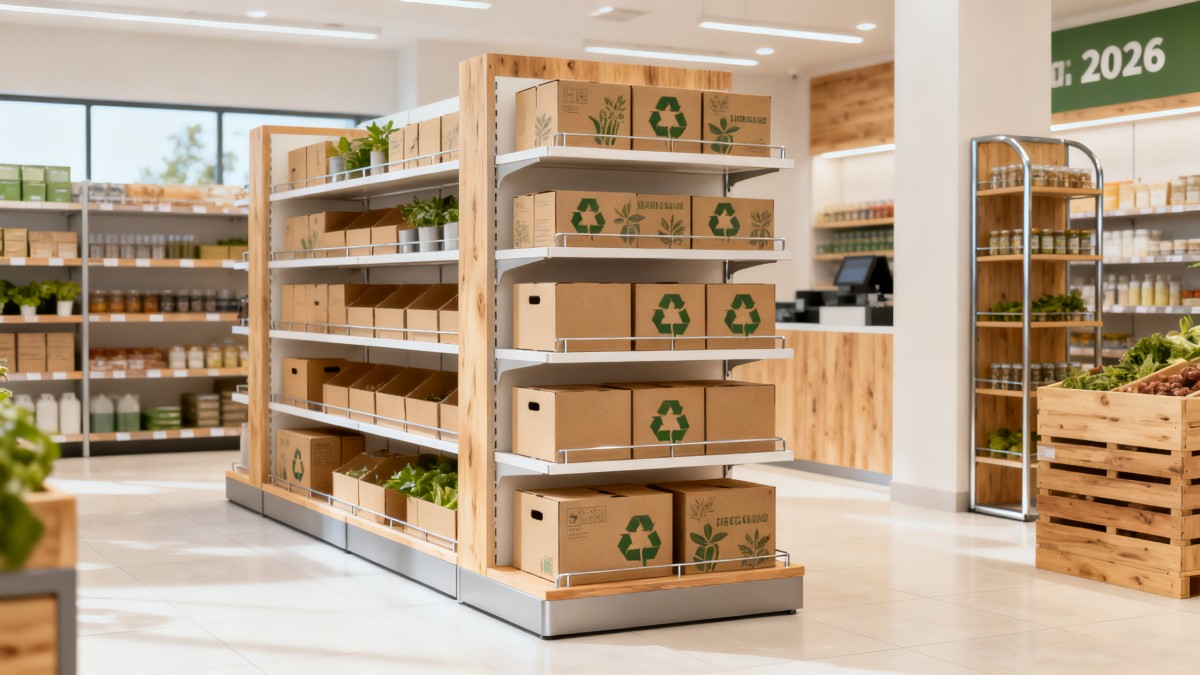
A recycled material may work well in one environment and fail in another. A low-emission coating may support compliance in one market yet miss labeling rules elsewhere.
This is the operational reality behind today’s sustainable consumer goods trends. Product selection is no longer a broad sustainability statement. It is a scenario-based decision.
Global Business & Consumer Ecosystem tracks this shift across commercial furniture, smart retail systems, consumer goods supply chains, lighting, signage, and sustainable packaging benchmarks.
The strongest choices combine environmental claims with durability, verified standards, maintenance practicality, and cross-border sourcing transparency.
Retail shelf and store-fit scenarios demand visible sustainability with operational proof
In physical retail, sustainability must be seen and verified. Shoppers notice packaging, fixtures, labels, and refill systems before they read technical reports.
However, visible eco-design alone is not enough. Products must withstand high traffic, frequent handling, cleaning chemicals, and seasonal merchandising changes.
Key judgment points for this scene
- Can recycled or bio-based materials maintain finish quality under repeated use?
- Are product claims supported by third-party certifications or traceable inputs?
- Do components support modular replacement instead of full disposal?
- Will packaging reduction affect display appeal or product protection?
Among the leading sustainable consumer goods trends, modular retail hardware and low-waste packaging systems stand out because they reduce replacement cycles and support brand consistency.
Hospitality and service environments prioritize durability, hygiene, and premium perception
Hotels, foodservice venues, and service-led spaces face a different challenge. Sustainable products must survive strict cleaning routines and still communicate comfort and quality.
Here, the best sustainable consumer goods trends are not always the most novel materials. They are the solutions that hold appearance, safety, and replacement efficiency over time.
Where decisions often shift
Compostable packaging may fit takeaway service, but moisture resistance and storage life must be tested. Natural-fiber surfaces may look premium, yet staining and wear can limit lifecycle value.
This scene rewards products with documented chemical resistance, repairability, and standardized quality consistency across locations.
Workplace and commercial interior scenarios favor lifecycle performance over simple material claims
Office systems, shared seating, acoustic elements, and lighting products now carry broader sustainability expectations tied to wellness and long-term asset planning.
In this context, sustainable consumer goods trends include low-VOC finishes, recyclable metals, responsible wood sourcing, remanufacturable components, and energy-efficient integrated controls.
Yet the decision hinge is performance over years, not launch messaging. A lower-carbon product with weak ergonomics or poor part availability can create hidden waste.
Core judgment points
- Expected service life versus replacement frequency
- Compatibility with UL, CE, BIFMA, and regional indoor safety expectations
- Availability of spare parts and refurbishment pathways
- Measured energy and maintenance impact over time
Packaging and last-mile delivery scenarios are being redefined by material accountability
Packaging is one of the most visible areas influenced by sustainable consumer goods trends. It also carries some of the highest compliance and reputation risks.
The challenge is balancing protection, transport efficiency, recyclability, labeling accuracy, and local waste infrastructure realities.
A package designed for recyclability in one country may perform poorly in another if collection systems, inks, adhesives, or multilayer structures block recovery.
Best-fit signals in 2026
High-value packaging decisions increasingly favor mono-material structures, reduced secondary layers, clearer disposal instructions, and verified recycled content statements.
This is especially relevant for cross-border goods where inconsistent sustainability language can trigger scrutiny and customer distrust.
How scenario needs differ across modern commercial ecosystems
Practical ways to align product selection with sustainable consumer goods trends
A strong strategy begins by matching sustainability targets to use conditions, not by collecting the highest number of green claims.
- Define the scene first: traffic, cleaning, climate, transport, and replacement cycle.
- Request material disclosure, certification evidence, and origin transparency.
- Compare total cost through maintenance, repairs, energy use, and disposal impact.
- Check standard alignment for market entry and commercial safety expectations.
- Pilot products in one real environment before broader rollout.
These actions turn broad sustainable consumer goods trends into measurable sourcing decisions with lower operational risk.
Common misreads that weaken sustainability outcomes
One frequent mistake is treating recycled content as the only decision metric. Without durability, verified chain-of-custody, or recoverability, the result may still be inefficient.
Another mistake is assuming all bio-based or compostable materials are automatically better. Actual waste systems, product contamination, and shelf-life demands change the answer.
A third issue is ignoring aesthetic longevity. In commercial settings, products replaced for visual degradation create waste even when technical performance remains acceptable.
The most reliable reading of sustainable consumer goods trends therefore combines environmental intent with engineering evidence, service conditions, and end-of-life realism.
Next-step actions for building smarter 2026 purchasing frameworks
Start by auditing current goods across fixtures, packaging, interior products, and customer-facing assets. Identify where sustainability claims are weakest against actual operating conditions.
Then build a comparison framework using four filters: material credibility, compliance readiness, lifecycle economics, and scene-specific performance.
For enterprises navigating multi-market sourcing, benchmark suppliers against recognized standards and transparent documentation rather than marketing language alone.
This is where intelligence platforms such as G-BCE add value, connecting product data, commercial hardware benchmarks, and cross-sector sustainability insights into practical evaluation pathways.
The companies that respond best to sustainable consumer goods trends in 2026 will not chase every new material. They will choose the right solution for the right scene, with proof.
News Recommendations
 How do packaging customization options affect minimum order quantities in Europe?
![51a6ab95581761cc26f4318be6520c15]()
Aris Katos
Future of Carbide Coatings
 Transom to Acquire Cree LED in Commercial Lighting Ownership Change
![51a6ab95581761cc26f4318be6520c15]()
Aris Katos
Future of Carbide Coatings
 How to plan customer flow in commercial design planning
![51a6ab95581761cc26f4318be6520c15]()
Aris Katos
Future of Carbide Coatings
 USTR Urged to Permanently Suspend Fees on China-Linked Ships
![51a6ab95581761cc26f4318be6520c15]()
Aris Katos
Future of Carbide Coatings
 How to choose comparable stores for retail benchmarking
![51a6ab95581761cc26f4318be6520c15]()
Aris Katos
Future of Carbide Coatings
 How does anchoring affect modular building wind load resistance?
![51a6ab95581761cc26f4318be6520c15]()
Aris Katos
Future of Carbide Coatings
 Amazon Raises European FBA Surcharge to 2% in Ten Markets From November 2
![51a6ab95581761cc26f4318be6520c15]()
Aris Katos
Future of Carbide Coatings
 How to verify a BPA-free test report for baby products
![51a6ab95581761cc26f4318be6520c15]()
Aris Katos
Future of Carbide Coatings
 China's Mandatory Classroom Lighting Standard GB 7793-2025 Takes Effect November 1
![51a6ab95581761cc26f4318be6520c15]()
Aris Katos
Future of Carbide Coatings
 How order volume affects the price of wholesale poly mailers
![51a6ab95581761cc26f4318be6520c15]()
Aris Katos
Future of Carbide Coatings
 US Imposes 50% Tariff on Certain Canadian PET Resin Imports
![51a6ab95581761cc26f4318be6520c15]()
Aris Katos
Future of Carbide Coatings
 How to read the maximum ratings in a semiconductor datasheet
![51a6ab95581761cc26f4318be6520c15]()
Aris Katos
Future of Carbide Coatings
 University of Maryland Develops Bio-Based Packaging to Extend Avocado and Cucumber Shelf Life
![51a6ab95581761cc26f4318be6520c15]()
Aris Katos
Future of Carbide Coatings
 How to verify a cookware manufacturer's induction compatibility claims
![51a6ab95581761cc26f4318be6520c15]()
Aris Katos
Future of Carbide Coatings
 Omdia Forecasts 11.6% Annual Growth in LED Display Revenue Through 2030
![51a6ab95581761cc26f4318be6520c15]()
Aris Katos
Future of Carbide Coatings
 How to verify a pulp molding packaging factory's production capacity
![51a6ab95581761cc26f4318be6520c15]()
Aris Katos
Future of Carbide Coatings
 Curion Survey: Half of Consumers Frustrated by Sustainable Packaging
![51a6ab95581761cc26f4318be6520c15]()
Aris Katos
Future of Carbide Coatings
 How to assess the credibility of market insight content
![51a6ab95581761cc26f4318be6520c15]()
Aris Katos
Future of Carbide Coatings
 US Removes 50% Additional Tariff on Selected Canadian Packaging Products
![51a6ab95581761cc26f4318be6520c15]()
Aris Katos
Future of Carbide Coatings
 Will a waterproof dimmable LED driver work with your existing dimmer?
![51a6ab95581761cc26f4318be6520c15]()
Aris Katos
Future of Carbide Coatings
 Charter Next Generation Raises Film PCR Use 30%, Advances Food-Grade Applications
![51a6ab95581761cc26f4318be6520c15]()
Aris Katos
Future of Carbide Coatings
 How to choose a dog harness and leash for a dog that pulls hard
![51a6ab95581761cc26f4318be6520c15]()
Aris Katos
Future of Carbide Coatings
 How to respect local customs when negotiating with overseas suppliers
![51a6ab95581761cc26f4318be6520c15]()
Aris Katos
Future of Carbide Coatings
 RFID Recycling Challenges Bring Paper-Based and Chipless Tags Into Focus
![51a6ab95581761cc26f4318be6520c15]()
Aris Katos
Future of Carbide Coatings
 How to choose commercial lighting for offices that reduces glare
![51a6ab95581761cc26f4318be6520c15]()
Aris Katos
Future of Carbide Coatings
 Queue Launches Fully Automated Robotic Pharmacy Kiosk for 30-Second Dispensing
![51a6ab95581761cc26f4318be6520c15]()
Aris Katos
Future of Carbide Coatings
 Can your supermarket store fixtures supplier meet your opening date?
![51a6ab95581761cc26f4318be6520c15]()
Aris Katos
Future of Carbide Coatings
 Shopify POS UI Extensions 2026-10 Adds Virtual Lists and Custom Row Templates
![51a6ab95581761cc26f4318be6520c15]()
Aris Katos
Future of Carbide Coatings
 How to assess smart office furniture suppliers’ North American support
![51a6ab95581761cc26f4318be6520c15]()
Aris Katos
Future of Carbide Coatings
 Aqara Launches Smart Lighting Range to Advance AI Spatial Intelligence
![51a6ab95581761cc26f4318be6520c15]()
Aris Katos
Future of Carbide Coatings
 How to assess demand forecasts in a lighting intelligence report
![51a6ab95581761cc26f4318be6520c15]()
Aris Katos
Future of Carbide Coatings
 Billerud推出PharmaKraft纤维基医药包装材料
![51a6ab95581761cc26f4318be6520c15]()
Aris Katos
Future of Carbide Coatings
 How to assess supplier reliability in global supply chain sourcing
![51a6ab95581761cc26f4318be6520c15]()
Aris Katos
Future of Carbide Coatings
 Omdia Forecasts 11.6% CAGR for Global LED Video Display Market in 2026–2030
![51a6ab95581761cc26f4318be6520c15]()
Aris Katos
Future of Carbide Coatings
 How to verify an LFGB testing laboratory's accreditation scope
![51a6ab95581761cc26f4318be6520c15]()
Aris Katos
Future of Carbide Coatings
 How to assess a workplace interior supplier's installation scope
![51a6ab95581761cc26f4318be6520c15]()
Aris Katos
Future of Carbide Coatings
 What records are needed for an ISO 9001 furniture factory audit?
![51a6ab95581761cc26f4318be6520c15]()
Aris Katos
Future of Carbide Coatings
 How to choose AI marketing tools that work with your existing CRM
![51a6ab95581761cc26f4318be6520c15]()
Aris Katos
Future of Carbide Coatings
 Do freight costs erase savings when buying retail fixtures wholesale?
![51a6ab95581761cc26f4318be6520c15]()
Aris Katos
Future of Carbide Coatings







































