
BPA Free Baby Bottle Factory Audit Checklist for Safer Product Launches
Time
Click Count
Launching a safer infant feeding line begins with verifying whether a bpa free baby bottle factory can support compliance, consistency, and scale.
Surface claims are not enough.
A structured audit reveals how materials are controlled, how hygiene is maintained, and how defects are prevented before market exposure grows costly.
For global sourcing and product launch planning, this checklist helps connect factory reality with safer commercialization outcomes.
When a BPA Free Baby Bottle Factory Fits a Safer Launch Scenario
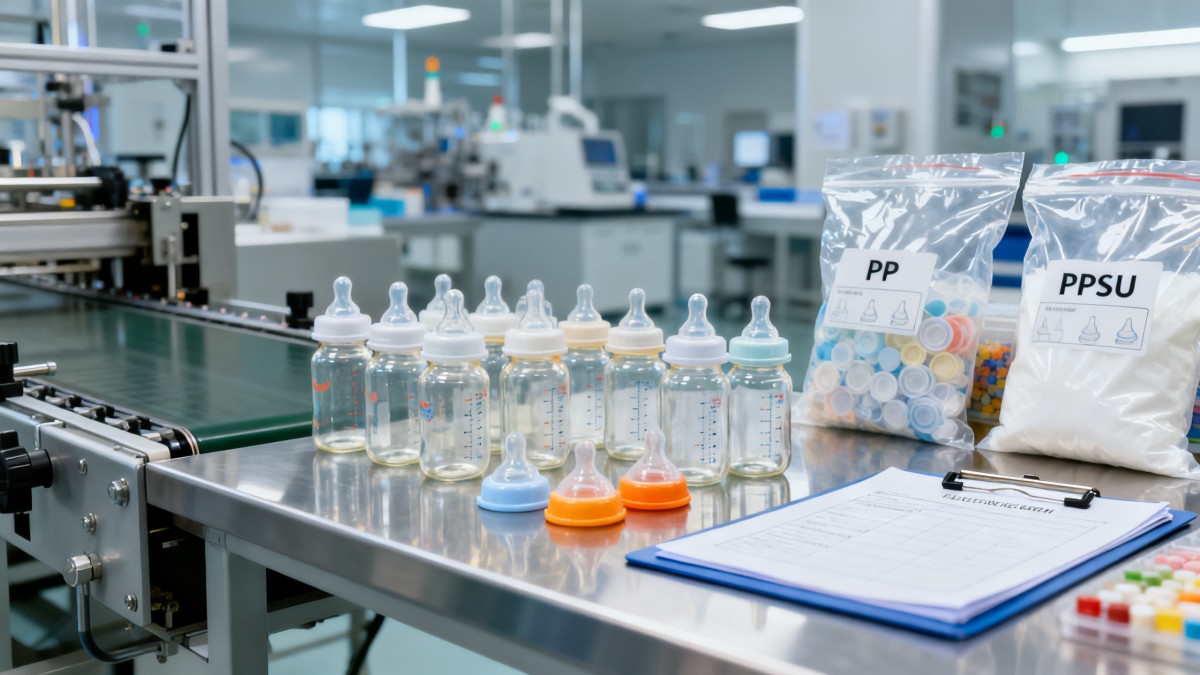
Not every launch scenario demands the same factory depth.
A pilot run, retail rollout, and multi-country expansion each create different audit priorities for a bpa free baby bottle factory.
In early-stage launches, flexibility and documentation speed often matter most.
In large retail programs, repeatability, labeling control, and complaint traceability become critical.
For cross-border launches, the factory must align material declarations with destination market rules.
This is where audit logic should move beyond price and sample appearance.
It should test whether the supplier can protect product integrity under real production pressure.
Scenario signals that require a deeper audit
- New mold development for bottle bodies, caps, or nipples
- Use of PP, PPSU, silicone, or blended material systems
- Private label packaging with regulatory claims
- Demand for food-contact testing and migration reports
- High-volume launch windows with compressed delivery dates
Audit the Material Compliance Scenario Before You Review Production Speed
The first scenario concerns material trust.
A capable bpa free baby bottle factory should prove resin source control, additive restrictions, and batch-level traceability.
Material declarations should match actual warehouse stock and production records.
If incoming resin bags lack lot numbers, the audit risk rises immediately.
Check whether food-contact materials are separated from general industrial plastics.
Storage conditions should prevent contamination, moisture issues, and mix-ups.
Material checkpoints that matter most
- Supplier certificates for BPA-free raw materials
- Lot coding linked to receiving and usage records
- Controls for regrind use or prohibition policy
- Color masterbatch approval and migration suitability
- Documented change control for resin substitutions
Ask for recent test reports, but also confirm the testing sample source.
A report has little value if the audited production line used a different material batch.
Review the Hygiene and Assembly Scenario for Infant Feeding Safety
The next scenario focuses on process hygiene.
A bpa free baby bottle factory making infant products should maintain stronger cleanliness control than general consumer plastic plants.
Observe the path from molding to trimming, washing, assembly, and packing.
Dust, open handling, and mixed workflow can compromise otherwise compliant materials.
Pay close attention to nipple handling if silicone or latex parts are included.
Contact surfaces, gloves, air filtration, and cleaning records should all be visible and current.
On-site hygiene audit points
- Controlled entry into clean assembly zones
- Separation between raw molding and final packing
- Routine line clearance between SKUs and colors
- Tool sanitation records and maintenance schedules
- Visible rejection bins and contamination response procedures
In commercial benchmarking, hygiene maturity often predicts complaint rates better than brochure quality does.
Check the Testing and Quality Scenario for Repeatable Market Entry
A safer launch depends on more than one pre-shipment inspection.
The bpa free baby bottle factory should operate a repeatable quality system covering incoming checks, in-process monitoring, and finished goods validation.
Review whether dimensions, leakage, drop resistance, odor, print adhesion, and heat performance are routinely tested.
Testing frequency matters as much as test scope.
A single retained report does not prove stable process control across many production days.
Ask for evidence in these categories
- Migration or food-contact safety reports
- Sealing and anti-leak performance records
- Thermal shock or boiling resistance test results
- Tensile or durability checks for nipples and valves
- Corrective action logs for recurring defects
A strong factory can explain not only pass results, but also failure history and process improvements.
Different Launch Scenarios Create Different Audit Priorities
The same bpa free baby bottle factory may perform well in one scenario and poorly in another.
Use a comparison grid to align audit depth with launch reality.
How to Adapt Audit Actions to Each Factory Evaluation Scenario
Practical adaptation improves audit value.
Instead of using one generic template, apply scenario-based scoring to the bpa free baby bottle factory.
Recommended actions by scenario
- For new product launches: validate tooling capability, pilot yield, and engineering change control.
- For replacement suppliers: compare retained samples against current approved standards.
- For high-volume orders: confirm machine capacity, maintenance records, and labor stability.
- For sustainability-driven ranges: verify packaging material declarations and recyclability claims.
This method aligns with broader supply chain intelligence principles used across consumer goods benchmarking.
It supports safer decisions without treating every supplier or launch path as identical.
Common Audit Misjudgments in a BPA Free Baby Bottle Factory Review
Several costly errors appear repeatedly during factory evaluation.
The first is assuming BPA-free equals fully safe.
A bpa free baby bottle factory still needs controls for additives, contamination, sealing reliability, and migration performance.
The second mistake is reviewing documents without tracing them to the line.
The third is ignoring packaging and labeling accuracy for infant use claims.
Another missed point is overvaluing showroom appearance while underchecking complaint handling records.
A reliable supplier should show how defects are identified, contained, and prevented from repeating.
Quick red flags
- Unlabeled resin or mixed storage areas
- Outdated test reports with unclear sample references
- No batch traceability from molding to shipment
- Weak sanitation records in assembly zones
- Inability to explain major defect trends
Next Steps for a More Confident Factory Audit and Product Launch
A successful audit should end with a decision path, not just a score.
Rank findings by launch impact, required correction time, and verification method.
For any bpa free baby bottle factory, separate critical failures from improvement opportunities.
Then request evidence-based closure before mass production approval.
A practical final checklist should include material proof, hygiene controls, testing records, capacity review, and traceability mapping.
That approach reduces launch risk and strengthens long-term supplier accountability across the consumer product supply chain.
In a market where safety, transparency, and technical benchmarking increasingly shape brand trust, better audits create better launches.
News Recommendations
 How do packaging customization options affect minimum order quantities in Europe?
![51a6ab95581761cc26f4318be6520c15]()
Aris Katos
Future of Carbide Coatings
 Transom to Acquire Cree LED in Commercial Lighting Ownership Change
![51a6ab95581761cc26f4318be6520c15]()
Aris Katos
Future of Carbide Coatings
 How to plan customer flow in commercial design planning
![51a6ab95581761cc26f4318be6520c15]()
Aris Katos
Future of Carbide Coatings
 USTR Urged to Permanently Suspend Fees on China-Linked Ships
![51a6ab95581761cc26f4318be6520c15]()
Aris Katos
Future of Carbide Coatings
 How to choose comparable stores for retail benchmarking
![51a6ab95581761cc26f4318be6520c15]()
Aris Katos
Future of Carbide Coatings
 How does anchoring affect modular building wind load resistance?
![51a6ab95581761cc26f4318be6520c15]()
Aris Katos
Future of Carbide Coatings
 Amazon Raises European FBA Surcharge to 2% in Ten Markets From November 2
![51a6ab95581761cc26f4318be6520c15]()
Aris Katos
Future of Carbide Coatings
 How to verify a BPA-free test report for baby products
![51a6ab95581761cc26f4318be6520c15]()
Aris Katos
Future of Carbide Coatings
 China's Mandatory Classroom Lighting Standard GB 7793-2025 Takes Effect November 1
![51a6ab95581761cc26f4318be6520c15]()
Aris Katos
Future of Carbide Coatings
 How order volume affects the price of wholesale poly mailers
![51a6ab95581761cc26f4318be6520c15]()
Aris Katos
Future of Carbide Coatings
 US Imposes 50% Tariff on Certain Canadian PET Resin Imports
![51a6ab95581761cc26f4318be6520c15]()
Aris Katos
Future of Carbide Coatings
 How to read the maximum ratings in a semiconductor datasheet
![51a6ab95581761cc26f4318be6520c15]()
Aris Katos
Future of Carbide Coatings
 University of Maryland Develops Bio-Based Packaging to Extend Avocado and Cucumber Shelf Life
![51a6ab95581761cc26f4318be6520c15]()
Aris Katos
Future of Carbide Coatings
 How to verify a cookware manufacturer's induction compatibility claims
![51a6ab95581761cc26f4318be6520c15]()
Aris Katos
Future of Carbide Coatings
 Omdia Forecasts 11.6% Annual Growth in LED Display Revenue Through 2030
![51a6ab95581761cc26f4318be6520c15]()
Aris Katos
Future of Carbide Coatings
 How to verify a pulp molding packaging factory's production capacity
![51a6ab95581761cc26f4318be6520c15]()
Aris Katos
Future of Carbide Coatings
 Curion Survey: Half of Consumers Frustrated by Sustainable Packaging
![51a6ab95581761cc26f4318be6520c15]()
Aris Katos
Future of Carbide Coatings
 How to assess the credibility of market insight content
![51a6ab95581761cc26f4318be6520c15]()
Aris Katos
Future of Carbide Coatings
 US Removes 50% Additional Tariff on Selected Canadian Packaging Products
![51a6ab95581761cc26f4318be6520c15]()
Aris Katos
Future of Carbide Coatings
 Will a waterproof dimmable LED driver work with your existing dimmer?
![51a6ab95581761cc26f4318be6520c15]()
Aris Katos
Future of Carbide Coatings
 Charter Next Generation Raises Film PCR Use 30%, Advances Food-Grade Applications
![51a6ab95581761cc26f4318be6520c15]()
Aris Katos
Future of Carbide Coatings
 How to choose a dog harness and leash for a dog that pulls hard
![51a6ab95581761cc26f4318be6520c15]()
Aris Katos
Future of Carbide Coatings
 How to respect local customs when negotiating with overseas suppliers
![51a6ab95581761cc26f4318be6520c15]()
Aris Katos
Future of Carbide Coatings
 RFID Recycling Challenges Bring Paper-Based and Chipless Tags Into Focus
![51a6ab95581761cc26f4318be6520c15]()
Aris Katos
Future of Carbide Coatings
 How to choose commercial lighting for offices that reduces glare
![51a6ab95581761cc26f4318be6520c15]()
Aris Katos
Future of Carbide Coatings
 Queue Launches Fully Automated Robotic Pharmacy Kiosk for 30-Second Dispensing
![51a6ab95581761cc26f4318be6520c15]()
Aris Katos
Future of Carbide Coatings
 Can your supermarket store fixtures supplier meet your opening date?
![51a6ab95581761cc26f4318be6520c15]()
Aris Katos
Future of Carbide Coatings
 Shopify POS UI Extensions 2026-10 Adds Virtual Lists and Custom Row Templates
![51a6ab95581761cc26f4318be6520c15]()
Aris Katos
Future of Carbide Coatings
 How to assess smart office furniture suppliers’ North American support
![51a6ab95581761cc26f4318be6520c15]()
Aris Katos
Future of Carbide Coatings
 Aqara Launches Smart Lighting Range to Advance AI Spatial Intelligence
![51a6ab95581761cc26f4318be6520c15]()
Aris Katos
Future of Carbide Coatings
 How to assess demand forecasts in a lighting intelligence report
![51a6ab95581761cc26f4318be6520c15]()
Aris Katos
Future of Carbide Coatings
 Billerud推出PharmaKraft纤维基医药包装材料
![51a6ab95581761cc26f4318be6520c15]()
Aris Katos
Future of Carbide Coatings
 How to assess supplier reliability in global supply chain sourcing
![51a6ab95581761cc26f4318be6520c15]()
Aris Katos
Future of Carbide Coatings
 Omdia Forecasts 11.6% CAGR for Global LED Video Display Market in 2026–2030
![51a6ab95581761cc26f4318be6520c15]()
Aris Katos
Future of Carbide Coatings
 How to verify an LFGB testing laboratory's accreditation scope
![51a6ab95581761cc26f4318be6520c15]()
Aris Katos
Future of Carbide Coatings
 How to assess a workplace interior supplier's installation scope
![51a6ab95581761cc26f4318be6520c15]()
Aris Katos
Future of Carbide Coatings
 What records are needed for an ISO 9001 furniture factory audit?
![51a6ab95581761cc26f4318be6520c15]()
Aris Katos
Future of Carbide Coatings
 How to choose AI marketing tools that work with your existing CRM
![51a6ab95581761cc26f4318be6520c15]()
Aris Katos
Future of Carbide Coatings
 Do freight costs erase savings when buying retail fixtures wholesale?
![51a6ab95581761cc26f4318be6520c15]()
Aris Katos
Future of Carbide Coatings







































