
Vietnam MOIT Mandates Stackable Load Labels on E-commerce Fulfillment Packs
Time
Click Count
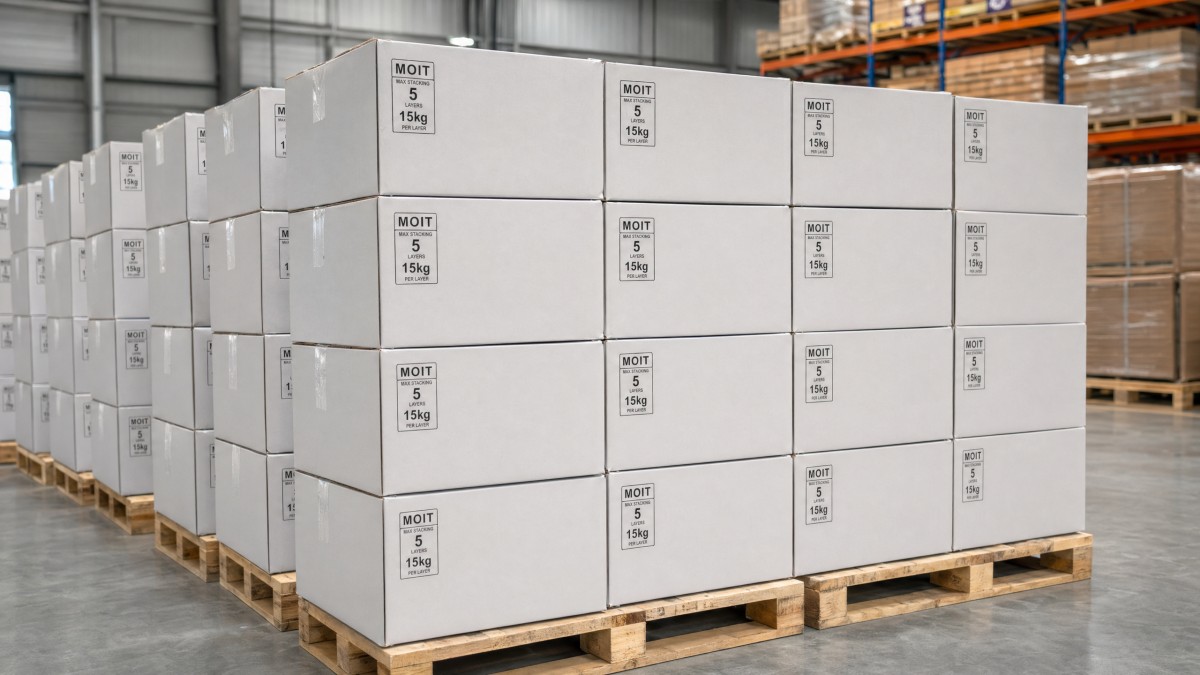
On April 28, 2026, Vietnam’s Ministry of Industry and Trade (MOIT) implemented Circular No. 12/2026/TT-BCT, requiring durable ‘stackable load markings’—indicating maximum stacking layers and per-layer weight capacity—to be affixed in a prominent position on all imported e-commerce fulfillment pack outer cartons. The regulation directly impacts Chinese e-commerce packaging suppliers and triggers mandatory re-inspection at Ho Chi Minh City and Hai Phong ports for non-compliant shipments. This development is especially relevant to exporters, packaging manufacturers, logistics service providers, and cross-border supply chain operators serving the Vietnamese e-commerce market.
Event Overview
Vietnam’s Ministry of Industry and Trade (MOIT) issued Circular No. 12/2026/TT-BCT, effective April 28, 2026. It mandates that all e-commerce fulfillment pack outer boxes imported into Vietnam must display a durable stackable load marking, clearly indicating both the maximum number of stacked layers and the permissible weight per layer. The marking must be affixed in a conspicuous location on the outer carton and registered with Vietnam’s Standard Metrology and Quality Institute (STAMEQ). The requirement applies uniformly to all Chinese export suppliers of e-commerce packaging materials. Non-compliant consignments will undergo mandatory container opening and physical inspection at Ho Chi Minh City Port and Hai Phong Port.
Which Subsectors Are Affected
Direct Exporters & Cross-border E-commerce Sellers
These entities are responsible for ensuring compliance of final shipped packages. Since the labeling obligation falls on the outer carton delivered to Vietnam, sellers using third-party fulfillment centers—or those consolidating orders across multiple suppliers—must verify label presence, durability, and STAMEQ registration status before shipment. Failure may delay customs clearance or trigger port-side rework, increasing landed cost and delivery lead time.
Packaging Manufacturers & Suppliers (especially China-based)
Suppliers producing e-commerce fulfillment packs for export to Vietnam must now integrate certified stackable load markings into their standard production workflow. This includes sourcing compliant label materials, verifying printing durability (e.g., resistance to moisture, abrasion), and initiating STAMEQ registration—a new procedural step not previously required for general export packaging. Unregistered labels risk rejection even if physically correct.
Third-Party Logistics & Fulfillment Service Providers
Domestic and regional 3PLs handling consolidation, labeling, or kitting for Vietnamese-bound e-commerce goods must adapt operational protocols. They are increasingly liable for label verification pre-shipment. Their quality control checkpoints now require documented confirmation of both label content accuracy and STAMEQ registration reference numbers—not just visual presence.
Supply Chain Compliance & Certification Intermediaries
Firms offering regulatory support, documentation review, or STAMEQ liaison services face heightened demand for verification workflows specific to this circular. However, no official guidance has yet been published by STAMEQ on registration timelines, fee structures, or accepted technical formats—creating near-term uncertainty for intermediaries advising clients.
What Relevant Enterprises or Practitioners Should Focus On — And How to Respond Now
Confirm STAMEQ registration requirements and timelines
Current publicly available information does not specify whether registration is supplier-level or product-specific, nor does it clarify processing duration or documentation needed. Enterprises should monitor MOIT and STAMEQ official channels for updated registration procedures—and avoid assuming prior certifications (e.g., ISO, ASTM) fulfill this new requirement.
Validate label durability and placement against actual port-handling conditions
‘Durable’ is defined contextually: labels must remain legible after typical warehouse stacking, humidity exposure, and manual handling during transshipment. Enterprises should test label adhesion and print legibility under simulated Vietnamese port and inland logistics conditions—not only under lab settings—before mass deployment.
Distinguish between policy signal and enforceable obligation
The circular entered force on April 28, 2026, but enforcement thresholds (e.g., grace period, sampling rate for inspections, consequences beyond re-inspection) have not been publicly disclosed. Until such details emerge, treating the rule as fully operational—rather than aspirational—is prudent, particularly for high-volume or time-sensitive shipments.
Update procurement and labeling SOPs—including vendor contracts
Buyers must revise purchase orders and supplier agreements to explicitly require STAMEQ-registered stackable load markings, with contractual liability assigned for non-compliance. Internal SOPs should assign responsibility for label verification to a defined role (e.g., export compliance officer), not left to warehouse staff without training.
Editorial Perspective / Industry Observation
Observably, this circular signals Vietnam’s institutional shift toward harmonizing e-commerce logistics standards with physical infrastructure realities—particularly port congestion and warehouse stacking practices. Analysis shows it is less a sudden trade barrier and more a formalization of existing de facto expectations among Vietnamese importers and customs officers. From an industry perspective, it reflects growing regulatory attention on packaging as part of supply chain safety and efficiency—not merely as a container. Current enforcement appears focused on traceability and accountability rather than punitive sanctions, suggesting the priority is systemic compliance adoption over immediate penalties. That said, the absence of transitional provisions or phased implementation means the rule functions operationally as a hard deadline.
Conclusion: This regulation marks a procedural tightening—not a market access restriction—but one that redefines baseline compliance for e-commerce packaging entering Vietnam. It underscores how seemingly granular packaging requirements can cascade across procurement, labeling, certification, and port logistics functions. Currently, it is more appropriately understood as a structural adjustment in Vietnam’s import governance framework for fast-moving e-commerce goods, rather than an isolated labeling mandate.
Source: Vietnam Ministry of Industry and Trade (MOIT), Circular No. 12/2026/TT-BCT, effective April 28, 2026. STAMEQ registration process details remain pending official publication and are subject to ongoing monitoring.
News Recommendations
 How do packaging customization options affect minimum order quantities in Europe?
![51a6ab95581761cc26f4318be6520c15]()
Aris Katos
Future of Carbide Coatings
 Transom to Acquire Cree LED in Commercial Lighting Ownership Change
![51a6ab95581761cc26f4318be6520c15]()
Aris Katos
Future of Carbide Coatings
 How to plan customer flow in commercial design planning
![51a6ab95581761cc26f4318be6520c15]()
Aris Katos
Future of Carbide Coatings
 USTR Urged to Permanently Suspend Fees on China-Linked Ships
![51a6ab95581761cc26f4318be6520c15]()
Aris Katos
Future of Carbide Coatings
 How to choose comparable stores for retail benchmarking
![51a6ab95581761cc26f4318be6520c15]()
Aris Katos
Future of Carbide Coatings
 How does anchoring affect modular building wind load resistance?
![51a6ab95581761cc26f4318be6520c15]()
Aris Katos
Future of Carbide Coatings
 Amazon Raises European FBA Surcharge to 2% in Ten Markets From November 2
![51a6ab95581761cc26f4318be6520c15]()
Aris Katos
Future of Carbide Coatings
 How to verify a BPA-free test report for baby products
![51a6ab95581761cc26f4318be6520c15]()
Aris Katos
Future of Carbide Coatings
 China's Mandatory Classroom Lighting Standard GB 7793-2025 Takes Effect November 1
![51a6ab95581761cc26f4318be6520c15]()
Aris Katos
Future of Carbide Coatings
 How order volume affects the price of wholesale poly mailers
![51a6ab95581761cc26f4318be6520c15]()
Aris Katos
Future of Carbide Coatings
 US Imposes 50% Tariff on Certain Canadian PET Resin Imports
![51a6ab95581761cc26f4318be6520c15]()
Aris Katos
Future of Carbide Coatings
 How to read the maximum ratings in a semiconductor datasheet
![51a6ab95581761cc26f4318be6520c15]()
Aris Katos
Future of Carbide Coatings
 University of Maryland Develops Bio-Based Packaging to Extend Avocado and Cucumber Shelf Life
![51a6ab95581761cc26f4318be6520c15]()
Aris Katos
Future of Carbide Coatings
 How to verify a cookware manufacturer's induction compatibility claims
![51a6ab95581761cc26f4318be6520c15]()
Aris Katos
Future of Carbide Coatings
 Omdia Forecasts 11.6% Annual Growth in LED Display Revenue Through 2030
![51a6ab95581761cc26f4318be6520c15]()
Aris Katos
Future of Carbide Coatings
 How to verify a pulp molding packaging factory's production capacity
![51a6ab95581761cc26f4318be6520c15]()
Aris Katos
Future of Carbide Coatings
 Curion Survey: Half of Consumers Frustrated by Sustainable Packaging
![51a6ab95581761cc26f4318be6520c15]()
Aris Katos
Future of Carbide Coatings
 How to assess the credibility of market insight content
![51a6ab95581761cc26f4318be6520c15]()
Aris Katos
Future of Carbide Coatings
 US Removes 50% Additional Tariff on Selected Canadian Packaging Products
![51a6ab95581761cc26f4318be6520c15]()
Aris Katos
Future of Carbide Coatings
 Will a waterproof dimmable LED driver work with your existing dimmer?
![51a6ab95581761cc26f4318be6520c15]()
Aris Katos
Future of Carbide Coatings
 Charter Next Generation Raises Film PCR Use 30%, Advances Food-Grade Applications
![51a6ab95581761cc26f4318be6520c15]()
Aris Katos
Future of Carbide Coatings
 How to choose a dog harness and leash for a dog that pulls hard
![51a6ab95581761cc26f4318be6520c15]()
Aris Katos
Future of Carbide Coatings
 How to respect local customs when negotiating with overseas suppliers
![51a6ab95581761cc26f4318be6520c15]()
Aris Katos
Future of Carbide Coatings
 RFID Recycling Challenges Bring Paper-Based and Chipless Tags Into Focus
![51a6ab95581761cc26f4318be6520c15]()
Aris Katos
Future of Carbide Coatings
 How to choose commercial lighting for offices that reduces glare
![51a6ab95581761cc26f4318be6520c15]()
Aris Katos
Future of Carbide Coatings
 Queue Launches Fully Automated Robotic Pharmacy Kiosk for 30-Second Dispensing
![51a6ab95581761cc26f4318be6520c15]()
Aris Katos
Future of Carbide Coatings
 Can your supermarket store fixtures supplier meet your opening date?
![51a6ab95581761cc26f4318be6520c15]()
Aris Katos
Future of Carbide Coatings
 Shopify POS UI Extensions 2026-10 Adds Virtual Lists and Custom Row Templates
![51a6ab95581761cc26f4318be6520c15]()
Aris Katos
Future of Carbide Coatings
 How to assess smart office furniture suppliers’ North American support
![51a6ab95581761cc26f4318be6520c15]()
Aris Katos
Future of Carbide Coatings
 Aqara Launches Smart Lighting Range to Advance AI Spatial Intelligence
![51a6ab95581761cc26f4318be6520c15]()
Aris Katos
Future of Carbide Coatings
 How to assess demand forecasts in a lighting intelligence report
![51a6ab95581761cc26f4318be6520c15]()
Aris Katos
Future of Carbide Coatings
 Billerud推出PharmaKraft纤维基医药包装材料
![51a6ab95581761cc26f4318be6520c15]()
Aris Katos
Future of Carbide Coatings
 How to assess supplier reliability in global supply chain sourcing
![51a6ab95581761cc26f4318be6520c15]()
Aris Katos
Future of Carbide Coatings
 Omdia Forecasts 11.6% CAGR for Global LED Video Display Market in 2026–2030
![51a6ab95581761cc26f4318be6520c15]()
Aris Katos
Future of Carbide Coatings
 How to verify an LFGB testing laboratory's accreditation scope
![51a6ab95581761cc26f4318be6520c15]()
Aris Katos
Future of Carbide Coatings
 How to assess a workplace interior supplier's installation scope
![51a6ab95581761cc26f4318be6520c15]()
Aris Katos
Future of Carbide Coatings
 What records are needed for an ISO 9001 furniture factory audit?
![51a6ab95581761cc26f4318be6520c15]()
Aris Katos
Future of Carbide Coatings
 How to choose AI marketing tools that work with your existing CRM
![51a6ab95581761cc26f4318be6520c15]()
Aris Katos
Future of Carbide Coatings
 Do freight costs erase savings when buying retail fixtures wholesale?
![51a6ab95581761cc26f4318be6520c15]()
Aris Katos
Future of Carbide Coatings







































