MPS Launches 1,800 National Standard Revisions, Adds Mandatory Biodegradability for E-Commerce Fulfillment Packs
Time
Click Count
On May 12, 2026, the State Administration for Market Regulation (SAMR) announced the launch of its 2026 national standard revision program — covering 1,800 standards — with a newly introduced mandatory biodegradability requirement for e-commerce fulfillment packaging. The move directly targets export-oriented e-commerce logistics and reflects mounting regulatory emphasis on circular economy compliance in cross-border supply chains.
Event Overview
On May 12, 2026, SAMR officially launched the 2026 National Standard Revision Program, comprising 1,800 standards. Among them, the Specification for E-Commerce Warehousing and Packaging was updated to include a new mandatory clause: all export-bound e-commerce fulfillment packs must declare their biodegradability rate, and the measured biobased content — tested per GB/T 38082-2026 — must be no less than 70%. The provision takes effect on October 1, 2027.

Industries Affected
Direct Export Trading Enterprises
These enterprises — including cross-border B2C platforms, branded e-commerce sellers, and third-party export agents — face immediate labeling, documentation, and certification obligations. Non-compliant packaging may trigger customs rejection, shipment delays, or post-import penalties in destination markets that recognize Chinese standards as de facto entry requirements (e.g., EU-aligned ASEAN partners). Their exposure lies not only in physical packaging but also in audit readiness and traceability systems.
Raw Material Procurement Enterprises
Suppliers sourcing biopolymers (e.g., PLA, PHA, starch blends) must now ensure batch-level conformity with GB/T 38082-2026 test protocols — not just supplier declarations. The 70% threshold raises the bar for material blending practices; previously accepted 50–60% biobased composites will no longer qualify. Procurement teams will need to renegotiate technical specifications and demand certified test reports from upstream resin producers.
Package Manufacturing Enterprises
Converters producing fulfillment packs (mailers, padded envelopes, void-fill pouches) must integrate new testing workflows, revise printing templates to include mandatory biodegradability statements, and validate production consistency across runs. Since GB/T 38082-2026 specifies accelerated soil burial and enzymatic hydrolysis testing methods, manufacturers lacking accredited lab access will need to outsource verification — adding lead time and cost.
Supply Chain Service Providers
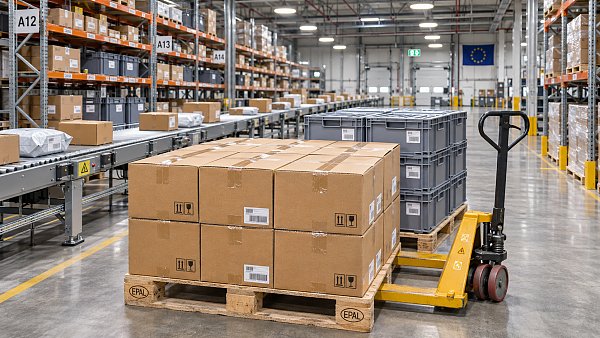
Third-party logistics (3PL) providers, fulfillment centers, and packaging-as-a-service (PaaS) platforms must update their inbound quality checklists and digital warehouse management systems (WMS) to flag non-declared or non-compliant packs. Their liability exposure increases if they handle, store, or consolidate shipments containing unlabelled or sub-threshold packaging — especially under future SAMR spot audits targeting fulfillment hubs.
Key Focus Areas and Recommended Actions
Verify Current Packaging Against GB/T 38082-2026 Testing Protocols
Enterprises should commission accredited labs to retest existing packaging stock using the finalized 2026 version — not earlier editions — as methodology updates (e.g., revised incubation duration, microbial inoculum source) may alter pass/fail outcomes.
Update Labeling and Documentation Systems Ahead of 2027 Enforcement
Biodegradability statements must appear legibly on primary packaging (not just invoices or packing slips). Digital systems — ERP, WMS, and e-invoicing modules — must support structured data fields for biobased content %, test standard reference, and certificate expiry dates.
Engage Raw Material Suppliers on Batch Traceability and Certificate Renewal Cycles
Since GB/T 38082-2026 requires lot-specific validation, procurement contracts should specify minimum certificate validity (e.g., 12 months), retention periods for raw material test reports, and rights to request retesting upon suspicion of formulation drift.
Editorial Perspective / Industry Observation
Observably, this is not merely a packaging regulation — it signals SAMR’s strategic pivot toward embedding environmental performance into trade-enabling infrastructure. Unlike previous voluntary green packaging guidelines, the binding nature of the 70% threshold, combined with explicit enforcement timing, suggests alignment with China’s broader ‘dual carbon’ export policy framework. Analysis shows that the rule disproportionately impacts SME exporters reliant on generic white-label packaging; larger firms with in-house R&D and certification capacity are better positioned to absorb transition costs. From an industry standpoint, the standard’s linkage to GB/T 38082-2026 — rather than ISO 14855 or ASTM D6400 — indicates intentional calibration to domestic testing capacity and regional soil conditions, potentially limiting global harmonization in the near term.
Conclusion
This revision marks a structural inflection point: environmental compliance is shifting from a reputational differentiator to a baseline operational prerequisite for e-commerce export. While the 16-month implementation window offers breathing room, the technical specificity and testing rigor imply that early-mover adaptation — not last-minute compliance — will define competitive resilience. A rational reading is that SAMR intends this standard to serve as a benchmark for future circular-economy mandates across logistics, electronics, and fast-moving consumer goods sectors.
Source Attribution
Official announcement issued by the State Administration for Market Regulation (SAMR), May 12, 2026. Full text available via samr.gov.cn. Note: GB/T 38082-2026 remains under public consultation phase; final text and annexes are pending official promulgation. Stakeholders are advised to monitor SAMR’s Standardization Administration of China (SAC) portal for updates on test method clarifications and transitional guidance.
News Recommendations
 How do packaging customization options affect minimum order quantities in Europe?
![51a6ab95581761cc26f4318be6520c15]()
Aris Katos
Future of Carbide Coatings
 Transom to Acquire Cree LED in Commercial Lighting Ownership Change
![51a6ab95581761cc26f4318be6520c15]()
Aris Katos
Future of Carbide Coatings
 How to plan customer flow in commercial design planning
![51a6ab95581761cc26f4318be6520c15]()
Aris Katos
Future of Carbide Coatings
 USTR Urged to Permanently Suspend Fees on China-Linked Ships
![51a6ab95581761cc26f4318be6520c15]()
Aris Katos
Future of Carbide Coatings
 How to choose comparable stores for retail benchmarking
![51a6ab95581761cc26f4318be6520c15]()
Aris Katos
Future of Carbide Coatings
 How does anchoring affect modular building wind load resistance?
![51a6ab95581761cc26f4318be6520c15]()
Aris Katos
Future of Carbide Coatings
 Amazon Raises European FBA Surcharge to 2% in Ten Markets From November 2
![51a6ab95581761cc26f4318be6520c15]()
Aris Katos
Future of Carbide Coatings
 How to verify a BPA-free test report for baby products
![51a6ab95581761cc26f4318be6520c15]()
Aris Katos
Future of Carbide Coatings
 China's Mandatory Classroom Lighting Standard GB 7793-2025 Takes Effect November 1
![51a6ab95581761cc26f4318be6520c15]()
Aris Katos
Future of Carbide Coatings
 How order volume affects the price of wholesale poly mailers
![51a6ab95581761cc26f4318be6520c15]()
Aris Katos
Future of Carbide Coatings
 US Imposes 50% Tariff on Certain Canadian PET Resin Imports
![51a6ab95581761cc26f4318be6520c15]()
Aris Katos
Future of Carbide Coatings
 How to read the maximum ratings in a semiconductor datasheet
![51a6ab95581761cc26f4318be6520c15]()
Aris Katos
Future of Carbide Coatings
 University of Maryland Develops Bio-Based Packaging to Extend Avocado and Cucumber Shelf Life
![51a6ab95581761cc26f4318be6520c15]()
Aris Katos
Future of Carbide Coatings
 How to verify a cookware manufacturer's induction compatibility claims
![51a6ab95581761cc26f4318be6520c15]()
Aris Katos
Future of Carbide Coatings
 Omdia Forecasts 11.6% Annual Growth in LED Display Revenue Through 2030
![51a6ab95581761cc26f4318be6520c15]()
Aris Katos
Future of Carbide Coatings
 How to verify a pulp molding packaging factory's production capacity
![51a6ab95581761cc26f4318be6520c15]()
Aris Katos
Future of Carbide Coatings
 Curion Survey: Half of Consumers Frustrated by Sustainable Packaging
![51a6ab95581761cc26f4318be6520c15]()
Aris Katos
Future of Carbide Coatings
 How to assess the credibility of market insight content
![51a6ab95581761cc26f4318be6520c15]()
Aris Katos
Future of Carbide Coatings
 US Removes 50% Additional Tariff on Selected Canadian Packaging Products
![51a6ab95581761cc26f4318be6520c15]()
Aris Katos
Future of Carbide Coatings
 Will a waterproof dimmable LED driver work with your existing dimmer?
![51a6ab95581761cc26f4318be6520c15]()
Aris Katos
Future of Carbide Coatings
 Charter Next Generation Raises Film PCR Use 30%, Advances Food-Grade Applications
![51a6ab95581761cc26f4318be6520c15]()
Aris Katos
Future of Carbide Coatings
 How to choose a dog harness and leash for a dog that pulls hard
![51a6ab95581761cc26f4318be6520c15]()
Aris Katos
Future of Carbide Coatings
 How to respect local customs when negotiating with overseas suppliers
![51a6ab95581761cc26f4318be6520c15]()
Aris Katos
Future of Carbide Coatings
 RFID Recycling Challenges Bring Paper-Based and Chipless Tags Into Focus
![51a6ab95581761cc26f4318be6520c15]()
Aris Katos
Future of Carbide Coatings
 How to choose commercial lighting for offices that reduces glare
![51a6ab95581761cc26f4318be6520c15]()
Aris Katos
Future of Carbide Coatings
 Queue Launches Fully Automated Robotic Pharmacy Kiosk for 30-Second Dispensing
![51a6ab95581761cc26f4318be6520c15]()
Aris Katos
Future of Carbide Coatings
 Can your supermarket store fixtures supplier meet your opening date?
![51a6ab95581761cc26f4318be6520c15]()
Aris Katos
Future of Carbide Coatings
 Shopify POS UI Extensions 2026-10 Adds Virtual Lists and Custom Row Templates
![51a6ab95581761cc26f4318be6520c15]()
Aris Katos
Future of Carbide Coatings
 How to assess smart office furniture suppliers’ North American support
![51a6ab95581761cc26f4318be6520c15]()
Aris Katos
Future of Carbide Coatings
 Aqara Launches Smart Lighting Range to Advance AI Spatial Intelligence
![51a6ab95581761cc26f4318be6520c15]()
Aris Katos
Future of Carbide Coatings
 How to assess demand forecasts in a lighting intelligence report
![51a6ab95581761cc26f4318be6520c15]()
Aris Katos
Future of Carbide Coatings
 Billerud推出PharmaKraft纤维基医药包装材料
![51a6ab95581761cc26f4318be6520c15]()
Aris Katos
Future of Carbide Coatings
 How to assess supplier reliability in global supply chain sourcing
![51a6ab95581761cc26f4318be6520c15]()
Aris Katos
Future of Carbide Coatings
 Omdia Forecasts 11.6% CAGR for Global LED Video Display Market in 2026–2030
![51a6ab95581761cc26f4318be6520c15]()
Aris Katos
Future of Carbide Coatings
 How to verify an LFGB testing laboratory's accreditation scope
![51a6ab95581761cc26f4318be6520c15]()
Aris Katos
Future of Carbide Coatings
 How to assess a workplace interior supplier's installation scope
![51a6ab95581761cc26f4318be6520c15]()
Aris Katos
Future of Carbide Coatings
 What records are needed for an ISO 9001 furniture factory audit?
![51a6ab95581761cc26f4318be6520c15]()
Aris Katos
Future of Carbide Coatings
 How to choose AI marketing tools that work with your existing CRM
![51a6ab95581761cc26f4318be6520c15]()
Aris Katos
Future of Carbide Coatings
 Do freight costs erase savings when buying retail fixtures wholesale?
![51a6ab95581761cc26f4318be6520c15]()
Aris Katos
Future of Carbide Coatings