
Choosing a POS System Manufacturer for Long-Term Stability and Support
Time
Click Count
Selecting the right pos system manufacturer is a strategic decision that affects operational continuity, upgrade flexibility, and long-term service reliability. For business decision-makers managing retail transformation, global sourcing, or multi-site expansion, understanding how a manufacturer supports product quality, compliance, integration, and after-sales performance is essential to reducing risk and sustaining growth.
Why the Manufacturer Matters More Than the Device
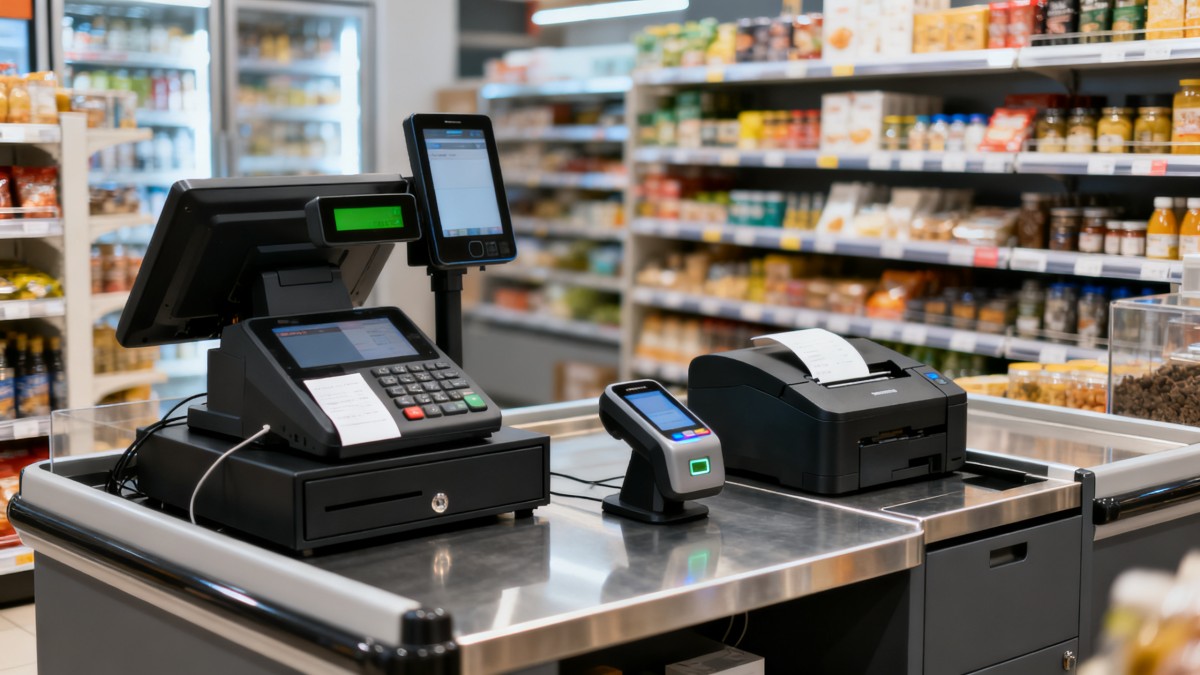
When companies evaluate POS hardware, many start by comparing screen size, processor speed, touch responsiveness, or price. Those specifications matter, but they are not what determines long-term success. For enterprise buyers, the bigger question is whether the manufacturer can support the system across its full operating life.
A POS terminal is not a standalone purchase. It becomes part of a larger retail infrastructure that includes payment workflows, software platforms, peripherals, compliance requirements, maintenance schedules, and future upgrade cycles. If the manufacturer lacks stability, engineering depth, or service discipline, even a well-designed product can become a source of operational risk.
This is why choosing a POS system manufacturer should be treated as a business continuity decision, not simply a procurement exercise. The right partner reduces downtime, simplifies expansion, supports standardization across locations, and protects your investment over time. The wrong one can create hidden costs through inconsistent product quality, short product lifecycles, poor spare-parts planning, and weak technical support.
What Business Decision-Makers Are Really Trying to Solve
Most enterprise buyers searching for a POS system manufacturer are not just looking for a supplier. They are trying to answer a more complex set of commercial questions. Can this manufacturer support a rollout across multiple sites or countries? Will the hardware remain available long enough to standardize operations? Can the devices integrate with current and future software ecosystems? What happens if failures occur at scale?
For executives overseeing retail operations, sourcing, IT infrastructure, or commercial development, the core concern is risk reduction. They want hardware that performs consistently, support that responds quickly, and a supplier relationship that remains viable through expansion, refresh cycles, and changing technology demands.
They also need confidence that the manufacturer understands real deployment environments. A POS terminal in a flagship store, quick-service restaurant, pharmacy, hotel, or self-service retail point may face very different operating conditions. Durability, cable management, thermal performance, peripheral compatibility, and enclosure design all affect uptime in ways that do not appear clearly on a basic product sheet.
How to Judge Long-Term Stability in a POS System Manufacturer
Long-term stability starts with the manufacturer’s operational maturity. Buyers should examine how long the company has been producing POS hardware, whether it owns core engineering capabilities, and how consistently it serves commercial clients rather than relying on short-run opportunistic production. A stable manufacturer usually shows evidence of repeatable product platforms, documented quality systems, and structured lifecycle planning.
Financial and organizational resilience also matter. A manufacturer may offer attractive pricing, but if it lacks supply chain depth, quality control discipline, or a realistic product roadmap, the savings can disappear quickly. Delayed lead times, abrupt component substitutions, and product discontinuations often create higher total cost than a more reliable supplier with stronger planning.
Decision-makers should also assess whether the manufacturer can support growth beyond the first order. A supplier that performs well for a pilot project may not have the systems needed for regional or global deployment. Ask about production capacity, component sourcing strategy, buffer inventory, engineering change control, and how product consistency is maintained across batches.
Another important signal is lifecycle transparency. A serious POS system manufacturer should be able to explain expected product availability, end-of-life policies, replacement models, and compatibility strategy. If your business needs standard hardware for three to five years, lifecycle discipline is not optional. It directly affects deployment continuity, training consistency, and maintenance efficiency.
Product Quality Is Not Just Build Quality
Many buyers interpret quality as physical durability alone, but enterprise POS quality is broader. It includes electrical reliability, thermal stability, motherboard consistency, touchscreen performance, peripheral interoperability, mounting precision, and resistance to wear in daily use. It also includes software-related stability at the hardware layer, such as BIOS control, operating system compatibility, and driver support.
In practice, quality should be evaluated through both design and process. The design side covers materials, structural integrity, port layout, fanless architecture where applicable, display readability, and serviceability. The process side covers testing protocols, inspection checkpoints, traceability, and how defects are analyzed and corrected.
For commercial buyers, a manufacturer’s quality assurance system often tells more than a polished sales presentation. Ask what failure testing is performed, how environmental conditions are simulated, and whether the company tracks field-return data. If a supplier cannot clearly describe its quality procedures, it may struggle to support enterprise-grade deployment.
Consistency is equally important. One high-performing sample unit does not prove reliable manufacturing. Buyers need assurance that the hundredth or thousandth terminal will perform to the same standard as the first. This is especially critical for chains seeking predictable installation, maintenance, and user experience across locations.
Compliance, Certification, and Market Readiness
For companies operating across markets, compliance is a practical issue, not a paperwork exercise. A capable POS system manufacturer should understand relevant regulatory and certification requirements, including electrical safety, electromagnetic compatibility, and regional market standards. Depending on deployment geography, certifications such as CE, FCC, UL, or RoHS can affect import eligibility, insurance acceptance, and project approval.
Business buyers should verify not only whether certifications exist, but whether they apply to the exact configuration being purchased. If modifications are made to the enclosure, power system, display, or wireless modules, compliance status may change. Experienced manufacturers are more likely to handle this properly and document it clearly.
Market readiness also includes practical deployment considerations such as local power compatibility, language support for documentation, accessory availability, and packaging suitable for international shipment. These details may seem operational, but they directly affect rollout speed and implementation quality.
Integration Capability Often Determines Real-World Value
Even excellent hardware can underperform if integration is weak. Business decision-makers should evaluate how well a manufacturer supports interoperability with operating systems, POS software, payment devices, barcode scanners, printers, customer displays, and mounting systems. In modern retail, hardware must function smoothly within a connected ecosystem rather than as an isolated terminal.
This is particularly important for organizations navigating omnichannel transformation, self-service deployment, or hybrid store formats. As retail environments become more digital, POS hardware increasingly needs to interact with inventory tools, loyalty systems, cloud management platforms, and analytics frameworks. A manufacturer that understands these operational realities can deliver more long-term value than one focused only on hardware assembly.
Ask whether the manufacturer provides SDK support, technical documentation, interface testing, and customization options for ports, brackets, enclosures, or embedded modules. These capabilities can make the difference between a smooth implementation and an expensive workaround.
Upgrade flexibility matters as well. If your business expects to add new peripherals, payment technologies, or digital services over time, the platform should not become obsolete too quickly. A future-ready manufacturer designs with modularity, compatibility, and migration planning in mind.
After-Sales Support Is Where Supplier Quality Becomes Visible
Support quality is often the clearest dividing line between a transactional vendor and a strategic manufacturing partner. Problems rarely appear at the quotation stage. They appear after deployment, when units fail in the field, spare parts are needed, software images need updating, or replacement timelines become critical.
For this reason, after-sales support should be assessed with the same seriousness as price and product design. Ask how warranty claims are handled, what response times are typical, whether remote diagnostics are available, and how spare parts are stocked. If you operate multiple sites, clarify whether support can scale accordingly.
The best manufacturers treat support as a structured system. They provide clear escalation paths, serial number traceability, issue reporting mechanisms, and service documentation. They also understand that enterprise customers need predictable communication, not vague reassurances.
For decision-makers, one useful question is simple: what happens if 5 percent of deployed units develop the same issue within six months? The manufacturer’s answer will reveal whether it has a true field-support process or is improvising. Long-term support reliability depends less on promises and more on systems.
Total Cost of Ownership Matters More Than Initial Unit Price
Low unit cost can be attractive during procurement, but it rarely captures the full economics of a POS deployment. The better approach is to compare total cost of ownership across the product lifecycle. That includes installation efficiency, expected failure rate, support responsiveness, parts availability, energy use, compatibility with existing infrastructure, and replacement planning.
A lower-priced device from a weaker manufacturer may require more field service, shorter replacement cycles, and greater IT intervention. Those costs can quickly outweigh the original savings. By contrast, a more dependable POS system manufacturer may deliver better long-term value through uptime, standardization, and lower maintenance burden.
For chains and multi-site businesses, standardization itself creates economic value. When terminals share common configurations, support processes, accessories, and training materials, operations become easier to scale. Manufacturers that support long lifecycle consistency can materially reduce complexity across the business.
Decision-makers should therefore evaluate proposals with a business-case lens. Consider expected service life, deployment environment, support model, and growth plans. The best choice is usually the one that lowers operational friction over time, not simply the one with the lowest purchase quote.
Questions to Ask Before Shortlisting a POS System Manufacturer
To move from vendor comparison to confident selection, buyers should ask direct questions that reveal maturity, transparency, and operational fit. Start with product lifecycle: how long will this model remain available, and what is the transition plan if components change? This helps prevent disruption during phased rollouts.
Next, ask about quality systems and field performance. What tests are conducted before shipment? How are defects tracked? What are the most common service issues reported in similar deployments? Serious manufacturers can discuss these topics with specificity.
Then address supply chain resilience. Where do critical components come from? What happens if a chipset or display module becomes constrained? How does the company manage substitutions without compromising compatibility or certification? These questions are increasingly important in volatile global sourcing conditions.
Support questions should be equally detailed. What is the warranty structure? How quickly can spare parts be shipped? Is there documentation for installation, maintenance, and troubleshooting? Can engineering support assist with software integration or hardware customization?
Finally, ask for relevant references or case examples. A manufacturer that has successfully supported similar business types, site counts, or regional deployments is usually better positioned to meet enterprise expectations.
What a Strong Manufacturer Partnership Looks Like in Practice
The best manufacturer relationships are collaborative, not merely transactional. A strong partner aligns product capability with your operational model, rollout schedule, technical architecture, and service expectations. It communicates clearly about constraints, proposes workable solutions, and supports planning beyond the first shipment.
In practice, this means the manufacturer can help you balance standardization with customization. It can advise on mounting options, peripheral compatibility, enclosure durability, and deployment-specific design choices. It can also support phased expansion without forcing unnecessary hardware fragmentation.
For businesses modernizing stores or scaling internationally, this partnership model is especially valuable. It reduces the risk of choosing hardware that works in a showroom but fails under commercial pressure. It also supports better coordination across sourcing, IT, operations, and brand implementation teams.
Ultimately, a dependable POS system manufacturer contributes to retail resilience. It supports smoother transactions, more predictable maintenance, and greater confidence as business needs evolve.
Conclusion: Choose for Continuity, Not Just Procurement
Choosing a POS system manufacturer for long-term stability and support is less about buying a terminal and more about securing operational continuity. For enterprise decision-makers, the right manufacturer provides durable product quality, compliance readiness, integration flexibility, lifecycle transparency, and dependable after-sales systems.
If your organization is expanding locations, upgrading legacy infrastructure, or standardizing retail technology across markets, the manufacturer behind the hardware matters as much as the hardware itself. A good choice reduces downtime, protects investment, and gives your business room to grow without unnecessary disruption.
In the end, the most valuable supplier is not the one that simply ships devices. It is the one that helps your commercial environment remain reliable, scalable, and supportable over the long term.
News Recommendations
 How do packaging customization options affect minimum order quantities in Europe?
![51a6ab95581761cc26f4318be6520c15]()
Aris Katos
Future of Carbide Coatings
 Transom to Acquire Cree LED in Commercial Lighting Ownership Change
![51a6ab95581761cc26f4318be6520c15]()
Aris Katos
Future of Carbide Coatings
 How to plan customer flow in commercial design planning
![51a6ab95581761cc26f4318be6520c15]()
Aris Katos
Future of Carbide Coatings
 USTR Urged to Permanently Suspend Fees on China-Linked Ships
![51a6ab95581761cc26f4318be6520c15]()
Aris Katos
Future of Carbide Coatings
 How to choose comparable stores for retail benchmarking
![51a6ab95581761cc26f4318be6520c15]()
Aris Katos
Future of Carbide Coatings
 How does anchoring affect modular building wind load resistance?
![51a6ab95581761cc26f4318be6520c15]()
Aris Katos
Future of Carbide Coatings
 Amazon Raises European FBA Surcharge to 2% in Ten Markets From November 2
![51a6ab95581761cc26f4318be6520c15]()
Aris Katos
Future of Carbide Coatings
 How to verify a BPA-free test report for baby products
![51a6ab95581761cc26f4318be6520c15]()
Aris Katos
Future of Carbide Coatings
 China's Mandatory Classroom Lighting Standard GB 7793-2025 Takes Effect November 1
![51a6ab95581761cc26f4318be6520c15]()
Aris Katos
Future of Carbide Coatings
 How order volume affects the price of wholesale poly mailers
![51a6ab95581761cc26f4318be6520c15]()
Aris Katos
Future of Carbide Coatings
 US Imposes 50% Tariff on Certain Canadian PET Resin Imports
![51a6ab95581761cc26f4318be6520c15]()
Aris Katos
Future of Carbide Coatings
 How to read the maximum ratings in a semiconductor datasheet
![51a6ab95581761cc26f4318be6520c15]()
Aris Katos
Future of Carbide Coatings
 University of Maryland Develops Bio-Based Packaging to Extend Avocado and Cucumber Shelf Life
![51a6ab95581761cc26f4318be6520c15]()
Aris Katos
Future of Carbide Coatings
 How to verify a cookware manufacturer's induction compatibility claims
![51a6ab95581761cc26f4318be6520c15]()
Aris Katos
Future of Carbide Coatings
 Omdia Forecasts 11.6% Annual Growth in LED Display Revenue Through 2030
![51a6ab95581761cc26f4318be6520c15]()
Aris Katos
Future of Carbide Coatings
 How to verify a pulp molding packaging factory's production capacity
![51a6ab95581761cc26f4318be6520c15]()
Aris Katos
Future of Carbide Coatings
 Curion Survey: Half of Consumers Frustrated by Sustainable Packaging
![51a6ab95581761cc26f4318be6520c15]()
Aris Katos
Future of Carbide Coatings
 How to assess the credibility of market insight content
![51a6ab95581761cc26f4318be6520c15]()
Aris Katos
Future of Carbide Coatings
 US Removes 50% Additional Tariff on Selected Canadian Packaging Products
![51a6ab95581761cc26f4318be6520c15]()
Aris Katos
Future of Carbide Coatings
 Will a waterproof dimmable LED driver work with your existing dimmer?
![51a6ab95581761cc26f4318be6520c15]()
Aris Katos
Future of Carbide Coatings
 Charter Next Generation Raises Film PCR Use 30%, Advances Food-Grade Applications
![51a6ab95581761cc26f4318be6520c15]()
Aris Katos
Future of Carbide Coatings
 How to choose a dog harness and leash for a dog that pulls hard
![51a6ab95581761cc26f4318be6520c15]()
Aris Katos
Future of Carbide Coatings
 How to respect local customs when negotiating with overseas suppliers
![51a6ab95581761cc26f4318be6520c15]()
Aris Katos
Future of Carbide Coatings
 RFID Recycling Challenges Bring Paper-Based and Chipless Tags Into Focus
![51a6ab95581761cc26f4318be6520c15]()
Aris Katos
Future of Carbide Coatings
 How to choose commercial lighting for offices that reduces glare
![51a6ab95581761cc26f4318be6520c15]()
Aris Katos
Future of Carbide Coatings
 Queue Launches Fully Automated Robotic Pharmacy Kiosk for 30-Second Dispensing
![51a6ab95581761cc26f4318be6520c15]()
Aris Katos
Future of Carbide Coatings
 Can your supermarket store fixtures supplier meet your opening date?
![51a6ab95581761cc26f4318be6520c15]()
Aris Katos
Future of Carbide Coatings
 Shopify POS UI Extensions 2026-10 Adds Virtual Lists and Custom Row Templates
![51a6ab95581761cc26f4318be6520c15]()
Aris Katos
Future of Carbide Coatings
 How to assess smart office furniture suppliers’ North American support
![51a6ab95581761cc26f4318be6520c15]()
Aris Katos
Future of Carbide Coatings
 Aqara Launches Smart Lighting Range to Advance AI Spatial Intelligence
![51a6ab95581761cc26f4318be6520c15]()
Aris Katos
Future of Carbide Coatings
 How to assess demand forecasts in a lighting intelligence report
![51a6ab95581761cc26f4318be6520c15]()
Aris Katos
Future of Carbide Coatings
 Billerud推出PharmaKraft纤维基医药包装材料
![51a6ab95581761cc26f4318be6520c15]()
Aris Katos
Future of Carbide Coatings
 How to assess supplier reliability in global supply chain sourcing
![51a6ab95581761cc26f4318be6520c15]()
Aris Katos
Future of Carbide Coatings
 Omdia Forecasts 11.6% CAGR for Global LED Video Display Market in 2026–2030
![51a6ab95581761cc26f4318be6520c15]()
Aris Katos
Future of Carbide Coatings
 How to verify an LFGB testing laboratory's accreditation scope
![51a6ab95581761cc26f4318be6520c15]()
Aris Katos
Future of Carbide Coatings
 How to assess a workplace interior supplier's installation scope
![51a6ab95581761cc26f4318be6520c15]()
Aris Katos
Future of Carbide Coatings
 What records are needed for an ISO 9001 furniture factory audit?
![51a6ab95581761cc26f4318be6520c15]()
Aris Katos
Future of Carbide Coatings
 How to choose AI marketing tools that work with your existing CRM
![51a6ab95581761cc26f4318be6520c15]()
Aris Katos
Future of Carbide Coatings
 Do freight costs erase savings when buying retail fixtures wholesale?
![51a6ab95581761cc26f4318be6520c15]()
Aris Katos
Future of Carbide Coatings







































