AI Giants' IPOs May Inflate Tech Equity Weights to Bubble-Like Levels
Time
Click Count
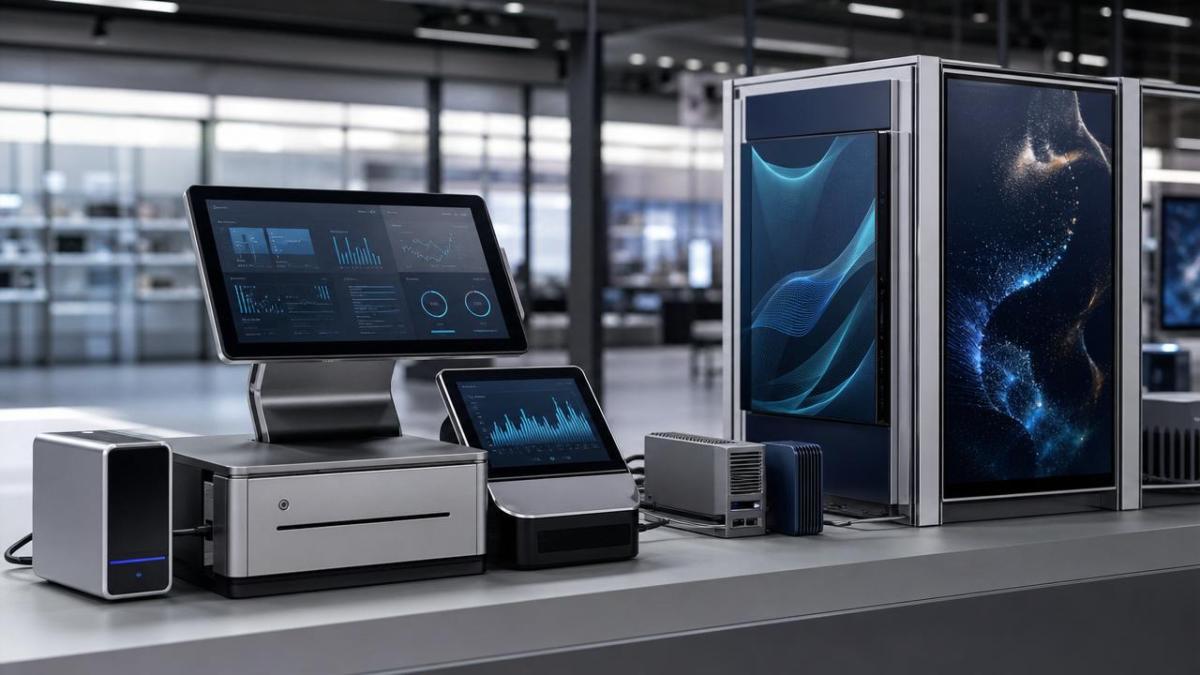
U.S. Bank has issued a market warning regarding the potential impact of upcoming mega-IPOs by AI-focused companies—including SpaceX and OpenAI—on global equity valuations, with particular implications for hardware-enabling sectors such as intelligent point-of-sale (POS) systems and digital signage. Though no specific timing has been disclosed for these IPOs, the warning signals heightened financial sensitivity across capital markets, affecting valuation benchmarks, risk appetite, and funding access for AI-integrated physical infrastructure.
Event Overview
U.S. Bank notes that proposed IPOs from leading AI firms could push the technology sector’s weight in the S&P 500 Index above 44%, nearing levels observed during prior market bubbles. The bank identifies extreme bullish sentiment and a sharp rise in bond yields—now triggering technical sell signals—as key near-term catalysts. This dynamic is expected to recalibrate investor expectations toward AI-driven hardware assets globally.
Industries Affected
Direct Trading Enterprises
Companies engaged in cross-border distribution or channel sales of AI-powered POS terminals and interactive digital signage face revised pricing discipline. As public-market multiples for AI-adjacent hardware compress under broader tech-weight volatility, private valuations previously anchored to growth narratives may undergo downward repricing. Margin pressure may intensify if buyers defer procurement amid macro uncertainty.
Raw Material Procurement Firms
Suppliers of semiconductors, thermal management components, and display-grade PCBs used in smart POS and digital signage systems may experience demand signal lag. While underlying unit demand remains intact, procurement cycles could lengthen as OEMs reassess inventory positions in response to tightening equity financing conditions and delayed capex approvals.
Contract Manufacturing & Assembly Providers
OEMs relying on third-party manufacturing for AI-enhanced retail hardware may face renegotiation of volume commitments or payment terms. Observably, capacity allocation decisions are becoming more sensitive to customers’ ability to secure post-IPO balance sheet support—not just product roadmap alignment—raising working capital risks for manufacturers.
Supply Chain Service Providers
Logistics integrators, customs brokers, and after-sales service networks supporting global deployment of intelligent POS and digital signage platforms may see shifts in service-level agreement (SLA) enforcement. With tighter liquidity among mid-tier hardware vendors, delays in logistics financing or warranty-backed service rollout become more probable.
Key Considerations and Recommended Actions
Maintain Liquidity Buffers Amid Valuation Uncertainty
Firms should avoid overextending working capital into speculative pre-IPO inventory builds. Current market signals suggest that equity-linked financing for hardware vendors may tighten before broad-based demand recovery.
Reassess Customer Credit Risk Profiles
Commercial teams should prioritize creditworthiness reviews for channel partners whose valuations are closely tied to AI hype cycles—especially those reliant on venture debt or unprofitable growth metrics.
Strengthen Unit-Economic Transparency
Hardware vendors should prepare auditable unit-cost and margin data per SKU (e.g., edge-AI POS vs. legacy terminal), as investors increasingly differentiate between genuine AI integration and marketing-led labeling.
Editorial Perspective / Industry Observation
Analysis shows this is not a commentary on AI hardware fundamentals—but rather a stress test of how capital markets assign value to physical infrastructure layered with AI capabilities. The current surge in tech index concentration reflects structural shifts in earnings visibility and investor time horizons, not just sentiment. From an industry perspective, the more consequential implication lies in the widening gap between software-centric valuation models and hardware development timelines: a mismatch that may accelerate consolidation among vertically integrated POS and digital signage providers.
Conclusion
This episode underscores that AI’s real-world deployment in commercial infrastructure remains financially contingent—not technologically constrained. A rational observation is that sustainable adoption will depend less on IPO headlines and more on demonstrable ROI in operational efficiency, fraud reduction, and customer engagement lift—metrics that remain largely decoupled from index-weight fluctuations.
Source Attribution
U.S. Bank Global Research report, "Tech Equity Weight and AI IPO Sensitivity," published Q2 2024. Note: IPO timing, final valuations, and regulatory clearance for listed entities remain unconfirmed. Ongoing monitoring of SEC filings for SpaceX and OpenAI-related vehicles—and S&P Dow Jones Indices methodology updates—is advised.
News Recommendations
 Which consumer goods need CE marking in Europe?
![51a6ab95581761cc26f4318be6520c15]()
Aris Katos
Future of Carbide Coatings
 Uniguest and Extreme Networks Partner to Simplify Digital Signage Deployment
![51a6ab95581761cc26f4318be6520c15]()
Aris Katos
Future of Carbide Coatings
 How to assess electronics compliance whitepapers for regulatory accuracy
![51a6ab95581761cc26f4318be6520c15]()
Aris Katos
Future of Carbide Coatings
 Packaging Data Hub Launches With Plastic Recycling Findings for 50 Countries
![51a6ab95581761cc26f4318be6520c15]()
Aris Katos
Future of Carbide Coatings
 How to verify an ergonomic office chair supplier's warranty terms
![51a6ab95581761cc26f4318be6520c15]()
Aris Katos
Future of Carbide Coatings
 Curion Survey: 64% Value Sustainable Beauty Packaging, but Quality Comes First
![51a6ab95581761cc26f4318be6520c15]()
Aris Katos
Future of Carbide Coatings
 Can minimalist fit out solutions make a small office feel larger?
![51a6ab95581761cc26f4318be6520c15]()
Aris Katos
Future of Carbide Coatings
 Kiosk Industry Releases IAAPA 2026 Self-Service Guide
![51a6ab95581761cc26f4318be6520c15]()
Aris Katos
Future of Carbide Coatings
 How to improve global supply chain visibility beyond tier-one suppliers
![51a6ab95581761cc26f4318be6520c15]()
Aris Katos
Future of Carbide Coatings
 Austria’s MM Group to Sell 70% of Packaging Business to KPS for $2.7 Billion
![51a6ab95581761cc26f4318be6520c15]()
Aris Katos
Future of Carbide Coatings
 How to assess delivery reliability of airport terminal seating suppliers in Europe
![51a6ab95581761cc26f4318be6520c15]()
Aris Katos
Future of Carbide Coatings
 USTR Extends China-Linked Vessel Fee Pause and 178 Product Exemptions to January 2027
![51a6ab95581761cc26f4318be6520c15]()
Aris Katos
Future of Carbide Coatings
 How to choose smart sensors for automated lighting
![51a6ab95581761cc26f4318be6520c15]()
Aris Katos
Future of Carbide Coatings
 Shanghai Retail Buyers Sign Deals at Ninth China International Import Expo
![51a6ab95581761cc26f4318be6520c15]()
Aris Katos
Future of Carbide Coatings
 Which toys are subject to EN 71 toy safety requirements?
![51a6ab95581761cc26f4318be6520c15]()
Aris Katos
Future of Carbide Coatings
 Report: Global Kraft Paper Market Forecast to Reach $20.5 Billion by 2033
![51a6ab95581761cc26f4318be6520c15]()
Aris Katos
Future of Carbide Coatings
 How to verify Zigbee compatibility when sourcing lighting sensors
![51a6ab95581761cc26f4318be6520c15]()
Aris Katos
Future of Carbide Coatings
 How do packaging customization options affect minimum order quantities in Europe?
![51a6ab95581761cc26f4318be6520c15]()
Aris Katos
Future of Carbide Coatings
 Transom to Acquire Cree LED in Commercial Lighting Ownership Change
![51a6ab95581761cc26f4318be6520c15]()
Aris Katos
Future of Carbide Coatings
 How to plan customer flow in commercial design planning
![51a6ab95581761cc26f4318be6520c15]()
Aris Katos
Future of Carbide Coatings
 USTR Urged to Permanently Suspend Fees on China-Linked Ships
![51a6ab95581761cc26f4318be6520c15]()
Aris Katos
Future of Carbide Coatings
 How to choose comparable stores for retail benchmarking
![51a6ab95581761cc26f4318be6520c15]()
Aris Katos
Future of Carbide Coatings
 How does anchoring affect modular building wind load resistance?
![51a6ab95581761cc26f4318be6520c15]()
Aris Katos
Future of Carbide Coatings
 Amazon Raises European FBA Surcharge to 2% in Ten Markets From November 2
![51a6ab95581761cc26f4318be6520c15]()
Aris Katos
Future of Carbide Coatings
 How to verify a BPA-free test report for baby products
![51a6ab95581761cc26f4318be6520c15]()
Aris Katos
Future of Carbide Coatings
 China's Mandatory Classroom Lighting Standard GB 7793-2025 Takes Effect November 1
![51a6ab95581761cc26f4318be6520c15]()
Aris Katos
Future of Carbide Coatings
 How order volume affects the price of wholesale poly mailers
![51a6ab95581761cc26f4318be6520c15]()
Aris Katos
Future of Carbide Coatings
 US Imposes 50% Tariff on Certain Canadian PET Resin Imports
![51a6ab95581761cc26f4318be6520c15]()
Aris Katos
Future of Carbide Coatings
 How to read the maximum ratings in a semiconductor datasheet
![51a6ab95581761cc26f4318be6520c15]()
Aris Katos
Future of Carbide Coatings
 University of Maryland Develops Bio-Based Packaging to Extend Avocado and Cucumber Shelf Life
![51a6ab95581761cc26f4318be6520c15]()
Aris Katos
Future of Carbide Coatings
 How to verify a cookware manufacturer's induction compatibility claims
![51a6ab95581761cc26f4318be6520c15]()
Aris Katos
Future of Carbide Coatings
 Omdia Forecasts 11.6% Annual Growth in LED Display Revenue Through 2030
![51a6ab95581761cc26f4318be6520c15]()
Aris Katos
Future of Carbide Coatings
 How to verify a pulp molding packaging factory's production capacity
![51a6ab95581761cc26f4318be6520c15]()
Aris Katos
Future of Carbide Coatings
 Curion Survey: Half of Consumers Frustrated by Sustainable Packaging
![51a6ab95581761cc26f4318be6520c15]()
Aris Katos
Future of Carbide Coatings
 How to assess the credibility of market insight content
![51a6ab95581761cc26f4318be6520c15]()
Aris Katos
Future of Carbide Coatings
 US Removes 50% Additional Tariff on Selected Canadian Packaging Products
![51a6ab95581761cc26f4318be6520c15]()
Aris Katos
Future of Carbide Coatings
 Will a waterproof dimmable LED driver work with your existing dimmer?
![51a6ab95581761cc26f4318be6520c15]()
Aris Katos
Future of Carbide Coatings
 Charter Next Generation Raises Film PCR Use 30%, Advances Food-Grade Applications
![51a6ab95581761cc26f4318be6520c15]()
Aris Katos
Future of Carbide Coatings
 How to choose a dog harness and leash for a dog that pulls hard
![51a6ab95581761cc26f4318be6520c15]()
Aris Katos
Future of Carbide Coatings