
US Starts Dual RFID Import Certification Rule in June
Time
Click Count
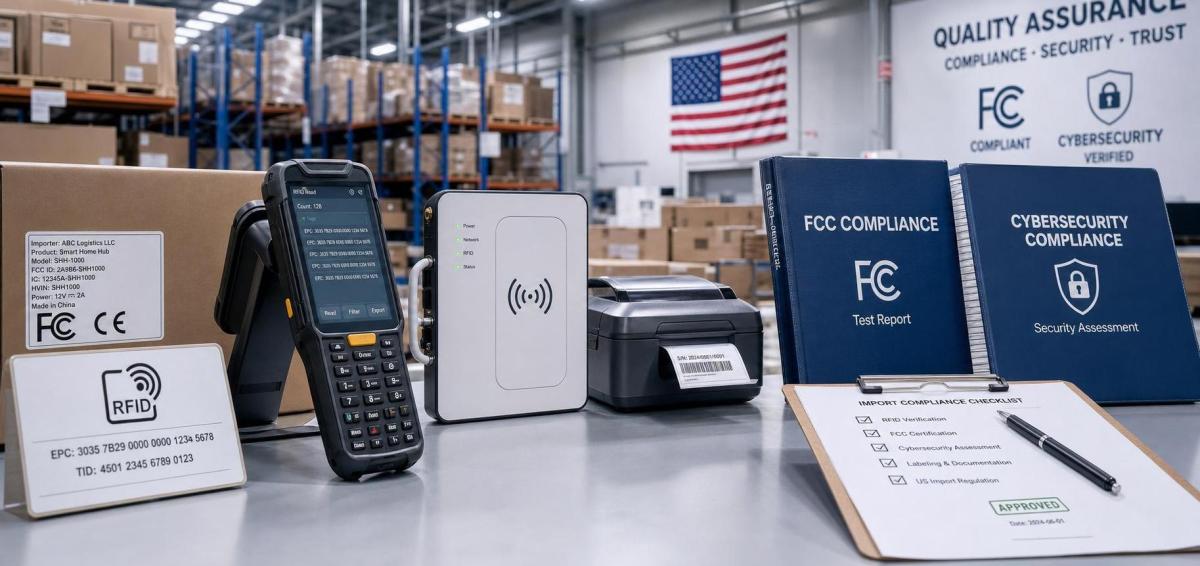
Effective June 22, 2026, the United States will begin enforcing a new import compliance requirement for goods containing RFID functions, combining radio-frequency compliance and cybersecurity certification into a single entry threshold. For exporters, importers, product integrators, and supply chain teams handling inventory tags, smart packaging, embedded POS labels, and similar products, this matters not only as a technical rule update but as a direct customs clearance and delivery risk, since products without both required certifications may be refused or detained by CBP.
A new entry condition for RFID-enabled imports
According to the provided event information, the new rule was jointly released by the FCC and UL and takes effect on 2026-06-22. From that date, all imported goods containing RFID functionality must meet both FCC Part 15C radio-frequency compliance requirements and UL 2900-2-2 cybersecurity certification requirements.
The scope described in the input includes RFID functions used in inventory management tags, smart packaging, and embedded POS labels. The information provided also states that the requirement directly affects exports to the United States in categories such as Inventory RFID Systems, E-commerce Fulfillment Pack, and Smart Lighting Controls.
The stated enforcement consequence is clear in the input: products that do not obtain both certifications may be rejected or detained by CBP.
Where the pressure is likely to appear first
Export shipments with embedded RFID features
From an industry perspective, exporters are likely to feel the impact first because the rule is tied directly to U.S. import acceptance. The practical pressure point is not only product design, but also whether the shipped item can demonstrate that both FCC Part 15C and UL 2900-2-2 requirements have been satisfied before entry.
Manufacturing and integration decisions upstream
For manufacturers and product integrators, the change matters because RFID is often only one component within a broader finished good. Analysis shows that products may face compliance exposure even when RFID is not the primary selling point, as long as the imported item contains RFID functionality. This makes design review, component selection, and technical file preparation more sensitive in affected product categories.
Procurement and delivery planning in the supply chain
Procurement teams, trading companies, and supply chain service providers may need to pay closer attention to supplier qualification, certification status, and document completeness. Observably, the business risk here centers on shipment release, delivery timing, and contract execution, especially where U.S.-bound orders involve RFID-enabled packaging, controls, or embedded labels.
Testing and certification support functions
Certification-related service providers and testing support organizations may also see greater demand for compliance review tied to dual requirements rather than single-track radio testing alone. What deserves closer attention is whether companies treat FCC and UL workstreams as separate tasks or as linked entry prerequisites for the same shipment.
What companies should review now
Check whether RFID is present anywhere in the product
Companies should first review whether exported goods contain any RFID function, including inventory labels, smart packaging elements, or embedded retail and transaction labels. This is a threshold question, because the rule described in the input applies to all imported goods with RFID functionality, not only to standalone RFID devices.
Reconfirm certification paths and supporting files
Analysis shows that businesses should examine whether existing compliance files, test records, and product documentation are aligned with the dual-certification requirement. Where supporting materials were prepared around only one standard path, additional review may be needed before shipment to the U.S. market.
Review supplier and delivery commitments
For purchasing, contract, and logistics teams, it is worth checking whether supplier qualifications, order specifications, and delivery schedules assume completion of both certifications. The input does not provide detailed implementation procedures, so it is more appropriate to flag this as a current compliance checkpoint rather than assume a uniform market practice has already formed.
Watch for execution wording and market documents
What deserves closer attention is how this requirement may appear in customs-facing documentation, buyer specifications, technical attachments, and downstream commercial documents. Since the provided information confirms the effective date and consequence but does not include further operational detail, companies should continue monitoring execution language and document expectations.
Why this should be read as an enforcement signal
Observably, this development is more than a routine technical update because it links product entry to a dual requirement covering both radio-frequency compliance and cybersecurity certification. From an industry perspective, that combination signals a higher documentation and review threshold for RFID-enabled imports into the U.S. market.
At the same time, it is more appropriate to understand this as a rule now entering execution rather than a fully transparent compliance framework with every practical detail already visible. The effective date and customs consequence are explicit in the provided information, but the market will still need to watch how implementation language, certification interpretation, and transaction documents evolve in practice.
How to read the change at this stage
In practical terms, this update should be understood as a landed compliance requirement with direct trade implications for goods containing RFID functions. Its significance lies less in broad market prediction and more in the immediate need for exporters, importers, and supply chain participants to verify whether affected products can satisfy both certification tracks before U.S. entry.
A neutral reading is that the rule already provides a clear compliance direction, while the finer points of execution still deserve continued observation. For businesses shipping relevant categories to the United States, the near-term priority is to treat dual certification readiness as part of shipment eligibility, not as a secondary technical formality.
Basis of this article and what still needs verification
This article is generated based on the user-provided news title, event date, and event summary. For developments of this kind, commonly relevant source types may include official announcements, releases from regulatory bodies, customs or trade administration notices, industry association communications, standards documents, and reporting from authoritative media.
No specific official source link was provided in the input, so the exact official publication path still needs to be verified on an ongoing basis. Further observation is also needed regarding detailed implementation language, certification interpretation, document requirements, tender wording changes, industry feedback, and how affected companies execute the requirement in actual export and import workflows.
News Recommendations
 Which consumer goods need CE marking in Europe?
![51a6ab95581761cc26f4318be6520c15]()
Aris Katos
Future of Carbide Coatings
 Uniguest and Extreme Networks Partner to Simplify Digital Signage Deployment
![51a6ab95581761cc26f4318be6520c15]()
Aris Katos
Future of Carbide Coatings
 How to assess electronics compliance whitepapers for regulatory accuracy
![51a6ab95581761cc26f4318be6520c15]()
Aris Katos
Future of Carbide Coatings
 Packaging Data Hub Launches With Plastic Recycling Findings for 50 Countries
![51a6ab95581761cc26f4318be6520c15]()
Aris Katos
Future of Carbide Coatings
 How to verify an ergonomic office chair supplier's warranty terms
![51a6ab95581761cc26f4318be6520c15]()
Aris Katos
Future of Carbide Coatings
 Curion Survey: 64% Value Sustainable Beauty Packaging, but Quality Comes First
![51a6ab95581761cc26f4318be6520c15]()
Aris Katos
Future of Carbide Coatings
 Can minimalist fit out solutions make a small office feel larger?
![51a6ab95581761cc26f4318be6520c15]()
Aris Katos
Future of Carbide Coatings
 Kiosk Industry Releases IAAPA 2026 Self-Service Guide
![51a6ab95581761cc26f4318be6520c15]()
Aris Katos
Future of Carbide Coatings
 How to improve global supply chain visibility beyond tier-one suppliers
![51a6ab95581761cc26f4318be6520c15]()
Aris Katos
Future of Carbide Coatings
 Austria’s MM Group to Sell 70% of Packaging Business to KPS for $2.7 Billion
![51a6ab95581761cc26f4318be6520c15]()
Aris Katos
Future of Carbide Coatings
 How to assess delivery reliability of airport terminal seating suppliers in Europe
![51a6ab95581761cc26f4318be6520c15]()
Aris Katos
Future of Carbide Coatings
 USTR Extends China-Linked Vessel Fee Pause and 178 Product Exemptions to January 2027
![51a6ab95581761cc26f4318be6520c15]()
Aris Katos
Future of Carbide Coatings
 How to choose smart sensors for automated lighting
![51a6ab95581761cc26f4318be6520c15]()
Aris Katos
Future of Carbide Coatings
 Shanghai Retail Buyers Sign Deals at Ninth China International Import Expo
![51a6ab95581761cc26f4318be6520c15]()
Aris Katos
Future of Carbide Coatings
 Which toys are subject to EN 71 toy safety requirements?
![51a6ab95581761cc26f4318be6520c15]()
Aris Katos
Future of Carbide Coatings
 Report: Global Kraft Paper Market Forecast to Reach $20.5 Billion by 2033
![51a6ab95581761cc26f4318be6520c15]()
Aris Katos
Future of Carbide Coatings
 How to verify Zigbee compatibility when sourcing lighting sensors
![51a6ab95581761cc26f4318be6520c15]()
Aris Katos
Future of Carbide Coatings
 How do packaging customization options affect minimum order quantities in Europe?
![51a6ab95581761cc26f4318be6520c15]()
Aris Katos
Future of Carbide Coatings
 Transom to Acquire Cree LED in Commercial Lighting Ownership Change
![51a6ab95581761cc26f4318be6520c15]()
Aris Katos
Future of Carbide Coatings
 How to plan customer flow in commercial design planning
![51a6ab95581761cc26f4318be6520c15]()
Aris Katos
Future of Carbide Coatings
 USTR Urged to Permanently Suspend Fees on China-Linked Ships
![51a6ab95581761cc26f4318be6520c15]()
Aris Katos
Future of Carbide Coatings
 How to choose comparable stores for retail benchmarking
![51a6ab95581761cc26f4318be6520c15]()
Aris Katos
Future of Carbide Coatings
 How does anchoring affect modular building wind load resistance?
![51a6ab95581761cc26f4318be6520c15]()
Aris Katos
Future of Carbide Coatings
 Amazon Raises European FBA Surcharge to 2% in Ten Markets From November 2
![51a6ab95581761cc26f4318be6520c15]()
Aris Katos
Future of Carbide Coatings
 How to verify a BPA-free test report for baby products
![51a6ab95581761cc26f4318be6520c15]()
Aris Katos
Future of Carbide Coatings
 China's Mandatory Classroom Lighting Standard GB 7793-2025 Takes Effect November 1
![51a6ab95581761cc26f4318be6520c15]()
Aris Katos
Future of Carbide Coatings
 How order volume affects the price of wholesale poly mailers
![51a6ab95581761cc26f4318be6520c15]()
Aris Katos
Future of Carbide Coatings
 US Imposes 50% Tariff on Certain Canadian PET Resin Imports
![51a6ab95581761cc26f4318be6520c15]()
Aris Katos
Future of Carbide Coatings
 How to read the maximum ratings in a semiconductor datasheet
![51a6ab95581761cc26f4318be6520c15]()
Aris Katos
Future of Carbide Coatings
 University of Maryland Develops Bio-Based Packaging to Extend Avocado and Cucumber Shelf Life
![51a6ab95581761cc26f4318be6520c15]()
Aris Katos
Future of Carbide Coatings
 How to verify a cookware manufacturer's induction compatibility claims
![51a6ab95581761cc26f4318be6520c15]()
Aris Katos
Future of Carbide Coatings
 Omdia Forecasts 11.6% Annual Growth in LED Display Revenue Through 2030
![51a6ab95581761cc26f4318be6520c15]()
Aris Katos
Future of Carbide Coatings
 How to verify a pulp molding packaging factory's production capacity
![51a6ab95581761cc26f4318be6520c15]()
Aris Katos
Future of Carbide Coatings
 Curion Survey: Half of Consumers Frustrated by Sustainable Packaging
![51a6ab95581761cc26f4318be6520c15]()
Aris Katos
Future of Carbide Coatings
 How to assess the credibility of market insight content
![51a6ab95581761cc26f4318be6520c15]()
Aris Katos
Future of Carbide Coatings
 US Removes 50% Additional Tariff on Selected Canadian Packaging Products
![51a6ab95581761cc26f4318be6520c15]()
Aris Katos
Future of Carbide Coatings
 Will a waterproof dimmable LED driver work with your existing dimmer?
![51a6ab95581761cc26f4318be6520c15]()
Aris Katos
Future of Carbide Coatings
 Charter Next Generation Raises Film PCR Use 30%, Advances Food-Grade Applications
![51a6ab95581761cc26f4318be6520c15]()
Aris Katos
Future of Carbide Coatings
 How to choose a dog harness and leash for a dog that pulls hard
![51a6ab95581761cc26f4318be6520c15]()
Aris Katos
Future of Carbide Coatings