
Retail Integration Technology vs Standalone Systems for RFID Accuracy
Time
Click Count
For technical evaluators seeking higher RFID accuracy, the choice between retail integration technology and standalone systems directly affects data reliability, deployment complexity, and long-term scalability. Understanding how each approach performs across real retail environments is essential for reducing read errors, improving inventory visibility, and aligning technology investment with broader operational goals.
Why retail integration technology changes RFID accuracy decisions
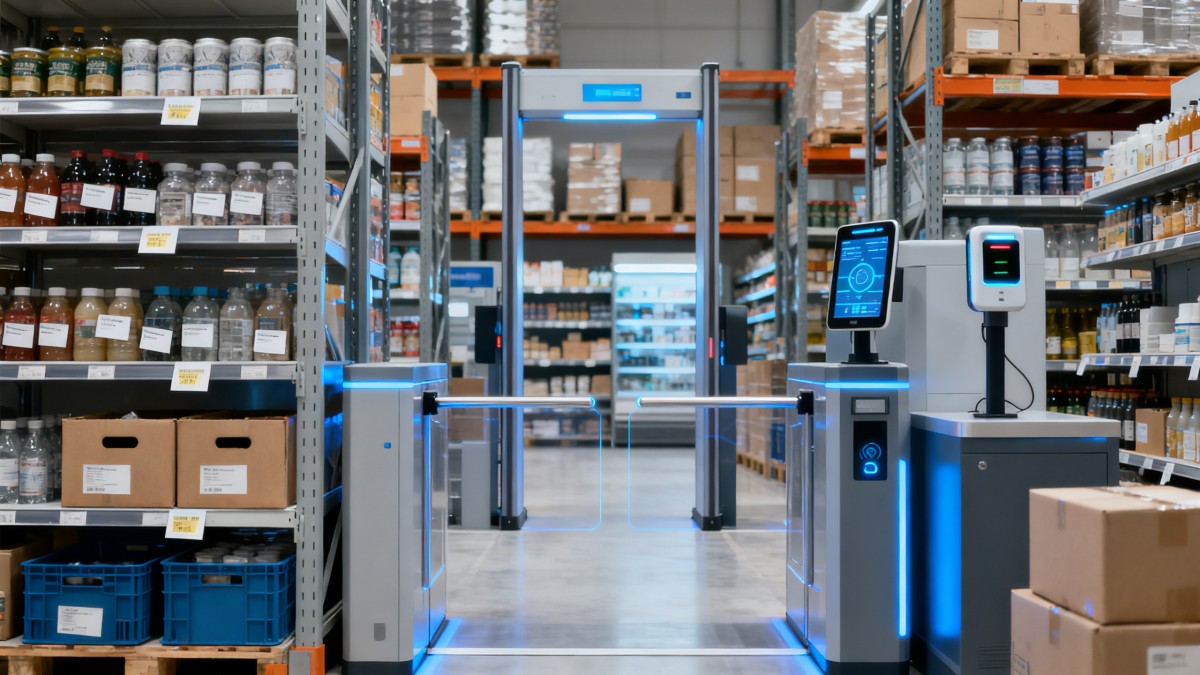
RFID accuracy is rarely determined by the reader alone. In modern stores, read performance depends on how hardware, middleware, store systems, shelving materials, POS workflows, lighting interference, stock movement, and replenishment processes work together. This is why retail integration technology often outperforms standalone deployments in complex commercial environments.
For technical evaluators, the main question is not simply whether tags can be read. The real issue is whether item-level data remains consistent across receiving, backroom storage, sales floor replenishment, self-checkout, loss prevention, returns, and omnichannel fulfillment. A system that tests well in isolation may still produce poor operational accuracy once exposed to metal fixtures, dense packaging, signal reflections, and disconnected software layers.
Within a global commercial ecosystem, the value of retail integration technology becomes even clearer. Cross-border sourcing, different store formats, mixed fixture standards, and varying compliance expectations create a technical landscape where isolated RFID devices can introduce hidden risks. G-BCE addresses this challenge by benchmarking commercial hardware and smart retail infrastructure in relation to broader space modernization and supply chain performance, not just device specifications.
- Integrated architecture supports synchronized data flows between RFID readers, POS, ERP, WMS, and inventory analytics tools.
- Context-aware filtering reduces duplicate reads, missed reads, and false event triggers in busy retail zones.
- Centralized governance improves deployment consistency across multiple stores, regions, and vendor ecosystems.
- Technical benchmarking makes it easier to compare fixtures, packaging, reader placement, and environmental effects before procurement.
Retail integration technology vs standalone systems: what technical evaluators should compare
Before selecting an RFID strategy, evaluators need a structured comparison model. The table below highlights how retail integration technology and standalone systems differ in the areas that most influence read accuracy, maintenance burden, and scaling risk.
The comparison shows why retail integration technology is often preferred when RFID accuracy must support enterprise inventory reliability rather than simple tag detection. Standalone systems remain useful for limited pilots or isolated checkpoints, but their value can decline once retailers demand synchronized, audit-ready data across channels.
Where standalone systems still make sense
A standalone option is not automatically the wrong choice. It can fit projects with a narrow objective, a single store format, minimal system dependencies, or a requirement to validate business value before deeper integration. For example, a retailer may start with handheld inventory counting in a controlled apparel environment before connecting RFID data to enterprise replenishment rules.
However, technical evaluators should treat such pilots as stage one, not the final operating model. If the long-term target includes omnichannel fulfillment, store-to-store transfer visibility, or automated stock discrepancy resolution, the architecture should be assessed from the beginning with retail integration technology in mind.
Which technical factors most affect RFID accuracy in real stores?
Read accuracy problems often originate in the physical environment and data design rather than the reader specification sheet. Evaluators in commercial projects should examine store fixtures, packaging materials, tag placement discipline, software event logic, and operational process timing together.
Physical environment variables
- Metal gondolas, dense display hardware, and reflective signage can distort signal behavior and create blind spots.
- Liquid products, foil packaging, and stacked cartons can lower read rates or require specialized tag strategies.
- Reader placement near entrances, checkout counters, or stockroom doors must consider customer traffic and cross-zone leakage.
- Commercial furniture and fixture design influences not only aesthetics but also antenna orientation and read zone stability.
System and workflow variables
- Poor item master alignment causes valid reads to be interpreted as unusable inventory records.
- Lag between RFID events and POS transactions can generate false shrink or phantom stock alerts.
- Duplicate event capture without middleware filtering may inflate movement counts and distort replenishment logic.
- Disconnected exception workflows force store teams to override system data manually, reducing trust in RFID outputs.
This is where G-BCE’s cross-sector perspective matters. Evaluating RFID accuracy in isolation ignores the impact of commercial fixtures, smart hardware, and supply chain packaging choices. A benchmarking approach that considers standards, materials, store design, and operational interoperability gives evaluators a more reliable basis for selection.
How to choose retail integration technology by application scenario
Different use cases require different accuracy thresholds, integration depth, and project governance. The table below helps technical evaluators match retail integration technology decisions to practical retail scenarios.
The scenario view shows that the right architecture depends on business consequences of inaccuracy. If a missed read only delays a count, a simpler approach may work. If a missed read causes a failed online order, false shrink alert, or repeated replenishment error, retail integration technology usually delivers better operational resilience.
A practical selection checklist for evaluators
- Define the business event that accuracy must support, such as receiving validation, cycle count confidence, or sold-item status.
- Map every system that consumes RFID data, including POS, ERP, WMS, OMS, analytics, and exception management tools.
- Assess environmental constraints such as metal fixtures, packaging density, lighting infrastructure, and zone overlap.
- Require pilot criteria that measure both read rate and workflow accuracy after reconciliation.
- Test configuration repeatability across more than one store profile before approving rollout.
What costs are often overlooked when comparing integrated and standalone RFID?
Technical evaluators often face budget pressure, which can make standalone systems appear attractive. Yet the lowest initial procurement cost does not always produce the lowest total operating cost. Integration debt, manual reconciliation, repeated retuning, and poor data trust can consume more budget than expected.
A useful cost review should separate capital expense from process cost, support cost, and business interruption cost. In many retail settings, inaccurate inventory creates hidden losses through emergency replenishment, delayed fulfillment, labor-intensive recounts, and missed sales.
- Standalone systems may reduce early project spend but increase integration retrofit costs later.
- Retail integration technology usually requires more planning resources upfront but can lower repeated troubleshooting across chain locations.
- If stores operate mixed fixtures and packaging formats, the cost of local tuning should be included in the comparison.
- Vendor coordination time, test labor, and exception workflow redesign are real cost items and should not be treated as incidental.
How standards, benchmarking, and interoperability reduce project risk
In integrated commercial environments, technical selection should consider not only RFID components but also the compatibility of adjacent infrastructure. Fixture construction, electrical design, packaging materials, and digital hardware all shape signal behavior and maintenance outcomes. This makes benchmarking across the wider retail ecosystem highly valuable.
G-BCE’s role is especially relevant here because technical evaluators increasingly need a decision framework that links smart retail technology with commercial furniture, supply chain packaging, signage, and internationally recognized standards. When hardware is assessed against practical deployment environments and common compliance expectations such as UL, CE, or BIFMA-related product contexts, sourcing teams can reduce mismatch risk before rollout.
Risk signals to investigate before purchase approval
- The RFID proposal focuses on reader sensitivity but provides little detail on data reconciliation logic.
- Store fixture materials and packaging types were not included in pilot design.
- Multiple vendors are involved, but interface ownership and fault responsibility remain unclear.
- Read success is measured only in lab conditions, not in live store traffic or replenishment cycles.
- Future expansion to loss prevention or omnichannel workflows is likely, but the current design has no integration roadmap.
FAQ: common technical questions about retail integration technology and RFID accuracy
Is retail integration technology always necessary for good RFID accuracy?
No. If the objective is limited to a narrow pilot or a single workflow with low downstream risk, a standalone solution can be sufficient. But if accuracy must remain reliable across POS, transfers, replenishment, returns, and omnichannel promises, retail integration technology usually becomes necessary because accuracy depends on context, not just tag capture.
What should be tested first during technical evaluation?
Start with the business-critical event. For many retailers, that means cycle count integrity, receiving validation, or sold-versus-unsold status at exit points. Then test environmental factors such as metal fixtures, product density, and packaging composition. Finally, verify whether system reconciliation preserves usable data after reads are captured.
How do commercial fixtures influence RFID read performance?
Fixture materials, spacing, and orientation can change antenna behavior significantly. Metal structures, crowded shelving, illuminated signage frames, and compact display architecture may create reflection or shadow effects. That is why fixture benchmarking should be part of RFID evaluation rather than a separate design topic.
What is the biggest mistake in comparing integrated and standalone systems?
The most common mistake is comparing device cost instead of comparing workflow accuracy and total operating burden. A lower-cost standalone installation may require frequent manual reconciliation, produce inconsistent store data, or become expensive to retrofit when business scope expands.
Why choose us for RFID benchmarking and solution evaluation
G-BCE supports technical evaluators who need more than a product brochure comparison. Our strength lies in connecting retail integration technology decisions with the wider commercial ecosystem: fixtures, packaging, smart hardware, compliance context, and supply chain execution. This helps teams judge RFID accuracy in realistic operating conditions rather than in isolated vendor demonstrations.
You can consult us on parameter confirmation for store environments, solution selection between integrated and standalone RFID paths, deployment planning across different store formats, expected delivery coordination factors, international standards context, sample evaluation priorities, and quote comparison logic for multi-vendor sourcing. We also help structure benchmarking criteria so sourcing directors and technical teams can align on measurable decision points before rollout.
If your project involves modernizing commercial spaces while improving supply chain visibility, contact G-BCE to discuss your RFID accuracy targets, hardware compatibility concerns, fixture and packaging constraints, or phased integration roadmap. A well-scoped evaluation early in the process can prevent expensive redesign later and create a more resilient retail data foundation.
News Recommendations
 How to verify Zigbee compatibility when sourcing lighting sensors
![51a6ab95581761cc26f4318be6520c15]()
Aris Katos
Future of Carbide Coatings
 How do packaging customization options affect minimum order quantities in Europe?
![51a6ab95581761cc26f4318be6520c15]()
Aris Katos
Future of Carbide Coatings
 Transom to Acquire Cree LED in Commercial Lighting Ownership Change
![51a6ab95581761cc26f4318be6520c15]()
Aris Katos
Future of Carbide Coatings
 How to plan customer flow in commercial design planning
![51a6ab95581761cc26f4318be6520c15]()
Aris Katos
Future of Carbide Coatings
 USTR Urged to Permanently Suspend Fees on China-Linked Ships
![51a6ab95581761cc26f4318be6520c15]()
Aris Katos
Future of Carbide Coatings
 How to choose comparable stores for retail benchmarking
![51a6ab95581761cc26f4318be6520c15]()
Aris Katos
Future of Carbide Coatings
 How does anchoring affect modular building wind load resistance?
![51a6ab95581761cc26f4318be6520c15]()
Aris Katos
Future of Carbide Coatings
 Amazon Raises European FBA Surcharge to 2% in Ten Markets From November 2
![51a6ab95581761cc26f4318be6520c15]()
Aris Katos
Future of Carbide Coatings
 How to verify a BPA-free test report for baby products
![51a6ab95581761cc26f4318be6520c15]()
Aris Katos
Future of Carbide Coatings
 China's Mandatory Classroom Lighting Standard GB 7793-2025 Takes Effect November 1
![51a6ab95581761cc26f4318be6520c15]()
Aris Katos
Future of Carbide Coatings
 How order volume affects the price of wholesale poly mailers
![51a6ab95581761cc26f4318be6520c15]()
Aris Katos
Future of Carbide Coatings
 US Imposes 50% Tariff on Certain Canadian PET Resin Imports
![51a6ab95581761cc26f4318be6520c15]()
Aris Katos
Future of Carbide Coatings
 How to read the maximum ratings in a semiconductor datasheet
![51a6ab95581761cc26f4318be6520c15]()
Aris Katos
Future of Carbide Coatings
 University of Maryland Develops Bio-Based Packaging to Extend Avocado and Cucumber Shelf Life
![51a6ab95581761cc26f4318be6520c15]()
Aris Katos
Future of Carbide Coatings
 How to verify a cookware manufacturer's induction compatibility claims
![51a6ab95581761cc26f4318be6520c15]()
Aris Katos
Future of Carbide Coatings
 Omdia Forecasts 11.6% Annual Growth in LED Display Revenue Through 2030
![51a6ab95581761cc26f4318be6520c15]()
Aris Katos
Future of Carbide Coatings
 How to verify a pulp molding packaging factory's production capacity
![51a6ab95581761cc26f4318be6520c15]()
Aris Katos
Future of Carbide Coatings
 Curion Survey: Half of Consumers Frustrated by Sustainable Packaging
![51a6ab95581761cc26f4318be6520c15]()
Aris Katos
Future of Carbide Coatings
 How to assess the credibility of market insight content
![51a6ab95581761cc26f4318be6520c15]()
Aris Katos
Future of Carbide Coatings
 US Removes 50% Additional Tariff on Selected Canadian Packaging Products
![51a6ab95581761cc26f4318be6520c15]()
Aris Katos
Future of Carbide Coatings
 Will a waterproof dimmable LED driver work with your existing dimmer?
![51a6ab95581761cc26f4318be6520c15]()
Aris Katos
Future of Carbide Coatings
 Charter Next Generation Raises Film PCR Use 30%, Advances Food-Grade Applications
![51a6ab95581761cc26f4318be6520c15]()
Aris Katos
Future of Carbide Coatings
 How to choose a dog harness and leash for a dog that pulls hard
![51a6ab95581761cc26f4318be6520c15]()
Aris Katos
Future of Carbide Coatings
 How to respect local customs when negotiating with overseas suppliers
![51a6ab95581761cc26f4318be6520c15]()
Aris Katos
Future of Carbide Coatings
 RFID Recycling Challenges Bring Paper-Based and Chipless Tags Into Focus
![51a6ab95581761cc26f4318be6520c15]()
Aris Katos
Future of Carbide Coatings
 How to choose commercial lighting for offices that reduces glare
![51a6ab95581761cc26f4318be6520c15]()
Aris Katos
Future of Carbide Coatings
 Queue Launches Fully Automated Robotic Pharmacy Kiosk for 30-Second Dispensing
![51a6ab95581761cc26f4318be6520c15]()
Aris Katos
Future of Carbide Coatings
 Can your supermarket store fixtures supplier meet your opening date?
![51a6ab95581761cc26f4318be6520c15]()
Aris Katos
Future of Carbide Coatings
 Shopify POS UI Extensions 2026-10 Adds Virtual Lists and Custom Row Templates
![51a6ab95581761cc26f4318be6520c15]()
Aris Katos
Future of Carbide Coatings
 How to assess smart office furniture suppliers’ North American support
![51a6ab95581761cc26f4318be6520c15]()
Aris Katos
Future of Carbide Coatings
 Aqara Launches Smart Lighting Range to Advance AI Spatial Intelligence
![51a6ab95581761cc26f4318be6520c15]()
Aris Katos
Future of Carbide Coatings
 How to assess demand forecasts in a lighting intelligence report
![51a6ab95581761cc26f4318be6520c15]()
Aris Katos
Future of Carbide Coatings
 Billerud推出PharmaKraft纤维基医药包装材料
![51a6ab95581761cc26f4318be6520c15]()
Aris Katos
Future of Carbide Coatings
 How to assess supplier reliability in global supply chain sourcing
![51a6ab95581761cc26f4318be6520c15]()
Aris Katos
Future of Carbide Coatings
 Omdia Forecasts 11.6% CAGR for Global LED Video Display Market in 2026–2030
![51a6ab95581761cc26f4318be6520c15]()
Aris Katos
Future of Carbide Coatings
 How to verify an LFGB testing laboratory's accreditation scope
![51a6ab95581761cc26f4318be6520c15]()
Aris Katos
Future of Carbide Coatings
 How to assess a workplace interior supplier's installation scope
![51a6ab95581761cc26f4318be6520c15]()
Aris Katos
Future of Carbide Coatings
 What records are needed for an ISO 9001 furniture factory audit?
![51a6ab95581761cc26f4318be6520c15]()
Aris Katos
Future of Carbide Coatings
 How to choose AI marketing tools that work with your existing CRM
![51a6ab95581761cc26f4318be6520c15]()
Aris Katos
Future of Carbide Coatings







































