
UL Urgently Updates UL 962A: Digital Signage Must Support Localized OTA Firmware Updates
Time
Click Count
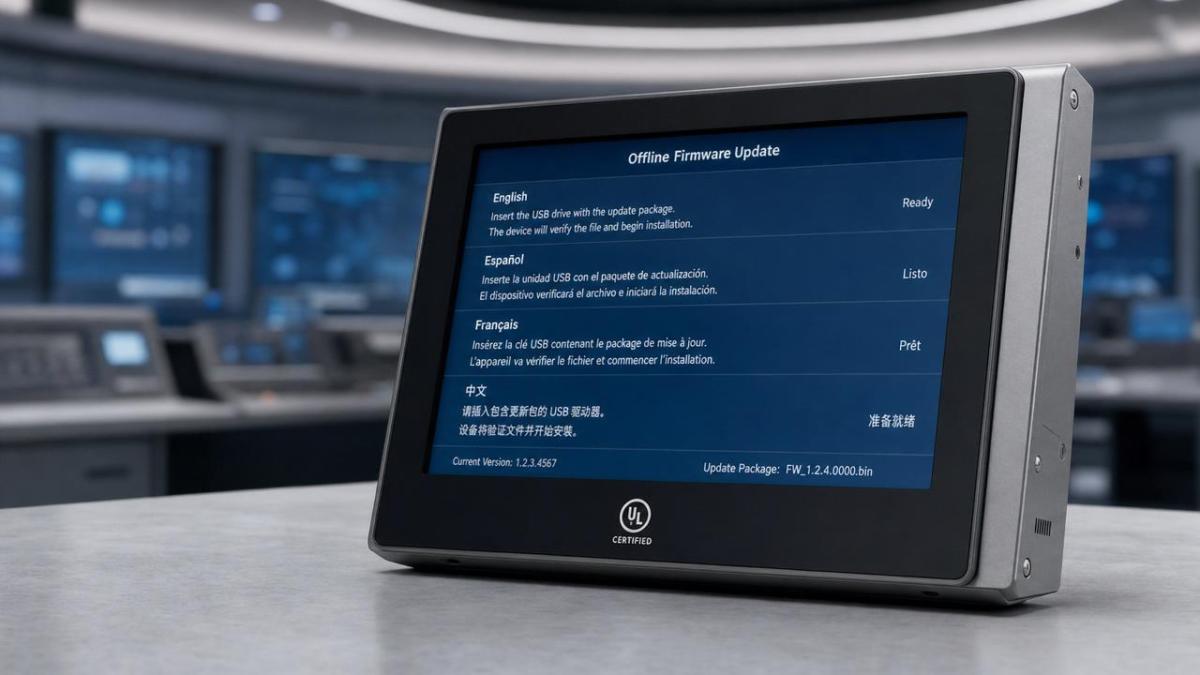
On May 7, 2026, UL released Revision 4.2 of UL 962A, mandating that all digital signage solutions sold in the North American market support offline-capable, localized over-the-air (OTA) firmware updates—including user interfaces in English, Spanish, French, and Chinese—without reliance on cloud-based key validation. This update directly impacts manufacturers, importers, system integrators, and infrastructure operators deploying digital signage in critical environments, as it aligns with NIST SP 800-161’s cybersecurity requirements for supply chain risk management.
Event Overview
UL issued Revision 4.2 of UL 962A on May 7, 2026. The revision explicitly requires digital signage solutions intended for the North American market to implement locally executed OTA firmware upgrade functionality. The requirement includes multilingual UI support (English, Spanish, French, and Chinese) and prohibits dependency on cloud-hosted cryptographic key verification during the update process. This change is formally tied to compliance with NIST Special Publication 800-161, Supply Chain Risk Management Practices for Federal Information Systems and Organizations.
Industries Affected by Segment
Original Equipment Manufacturers (OEMs) and Device Makers
OEMs producing digital signage hardware are directly subject to the new requirement, as UL 962A certification applies at the product level. Non-compliant firmware architectures—particularly those relying solely on cloud-authenticated OTA mechanisms—will no longer meet listing criteria for North American distribution.
System Integrators and Solution Providers
Integrators bundling third-party displays, media players, or CMS platforms into turnkey digital signage deployments must verify that each component supports offline, localized OTA upgrades per UL 962A Rev. 4.2. Failure to validate compatibility may invalidate overall system certification or expose clients to non-compliance risk in regulated sectors (e.g., transportation hubs, healthcare facilities).
Importers and Distributors Targeting North America
Entities importing digital signage devices from Asia or Europe into the U.S. and Canada must confirm pre-market conformity with Revision 4.2. UL does not grandfather legacy-certified units; newly shipped units after the effective date must comply. Documentation of localized OTA capability—including language coverage and offline signature verification logic—will be required for certification submissions.
What Enterprises and Practitioners Should Monitor and Do Now
Track official UL implementation timelines and transitional provisions
While the revision was published on May 7, 2026, UL may issue a grace period for existing certified models. Stakeholders should monitor UL’s official communications—including Bulletin UL 962A-2026-05 and any follow-up FAQs—for stated enforcement dates, grandfathering conditions, and test procedure clarifications.
Verify OTA architecture against the ‘offline’ and ‘localized UI’ requirements
Engineering and compliance teams should audit current OTA implementations to confirm: (a) firmware validation occurs entirely on-device using embedded keys or certificates; (b) UI language selection and rendering are handled locally without cloud API calls; and (c) all four mandated languages are fully supported in the update interface—not just the base OS or application layer.
Update technical documentation and certification submissions immediately
Manufacturers preparing new UL 962A applications—or filing modifications to existing certifications—must include detailed descriptions of the OTA mechanism, evidence of offline signature verification, and screenshots or test logs demonstrating UI localization across all four languages. UL will treat omissions in this documentation as grounds for evaluation delay or rejection.
Engage firmware and localization vendors early to assess readiness gaps
Third-party firmware SDKs or CMS platforms used in digital signage solutions may lack built-in support for offline, multi-language OTA workflows. Companies should initiate technical reviews with their software suppliers now—not after receiving a UL query—to identify integration effort, timeline implications, and potential rework costs.
Editorial Perspective / Industry Observation
Observably, this revision signals a deliberate shift toward embedding cybersecurity resilience at the device firmware layer—not just at the network or application level. It reflects growing regulatory emphasis on minimizing external dependencies in safety- and mission-critical systems. Analysis shows UL is treating OTA not merely as a convenience feature but as a security-critical control subject to supply chain assurance standards. From an industry perspective, this is less a one-time compliance checkpoint and more an indicator of tightening expectations around firmware integrity, localization accountability, and offline autonomy in connected commercial hardware. Current enforcement remains tied to new certifications and model submissions; however, sustained alignment with NIST SP 800-161 suggests future revisions may extend similar requirements to broader categories of interactive display systems.
This update underscores how foundational standards like UL 962A are evolving to incorporate cybersecurity and localization mandates previously associated only with federal IT procurement rules. Its significance lies not in immediate market disruption—but in establishing a clear, auditable baseline for firmware update trustworthiness in commercial digital infrastructure. For now, it is best understood as a targeted, enforceable specification update—not a broad policy shift—and its operational impact is confined to new product certifications and North American market access.
Source: UL Standards & Engagement, UL 962A Revision 4.2 Announcement (May 7, 2026); NIST SP 800-161 Rev. 1 (2023).
Note: Transitional enforcement details, including effective dates for legacy models, remain pending official clarification from UL and are under active observation.
News Recommendations
 How do packaging customization options affect minimum order quantities in Europe?
![51a6ab95581761cc26f4318be6520c15]()
Aris Katos
Future of Carbide Coatings
 Transom to Acquire Cree LED in Commercial Lighting Ownership Change
![51a6ab95581761cc26f4318be6520c15]()
Aris Katos
Future of Carbide Coatings
 How to plan customer flow in commercial design planning
![51a6ab95581761cc26f4318be6520c15]()
Aris Katos
Future of Carbide Coatings
 USTR Urged to Permanently Suspend Fees on China-Linked Ships
![51a6ab95581761cc26f4318be6520c15]()
Aris Katos
Future of Carbide Coatings
 How to choose comparable stores for retail benchmarking
![51a6ab95581761cc26f4318be6520c15]()
Aris Katos
Future of Carbide Coatings
 How does anchoring affect modular building wind load resistance?
![51a6ab95581761cc26f4318be6520c15]()
Aris Katos
Future of Carbide Coatings
 Amazon Raises European FBA Surcharge to 2% in Ten Markets From November 2
![51a6ab95581761cc26f4318be6520c15]()
Aris Katos
Future of Carbide Coatings
 How to verify a BPA-free test report for baby products
![51a6ab95581761cc26f4318be6520c15]()
Aris Katos
Future of Carbide Coatings
 China's Mandatory Classroom Lighting Standard GB 7793-2025 Takes Effect November 1
![51a6ab95581761cc26f4318be6520c15]()
Aris Katos
Future of Carbide Coatings
 How order volume affects the price of wholesale poly mailers
![51a6ab95581761cc26f4318be6520c15]()
Aris Katos
Future of Carbide Coatings
 US Imposes 50% Tariff on Certain Canadian PET Resin Imports
![51a6ab95581761cc26f4318be6520c15]()
Aris Katos
Future of Carbide Coatings
 How to read the maximum ratings in a semiconductor datasheet
![51a6ab95581761cc26f4318be6520c15]()
Aris Katos
Future of Carbide Coatings
 University of Maryland Develops Bio-Based Packaging to Extend Avocado and Cucumber Shelf Life
![51a6ab95581761cc26f4318be6520c15]()
Aris Katos
Future of Carbide Coatings
 How to verify a cookware manufacturer's induction compatibility claims
![51a6ab95581761cc26f4318be6520c15]()
Aris Katos
Future of Carbide Coatings
 Omdia Forecasts 11.6% Annual Growth in LED Display Revenue Through 2030
![51a6ab95581761cc26f4318be6520c15]()
Aris Katos
Future of Carbide Coatings
 How to verify a pulp molding packaging factory's production capacity
![51a6ab95581761cc26f4318be6520c15]()
Aris Katos
Future of Carbide Coatings
 Curion Survey: Half of Consumers Frustrated by Sustainable Packaging
![51a6ab95581761cc26f4318be6520c15]()
Aris Katos
Future of Carbide Coatings
 How to assess the credibility of market insight content
![51a6ab95581761cc26f4318be6520c15]()
Aris Katos
Future of Carbide Coatings
 US Removes 50% Additional Tariff on Selected Canadian Packaging Products
![51a6ab95581761cc26f4318be6520c15]()
Aris Katos
Future of Carbide Coatings
 Will a waterproof dimmable LED driver work with your existing dimmer?
![51a6ab95581761cc26f4318be6520c15]()
Aris Katos
Future of Carbide Coatings
 Charter Next Generation Raises Film PCR Use 30%, Advances Food-Grade Applications
![51a6ab95581761cc26f4318be6520c15]()
Aris Katos
Future of Carbide Coatings
 How to choose a dog harness and leash for a dog that pulls hard
![51a6ab95581761cc26f4318be6520c15]()
Aris Katos
Future of Carbide Coatings
 How to respect local customs when negotiating with overseas suppliers
![51a6ab95581761cc26f4318be6520c15]()
Aris Katos
Future of Carbide Coatings
 RFID Recycling Challenges Bring Paper-Based and Chipless Tags Into Focus
![51a6ab95581761cc26f4318be6520c15]()
Aris Katos
Future of Carbide Coatings
 How to choose commercial lighting for offices that reduces glare
![51a6ab95581761cc26f4318be6520c15]()
Aris Katos
Future of Carbide Coatings
 Queue Launches Fully Automated Robotic Pharmacy Kiosk for 30-Second Dispensing
![51a6ab95581761cc26f4318be6520c15]()
Aris Katos
Future of Carbide Coatings
 Can your supermarket store fixtures supplier meet your opening date?
![51a6ab95581761cc26f4318be6520c15]()
Aris Katos
Future of Carbide Coatings
 Shopify POS UI Extensions 2026-10 Adds Virtual Lists and Custom Row Templates
![51a6ab95581761cc26f4318be6520c15]()
Aris Katos
Future of Carbide Coatings
 How to assess smart office furniture suppliers’ North American support
![51a6ab95581761cc26f4318be6520c15]()
Aris Katos
Future of Carbide Coatings
 Aqara Launches Smart Lighting Range to Advance AI Spatial Intelligence
![51a6ab95581761cc26f4318be6520c15]()
Aris Katos
Future of Carbide Coatings
 How to assess demand forecasts in a lighting intelligence report
![51a6ab95581761cc26f4318be6520c15]()
Aris Katos
Future of Carbide Coatings
 Billerud推出PharmaKraft纤维基医药包装材料
![51a6ab95581761cc26f4318be6520c15]()
Aris Katos
Future of Carbide Coatings
 How to assess supplier reliability in global supply chain sourcing
![51a6ab95581761cc26f4318be6520c15]()
Aris Katos
Future of Carbide Coatings
 Omdia Forecasts 11.6% CAGR for Global LED Video Display Market in 2026–2030
![51a6ab95581761cc26f4318be6520c15]()
Aris Katos
Future of Carbide Coatings
 How to verify an LFGB testing laboratory's accreditation scope
![51a6ab95581761cc26f4318be6520c15]()
Aris Katos
Future of Carbide Coatings
 How to assess a workplace interior supplier's installation scope
![51a6ab95581761cc26f4318be6520c15]()
Aris Katos
Future of Carbide Coatings
 What records are needed for an ISO 9001 furniture factory audit?
![51a6ab95581761cc26f4318be6520c15]()
Aris Katos
Future of Carbide Coatings
 How to choose AI marketing tools that work with your existing CRM
![51a6ab95581761cc26f4318be6520c15]()
Aris Katos
Future of Carbide Coatings
 Do freight costs erase savings when buying retail fixtures wholesale?
![51a6ab95581761cc26f4318be6520c15]()
Aris Katos
Future of Carbide Coatings







































