When Retail Integration Services Fix More Problems Than New Software
Time
Click Count
Many retail teams assume that the next software purchase will finally eliminate delays, missing data, and store-level confusion. But for operators who deal with daily execution, the bigger issue is often not a lack of tools. It is that the tools, devices, and processes already in place do not work together reliably. In these cases, retail integration services can solve more problems, faster, than deploying another standalone platform.
For users and operators, this matters because every disconnected workflow creates extra manual work. A POS system that does not sync cleanly with inventory, a pricing tool that updates late, a label printer that fails to receive correct data, or a reporting dashboard that shows yesterday’s numbers instead of today’s reality all create operational friction. Buying new software may add features, but it does not automatically fix the broken connections underneath.
The core search intent behind “retail integration services” is practical: people want to know when integration is the better solution than replacement, what problems it actually fixes, and how to judge whether it will improve store operations without causing more disruption. The most useful answer is not a technical definition. It is a clear guide to where integration delivers value, what warning signs to look for, and how operators can reduce risk while improving daily performance.
Why new software often fails to fix day-to-day retail problems
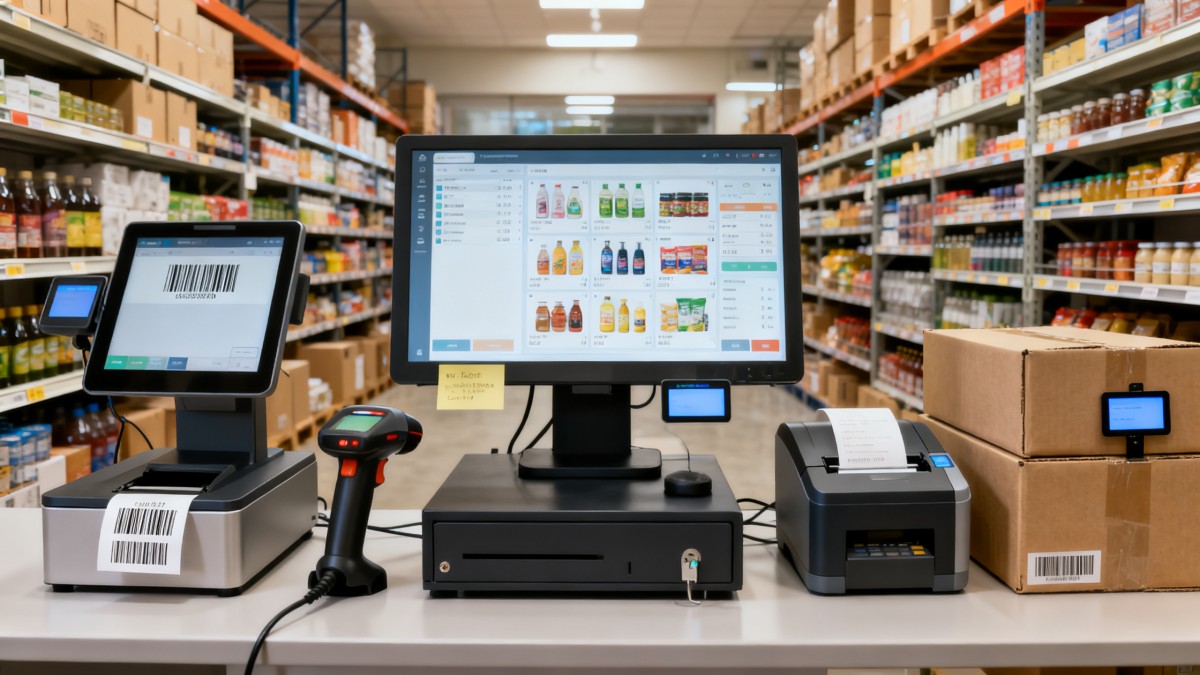
In retail environments, software problems are often symptoms of process and system disconnection. Teams may have a working POS, an ERP, inventory tools, pricing systems, e-commerce platforms, workforce applications, self-service devices, and back-office reporting tools. Each may perform well on its own. The failure happens in the gaps between them.
For example, a store associate may receive a customer return that appears valid in one system but not another. A supervisor may see stock on hand in a dashboard, while the shelf remains empty because receiving updates did not transfer correctly. A pricing team may push promotions centrally, yet stores still print the wrong shelf labels because file formats, approval steps, or device communications are inconsistent. In these cases, a newer application may only place a more modern interface on top of the same fragmented operating model.
This is why operators often feel disappointed after major software rollouts. The promised efficiency gains do not fully appear because the root causes remain untouched. If system logic is inconsistent, if data transfer rules are incomplete, or if device-level execution is unreliable, then a new platform may simply create another layer to manage.
Retail integration services focus on making existing technology work as one operating environment. Instead of assuming replacement is the only path forward, integration evaluates data flow, workflow timing, exception handling, store device connectivity, and cross-system dependencies. That approach is often more effective when the business already has capable systems but poor coordination between them.
What retail operators care about most when systems stop working together
For end users and operators, the priority is rarely architectural elegance. They care about whether tasks can be completed accurately, quickly, and without repeated workarounds. When systems are not integrated well, the pain appears in very specific ways.
One major concern is duplicate entry. Staff should not have to enter the same product, pricing, or transaction data into multiple systems just to keep operations moving. Every extra step increases time, frustration, and error rates. Another concern is timing. If one system updates every hour and another updates in real time, staff may make decisions based on mismatched information.
Operators also care about exception handling. It is easy for software vendors to demonstrate ideal workflows. Real stores run on edge cases: damaged goods, partial deliveries, return mismatches, promotion overlaps, mixed-channel orders, offline terminals, and delayed approvals. Integration quality determines whether those exceptions are handled smoothly or pushed back onto store teams.
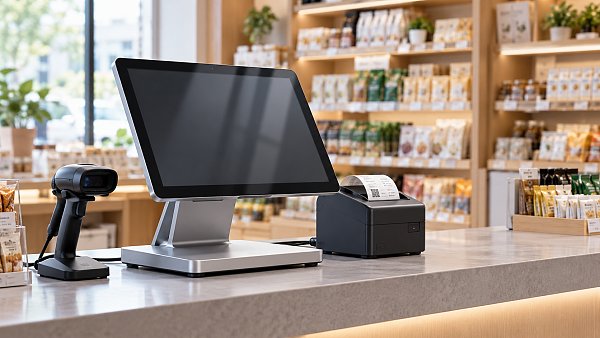
Device reliability is another overlooked issue. Many retail tasks depend not only on software but on scanners, printers, digital signage, handheld devices, kiosks, POS terminals, and label systems. If these devices are not properly integrated with business data and workflow rules, execution breaks down at the point where customers and staff actually interact with the store.
That is why retail integration services are so valuable to operational users. They reduce the hidden friction that drains productivity every day. The benefit is not abstract digital transformation. It is fewer failed updates, fewer manual fixes, clearer visibility, and more confidence that the system reflects what is really happening on the floor.
When retail integration services are a better investment than buying new software
There are several clear situations where integration is likely to deliver more immediate value than software replacement. The first is when the current systems are functionally acceptable, but information does not move between them correctly. If users generally like their core tools but complain about delays, inconsistencies, or manual reconciliation, integration should be examined before replacement.
The second situation is when stores rely on a mix of legacy and newer technologies that must continue operating together. Many retail businesses cannot pause operations to replace every platform at once. They need a practical bridge between existing infrastructure and newer digital capabilities. Integration allows modernization to happen in stages, reducing operational risk.
A third situation is when the business has already invested heavily in hardware and commercial systems across locations. Replacing software can trigger retraining, process redesign, compatibility issues, and device reconfiguration. Retail integration services can often preserve those investments while improving how they interact. For chain operators, that can mean a much better return on prior spending.
Integration is also the smarter option when the real problem is visibility. If leaders and store teams cannot trust inventory accuracy, promotion status, order flow, or service metrics because data is scattered across systems, then connecting and standardizing those information flows may solve the issue without replacing major applications.
Finally, integration is often the better move when disruption tolerance is low. Retail environments cannot afford long periods of instability, especially across multiple stores, seasons, or channels. A full software rollout may promise long-term gains, but if operations need relief now, targeted integration fixes can improve reliability much faster.
Problems retail integration services can fix that new platforms often miss
One of the most important strengths of retail integration services is their ability to address operational root causes rather than surface symptoms. A new software package may offer improved features, but integration works directly on how information, commands, and decisions move through the business.
Inventory inconsistency is a common example. Stock errors often come from delayed updates between receiving, warehouse management, store systems, online channels, and sales transactions. Integration can align data timing and business rules so that inventory reflects actual movement more accurately. That has immediate value for replenishment, click-and-collect, and customer service.
Pricing execution is another area where integration solves real pain. Promotions may be configured correctly at headquarters but fail in stores because of data mapping issues, version conflicts, or disconnected label and signage systems. Integration helps ensure that the right price appears in the right place at the right time, reducing compliance risk and customer dissatisfaction.
Order orchestration across channels also improves with integration. Many retailers now manage store pickup, ship-from-store, returns across channels, and marketplace orders. New software may add management dashboards, but unless existing systems exchange status data cleanly, stores still face confusion. Integration can make order handoffs clearer and reduce errors in fulfillment and returns.
Operational reporting becomes more trustworthy as well. If data from POS, footfall counters, labor systems, merchandising tools, and supply chain platforms is not connected properly, frontline teams and supervisors spend time arguing with reports instead of acting on them. Integration improves data consistency, allowing users to make decisions with more confidence.
In short, retail integration services often fix the hidden process failures that software demonstrations rarely show. They improve the parts of retail operations where execution, not feature count, determines success.
How to tell whether your problem is a software gap or an integration gap
Retail teams often struggle to diagnose the real issue. If users are frustrated, it is tempting to assume the software itself is outdated or inadequate. But replacing software is expensive and disruptive, so it is important to distinguish between a true capability gap and an integration gap.
Start with a simple question: does the current system fail because it cannot perform the required function, or because related systems do not provide the right data at the right time? If the function exists but produces inconsistent results, integration is often the real issue.
Another useful test is to look at manual workarounds. If staff regularly export spreadsheets, re-enter data, check multiple screens, call other departments for confirmation, or override mismatched records, then the problem likely sits between systems rather than inside one application alone.
Pay attention to where errors occur. If failures cluster around handoffs, such as receiving to inventory, promotion setup to shelf execution, online orders to store pickup, or transaction records to reporting, then integration deserves priority. By contrast, if users cannot perform necessary tasks even within a single system, a software capability issue may be more likely.
It is also helpful to review whether devices and edge environments are part of the problem. Stores are not clean office environments. Connectivity varies, local devices age differently, and execution depends on physical hardware as much as software. If process failures happen at printers, scanners, kiosks, or terminals, integration and configuration may matter more than replacing the main application.
This diagnosis step is critical because it shapes investment decisions. Retail integration services are most valuable when they target operational bottlenecks with measurable impact. A better diagnosis prevents businesses from buying more technology when what they really need is better coordination.
What good retail integration services look like in practice
Not all integration projects deliver the same value. For operators, good retail integration services should make daily work simpler, not more opaque. That means the design must be grounded in real workflows, not only technical diagrams.
A strong integration approach begins with process mapping from the user perspective. It should identify exactly where delays, duplicate work, failed updates, or device issues occur. Instead of asking only how systems can connect, the right question is how a store task should move from start to finish with fewer failure points.
Data governance is also essential. Integration should define which system owns each type of data, how updates are triggered, what validation rules apply, and how exceptions are escalated. Without clear ownership, integration can move bad data faster rather than improving operations.
Reliability and monitoring matter just as much as the initial connection. Good integration services include alerts, logs, retry rules, fallback handling, and support processes that help teams spot problems before store execution suffers. Operators need visibility into whether a feed failed, a device did not receive an update, or a transaction got stuck between platforms.
Another sign of quality is phased deployment. Retail businesses benefit when integration changes are tested in controlled environments, validated at pilot stores, and adjusted based on frontline feedback. This reduces disruption and helps ensure that improvements are real under live operating conditions.
Most importantly, successful retail integration services produce outcomes users can feel: faster task completion, fewer calls for help, more accurate stock and pricing information, and less time spent correcting errors after the fact.
How operators can evaluate value without getting lost in technical language
Users and store-side stakeholders do not need to become integration engineers to assess whether a project is worthwhile. They need a practical framework for evaluating impact. Start with measurable friction points: how many manual corrections happen each week, how long key updates take, how often devices fail to execute tasks correctly, and how frequently staff rely on workarounds.
Then connect those issues to business consequences. A delayed inventory update is not just a data problem. It can create out-of-stocks, missed sales, poor customer experiences, and wasted labor. Incorrect promotional execution can damage trust, increase refunds, and expose the business to compliance risk. Framing value in operational terms helps teams judge the real importance of integration.
It is also worth comparing the implementation burden of integration versus software replacement. New software often requires broad retraining, process redesign, and transition management. Integration may still require effort, but if it improves outcomes while preserving familiar tools, adoption is usually easier for frontline users.
Ask vendors or internal teams for specific proof points. Which workflows will improve first? How will success be measured? What exceptions are included? What happens when one system is temporarily offline? How will store devices be supported? Clear answers to these questions are often more valuable than broad promises about transformation.
For many retail organizations, the best decision is not integration instead of innovation forever. It is integration first, where coordination problems are blocking performance today, followed by targeted replacement only where a true software limitation remains. That sequence often delivers faster gains with lower risk.
Conclusion: fix the operating environment before adding another layer
When retail teams are under pressure, buying new software can feel like decisive action. But for users and operators dealing with the reality of daily execution, the biggest problems often come from disconnected systems, unreliable data movement, and weak device coordination. In those situations, retail integration services do more than link technology. They restore operational flow.
The most important takeaway is simple: if your current environment already has capable systems, but store tasks still depend on manual fixes, delayed updates, and inconsistent information, the problem may not be that you lack software. It may be that your software, hardware, and workflows are not working together as one system.
That is why retail integration services frequently solve more problems than a new platform alone. They target the handoffs, dependencies, and execution gaps that create real frustration for frontline teams. For operators seeking practical improvement rather than another disruptive rollout, integration is often the smarter first move.
News Recommendations
 How do packaging customization options affect minimum order quantities in Europe?
![51a6ab95581761cc26f4318be6520c15]()
Aris Katos
Future of Carbide Coatings
 Transom to Acquire Cree LED in Commercial Lighting Ownership Change
![51a6ab95581761cc26f4318be6520c15]()
Aris Katos
Future of Carbide Coatings
 How to plan customer flow in commercial design planning
![51a6ab95581761cc26f4318be6520c15]()
Aris Katos
Future of Carbide Coatings
 USTR Urged to Permanently Suspend Fees on China-Linked Ships
![51a6ab95581761cc26f4318be6520c15]()
Aris Katos
Future of Carbide Coatings
 How to choose comparable stores for retail benchmarking
![51a6ab95581761cc26f4318be6520c15]()
Aris Katos
Future of Carbide Coatings
 How does anchoring affect modular building wind load resistance?
![51a6ab95581761cc26f4318be6520c15]()
Aris Katos
Future of Carbide Coatings
 Amazon Raises European FBA Surcharge to 2% in Ten Markets From November 2
![51a6ab95581761cc26f4318be6520c15]()
Aris Katos
Future of Carbide Coatings
 How to verify a BPA-free test report for baby products
![51a6ab95581761cc26f4318be6520c15]()
Aris Katos
Future of Carbide Coatings
 China's Mandatory Classroom Lighting Standard GB 7793-2025 Takes Effect November 1
![51a6ab95581761cc26f4318be6520c15]()
Aris Katos
Future of Carbide Coatings
 How order volume affects the price of wholesale poly mailers
![51a6ab95581761cc26f4318be6520c15]()
Aris Katos
Future of Carbide Coatings
 US Imposes 50% Tariff on Certain Canadian PET Resin Imports
![51a6ab95581761cc26f4318be6520c15]()
Aris Katos
Future of Carbide Coatings
 How to read the maximum ratings in a semiconductor datasheet
![51a6ab95581761cc26f4318be6520c15]()
Aris Katos
Future of Carbide Coatings
 University of Maryland Develops Bio-Based Packaging to Extend Avocado and Cucumber Shelf Life
![51a6ab95581761cc26f4318be6520c15]()
Aris Katos
Future of Carbide Coatings
 How to verify a cookware manufacturer's induction compatibility claims
![51a6ab95581761cc26f4318be6520c15]()
Aris Katos
Future of Carbide Coatings
 Omdia Forecasts 11.6% Annual Growth in LED Display Revenue Through 2030
![51a6ab95581761cc26f4318be6520c15]()
Aris Katos
Future of Carbide Coatings
 How to verify a pulp molding packaging factory's production capacity
![51a6ab95581761cc26f4318be6520c15]()
Aris Katos
Future of Carbide Coatings
 Curion Survey: Half of Consumers Frustrated by Sustainable Packaging
![51a6ab95581761cc26f4318be6520c15]()
Aris Katos
Future of Carbide Coatings
 How to assess the credibility of market insight content
![51a6ab95581761cc26f4318be6520c15]()
Aris Katos
Future of Carbide Coatings
 US Removes 50% Additional Tariff on Selected Canadian Packaging Products
![51a6ab95581761cc26f4318be6520c15]()
Aris Katos
Future of Carbide Coatings
 Will a waterproof dimmable LED driver work with your existing dimmer?
![51a6ab95581761cc26f4318be6520c15]()
Aris Katos
Future of Carbide Coatings
 Charter Next Generation Raises Film PCR Use 30%, Advances Food-Grade Applications
![51a6ab95581761cc26f4318be6520c15]()
Aris Katos
Future of Carbide Coatings
 How to choose a dog harness and leash for a dog that pulls hard
![51a6ab95581761cc26f4318be6520c15]()
Aris Katos
Future of Carbide Coatings
 How to respect local customs when negotiating with overseas suppliers
![51a6ab95581761cc26f4318be6520c15]()
Aris Katos
Future of Carbide Coatings
 RFID Recycling Challenges Bring Paper-Based and Chipless Tags Into Focus
![51a6ab95581761cc26f4318be6520c15]()
Aris Katos
Future of Carbide Coatings
 How to choose commercial lighting for offices that reduces glare
![51a6ab95581761cc26f4318be6520c15]()
Aris Katos
Future of Carbide Coatings
 Queue Launches Fully Automated Robotic Pharmacy Kiosk for 30-Second Dispensing
![51a6ab95581761cc26f4318be6520c15]()
Aris Katos
Future of Carbide Coatings
 Can your supermarket store fixtures supplier meet your opening date?
![51a6ab95581761cc26f4318be6520c15]()
Aris Katos
Future of Carbide Coatings
 Shopify POS UI Extensions 2026-10 Adds Virtual Lists and Custom Row Templates
![51a6ab95581761cc26f4318be6520c15]()
Aris Katos
Future of Carbide Coatings
 How to assess smart office furniture suppliers’ North American support
![51a6ab95581761cc26f4318be6520c15]()
Aris Katos
Future of Carbide Coatings
 Aqara Launches Smart Lighting Range to Advance AI Spatial Intelligence
![51a6ab95581761cc26f4318be6520c15]()
Aris Katos
Future of Carbide Coatings
 How to assess demand forecasts in a lighting intelligence report
![51a6ab95581761cc26f4318be6520c15]()
Aris Katos
Future of Carbide Coatings
 Billerud推出PharmaKraft纤维基医药包装材料
![51a6ab95581761cc26f4318be6520c15]()
Aris Katos
Future of Carbide Coatings
 How to assess supplier reliability in global supply chain sourcing
![51a6ab95581761cc26f4318be6520c15]()
Aris Katos
Future of Carbide Coatings
 Omdia Forecasts 11.6% CAGR for Global LED Video Display Market in 2026–2030
![51a6ab95581761cc26f4318be6520c15]()
Aris Katos
Future of Carbide Coatings
 How to verify an LFGB testing laboratory's accreditation scope
![51a6ab95581761cc26f4318be6520c15]()
Aris Katos
Future of Carbide Coatings
 How to assess a workplace interior supplier's installation scope
![51a6ab95581761cc26f4318be6520c15]()
Aris Katos
Future of Carbide Coatings
 What records are needed for an ISO 9001 furniture factory audit?
![51a6ab95581761cc26f4318be6520c15]()
Aris Katos
Future of Carbide Coatings
 How to choose AI marketing tools that work with your existing CRM
![51a6ab95581761cc26f4318be6520c15]()
Aris Katos
Future of Carbide Coatings
 Do freight costs erase savings when buying retail fixtures wholesale?
![51a6ab95581761cc26f4318be6520c15]()
Aris Katos
Future of Carbide Coatings