
IEC 62471-2:2026 Amd 1 Adds Blue Light Limits for Pulsed Architectural LED Lighting
Time
Click Count
On 4 May 2026, the International Electrotechnical Commission (IEC) published Amendment 1 to IEC 62471-2:2026, introducing new photobiological safety limits for pulsed architectural LED lighting — specifically addressing instantaneous peak radiance and pulse repetition frequency sensitivity zones. This update directly affects manufacturers, exporters, and certification bodies serving EU and IEC-aligned markets.
Event Overview
The International Electrotechnical Commission (IEC) officially released IEC 62471-2:2026 Amendment 1 on 4 May 2026. The amendment adds two new assessment parameters for blue light hazard evaluation: ‘instantaneous peak radiance’ and ‘pulse repetition frequency sensitive zone’. It applies specifically to architectural LED lighting systems using pulse-width modulation (PWM) dimming or micro-LED array driving methods. EU CE notified bodies have confirmed they are now applying this amendment in type testing procedures.
Industries Affected by This Amendment
LED Luminaire Manufacturers (Architectural Segment)
Manufacturers producing high-end architectural LED fixtures — especially those incorporating PWM-based dimming or micro-LED modules — are directly subject to revised photobiological safety testing requirements. Compliance now requires measurement and documentation of transient optical output characteristics, not just time-averaged values.
LED Driver & Module Suppliers
Suppliers of PWM-capable drivers, micro-LED submodules, and integrated control units must ensure their components’ dynamic optical behavior falls within the newly defined limits. Design specifications and datasheets may require revision to reflect peak radiance performance under worst-case drive conditions.
CE Certification & Testing Laboratories
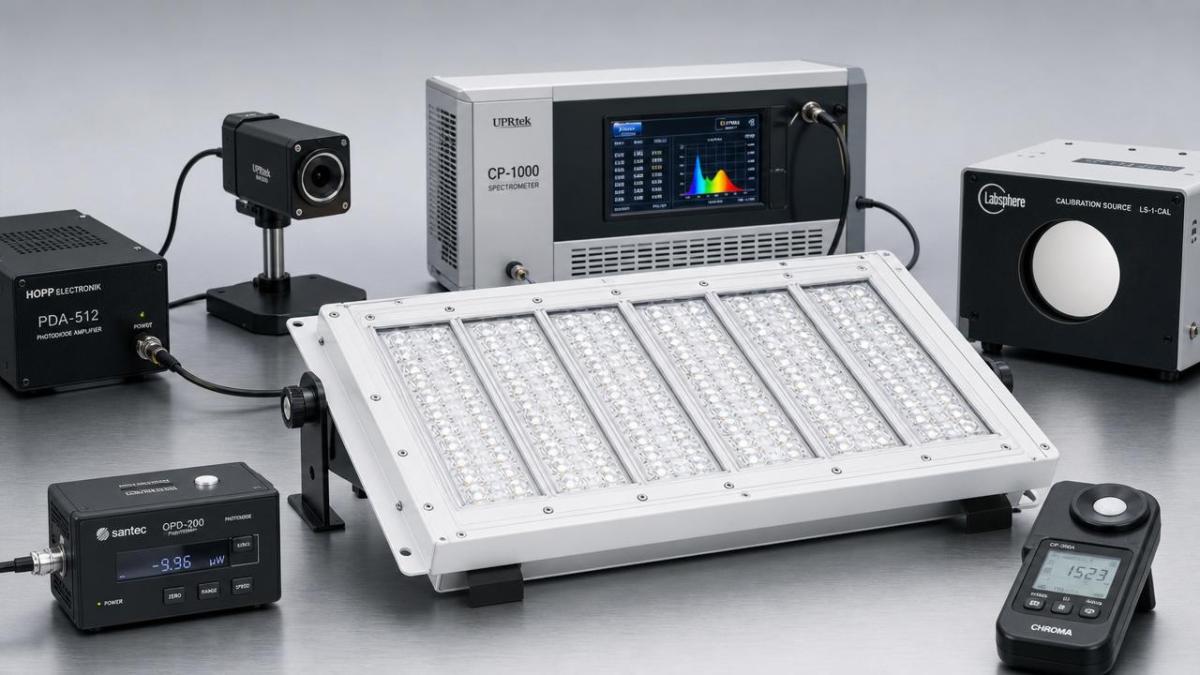
Notified bodies and accredited test labs performing IEC 62471-based assessments must update test protocols, calibration procedures, and reporting templates to incorporate the two new parameters. Equipment capable of capturing sub-millisecond optical transients is now required for full compliance verification.
What Relevant Enterprises or Practitioners Should Focus On — And How to Respond
Monitor official interpretations from IEC TC 34 and EU NANDO updates
While the amendment text is published, application guidance — particularly regarding measurement geometry, pulse definition thresholds, and pass/fail criteria for the ‘sensitive zone’ — remains pending. Stakeholders should track technical reports issued by IEC Technical Committee 34 (Lamps and related equipment) and updates listed in the EU’s NANDO database.
Prioritize review of high-risk product categories
Products most likely affected include tunable-white linear coves, dynamic façade modules, and high-frequency PWM-dimmed downlights used in premium commercial interiors. Firms should identify existing models with fast-switching drivers or micro-LED arrays and assess whether legacy test reports remain valid post-amendment.
Distinguish between regulatory signal and enforceable requirement
Although EU notified bodies have begun applying the amendment, harmonized standards under the EU Electromagnetic Compatibility (EMC) and Radio Equipment Directives do not yet reference IEC 62471-2:2026 Amd 1. Its use remains a de facto requirement for CE marking via risk-based photobiological safety assessment — not yet a mandated harmonized standard clause.
Prepare updated technical documentation and supplier coordination
Manufacturers should initiate internal reviews of optical safety files, including pulse waveform data from driver suppliers. Where necessary, revise technical construction files (TCFs) to include peak radiance measurements under specified test conditions. Early engagement with test labs on capability readiness is recommended before scheduling new certifications.
Editorial Perspective / Industry Observation
Observably, this amendment reflects a broader shift in photobiological safety assessment — from steady-state exposure modeling toward time-resolved optical hazard characterization. Analysis shows it is primarily a technical refinement rather than a market access barrier at present: no new conformity routes are introduced, and no retroactive re-certification is mandated. From an industry perspective, it functions more as an early signal of evolving measurement expectations for next-generation controllable lighting, especially where human-centric design intersects with high-frequency optical modulation. Continuous monitoring is warranted as adoption expands beyond EU CE processes into other IEC-aligned jurisdictions.
Conclusion
This amendment formalizes new metrological considerations for blue light hazard in advanced architectural LED systems. It does not introduce new regulatory obligations per se, but elevates the evidentiary threshold for photobiological safety claims. Currently, it is best understood as a forward-looking technical update — one that signals increasing granularity in lighting safety assessment, rather than an immediate compliance inflection point.
Information Sources
Main source: IEC Webstore — IEC 62471-2:2026/AMD1:2026 (published 4 May 2026).
Additional confirmation: Public statements from EU notified bodies (as of May 2026); no consolidated EU Commission guidance or OJ publication observed to date. Ongoing observation is recommended for future alignment status under relevant EU directives.
News Recommendations
 How to verify Zigbee compatibility when sourcing lighting sensors
![51a6ab95581761cc26f4318be6520c15]()
Aris Katos
Future of Carbide Coatings
 How do packaging customization options affect minimum order quantities in Europe?
![51a6ab95581761cc26f4318be6520c15]()
Aris Katos
Future of Carbide Coatings
 Transom to Acquire Cree LED in Commercial Lighting Ownership Change
![51a6ab95581761cc26f4318be6520c15]()
Aris Katos
Future of Carbide Coatings
 How to plan customer flow in commercial design planning
![51a6ab95581761cc26f4318be6520c15]()
Aris Katos
Future of Carbide Coatings
 USTR Urged to Permanently Suspend Fees on China-Linked Ships
![51a6ab95581761cc26f4318be6520c15]()
Aris Katos
Future of Carbide Coatings
 How to choose comparable stores for retail benchmarking
![51a6ab95581761cc26f4318be6520c15]()
Aris Katos
Future of Carbide Coatings
 How does anchoring affect modular building wind load resistance?
![51a6ab95581761cc26f4318be6520c15]()
Aris Katos
Future of Carbide Coatings
 Amazon Raises European FBA Surcharge to 2% in Ten Markets From November 2
![51a6ab95581761cc26f4318be6520c15]()
Aris Katos
Future of Carbide Coatings
 How to verify a BPA-free test report for baby products
![51a6ab95581761cc26f4318be6520c15]()
Aris Katos
Future of Carbide Coatings
 China's Mandatory Classroom Lighting Standard GB 7793-2025 Takes Effect November 1
![51a6ab95581761cc26f4318be6520c15]()
Aris Katos
Future of Carbide Coatings
 How order volume affects the price of wholesale poly mailers
![51a6ab95581761cc26f4318be6520c15]()
Aris Katos
Future of Carbide Coatings
 US Imposes 50% Tariff on Certain Canadian PET Resin Imports
![51a6ab95581761cc26f4318be6520c15]()
Aris Katos
Future of Carbide Coatings
 How to read the maximum ratings in a semiconductor datasheet
![51a6ab95581761cc26f4318be6520c15]()
Aris Katos
Future of Carbide Coatings
 University of Maryland Develops Bio-Based Packaging to Extend Avocado and Cucumber Shelf Life
![51a6ab95581761cc26f4318be6520c15]()
Aris Katos
Future of Carbide Coatings
 How to verify a cookware manufacturer's induction compatibility claims
![51a6ab95581761cc26f4318be6520c15]()
Aris Katos
Future of Carbide Coatings
 Omdia Forecasts 11.6% Annual Growth in LED Display Revenue Through 2030
![51a6ab95581761cc26f4318be6520c15]()
Aris Katos
Future of Carbide Coatings
 How to verify a pulp molding packaging factory's production capacity
![51a6ab95581761cc26f4318be6520c15]()
Aris Katos
Future of Carbide Coatings
 Curion Survey: Half of Consumers Frustrated by Sustainable Packaging
![51a6ab95581761cc26f4318be6520c15]()
Aris Katos
Future of Carbide Coatings
 How to assess the credibility of market insight content
![51a6ab95581761cc26f4318be6520c15]()
Aris Katos
Future of Carbide Coatings
 US Removes 50% Additional Tariff on Selected Canadian Packaging Products
![51a6ab95581761cc26f4318be6520c15]()
Aris Katos
Future of Carbide Coatings
 Will a waterproof dimmable LED driver work with your existing dimmer?
![51a6ab95581761cc26f4318be6520c15]()
Aris Katos
Future of Carbide Coatings
 Charter Next Generation Raises Film PCR Use 30%, Advances Food-Grade Applications
![51a6ab95581761cc26f4318be6520c15]()
Aris Katos
Future of Carbide Coatings
 How to choose a dog harness and leash for a dog that pulls hard
![51a6ab95581761cc26f4318be6520c15]()
Aris Katos
Future of Carbide Coatings
 How to respect local customs when negotiating with overseas suppliers
![51a6ab95581761cc26f4318be6520c15]()
Aris Katos
Future of Carbide Coatings
 RFID Recycling Challenges Bring Paper-Based and Chipless Tags Into Focus
![51a6ab95581761cc26f4318be6520c15]()
Aris Katos
Future of Carbide Coatings
 How to choose commercial lighting for offices that reduces glare
![51a6ab95581761cc26f4318be6520c15]()
Aris Katos
Future of Carbide Coatings
 Queue Launches Fully Automated Robotic Pharmacy Kiosk for 30-Second Dispensing
![51a6ab95581761cc26f4318be6520c15]()
Aris Katos
Future of Carbide Coatings
 Can your supermarket store fixtures supplier meet your opening date?
![51a6ab95581761cc26f4318be6520c15]()
Aris Katos
Future of Carbide Coatings
 Shopify POS UI Extensions 2026-10 Adds Virtual Lists and Custom Row Templates
![51a6ab95581761cc26f4318be6520c15]()
Aris Katos
Future of Carbide Coatings
 How to assess smart office furniture suppliers’ North American support
![51a6ab95581761cc26f4318be6520c15]()
Aris Katos
Future of Carbide Coatings
 Aqara Launches Smart Lighting Range to Advance AI Spatial Intelligence
![51a6ab95581761cc26f4318be6520c15]()
Aris Katos
Future of Carbide Coatings
 How to assess demand forecasts in a lighting intelligence report
![51a6ab95581761cc26f4318be6520c15]()
Aris Katos
Future of Carbide Coatings
 Billerud推出PharmaKraft纤维基医药包装材料
![51a6ab95581761cc26f4318be6520c15]()
Aris Katos
Future of Carbide Coatings
 How to assess supplier reliability in global supply chain sourcing
![51a6ab95581761cc26f4318be6520c15]()
Aris Katos
Future of Carbide Coatings
 Omdia Forecasts 11.6% CAGR for Global LED Video Display Market in 2026–2030
![51a6ab95581761cc26f4318be6520c15]()
Aris Katos
Future of Carbide Coatings
 How to verify an LFGB testing laboratory's accreditation scope
![51a6ab95581761cc26f4318be6520c15]()
Aris Katos
Future of Carbide Coatings
 How to assess a workplace interior supplier's installation scope
![51a6ab95581761cc26f4318be6520c15]()
Aris Katos
Future of Carbide Coatings
 What records are needed for an ISO 9001 furniture factory audit?
![51a6ab95581761cc26f4318be6520c15]()
Aris Katos
Future of Carbide Coatings
 How to choose AI marketing tools that work with your existing CRM
![51a6ab95581761cc26f4318be6520c15]()
Aris Katos
Future of Carbide Coatings







































