
UL Updates UL 962A: Smart Lighting Controls Must Support Local OTA Firmware Upgrade
Time
Click Count
On May 10, 2026, UL Solutions officially released the 4th edition of UL 962A, introducing a mandatory requirement for smart lighting controls to support offline-capable, localized over-the-air (OTA) firmware upgrades—verified through on-site UL assessment. This update directly impacts manufacturers and exporters supplying smart switches, dimmers, and IoT gateways to North America, the Middle East, and Latin America, with Chinese OEMs given six months to restructure firmware architecture across production lines.
Event Overview
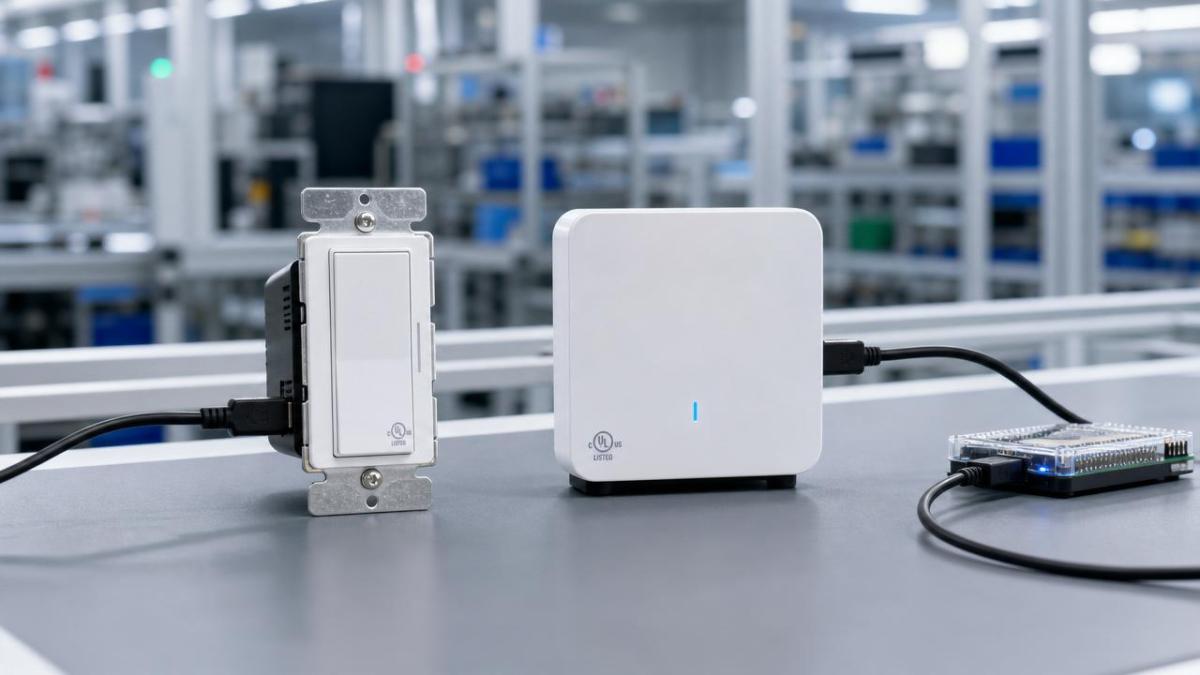
UL updated UL 962A to its 4th edition on May 10, 2026. The revision mandates that all smart lighting control devices—including but not limited to wall-mounted smart switches, phase-cut dimmers, and lighting-specific IoT gateways—must implement secure, local OTA firmware upgrade capability, operable without cloud dependency or internet connectivity. Compliance requires successful verification during UL’s on-site factory assessment. No grandfathering clauses apply; products certified under prior editions must be recertified to meet the new requirements before May 10, 2027.
Industries Affected
Direct Exporters & Trading Companies
These entities face immediate compliance risk: shipments to UL-recognized markets post-May 2027 will require valid 4th-edition certification. Non-compliant inventory may be detained at customs or rejected by retailers. Impact manifests in delayed order fulfillment, increased pre-shipment testing costs, and potential contract renegotiation with North American distributors who now mandate UL 962A 4th-edition documentation upfront.
Raw Material Suppliers
Suppliers of MCU modules, secure element ICs (e.g., ATECC608), and flash memory components must now align with firmware partitioning and cryptographic signing requirements embedded in the new standard. Demand is shifting toward chips supporting dual-bank firmware storage and hardware-rooted key management—components previously optional in cost-sensitive lighting designs. Lead times for qualified parts are expected to tighten as OEMs accelerate qualification cycles.
Contract Manufacturers & OEMs
Manufacturers must refactor firmware architecture—including bootloader design, update rollback mechanisms, and local certificate validation—to meet UL’s offline OTA validation protocol. This entails revising CI/CD pipelines, adding secure bootchain testing, and training QA teams on UL’s new field verification checklist. The six-month timeline places pressure on firmware development cycles, especially for vendors relying on third-party SDKs lacking native local OTA support.
Supply Chain Certification & Testing Service Providers
Laboratories and certification consultants must update test plans, acquire new OTA simulation tools capable of emulating air-gapped environments, and train engineers on UL’s revised field audit criteria. Demand for pre-assessment gap analysis is rising sharply—particularly among Tier-2 Chinese OEMs unfamiliar with local OTA security validation. Turnaround time for full certification is projected to increase by 3–5 weeks due to added firmware behavioral testing.
Key Focus Areas & Recommended Actions
Validate Firmware Architecture Against UL’s Offline OTA Protocol
Confirm that current bootloader supports authenticated dual-bank updates, failsafe rollback, and certificate validation using locally stored root-of-trust—not cloud-retrieved keys. UL explicitly rejects OTA flows requiring TLS handshake or remote attestation during upgrade execution.
Engage UL Early for Pre-Certification Gap Assessment
Given the absence of transitional allowances, initiate formal engagement with UL Solutions’ lighting certification team before Q3 2026. Request a documented gap report covering bootloader integrity, local signature verification logic, and recovery behavior under power-loss scenarios—critical items flagged in the 4th edition annexes.
Review Supplier Agreements for Firmware IP & Update Rights
OEMs sourcing reference designs or SDKs from chipset vendors (e.g., Silicon Labs, NXP, Espressif) must verify contractual rights to modify, sign, and distribute OTA firmware images. Several recent SDK license terms restrict modification of secure bootloaders—a direct conflict with UL 962A 4th edition’s local update enforcement.
Editorial Perspective / Industry Observation
Observably, this update signals a strategic pivot by UL toward enforcing edge-resident security—not just cloud-connected convenience—in IoT infrastructure. Unlike earlier iterations focused on electrical safety and RF emissions, UL 962A v4 treats firmware upgradability as a core safety-critical function: unpatched vulnerabilities in lighting controls can enable lateral network movement or physical layer denial-of-service (e.g., persistent overvoltage). Analysis shows this mirrors trends in UL 62368-3 (cybersecurity for AV/IT equipment) and IEC 63044-3 (home automation security), suggesting future harmonization across verticals. However, it remains uncertain whether regional regulators (e.g., ANATEL, SASO) will adopt equivalent local OTA mandates—or treat UL 962A v4 as de facto benchmark.
Conclusion
This revision marks more than a technical update—it reflects an industry-wide recalibration of responsibility: firmware maintainability is no longer a post-sale option, but a prerequisite for market access. For global lighting supply chains, adapting to local OTA requirements is less about engineering complexity and more about embedding security accountability into product lifecycle governance. Rational observation suggests early adopters will gain competitive advantage not only in certification speed, but in customer trust—especially where lighting controls interface with life-safety systems (e.g., emergency egress, healthcare facility lighting).
Source Attribution
Official source: UL Solutions Bulletin UL 962A-2026-ED4, published May 10, 2026 (Document ID: UL962A-ED4-20260510). Additional context drawn from UL’s May 2026 webinar “Smart Lighting Cybersecurity Readiness” and draft ANSI/UL 962A-2026 Annex D (Field Verification Protocol). Note: UL has indicated pending clarification on legacy product transition timelines; this remains under active review and warrants monitoring through UL’s Regulatory Alert Service.
News Recommendations
 How do packaging customization options affect minimum order quantities in Europe?
![51a6ab95581761cc26f4318be6520c15]()
Aris Katos
Future of Carbide Coatings
 Transom to Acquire Cree LED in Commercial Lighting Ownership Change
![51a6ab95581761cc26f4318be6520c15]()
Aris Katos
Future of Carbide Coatings
 How to plan customer flow in commercial design planning
![51a6ab95581761cc26f4318be6520c15]()
Aris Katos
Future of Carbide Coatings
 USTR Urged to Permanently Suspend Fees on China-Linked Ships
![51a6ab95581761cc26f4318be6520c15]()
Aris Katos
Future of Carbide Coatings
 How to choose comparable stores for retail benchmarking
![51a6ab95581761cc26f4318be6520c15]()
Aris Katos
Future of Carbide Coatings
 How does anchoring affect modular building wind load resistance?
![51a6ab95581761cc26f4318be6520c15]()
Aris Katos
Future of Carbide Coatings
 Amazon Raises European FBA Surcharge to 2% in Ten Markets From November 2
![51a6ab95581761cc26f4318be6520c15]()
Aris Katos
Future of Carbide Coatings
 How to verify a BPA-free test report for baby products
![51a6ab95581761cc26f4318be6520c15]()
Aris Katos
Future of Carbide Coatings
 China's Mandatory Classroom Lighting Standard GB 7793-2025 Takes Effect November 1
![51a6ab95581761cc26f4318be6520c15]()
Aris Katos
Future of Carbide Coatings
 How order volume affects the price of wholesale poly mailers
![51a6ab95581761cc26f4318be6520c15]()
Aris Katos
Future of Carbide Coatings
 US Imposes 50% Tariff on Certain Canadian PET Resin Imports
![51a6ab95581761cc26f4318be6520c15]()
Aris Katos
Future of Carbide Coatings
 How to read the maximum ratings in a semiconductor datasheet
![51a6ab95581761cc26f4318be6520c15]()
Aris Katos
Future of Carbide Coatings
 University of Maryland Develops Bio-Based Packaging to Extend Avocado and Cucumber Shelf Life
![51a6ab95581761cc26f4318be6520c15]()
Aris Katos
Future of Carbide Coatings
 How to verify a cookware manufacturer's induction compatibility claims
![51a6ab95581761cc26f4318be6520c15]()
Aris Katos
Future of Carbide Coatings
 Omdia Forecasts 11.6% Annual Growth in LED Display Revenue Through 2030
![51a6ab95581761cc26f4318be6520c15]()
Aris Katos
Future of Carbide Coatings
 How to verify a pulp molding packaging factory's production capacity
![51a6ab95581761cc26f4318be6520c15]()
Aris Katos
Future of Carbide Coatings
 Curion Survey: Half of Consumers Frustrated by Sustainable Packaging
![51a6ab95581761cc26f4318be6520c15]()
Aris Katos
Future of Carbide Coatings
 How to assess the credibility of market insight content
![51a6ab95581761cc26f4318be6520c15]()
Aris Katos
Future of Carbide Coatings
 US Removes 50% Additional Tariff on Selected Canadian Packaging Products
![51a6ab95581761cc26f4318be6520c15]()
Aris Katos
Future of Carbide Coatings
 Will a waterproof dimmable LED driver work with your existing dimmer?
![51a6ab95581761cc26f4318be6520c15]()
Aris Katos
Future of Carbide Coatings
 Charter Next Generation Raises Film PCR Use 30%, Advances Food-Grade Applications
![51a6ab95581761cc26f4318be6520c15]()
Aris Katos
Future of Carbide Coatings
 How to choose a dog harness and leash for a dog that pulls hard
![51a6ab95581761cc26f4318be6520c15]()
Aris Katos
Future of Carbide Coatings
 How to respect local customs when negotiating with overseas suppliers
![51a6ab95581761cc26f4318be6520c15]()
Aris Katos
Future of Carbide Coatings
 RFID Recycling Challenges Bring Paper-Based and Chipless Tags Into Focus
![51a6ab95581761cc26f4318be6520c15]()
Aris Katos
Future of Carbide Coatings
 How to choose commercial lighting for offices that reduces glare
![51a6ab95581761cc26f4318be6520c15]()
Aris Katos
Future of Carbide Coatings
 Queue Launches Fully Automated Robotic Pharmacy Kiosk for 30-Second Dispensing
![51a6ab95581761cc26f4318be6520c15]()
Aris Katos
Future of Carbide Coatings
 Can your supermarket store fixtures supplier meet your opening date?
![51a6ab95581761cc26f4318be6520c15]()
Aris Katos
Future of Carbide Coatings
 Shopify POS UI Extensions 2026-10 Adds Virtual Lists and Custom Row Templates
![51a6ab95581761cc26f4318be6520c15]()
Aris Katos
Future of Carbide Coatings
 How to assess smart office furniture suppliers’ North American support
![51a6ab95581761cc26f4318be6520c15]()
Aris Katos
Future of Carbide Coatings
 Aqara Launches Smart Lighting Range to Advance AI Spatial Intelligence
![51a6ab95581761cc26f4318be6520c15]()
Aris Katos
Future of Carbide Coatings
 How to assess demand forecasts in a lighting intelligence report
![51a6ab95581761cc26f4318be6520c15]()
Aris Katos
Future of Carbide Coatings
 Billerud推出PharmaKraft纤维基医药包装材料
![51a6ab95581761cc26f4318be6520c15]()
Aris Katos
Future of Carbide Coatings
 How to assess supplier reliability in global supply chain sourcing
![51a6ab95581761cc26f4318be6520c15]()
Aris Katos
Future of Carbide Coatings
 Omdia Forecasts 11.6% CAGR for Global LED Video Display Market in 2026–2030
![51a6ab95581761cc26f4318be6520c15]()
Aris Katos
Future of Carbide Coatings
 How to verify an LFGB testing laboratory's accreditation scope
![51a6ab95581761cc26f4318be6520c15]()
Aris Katos
Future of Carbide Coatings
 How to assess a workplace interior supplier's installation scope
![51a6ab95581761cc26f4318be6520c15]()
Aris Katos
Future of Carbide Coatings
 What records are needed for an ISO 9001 furniture factory audit?
![51a6ab95581761cc26f4318be6520c15]()
Aris Katos
Future of Carbide Coatings
 How to choose AI marketing tools that work with your existing CRM
![51a6ab95581761cc26f4318be6520c15]()
Aris Katos
Future of Carbide Coatings
 Do freight costs erase savings when buying retail fixtures wholesale?
![51a6ab95581761cc26f4318be6520c15]()
Aris Katos
Future of Carbide Coatings







































