
UL Solutions Mandates Offline OTA Rollback for Smart Lighting Controls
Time
Click Count
UL Solutions has issued a global announcement requiring offline over-the-air (OTA) rollback capability for smart lighting controls sold in North America, the EU, and Australia/New Zealand — effective August 1, 2026. This update to UL 962A v2.1 introduces a hardware-enforced requirement: firmware must automatically revert to the previous stable version within three seconds of an upgrade failure. The change directly impacts manufacturers, suppliers, and importers engaged in smart lighting hardware production and trade.
Event Overview
On May 18, 2026, UL Solutions published a global notice stating that, starting August 1, 2026, all smart lighting controls intended for sale in North America, the European Union, and Australia/New Zealand must comply with UL 962A v2.1. A core new requirement is mandatory offline OTA rollback functionality — defined as automatic reversion to the prior stable firmware version within three seconds of a failed firmware update. This function must be implemented at the hardware level, necessitating integration of a dedicated secure microcontroller unit (MCU). The notice confirms that over 60% of smart lighting ODM manufacturers in Shenzhen and Dongguan have already initiated production line modifications. Overseas buyers are advised to verify whether their Chinese suppliers’ bill of materials (BOM) includes the SE02 security chip and firmware version V2.1.0 or later.
Industries Affected by Segment
Direct Trading Enterprises
Importers and brand owners sourcing smart lighting controls from China face immediate compliance risk if their current supplier BOMs lack the SE02 chip or certified firmware. Non-compliant products may be rejected at customs or denied market access post-August 2026, triggering delays, rework costs, or contractual liability under new procurement clauses.
Component Procurement Enterprises
Suppliers responsible for sourcing MCU, secure element, or firmware modules must now prioritize availability and certification status of SE02-class chips. Lead times and qualification cycles for security ICs are expected to tighten, especially as demand surges across multiple OEM/ODM lines in Southern China.
Contract Manufacturing & ODM Enterprises
Manufacturers — particularly those in Shenzhen and Dongguan — are actively retrofitting production lines to integrate independent secure MCUs. This requires hardware redesign, firmware validation, and updated UL certification submissions. Existing product families without rollback-capable architecture may require full re-engineering, not just software patching.
Supply Chain & Logistics Service Providers
Third-party testing labs, certification consultants, and logistics firms supporting smart lighting exports must update documentation checklists and pre-shipment verification protocols. Certificates issued before August 2026 under UL 962A v2.0 will no longer suffice for new shipments targeting regulated markets.
Key Points for Enterprises and Practitioners
Verify BOM and firmware version against UL 962A v2.1 requirements
Overseas buyers should request updated BOMs and firmware release notes from suppliers, explicitly confirming inclusion of the SE02 security chip and firmware version ≥ V2.1.0. Cross-check with UL’s publicly listed certified models where available.
Assess production line readiness and certification timelines
ODMs and contract manufacturers should confirm whether their UL certification renewal applications include test reports validating the 3-second offline rollback behavior under power-loss and communication-interruption conditions — per UL 962A v2.1 Annex G.
Distinguish between policy signal and operational enforcement
The August 1, 2026 deadline marks formal enforcement; however, UL does not retroactively invalidate existing certifications. Products certified under v2.0 before the deadline may still enter regulated markets if shipped prior to August 1 — but only if accompanied by valid v2.0 certificates and no post-certification design changes affecting firmware update logic.
Prepare for supply chain adjustments ahead of Q3 2026
Given lead times for qualified secure MCUs and firmware validation cycles, procurement teams should initiate component sourcing reviews and supplier audits by June 2026. Delaying verification until July risks missing the August cutoff for first shipments.
Editorial Perspective / Industry Observation
Observably, this mandate signals a shift from functional safety toward firmware resilience as a baseline requirement for connected lighting devices. Analysis shows UL is aligning UL 962A more closely with IEC 62443-4-2 security lifecycle expectations — specifically around fail-safe update mechanisms. From an industry perspective, it is less a one-off compliance hurdle and more an early indicator of broader firmware integrity expectations likely to extend to other IoT device categories in future revisions. Current enforcement scope remains limited to smart lighting controls in three regulatory regions, but the technical precedent — hardware-enforced rollback — sets a benchmark for reliability that certification bodies may reference elsewhere.
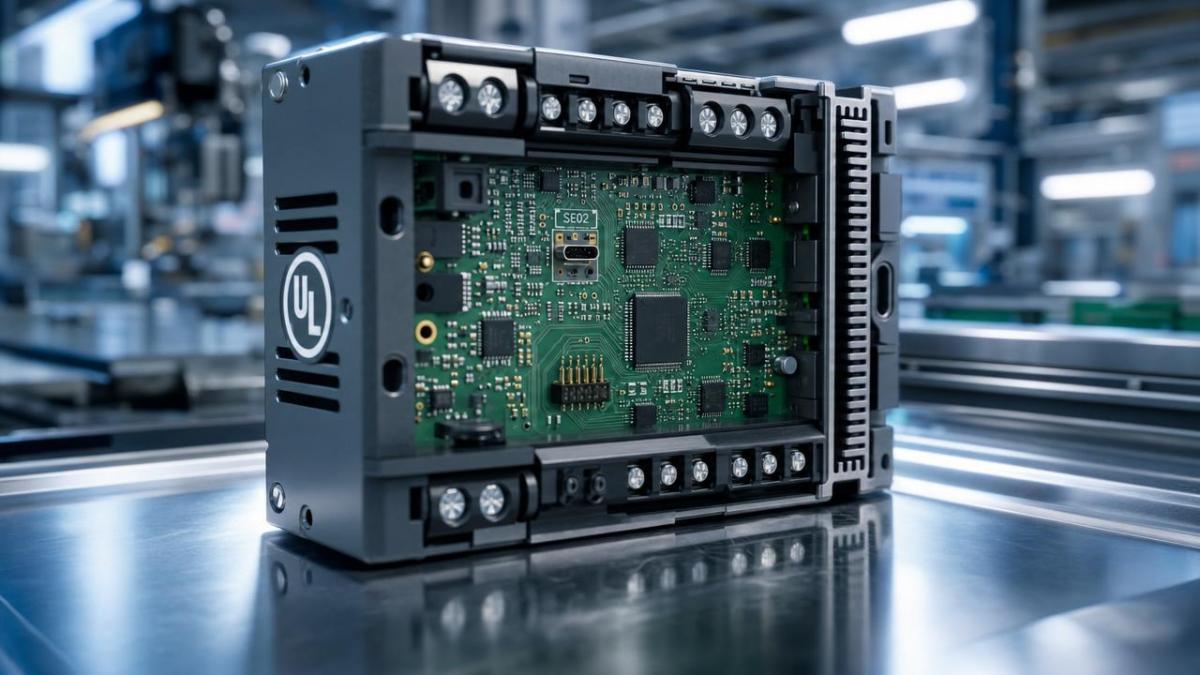
This notice is not yet a universal standard but represents a concrete, time-bound requirement with measurable implementation criteria. Its significance lies not in novelty alone, but in the explicit linkage between hardware architecture (dedicated secure MCU), firmware behavior (sub-3-second rollback), and market access eligibility.
Conclusion
This UL Solutions announcement establishes a clear, enforceable firmware resilience requirement for smart lighting controls entering key export markets. It reflects growing regulatory emphasis on embedded system recoverability — not just connectivity or energy efficiency. For stakeholders, the directive is best understood not as a distant compliance deadline, but as a near-term operational checkpoint requiring coordinated action across hardware design, firmware development, component procurement, and certification management. Timely BOM verification and production line readiness assessment remain the most actionable priorities through mid-2026.
Source Attribution
Primary source: UL Solutions Global Notice, issued May 18, 2026.
Noted for ongoing observation: UL’s official list of certified models compliant with UL 962A v2.1 — as of publication, no public registry is confirmed; verification remains dependent on supplier-provided documentation and UL-issued certificates.
News Recommendations
 How do packaging customization options affect minimum order quantities in Europe?
![51a6ab95581761cc26f4318be6520c15]()
Aris Katos
Future of Carbide Coatings
 Transom to Acquire Cree LED in Commercial Lighting Ownership Change
![51a6ab95581761cc26f4318be6520c15]()
Aris Katos
Future of Carbide Coatings
 How to plan customer flow in commercial design planning
![51a6ab95581761cc26f4318be6520c15]()
Aris Katos
Future of Carbide Coatings
 USTR Urged to Permanently Suspend Fees on China-Linked Ships
![51a6ab95581761cc26f4318be6520c15]()
Aris Katos
Future of Carbide Coatings
 How to choose comparable stores for retail benchmarking
![51a6ab95581761cc26f4318be6520c15]()
Aris Katos
Future of Carbide Coatings
 How does anchoring affect modular building wind load resistance?
![51a6ab95581761cc26f4318be6520c15]()
Aris Katos
Future of Carbide Coatings
 Amazon Raises European FBA Surcharge to 2% in Ten Markets From November 2
![51a6ab95581761cc26f4318be6520c15]()
Aris Katos
Future of Carbide Coatings
 How to verify a BPA-free test report for baby products
![51a6ab95581761cc26f4318be6520c15]()
Aris Katos
Future of Carbide Coatings
 China's Mandatory Classroom Lighting Standard GB 7793-2025 Takes Effect November 1
![51a6ab95581761cc26f4318be6520c15]()
Aris Katos
Future of Carbide Coatings
 How order volume affects the price of wholesale poly mailers
![51a6ab95581761cc26f4318be6520c15]()
Aris Katos
Future of Carbide Coatings
 US Imposes 50% Tariff on Certain Canadian PET Resin Imports
![51a6ab95581761cc26f4318be6520c15]()
Aris Katos
Future of Carbide Coatings
 How to read the maximum ratings in a semiconductor datasheet
![51a6ab95581761cc26f4318be6520c15]()
Aris Katos
Future of Carbide Coatings
 University of Maryland Develops Bio-Based Packaging to Extend Avocado and Cucumber Shelf Life
![51a6ab95581761cc26f4318be6520c15]()
Aris Katos
Future of Carbide Coatings
 How to verify a cookware manufacturer's induction compatibility claims
![51a6ab95581761cc26f4318be6520c15]()
Aris Katos
Future of Carbide Coatings
 Omdia Forecasts 11.6% Annual Growth in LED Display Revenue Through 2030
![51a6ab95581761cc26f4318be6520c15]()
Aris Katos
Future of Carbide Coatings
 How to verify a pulp molding packaging factory's production capacity
![51a6ab95581761cc26f4318be6520c15]()
Aris Katos
Future of Carbide Coatings
 Curion Survey: Half of Consumers Frustrated by Sustainable Packaging
![51a6ab95581761cc26f4318be6520c15]()
Aris Katos
Future of Carbide Coatings
 How to assess the credibility of market insight content
![51a6ab95581761cc26f4318be6520c15]()
Aris Katos
Future of Carbide Coatings
 US Removes 50% Additional Tariff on Selected Canadian Packaging Products
![51a6ab95581761cc26f4318be6520c15]()
Aris Katos
Future of Carbide Coatings
 Will a waterproof dimmable LED driver work with your existing dimmer?
![51a6ab95581761cc26f4318be6520c15]()
Aris Katos
Future of Carbide Coatings
 Charter Next Generation Raises Film PCR Use 30%, Advances Food-Grade Applications
![51a6ab95581761cc26f4318be6520c15]()
Aris Katos
Future of Carbide Coatings
 How to choose a dog harness and leash for a dog that pulls hard
![51a6ab95581761cc26f4318be6520c15]()
Aris Katos
Future of Carbide Coatings
 How to respect local customs when negotiating with overseas suppliers
![51a6ab95581761cc26f4318be6520c15]()
Aris Katos
Future of Carbide Coatings
 RFID Recycling Challenges Bring Paper-Based and Chipless Tags Into Focus
![51a6ab95581761cc26f4318be6520c15]()
Aris Katos
Future of Carbide Coatings
 How to choose commercial lighting for offices that reduces glare
![51a6ab95581761cc26f4318be6520c15]()
Aris Katos
Future of Carbide Coatings
 Queue Launches Fully Automated Robotic Pharmacy Kiosk for 30-Second Dispensing
![51a6ab95581761cc26f4318be6520c15]()
Aris Katos
Future of Carbide Coatings
 Can your supermarket store fixtures supplier meet your opening date?
![51a6ab95581761cc26f4318be6520c15]()
Aris Katos
Future of Carbide Coatings
 Shopify POS UI Extensions 2026-10 Adds Virtual Lists and Custom Row Templates
![51a6ab95581761cc26f4318be6520c15]()
Aris Katos
Future of Carbide Coatings
 How to assess smart office furniture suppliers’ North American support
![51a6ab95581761cc26f4318be6520c15]()
Aris Katos
Future of Carbide Coatings
 Aqara Launches Smart Lighting Range to Advance AI Spatial Intelligence
![51a6ab95581761cc26f4318be6520c15]()
Aris Katos
Future of Carbide Coatings
 How to assess demand forecasts in a lighting intelligence report
![51a6ab95581761cc26f4318be6520c15]()
Aris Katos
Future of Carbide Coatings
 Billerud推出PharmaKraft纤维基医药包装材料
![51a6ab95581761cc26f4318be6520c15]()
Aris Katos
Future of Carbide Coatings
 How to assess supplier reliability in global supply chain sourcing
![51a6ab95581761cc26f4318be6520c15]()
Aris Katos
Future of Carbide Coatings
 Omdia Forecasts 11.6% CAGR for Global LED Video Display Market in 2026–2030
![51a6ab95581761cc26f4318be6520c15]()
Aris Katos
Future of Carbide Coatings
 How to verify an LFGB testing laboratory's accreditation scope
![51a6ab95581761cc26f4318be6520c15]()
Aris Katos
Future of Carbide Coatings
 How to assess a workplace interior supplier's installation scope
![51a6ab95581761cc26f4318be6520c15]()
Aris Katos
Future of Carbide Coatings
 What records are needed for an ISO 9001 furniture factory audit?
![51a6ab95581761cc26f4318be6520c15]()
Aris Katos
Future of Carbide Coatings
 How to choose AI marketing tools that work with your existing CRM
![51a6ab95581761cc26f4318be6520c15]()
Aris Katos
Future of Carbide Coatings
 Do freight costs erase savings when buying retail fixtures wholesale?
![51a6ab95581761cc26f4318be6520c15]()
Aris Katos
Future of Carbide Coatings







































