Technical Benchmarking Analysis for Smart Lighting Controls: What Really Matters
Time
Click Count
For financial decision-makers evaluating smart lighting controls, technical benchmarking analysis is not about features alone—it is about measurable ROI, compliance risk, lifecycle cost, and long-term scalability. In a market shaped by energy targets, digital integration, and global sourcing complexity, understanding what truly matters helps separate attractive specifications from investments that strengthen operational performance and capital efficiency.
Why a checklist approach matters before approving spend
For finance teams, the biggest mistake in technical benchmarking analysis is treating smart lighting controls as a narrow facilities purchase. In reality, these systems affect energy spend, maintenance labor, tenant experience, retrofit complexity, cybersecurity exposure, and the quality of reporting used for ESG and capital planning. A checklist structure helps decision-makers compare options in a disciplined way, especially when proposals look similar on paper but differ significantly in long-term value.
This matters even more in international sourcing environments. Product claims may be strong, but the financial case weakens quickly if interoperability is poor, certifications are incomplete, local service is limited, or the system cannot scale across sites. A practical technical benchmarking analysis should therefore focus on proof, not promises.
The first-screen checklist: what to confirm before reviewing detailed specs
Before diving into protocols, sensors, or dashboards, finance approvers should ask for a short list of decision-grade facts. This reduces the risk of spending time on technically impressive options that do not fit asset strategy or payback expectations.
- Confirm the target outcome: energy reduction, occupancy-based savings, compliance, user comfort, data visibility, or portfolio standardization.
- Request baseline numbers: current lighting load, annual operating hours, maintenance cost, failure rate, and utility pricing.
- Identify the project type: new build, phased retrofit, single site, or multi-country rollout.
- Verify system boundaries: controls only, controls plus luminaires, or a broader building integration package.
- Set financial thresholds early: target payback period, IRR expectation, CAPEX ceiling, and acceptable implementation disruption.
- Ask for third-party support: certification documents, commissioning plan, warranty terms, and post-installation measurement method.
Core technical benchmarking analysis criteria that actually affect ROI
1. Control performance must be measured, not described
A strong technical benchmarking analysis starts with actual control effectiveness. Ask how accurately the system responds to occupancy, daylight availability, scheduling logic, and zoning requirements. Delays, false triggers, poor calibration, or limited dimming granularity can reduce savings and frustrate users. Financially, weak performance creates a double loss: expected energy reduction is missed, and manual overrides increase operating complexity.
2. Interoperability is a capital protection issue
Whether the project uses DALI, 0-10V, BACnet, Zigbee, Bluetooth Mesh, or hybrid architecture, the key question is not technical elegance alone but future flexibility. If a system depends heavily on proprietary gateways, custom software layers, or single-vendor components, replacement cost can rise sharply later. Technical benchmarking analysis should compare how easily each solution integrates with BMS, HVAC logic, occupancy analytics, emergency systems, and enterprise reporting tools.
3. Commissioning complexity often changes the payback model
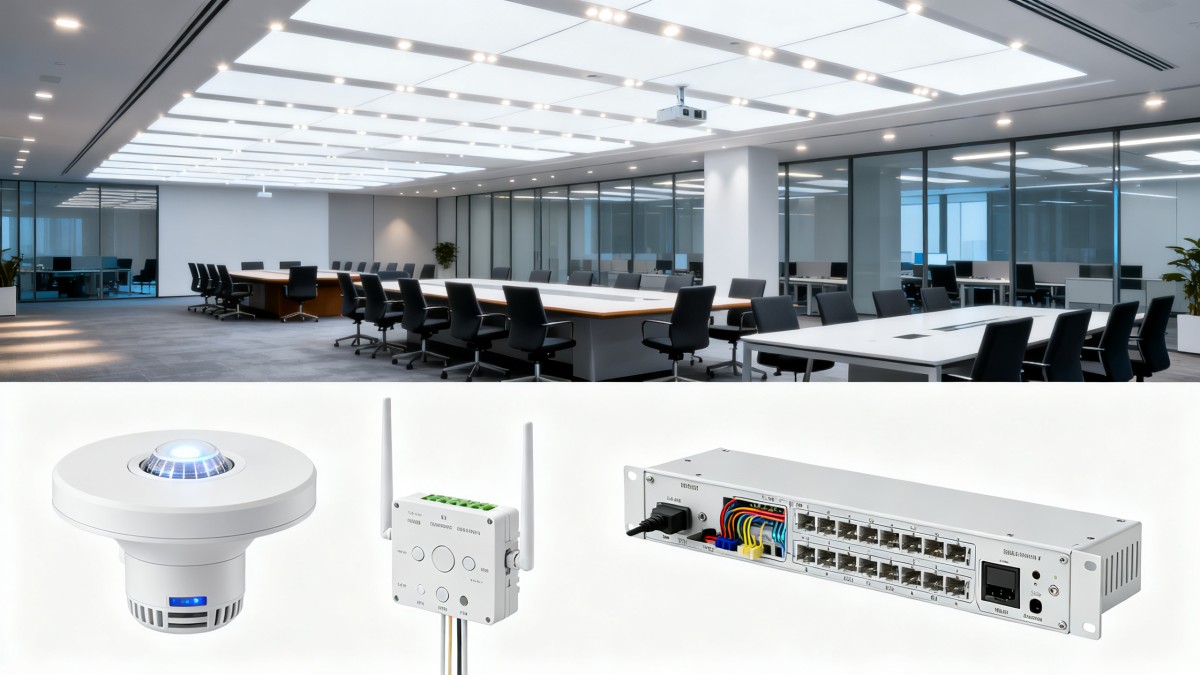
Many proposals understate setup effort. Sensor placement, zoning logic, scene programming, daylight calibration, firmware updates, and user training all influence launch cost and schedule risk. A system with slightly higher equipment cost but faster commissioning may outperform a cheaper alternative once labor, disruption, and delayed savings are included. For finance teams, this is one of the most important technical benchmarking analysis checkpoints.
4. Data visibility should support reporting and governance
Controls increasingly serve as data platforms. The question is whether the system can produce usable, auditable information by zone, floor, tenant, store format, or operating period. If data exports are limited, dashboards are not portfolio-ready, or energy attribution is unclear, the asset loses strategic value. This is especially relevant for organizations aligning operational efficiency with ESG disclosure or lease-based cost allocation.
5. Compliance and certification should be screened early
In global commercial environments, standards and approvals are not administrative details. UL, CE, EMC requirements, electrical safety, wireless conformity, and local code compatibility can affect deployment timing and insurance confidence. G-BCE’s benchmarking perspective is especially useful here because cross-market sourcing often introduces hidden documentation gaps. A rigorous technical benchmarking analysis should verify not only certificates, but also whether those certificates match the exact configuration being purchased.
A practical comparison table for financial reviewers
Use the following framework to compare bids beyond headline savings claims. It keeps the technical benchmarking analysis tied to financial outcomes.
What changes by project type: scenario-based checks
For retrofits in occupied commercial spaces
Prioritize low-disruption installation, compatibility with existing wiring, and fast commissioning. Technical benchmarking analysis in retrofit settings should include ceiling access constraints, tenant interruption costs, temporary lighting needs, and whether controls can be deployed zone by zone. In these projects, installation friction can erase the savings advantage of a lower-priced product.
For new developments or flagship projects
The focus shifts toward long-term scalability, design flexibility, premium user experience, and broader systems integration. Here, finance approvers should check whether smart lighting controls support scene management, analytics expansion, and future technology layers without major rework. Higher upfront cost may be justified if the system protects asset positioning and avoids premature redesign.
For multi-site or cross-border rollouts
Standardization becomes critical. Compare supplier manufacturing consistency, regional certification readiness, software localization, spare parts strategy, and remote support capability. G-BCE’s cross-sector and global sourcing perspective is valuable because financial efficiency at scale depends on repeatability, not just single-site performance. Technical benchmarking analysis should test whether one platform can serve multiple formats without creating fragmented support models.
Commonly overlooked risks that distort the business case
- Overreliance on vendor savings simulations without measured reference projects.
- Ignoring firmware management, cybersecurity responsibilities, and user-access control.
- Assuming all wireless systems reduce installation cost equally, regardless of interference or building layout.
- Failing to model maintenance savings and replacement cycles separately from energy savings.
- Approving a platform without clear ownership of post-installation optimization.
- Treating certifications as generic rather than checking exact product variants and target markets.
Each of these issues can weaken a technical benchmarking analysis by making the proposal appear cheaper, simpler, or more mature than it really is. Finance teams should push for documented evidence and responsibility mapping before approval.
Execution advice: what information to request before signing off
If the organization wants a reliable approval process, require a structured vendor submission package. This should include a bill of materials, control architecture diagram, certification set, commissioning scope, expected savings methodology, warranty statement, cybersecurity note, and service-response model. Ask for one financial model showing best case, expected case, and downside case rather than a single optimistic payback number.
It is also useful to request a pilot or reference validation checklist. A short pilot can test occupancy response, actual dimming behavior, user acceptance, and data export quality before a larger rollout. In many cases, this step improves capital discipline more than extended vendor presentations do.
FAQ for finance-oriented technical benchmarking analysis
How should payback be evaluated?
Use total installed cost, commissioning cost, maintenance impact, expected system life, and realistic utilization assumptions. Avoid relying on energy savings alone.
What is the fastest way to filter weak proposals?
Check for verified reference projects, complete certification documents, open integration capability, and a detailed commissioning plan. If any of these are vague, the proposal needs further scrutiny.
When is a premium system worth the extra cost?
Usually when the project involves high-value commercial environments, multi-site expansion, integration with broader smart building systems, or strong reporting requirements. In these cases, better data, serviceability, and scalability can justify higher CAPEX.
Final decision guide: what really matters
The most useful technical benchmarking analysis for smart lighting controls is not the one with the longest specification sheet. It is the one that clarifies whether a system can deliver verified savings, comply across markets, integrate without lock-in, scale across assets, and remain serviceable over time. For financial approvers, that means prioritizing evidence, lifecycle economics, and execution readiness over feature-heavy marketing language.
If the next step is internal review or supplier engagement, begin by confirming five items: baseline energy profile, target payback, integration requirements, required certifications, and post-installation support expectations. Once those are clear, discussions around parameters, solution fit, rollout timing, budget structure, and cooperation model become far more efficient—and far more likely to lead to a sound investment decision.
News Recommendations
 Uniguest and Extreme Networks Partner to Simplify Digital Signage Deployment
![51a6ab95581761cc26f4318be6520c15]()
Aris Katos
Future of Carbide Coatings
 How to assess electronics compliance whitepapers for regulatory accuracy
![51a6ab95581761cc26f4318be6520c15]()
Aris Katos
Future of Carbide Coatings
 Packaging Data Hub Launches With Plastic Recycling Findings for 50 Countries
![51a6ab95581761cc26f4318be6520c15]()
Aris Katos
Future of Carbide Coatings
 How to verify an ergonomic office chair supplier's warranty terms
![51a6ab95581761cc26f4318be6520c15]()
Aris Katos
Future of Carbide Coatings
 Curion Survey: 64% Value Sustainable Beauty Packaging, but Quality Comes First
![51a6ab95581761cc26f4318be6520c15]()
Aris Katos
Future of Carbide Coatings
 Can minimalist fit out solutions make a small office feel larger?
![51a6ab95581761cc26f4318be6520c15]()
Aris Katos
Future of Carbide Coatings
 Kiosk Industry Releases IAAPA 2026 Self-Service Guide
![51a6ab95581761cc26f4318be6520c15]()
Aris Katos
Future of Carbide Coatings
 How to improve global supply chain visibility beyond tier-one suppliers
![51a6ab95581761cc26f4318be6520c15]()
Aris Katos
Future of Carbide Coatings
 Austria’s MM Group to Sell 70% of Packaging Business to KPS for $2.7 Billion
![51a6ab95581761cc26f4318be6520c15]()
Aris Katos
Future of Carbide Coatings
 How to assess delivery reliability of airport terminal seating suppliers in Europe
![51a6ab95581761cc26f4318be6520c15]()
Aris Katos
Future of Carbide Coatings
 USTR Extends China-Linked Vessel Fee Pause and 178 Product Exemptions to January 2027
![51a6ab95581761cc26f4318be6520c15]()
Aris Katos
Future of Carbide Coatings
 How to choose smart sensors for automated lighting
![51a6ab95581761cc26f4318be6520c15]()
Aris Katos
Future of Carbide Coatings
 Shanghai Retail Buyers Sign Deals at Ninth China International Import Expo
![51a6ab95581761cc26f4318be6520c15]()
Aris Katos
Future of Carbide Coatings
 Which toys are subject to EN 71 toy safety requirements?
![51a6ab95581761cc26f4318be6520c15]()
Aris Katos
Future of Carbide Coatings
 Report: Global Kraft Paper Market Forecast to Reach $20.5 Billion by 2033
![51a6ab95581761cc26f4318be6520c15]()
Aris Katos
Future of Carbide Coatings
 How to verify Zigbee compatibility when sourcing lighting sensors
![51a6ab95581761cc26f4318be6520c15]()
Aris Katos
Future of Carbide Coatings
 How do packaging customization options affect minimum order quantities in Europe?
![51a6ab95581761cc26f4318be6520c15]()
Aris Katos
Future of Carbide Coatings
 Transom to Acquire Cree LED in Commercial Lighting Ownership Change
![51a6ab95581761cc26f4318be6520c15]()
Aris Katos
Future of Carbide Coatings
 How to plan customer flow in commercial design planning
![51a6ab95581761cc26f4318be6520c15]()
Aris Katos
Future of Carbide Coatings
 USTR Urged to Permanently Suspend Fees on China-Linked Ships
![51a6ab95581761cc26f4318be6520c15]()
Aris Katos
Future of Carbide Coatings
 How to choose comparable stores for retail benchmarking
![51a6ab95581761cc26f4318be6520c15]()
Aris Katos
Future of Carbide Coatings
 How does anchoring affect modular building wind load resistance?
![51a6ab95581761cc26f4318be6520c15]()
Aris Katos
Future of Carbide Coatings
 Amazon Raises European FBA Surcharge to 2% in Ten Markets From November 2
![51a6ab95581761cc26f4318be6520c15]()
Aris Katos
Future of Carbide Coatings
 How to verify a BPA-free test report for baby products
![51a6ab95581761cc26f4318be6520c15]()
Aris Katos
Future of Carbide Coatings
 China's Mandatory Classroom Lighting Standard GB 7793-2025 Takes Effect November 1
![51a6ab95581761cc26f4318be6520c15]()
Aris Katos
Future of Carbide Coatings
 How order volume affects the price of wholesale poly mailers
![51a6ab95581761cc26f4318be6520c15]()
Aris Katos
Future of Carbide Coatings
 US Imposes 50% Tariff on Certain Canadian PET Resin Imports
![51a6ab95581761cc26f4318be6520c15]()
Aris Katos
Future of Carbide Coatings
 How to read the maximum ratings in a semiconductor datasheet
![51a6ab95581761cc26f4318be6520c15]()
Aris Katos
Future of Carbide Coatings
 University of Maryland Develops Bio-Based Packaging to Extend Avocado and Cucumber Shelf Life
![51a6ab95581761cc26f4318be6520c15]()
Aris Katos
Future of Carbide Coatings
 How to verify a cookware manufacturer's induction compatibility claims
![51a6ab95581761cc26f4318be6520c15]()
Aris Katos
Future of Carbide Coatings
 Omdia Forecasts 11.6% Annual Growth in LED Display Revenue Through 2030
![51a6ab95581761cc26f4318be6520c15]()
Aris Katos
Future of Carbide Coatings
 How to verify a pulp molding packaging factory's production capacity
![51a6ab95581761cc26f4318be6520c15]()
Aris Katos
Future of Carbide Coatings
 Curion Survey: Half of Consumers Frustrated by Sustainable Packaging
![51a6ab95581761cc26f4318be6520c15]()
Aris Katos
Future of Carbide Coatings
 How to assess the credibility of market insight content
![51a6ab95581761cc26f4318be6520c15]()
Aris Katos
Future of Carbide Coatings
 US Removes 50% Additional Tariff on Selected Canadian Packaging Products
![51a6ab95581761cc26f4318be6520c15]()
Aris Katos
Future of Carbide Coatings
 Will a waterproof dimmable LED driver work with your existing dimmer?
![51a6ab95581761cc26f4318be6520c15]()
Aris Katos
Future of Carbide Coatings
 Charter Next Generation Raises Film PCR Use 30%, Advances Food-Grade Applications
![51a6ab95581761cc26f4318be6520c15]()
Aris Katos
Future of Carbide Coatings
 How to choose a dog harness and leash for a dog that pulls hard
![51a6ab95581761cc26f4318be6520c15]()
Aris Katos
Future of Carbide Coatings
 How to respect local customs when negotiating with overseas suppliers
![51a6ab95581761cc26f4318be6520c15]()
Aris Katos
Future of Carbide Coatings