Saudi Arabia Updates Washer Efficiency Standards, Affecting Smart Lighting Exports
Time
Click Count
Saudi Arabia’s Standards, Metrology and Quality Organization (SASO) has introduced revised energy and water efficiency requirements for washing machines, effective May 1, 2026. The new standard — SASO 2663:2026 — extends regulatory scope beyond core appliances to encompass a broad range of smart-enabled commercial peripheral devices, triggering cross-sector compliance implications for exporters in lighting, controls, and embedded electronics.
Event Overview
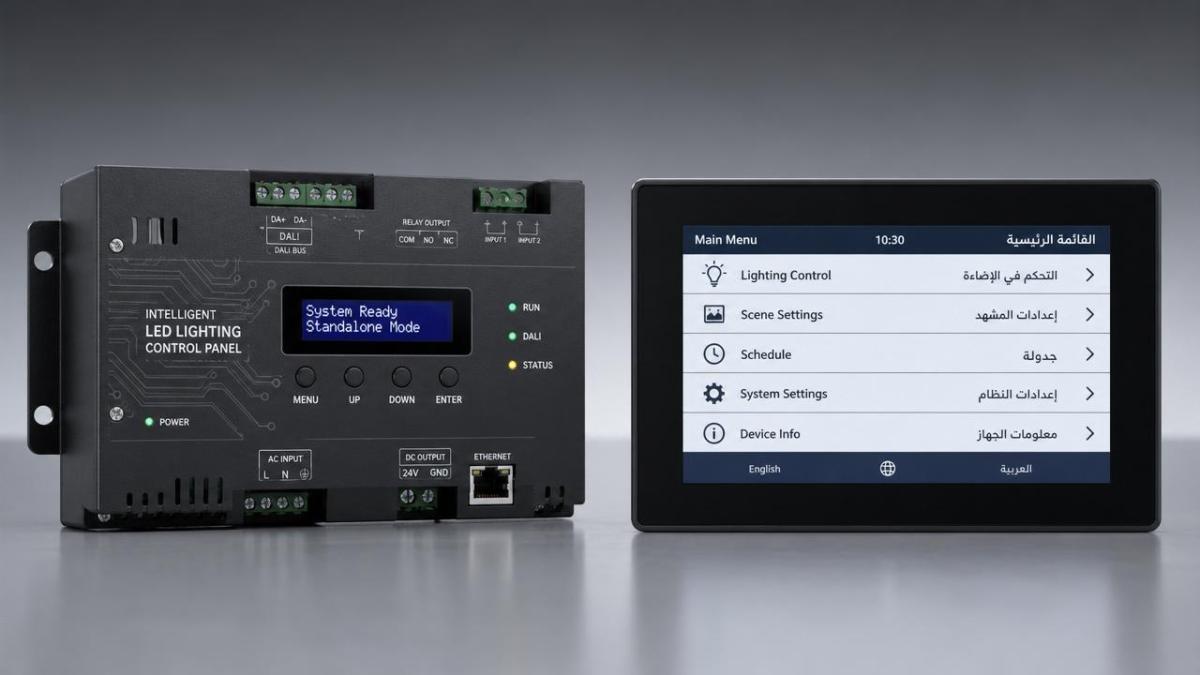
SASO will enforce SASO 2663:2026 starting May 1, 2026. The standard mandates updated energy and water efficiency thresholds for all washing machines sold in Saudi Arabia. Crucially, it now explicitly covers integrated components including intelligent controllers, human-machine interface (HMI) units, and embedded LED status indicators — requiring compliance with electromagnetic compatibility (EMC), ultra-low standby power limits (<0.5 W), and Arabic language support in on-device displays or menus. The scope further expands to include any commercially deployed device featuring smart control functionality — such as hotel lighting control systems, POS terminal status indicators, and digital signage power management modules.
Industries Affected
Direct Exporters & Trading Companies
Exporters of commercial LED lighting systems and smart control hardware face immediate market access risk. Because SASO 2663:2026 now applies to ‘smart-enabled peripherals’, products previously exempt from SASO’s mandatory certification (e.g., standalone lighting controllers or modular status-light assemblies) may now require SASO CoC (Certificate of Conformity), SASO IECEE CB acceptance, and Arabic labeling — increasing time-to-market by 6–10 weeks per SKU and raising third-party testing costs by 18–25%.
Raw Material & Component Suppliers
Suppliers of microcontrollers, low-power display drivers, and certified Arabic-font firmware libraries are seeing rising demand inquiries — particularly for chips pre-validated against SASO’s EMC Class B limits and standby power profiles. However, no new national procurement mandate exists; the pressure is indirect and driven by OEMs’ need to pre-qualify subcomponents before system-level testing.
Contract Manufacturers & OEMs
OEMs producing smart lighting control panels or embedded status modules must now conduct full-system validation against SASO 2663:2026’s Annex D (EMC immunity) and Annex E (low-power operation). This includes retesting firmware behavior under brownout conditions and verifying Arabic UI rendering across all display resolutions — tasks that go beyond typical IEC/EN 61000-4 series testing scopes.
Supply Chain Service Providers
Logistics firms offering SASO documentation support, local representative services, and conformity assessment coordination report increased client requests for ‘pre-audit gap analysis’ targeting SASO 2663:2026’s Clause 7.3 (language localization evidence) and Clause 9.2 (standby power verification methodology). Notably, SASO does not accept test reports older than 12 months — meaning existing certifications for legacy controllers cannot be grandfathered.
Key Focus Areas and Recommended Actions
Verify Product Classification Under Expanded Scope
Manufacturers must determine whether their product falls under SASO’s newly defined ‘smart-enabled commercial peripheral’ category — i.e., any device with programmable logic, network connectivity (even wired Ethernet or DALI), or user-configurable status indication. If yes, SASO CoC becomes mandatory regardless of primary function.
Update Firmware and UI Localization Protocols
Arabic language support must be implemented at the firmware level — not just via external labels. Evidence must include Arabic menu navigation flows, error message strings, and on-screen setup wizards. SASO inspectors have begun requesting firmware binary hashes and localization source files during document review.
Reassess Power Management Architecture
Standby power compliance now applies to entire subsystems — not just main processors. Design teams must measure total quiescent draw across auxiliary circuits (e.g., real-time clocks, sensor bias networks, wireless co-processors), using IEC 62301 Ed. 2.0 measurement methodology. External AC-DC adapters are excluded only if physically detachable and marketed separately.
Editorial Insight / Industry Observation
Observably, SASO is shifting from appliance-centric regulation toward ecosystem-based conformity — treating interconnected devices as functional extensions of major household appliances. This mirrors trends in the EU’s Ecodesign for Sustainable Products Regulation (ESPR), but with tighter integration of language and regional usability mandates. Analysis shows this is less about energy savings per se and more about strengthening local technical sovereignty: Arabic UI enforcement, for example, creates de facto barriers to off-the-shelf global firmware stacks. From an industry perspective, SASO 2663:2026 is better understood as a signal of broader digital policy alignment — not merely an energy standard update.
Conclusion
The revision reflects Saudi Arabia’s strategic pivot toward regulating the intelligence layer of physical infrastructure — not just its energy footprint. For exporters, the implication is structural: compliance can no longer be treated as a final-stage certification hurdle. It must be embedded earlier in R&D, firmware development, and supply chain sourcing. Current readiness levels across lighting and controls exporters remain uneven — making proactive gap assessment, rather than reactive recertification, the more resilient path forward.
Source Attribution
Official text: SASO Standard SASO 2663:2026, published March 2026 (Arabic & English bilingual version available via www.saso.gov.sa).
Implementation notice: SASO Circular No. SASO/REG/2026/017, dated February 12, 2026.
Note: SASO has indicated that interpretation guidelines for Clause 4.2 (scope applicability to non-washer devices) will be issued in Q3 2026 — subject to ongoing monitoring.
News Recommendations
 Which consumer goods need CE marking in Europe?
![51a6ab95581761cc26f4318be6520c15]()
Aris Katos
Future of Carbide Coatings
 Uniguest and Extreme Networks Partner to Simplify Digital Signage Deployment
![51a6ab95581761cc26f4318be6520c15]()
Aris Katos
Future of Carbide Coatings
 How to assess electronics compliance whitepapers for regulatory accuracy
![51a6ab95581761cc26f4318be6520c15]()
Aris Katos
Future of Carbide Coatings
 Packaging Data Hub Launches With Plastic Recycling Findings for 50 Countries
![51a6ab95581761cc26f4318be6520c15]()
Aris Katos
Future of Carbide Coatings
 How to verify an ergonomic office chair supplier's warranty terms
![51a6ab95581761cc26f4318be6520c15]()
Aris Katos
Future of Carbide Coatings
 Curion Survey: 64% Value Sustainable Beauty Packaging, but Quality Comes First
![51a6ab95581761cc26f4318be6520c15]()
Aris Katos
Future of Carbide Coatings
 Can minimalist fit out solutions make a small office feel larger?
![51a6ab95581761cc26f4318be6520c15]()
Aris Katos
Future of Carbide Coatings
 Kiosk Industry Releases IAAPA 2026 Self-Service Guide
![51a6ab95581761cc26f4318be6520c15]()
Aris Katos
Future of Carbide Coatings
 How to improve global supply chain visibility beyond tier-one suppliers
![51a6ab95581761cc26f4318be6520c15]()
Aris Katos
Future of Carbide Coatings
 Austria’s MM Group to Sell 70% of Packaging Business to KPS for $2.7 Billion
![51a6ab95581761cc26f4318be6520c15]()
Aris Katos
Future of Carbide Coatings
 How to assess delivery reliability of airport terminal seating suppliers in Europe
![51a6ab95581761cc26f4318be6520c15]()
Aris Katos
Future of Carbide Coatings
 USTR Extends China-Linked Vessel Fee Pause and 178 Product Exemptions to January 2027
![51a6ab95581761cc26f4318be6520c15]()
Aris Katos
Future of Carbide Coatings
 How to choose smart sensors for automated lighting
![51a6ab95581761cc26f4318be6520c15]()
Aris Katos
Future of Carbide Coatings
 Shanghai Retail Buyers Sign Deals at Ninth China International Import Expo
![51a6ab95581761cc26f4318be6520c15]()
Aris Katos
Future of Carbide Coatings
 Which toys are subject to EN 71 toy safety requirements?
![51a6ab95581761cc26f4318be6520c15]()
Aris Katos
Future of Carbide Coatings
 Report: Global Kraft Paper Market Forecast to Reach $20.5 Billion by 2033
![51a6ab95581761cc26f4318be6520c15]()
Aris Katos
Future of Carbide Coatings
 How to verify Zigbee compatibility when sourcing lighting sensors
![51a6ab95581761cc26f4318be6520c15]()
Aris Katos
Future of Carbide Coatings
 How do packaging customization options affect minimum order quantities in Europe?
![51a6ab95581761cc26f4318be6520c15]()
Aris Katos
Future of Carbide Coatings
 Transom to Acquire Cree LED in Commercial Lighting Ownership Change
![51a6ab95581761cc26f4318be6520c15]()
Aris Katos
Future of Carbide Coatings
 How to plan customer flow in commercial design planning
![51a6ab95581761cc26f4318be6520c15]()
Aris Katos
Future of Carbide Coatings
 USTR Urged to Permanently Suspend Fees on China-Linked Ships
![51a6ab95581761cc26f4318be6520c15]()
Aris Katos
Future of Carbide Coatings
 How to choose comparable stores for retail benchmarking
![51a6ab95581761cc26f4318be6520c15]()
Aris Katos
Future of Carbide Coatings
 How does anchoring affect modular building wind load resistance?
![51a6ab95581761cc26f4318be6520c15]()
Aris Katos
Future of Carbide Coatings
 Amazon Raises European FBA Surcharge to 2% in Ten Markets From November 2
![51a6ab95581761cc26f4318be6520c15]()
Aris Katos
Future of Carbide Coatings
 How to verify a BPA-free test report for baby products
![51a6ab95581761cc26f4318be6520c15]()
Aris Katos
Future of Carbide Coatings
 China's Mandatory Classroom Lighting Standard GB 7793-2025 Takes Effect November 1
![51a6ab95581761cc26f4318be6520c15]()
Aris Katos
Future of Carbide Coatings
 How order volume affects the price of wholesale poly mailers
![51a6ab95581761cc26f4318be6520c15]()
Aris Katos
Future of Carbide Coatings
 US Imposes 50% Tariff on Certain Canadian PET Resin Imports
![51a6ab95581761cc26f4318be6520c15]()
Aris Katos
Future of Carbide Coatings
 How to read the maximum ratings in a semiconductor datasheet
![51a6ab95581761cc26f4318be6520c15]()
Aris Katos
Future of Carbide Coatings
 University of Maryland Develops Bio-Based Packaging to Extend Avocado and Cucumber Shelf Life
![51a6ab95581761cc26f4318be6520c15]()
Aris Katos
Future of Carbide Coatings
 How to verify a cookware manufacturer's induction compatibility claims
![51a6ab95581761cc26f4318be6520c15]()
Aris Katos
Future of Carbide Coatings
 Omdia Forecasts 11.6% Annual Growth in LED Display Revenue Through 2030
![51a6ab95581761cc26f4318be6520c15]()
Aris Katos
Future of Carbide Coatings
 How to verify a pulp molding packaging factory's production capacity
![51a6ab95581761cc26f4318be6520c15]()
Aris Katos
Future of Carbide Coatings
 Curion Survey: Half of Consumers Frustrated by Sustainable Packaging
![51a6ab95581761cc26f4318be6520c15]()
Aris Katos
Future of Carbide Coatings
 How to assess the credibility of market insight content
![51a6ab95581761cc26f4318be6520c15]()
Aris Katos
Future of Carbide Coatings
 US Removes 50% Additional Tariff on Selected Canadian Packaging Products
![51a6ab95581761cc26f4318be6520c15]()
Aris Katos
Future of Carbide Coatings
 Will a waterproof dimmable LED driver work with your existing dimmer?
![51a6ab95581761cc26f4318be6520c15]()
Aris Katos
Future of Carbide Coatings
 Charter Next Generation Raises Film PCR Use 30%, Advances Food-Grade Applications
![51a6ab95581761cc26f4318be6520c15]()
Aris Katos
Future of Carbide Coatings
 How to choose a dog harness and leash for a dog that pulls hard
![51a6ab95581761cc26f4318be6520c15]()
Aris Katos
Future of Carbide Coatings