Commercial Optimization Strategies for Lower-Cost Smart Lighting Upgrades
Time
Click Count
For finance decision-makers, smart lighting upgrades are no longer just facility improvements—they are measurable levers for cost control, compliance, and asset performance. This guide explores commercial optimization strategies that help reduce upfront investment, improve energy efficiency, and align lighting decisions with long-term operational returns. With the right benchmarking approach, lower-cost upgrades can still deliver premium commercial outcomes.
What do commercial optimization strategies mean in smart lighting projects?
In practical terms, commercial optimization strategies are structured ways to improve lighting performance while controlling capital exposure, operating costs, and project risk. For a finance approver, this means looking beyond fixture price alone. A lower-cost smart lighting upgrade is not simply the cheapest quote. It is a balanced investment decision based on energy savings, installation complexity, maintenance cycles, system compatibility, compliance requirements, and payback reliability.
Many organizations still treat lighting as a static building expense. However, smart controls, occupancy sensing, daylight harvesting, centralized monitoring, and fixture standardization have turned lighting into an operational data asset. Effective commercial optimization strategies connect procurement logic with building performance. They help determine whether a phased retrofit, selective zone upgrade, or controls-first approach can produce stronger returns than a full replacement program.
For mixed commercial portfolios such as offices, retail sites, hospitality spaces, clinics, and distribution-linked customer environments, optimization also means matching technical specifications to actual usage intensity. A reception area, fitting room, warehouse aisle, and executive workspace do not need the same lighting investment profile. Cost reduction comes from precision, not uniform over-specification.
Why are lower-cost smart lighting upgrades getting more attention from finance teams?
The shift is driven by three pressures: tighter capital discipline, rising energy costs, and growing accountability for sustainability metrics. Finance teams are expected to approve projects that show measurable return, shorter payback periods, and low disruption to business operations. Smart lighting fits this requirement when evaluated correctly.
Compared with major HVAC or structural projects, lighting upgrades are relatively modular. They can be piloted in one site, one floor, or one business unit before portfolio-wide deployment. This makes them ideal for staged investment governance. In addition, modern LED systems with controls can reduce energy consumption significantly, especially in spaces with long operating hours or inconsistent occupancy patterns.
Another reason is reporting. Boards, investors, and procurement leaders increasingly want proof that facility spending supports resilience, compliance, and emissions goals. Smart lighting produces visible outputs: kilowatt-hour reduction, demand response capability, lower maintenance visits, and improved asset tracking. These outcomes support the broader commercial optimization strategies now used across integrated commercial ecosystems.
Which commercial spaces benefit most from these commercial optimization strategies?
Not every environment offers the same savings profile, so prioritization matters. Finance decision-makers should first identify facilities where lighting runs for extended periods, where maintenance access is costly, or where occupancy changes frequently throughout the day. Those conditions usually create the strongest case for lower-cost smart lighting upgrades.
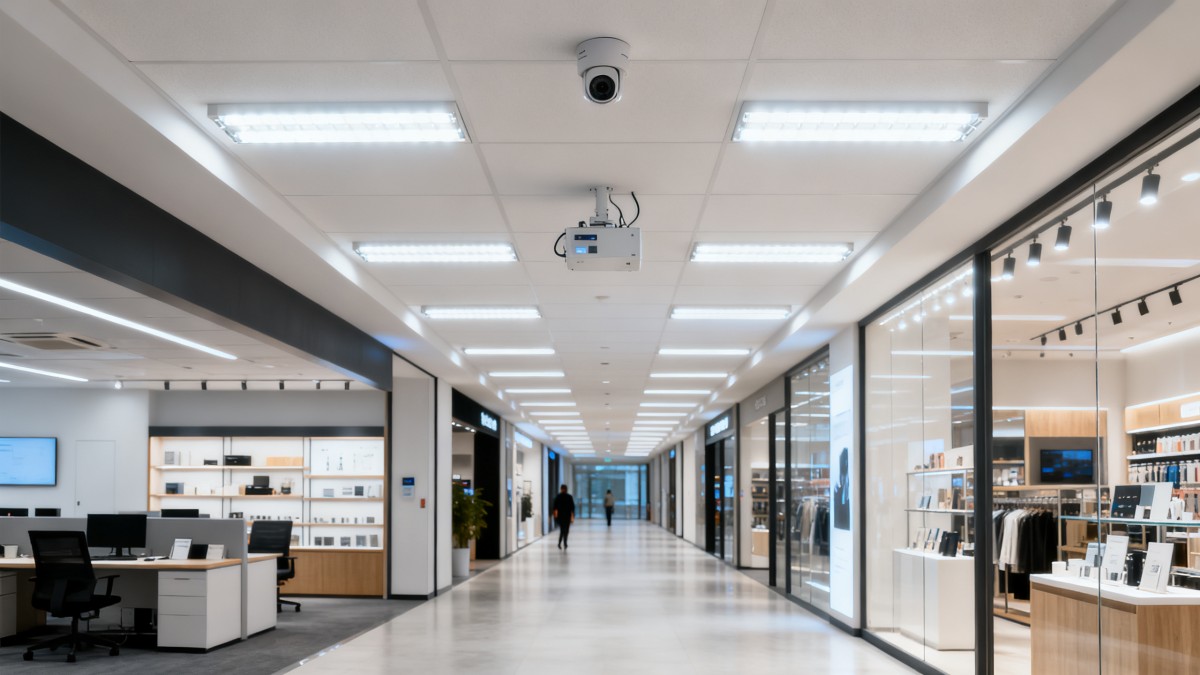
Retail chains are strong candidates because lighting affects both energy spend and customer experience. Sensors and scene controls can reduce waste in low-traffic zones without compromising presentation. Offices benefit when meeting rooms, circulation areas, and shared spaces are often left illuminated while unoccupied. Hospitality properties can optimize back-of-house, corridors, and amenity spaces while preserving guest-facing ambiance. Healthcare-adjacent and service environments often gain from better control consistency, compliance visibility, and maintenance planning.
Large multi-site businesses benefit even more when they standardize approved fixture families, drivers, and control platforms. This allows centralized sourcing, simpler spare parts planning, and more reliable benchmarking between sites. In that sense, commercial optimization strategies support not only one project but long-term procurement efficiency across the portfolio.
How can finance approvers judge whether a “lower-cost” upgrade is actually cost-effective?
The best way is to evaluate total cost of ownership rather than purchase price. A low initial quote may hide higher labor needs, weaker controls integration, shorter driver life, inconsistent product quality, or difficult future replacement. Smart financial review should compare four layers at minimum: capital cost, operating savings, maintenance implications, and implementation risk.
Ask whether the proposal reduces fixture count, simplifies wiring, or enables wireless controls that lower installation labor. Review warranty terms carefully, especially for drivers, sensors, and networked components. Confirm whether the system can scale or integrate with existing building platforms, because stranded technology creates future cost. Also check whether the lighting design is matched to actual lux needs rather than generic assumptions that drive overspending.
One of the most useful commercial optimization strategies is to compare projects by payback sensitivity. Instead of relying on a single savings estimate, test best-case, expected, and conservative scenarios. If the project still performs acceptably when occupancy savings are lower than forecast, it is financially stronger than a proposal that only works under ideal assumptions.
Quick evaluation table for finance review
What are the most effective ways to reduce upfront investment without weakening outcomes?
Several commercial optimization strategies consistently lower first-cost burden while preserving performance. The first is phased deployment. Instead of replacing everything at once, companies can target high-burn areas first, such as sales floors, open-plan offices, corridors, parking structures, or high-hour operational zones. Early savings can support later phases.
The second is selective controls deployment. Not every area needs the same sensor package or automation depth. Occupancy sensors, daylight controls, scheduling, and remote monitoring should be prioritized where they produce clear savings. Overengineering low-use or low-impact areas reduces return.
The third is specification discipline. Many projects overspend by selecting premium decorative fixtures for utility spaces or by demanding excessive color tuning where simple dimming would suffice. Finance teams should ask whether each specification line contributes to a measurable business objective: sales presentation, worker comfort, brand consistency, compliance, or maintenance efficiency.
The fourth is supplier benchmarking. Platforms such as G-BCE are valuable because they help compare product quality, standards alignment, and manufacturing capability across regions. This reduces the risk of buying solely on unit cost from suppliers that cannot support global compliance, replacement continuity, or large-scale rollout requirements.
What common mistakes weaken ROI in smart lighting decisions?
A frequent mistake is approving based on fixture cost only. This ignores labor, controls commissioning, software support, driver durability, and future compatibility. Another mistake is treating all sites as identical. A chain-wide rollout without site segmentation can overinvest in low-impact locations and underinvest where savings potential is highest.
Finance teams also sometimes accept savings models that are too generic. If usage assumptions are not tied to actual occupancy patterns, operating hours, and tariff conditions, ROI may look stronger than reality. Similarly, underestimating commissioning needs can delay benefits. Smart systems perform best when settings, zoning, and control logic are calibrated carefully after installation.
Another hidden risk is fragmented procurement. Buying fixtures, sensors, and software from disconnected sources may reduce apparent upfront cost but create accountability gaps when performance issues arise. Commercial optimization strategies work best when product architecture, support responsibility, and long-term parts availability are reviewed together.
How should a finance decision-maker compare vendors, standards, and technical claims?
A disciplined comparison process should combine commercial and technical filters. Start with certification and regional compliance relevance. For international or multi-market use, confirm whether products align with requirements such as UL, CE, and other applicable electrical and safety benchmarks. Certification alone is not enough, but its absence creates avoidable risk.
Then evaluate consistency. Can the vendor maintain the same performance across batches and future orders? For large portfolios, replacement continuity is financially important. If one product line changes every year, maintenance and visual consistency suffer. Ask for photometric data, driver specifications, control interoperability details, warranty scope, and failure-rate history where available.
It is also wise to compare reporting capability. Better vendors support dashboards, device-level diagnostics, or at least structured commissioning records. These features help validate savings and simplify internal audit review. In many cases, the strongest commercial optimization strategies are built on transparency rather than marketing language.
What should be confirmed before moving from evaluation to rollout?
Before approval, finance and operations teams should align on five practical questions. First, what baseline energy and maintenance data will be used to verify success? Second, which areas are highest priority based on hours of use, business criticality, and savings potential? Third, what level of controls complexity is actually justified? Fourth, how will installation affect operations, revenue hours, or customer experience? Fifth, who owns commissioning, training, and post-install support?
Pilot projects are often the best bridge between concept and rollout. A focused pilot allows finance leaders to test assumptions, validate occupancy-based savings, and compare user acceptance before approving a larger budget. This is especially useful in mixed-use commercial portfolios where behavior patterns vary by site type.
The strongest commercial optimization strategies are not based on a single product pitch. They are based on measurable baselines, staged capital logic, clear technical governance, and supplier benchmarking that protects long-term value. For finance approvers, that approach transforms lighting from a discretionary upgrade into a controlled performance investment.
What are the key questions to raise when requesting a detailed proposal?
If you need to confirm a specific path forward, start the conversation with focused questions that reveal financial and operational fit. Ask suppliers to separate fixture cost, controls cost, installation cost, and commissioning cost. Request a savings model showing assumptions by zone, operating schedule, and tariff basis. Confirm certifications, warranty terms, spare parts continuity, and integration options with existing building systems.
You should also ask which sites or spaces are most suitable for a first-phase deployment, what payback range can be expected under conservative assumptions, and what operational disruptions may occur during implementation. If the proposal includes software or remote management, clarify recurring fees, data ownership, and support response times.
For organizations seeking resilient, lower-cost smart lighting upgrades, these are the questions that matter most. They turn commercial optimization strategies into actionable procurement criteria and help decision-makers compare options with confidence. If further validation is needed, the next step is usually a benchmarked review of products, standards, rollout phases, expected ROI, and supplier capability before final budget approval.
News Recommendations
 Which consumer goods need CE marking in Europe?
![51a6ab95581761cc26f4318be6520c15]()
Aris Katos
Future of Carbide Coatings
 Uniguest and Extreme Networks Partner to Simplify Digital Signage Deployment
![51a6ab95581761cc26f4318be6520c15]()
Aris Katos
Future of Carbide Coatings
 How to assess electronics compliance whitepapers for regulatory accuracy
![51a6ab95581761cc26f4318be6520c15]()
Aris Katos
Future of Carbide Coatings
 Packaging Data Hub Launches With Plastic Recycling Findings for 50 Countries
![51a6ab95581761cc26f4318be6520c15]()
Aris Katos
Future of Carbide Coatings
 How to verify an ergonomic office chair supplier's warranty terms
![51a6ab95581761cc26f4318be6520c15]()
Aris Katos
Future of Carbide Coatings
 Curion Survey: 64% Value Sustainable Beauty Packaging, but Quality Comes First
![51a6ab95581761cc26f4318be6520c15]()
Aris Katos
Future of Carbide Coatings
 Can minimalist fit out solutions make a small office feel larger?
![51a6ab95581761cc26f4318be6520c15]()
Aris Katos
Future of Carbide Coatings
 Kiosk Industry Releases IAAPA 2026 Self-Service Guide
![51a6ab95581761cc26f4318be6520c15]()
Aris Katos
Future of Carbide Coatings
 How to improve global supply chain visibility beyond tier-one suppliers
![51a6ab95581761cc26f4318be6520c15]()
Aris Katos
Future of Carbide Coatings
 Austria’s MM Group to Sell 70% of Packaging Business to KPS for $2.7 Billion
![51a6ab95581761cc26f4318be6520c15]()
Aris Katos
Future of Carbide Coatings
 How to assess delivery reliability of airport terminal seating suppliers in Europe
![51a6ab95581761cc26f4318be6520c15]()
Aris Katos
Future of Carbide Coatings
 USTR Extends China-Linked Vessel Fee Pause and 178 Product Exemptions to January 2027
![51a6ab95581761cc26f4318be6520c15]()
Aris Katos
Future of Carbide Coatings
 How to choose smart sensors for automated lighting
![51a6ab95581761cc26f4318be6520c15]()
Aris Katos
Future of Carbide Coatings
 Shanghai Retail Buyers Sign Deals at Ninth China International Import Expo
![51a6ab95581761cc26f4318be6520c15]()
Aris Katos
Future of Carbide Coatings
 Which toys are subject to EN 71 toy safety requirements?
![51a6ab95581761cc26f4318be6520c15]()
Aris Katos
Future of Carbide Coatings
 Report: Global Kraft Paper Market Forecast to Reach $20.5 Billion by 2033
![51a6ab95581761cc26f4318be6520c15]()
Aris Katos
Future of Carbide Coatings
 How to verify Zigbee compatibility when sourcing lighting sensors
![51a6ab95581761cc26f4318be6520c15]()
Aris Katos
Future of Carbide Coatings
 How do packaging customization options affect minimum order quantities in Europe?
![51a6ab95581761cc26f4318be6520c15]()
Aris Katos
Future of Carbide Coatings
 Transom to Acquire Cree LED in Commercial Lighting Ownership Change
![51a6ab95581761cc26f4318be6520c15]()
Aris Katos
Future of Carbide Coatings
 How to plan customer flow in commercial design planning
![51a6ab95581761cc26f4318be6520c15]()
Aris Katos
Future of Carbide Coatings
 USTR Urged to Permanently Suspend Fees on China-Linked Ships
![51a6ab95581761cc26f4318be6520c15]()
Aris Katos
Future of Carbide Coatings
 How to choose comparable stores for retail benchmarking
![51a6ab95581761cc26f4318be6520c15]()
Aris Katos
Future of Carbide Coatings
 How does anchoring affect modular building wind load resistance?
![51a6ab95581761cc26f4318be6520c15]()
Aris Katos
Future of Carbide Coatings
 Amazon Raises European FBA Surcharge to 2% in Ten Markets From November 2
![51a6ab95581761cc26f4318be6520c15]()
Aris Katos
Future of Carbide Coatings
 How to verify a BPA-free test report for baby products
![51a6ab95581761cc26f4318be6520c15]()
Aris Katos
Future of Carbide Coatings
 China's Mandatory Classroom Lighting Standard GB 7793-2025 Takes Effect November 1
![51a6ab95581761cc26f4318be6520c15]()
Aris Katos
Future of Carbide Coatings
 How order volume affects the price of wholesale poly mailers
![51a6ab95581761cc26f4318be6520c15]()
Aris Katos
Future of Carbide Coatings
 US Imposes 50% Tariff on Certain Canadian PET Resin Imports
![51a6ab95581761cc26f4318be6520c15]()
Aris Katos
Future of Carbide Coatings
 How to read the maximum ratings in a semiconductor datasheet
![51a6ab95581761cc26f4318be6520c15]()
Aris Katos
Future of Carbide Coatings
 University of Maryland Develops Bio-Based Packaging to Extend Avocado and Cucumber Shelf Life
![51a6ab95581761cc26f4318be6520c15]()
Aris Katos
Future of Carbide Coatings
 How to verify a cookware manufacturer's induction compatibility claims
![51a6ab95581761cc26f4318be6520c15]()
Aris Katos
Future of Carbide Coatings
 Omdia Forecasts 11.6% Annual Growth in LED Display Revenue Through 2030
![51a6ab95581761cc26f4318be6520c15]()
Aris Katos
Future of Carbide Coatings
 How to verify a pulp molding packaging factory's production capacity
![51a6ab95581761cc26f4318be6520c15]()
Aris Katos
Future of Carbide Coatings
 Curion Survey: Half of Consumers Frustrated by Sustainable Packaging
![51a6ab95581761cc26f4318be6520c15]()
Aris Katos
Future of Carbide Coatings
 How to assess the credibility of market insight content
![51a6ab95581761cc26f4318be6520c15]()
Aris Katos
Future of Carbide Coatings
 US Removes 50% Additional Tariff on Selected Canadian Packaging Products
![51a6ab95581761cc26f4318be6520c15]()
Aris Katos
Future of Carbide Coatings
 Will a waterproof dimmable LED driver work with your existing dimmer?
![51a6ab95581761cc26f4318be6520c15]()
Aris Katos
Future of Carbide Coatings
 Charter Next Generation Raises Film PCR Use 30%, Advances Food-Grade Applications
![51a6ab95581761cc26f4318be6520c15]()
Aris Katos
Future of Carbide Coatings
 How to choose a dog harness and leash for a dog that pulls hard
![51a6ab95581761cc26f4318be6520c15]()
Aris Katos
Future of Carbide Coatings