
Wholesale LED Linear Light Cost Breakdown for Large Fit-Outs
Time
Click Count
For finance decision-makers managing large commercial fit-outs, understanding the true cost structure of wholesale led linear light is essential to controlling budgets without compromising performance. From unit pricing and installation labor to compliance, energy efficiency, and long-term maintenance, each factor affects total project value. This breakdown highlights where costs come from and how to evaluate suppliers with greater confidence.
In large retail, office, hospitality, and mixed-use projects, lighting is rarely a minor line item. When a fit-out includes 300, 800, or even 2,000 linear fixtures, small differences in specification can shift capital expenditure by tens of thousands of dollars and affect operating cost for 5 to 10 years.
For procurement teams working across global supply chains, the challenge is not only finding a competitive unit price. It is also comparing installation complexity, certification readiness, failure risk, warranty terms, and energy performance in a way that supports budget approval with fewer surprises later.
Understanding the Main Cost Layers in Wholesale LED Linear Light Procurement
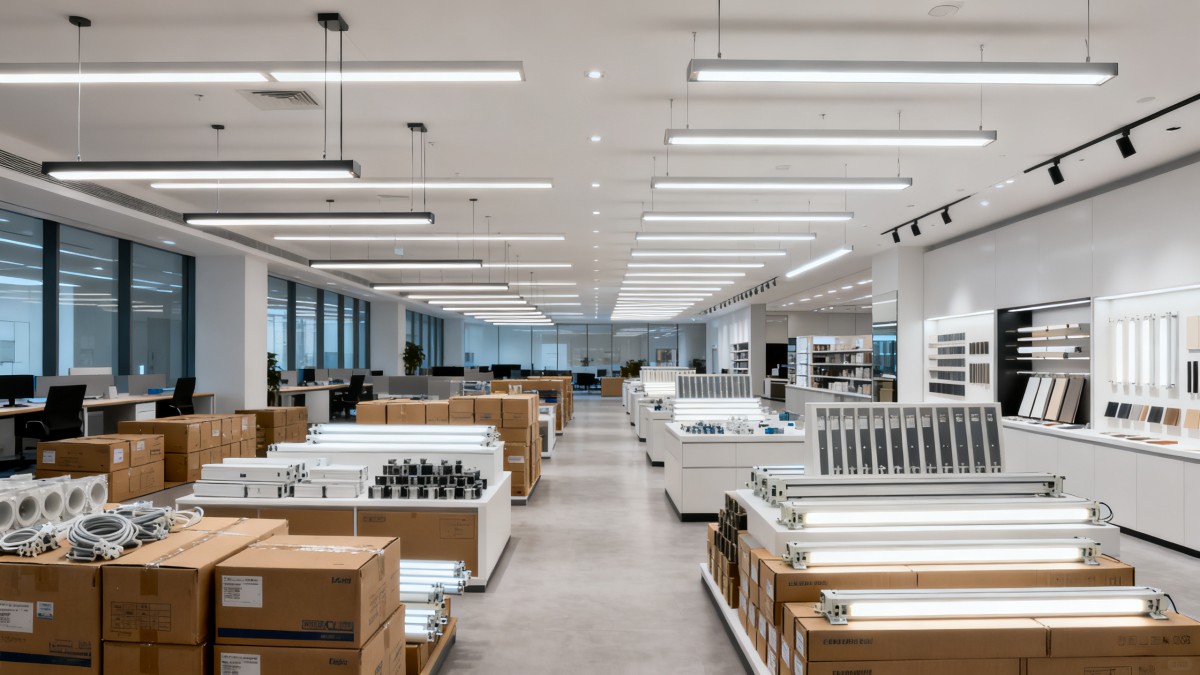
A realistic budget for wholesale led linear light should be divided into at least 5 cost layers: product cost, customization cost, logistics and duties, installation labor, and lifecycle operating cost. Finance reviewers who isolate only the fixture price often underestimate the true project commitment by 15% to 35%.
1. Base fixture price is only the starting point
The quoted factory price usually covers the housing, LED board, driver, diffuser, and standard finish. In many commercial tenders, the base cost varies according to length, wattage, lumen output, color temperature, CRI level, driver brand, dimming protocol, and mounting method.
For example, a suspended 1200 mm fixture with standard on/off control may cost meaningfully less than a recessed continuous-run system with DALI dimming, emergency backup, and a custom powder-coated finish. Even before freight and labor are added, specification upgrades can raise fixture cost by 20% to 60%.
Common cost drivers in the product specification
- Length options such as 600 mm, 1200 mm, 1500 mm, and continuous runs
- Power ranges from 20W to 80W depending on application density
- Color temperatures such as 3000K, 4000K, and 5000K
- CRI 80 versus CRI 90 for premium retail presentation
- UGR targets for office comfort and glare control
- Driver type: non-dimmable, 0-10V, DALI, or smart control compatible
2. Customization and engineering costs are often hidden
Large fit-outs often require more than standard catalog items. Ceiling integration, joiner details, corner modules, sensor compatibility, and project-specific finishes can introduce engineering work, tooling, mock-ups, and longer lead times. These costs may appear as one-time NRE charges or be absorbed into a higher unit rate.
For global chain operators, custom packaging, barcode labeling, country-specific manuals, and phased shipping schedules may also add measurable cost. While each line may seem small, combined project management overhead can add 3% to 8% to total procurement value.
The table below shows how finance teams can separate direct and indirect cost categories when assessing a wholesale led linear light proposal for a large commercial installation.
The key takeaway is that fixture price alone does not reveal project value. A lower unit quote can become more expensive if it creates longer installation time, poor optical performance, or higher replacement rates after handover.
3. Compliance and documentation affect financial risk
Commercial lighting sourced internationally must align with target-market requirements such as UL, CE, and other project-specific benchmarks. Even when certification is routine, document preparation, test alignment, and inspection readiness consume time. For multi-country rollouts, compliance gaps can delay opening schedules by 2 to 6 weeks.
Finance approvers should treat documentation as a risk control item, not a paperwork detail. A supplier that can provide photometric files, warranty terms, installation instructions, driver specifications, and compliance evidence in a complete package usually reduces approval friction and site-side disputes.
How Installation, Operations, and Maintenance Shape Total Cost of Ownership
When evaluating wholesale led linear light for large fit-outs, total cost of ownership matters more than first cost. A product that saves 8% at purchase may lose that advantage if labor takes longer, energy draw is higher, or maintenance requires repeated access to occupied commercial space.
Installation complexity can change budget outcomes fast
Surface-mounted, suspended, and recessed systems do not carry the same installation profile. Recessed continuous lines usually demand stricter ceiling coordination, tighter dimensional tolerance, and more site adjustments than standard surface linear fixtures. On large floorplates, labor variance can become a major budget issue.
As a working rule, finance teams should ask whether the product reduces or increases the number of installation steps. A 4-step install process with prewired joiners may be significantly more efficient than a 7-step system requiring extra alignment brackets, field cutting, or separate driver placement.
Questions to raise before approval
- How many labor steps are required per fixture or per continuous run?
- Are drivers integrated or remote, and what ceiling access is needed?
- Is there pre-assembly at factory level to reduce site handling?
- What is the expected reject rate for alignment or finish defects?
- Does the supplier provide installation guides for contractors?
Energy consumption has a measurable 3 to 7 year effect
LED linear fixtures are usually selected for efficiency, but performance should be compared in usable application terms, not wattage alone. Finance stakeholders should review lumens per watt, driver efficiency, dimming strategy, operating hours, and maintenance schedule together.
For a commercial site running 12 to 16 hours per day, a difference of 8W per fixture across 1,000 units creates a substantial annual energy impact. If controls such as occupancy sensing or daylight dimming are included, actual operating savings may improve further, especially in offices and common areas.
The comparison below helps finance teams judge whether a lower upfront quote for wholesale led linear light is genuinely economical over time.
This is where many approval decisions improve. Instead of arguing over the cheapest fixture, stakeholders can compare cost per operating year, labor exposure, and service disruption. That shifts the discussion from price compression to project economics.
Maintenance frequency is a finance issue, not only a facilities issue
In active retail and office environments, maintenance often requires after-hours access, lift rental, ceiling reopening, or partial area closure. A single driver failure may be manageable, but a 2% to 4% early failure rate across a large deployment creates measurable service cost and operational friction.
Ask suppliers about component consistency, thermal management, spare-part availability, and replacement response windows. It is also useful to confirm whether the driver, light source, and accessories are standardized across the project, since mixed components complicate inventory and service planning.
Supplier Comparison Framework for Finance Approval
A strong supplier review process should translate technical lighting detail into commercial risk language. For finance teams, the most useful approach is a 4-part scoring model covering commercial terms, technical compliance, delivery reliability, and lifetime cost.
What to compare beyond the quote sheet
When reviewing wholesale led linear light offers from multiple factories or exporters, use a normalized checklist. Compare like-for-like specifications, confirm incoterms, and separate ex-works price from delivered project cost. This prevents low headline pricing from hiding later charges.
- Lead time range, such as 3–5 weeks for standard production or 6–8 weeks for custom runs
- MOQ thresholds for standard and customized SKUs
- Driver and component origin consistency
- Packaging method and damage protection for long fixtures
- Defect handling process and replacement turnaround
- Whether test reports and installation documents are supplied before shipment
Warning signs that often raise total project cost
Red flags include unclear lumen data, undefined warranty scope, changing lead times, weak carton protection, and no clear answer on spare drivers or diffuser replacement. In large fit-outs, such gaps often lead to rework, claims, or schedule drift that cost more than the original discount offered.
Another warning sign is a quote that bundles all technical options into one price without itemization. Finance teams need visibility into dimming upgrades, emergency modules, suspension kits, and finish surcharges to keep value engineering decisions transparent.
How G-BCE style benchmarking supports better purchasing decisions
For international commercial projects, benchmarking is valuable because it converts fragmented supplier claims into comparable decision data. By reviewing wholesale led linear light through the lens of standards alignment, application fit, and supply chain practicality, approvers can reduce uncertainty earlier in the tender cycle.
This matters especially when Asian manufacturing capacity is being matched to premium commercial expectations in North America, Europe, the Middle East, or Asia-Pacific. The right supplier is not simply the one with the lowest ex-factory price, but the one whose product, documentation, and delivery discipline best support predictable rollout.
Practical Budgeting Tips for Large Commercial Fit-Outs
For projects with 500 or more fixtures, finance teams should build a budget model with at least 6 fields: product supply, accessories, shipping and duties, installation labor, contingency, and 3 to 5 year operating cost. This makes vendor comparison more accurate and supports faster sign-off.
Set a realistic contingency for lighting packages
A practical contingency often falls in the 5% to 10% range depending on whether the design is standardized or highly customized. Recessed systems, integrated sensors, and phased international delivery generally justify the higher end of that range because coordination risk is greater.
Approve mock-ups early to avoid expensive revisions
A physical sample or pilot area can prevent reorders and site disputes. In many cases, approving 1 mock-up batch before mass production is cheaper than correcting glare issues, finish mismatch, or mounting conflicts after 1,000 fixtures are already in transit or on site.
Use lifecycle language in internal approvals
If a procurement recommendation is framed only around unit cost, it is harder to justify a premium option. If it is framed around cost per year, installation time saved, lower maintenance exposure, and reduced risk of opening delays, decision quality usually improves.
FAQ for finance-focused buyers
Is wholesale led linear light always cheaper from overseas factories?
Not always. Overseas sourcing may lower product cost, but freight, duties, project management, and lead time risk can offset savings. The right comparison is total landed and installed cost, not ex-works price alone.
What warranty term is practical for commercial fit-outs?
Many buyers look for 3 to 5 years, but the term matters less than scope clarity. Confirm which components are covered, how replacement is handled, and whether labor is included or excluded.
How much should installation influence supplier choice?
More than many teams expect. On large projects, a modest labor saving per fixture can outweigh a lower product quote. Installation simplicity is a direct budget lever.
A disciplined review of wholesale led linear light should connect specification, logistics, installation, and operating cost into one approval framework. That is the most reliable way to protect capital budgets while still meeting design, compliance, and performance expectations in modern commercial environments.
If your team is comparing suppliers, validating commercial lighting specifications, or building a more defensible sourcing plan for a large fit-out, now is the right time to get structured insight. Contact us to explore tailored benchmarking support, discuss product details, or get a customized solution for your next project.
News Recommendations
 How to verify Zigbee compatibility when sourcing lighting sensors
![51a6ab95581761cc26f4318be6520c15]()
Aris Katos
Future of Carbide Coatings
 How do packaging customization options affect minimum order quantities in Europe?
![51a6ab95581761cc26f4318be6520c15]()
Aris Katos
Future of Carbide Coatings
 Transom to Acquire Cree LED in Commercial Lighting Ownership Change
![51a6ab95581761cc26f4318be6520c15]()
Aris Katos
Future of Carbide Coatings
 How to plan customer flow in commercial design planning
![51a6ab95581761cc26f4318be6520c15]()
Aris Katos
Future of Carbide Coatings
 USTR Urged to Permanently Suspend Fees on China-Linked Ships
![51a6ab95581761cc26f4318be6520c15]()
Aris Katos
Future of Carbide Coatings
 How to choose comparable stores for retail benchmarking
![51a6ab95581761cc26f4318be6520c15]()
Aris Katos
Future of Carbide Coatings
 How does anchoring affect modular building wind load resistance?
![51a6ab95581761cc26f4318be6520c15]()
Aris Katos
Future of Carbide Coatings
 Amazon Raises European FBA Surcharge to 2% in Ten Markets From November 2
![51a6ab95581761cc26f4318be6520c15]()
Aris Katos
Future of Carbide Coatings
 How to verify a BPA-free test report for baby products
![51a6ab95581761cc26f4318be6520c15]()
Aris Katos
Future of Carbide Coatings
 China's Mandatory Classroom Lighting Standard GB 7793-2025 Takes Effect November 1
![51a6ab95581761cc26f4318be6520c15]()
Aris Katos
Future of Carbide Coatings
 How order volume affects the price of wholesale poly mailers
![51a6ab95581761cc26f4318be6520c15]()
Aris Katos
Future of Carbide Coatings
 US Imposes 50% Tariff on Certain Canadian PET Resin Imports
![51a6ab95581761cc26f4318be6520c15]()
Aris Katos
Future of Carbide Coatings
 How to read the maximum ratings in a semiconductor datasheet
![51a6ab95581761cc26f4318be6520c15]()
Aris Katos
Future of Carbide Coatings
 University of Maryland Develops Bio-Based Packaging to Extend Avocado and Cucumber Shelf Life
![51a6ab95581761cc26f4318be6520c15]()
Aris Katos
Future of Carbide Coatings
 How to verify a cookware manufacturer's induction compatibility claims
![51a6ab95581761cc26f4318be6520c15]()
Aris Katos
Future of Carbide Coatings
 Omdia Forecasts 11.6% Annual Growth in LED Display Revenue Through 2030
![51a6ab95581761cc26f4318be6520c15]()
Aris Katos
Future of Carbide Coatings
 How to verify a pulp molding packaging factory's production capacity
![51a6ab95581761cc26f4318be6520c15]()
Aris Katos
Future of Carbide Coatings
 Curion Survey: Half of Consumers Frustrated by Sustainable Packaging
![51a6ab95581761cc26f4318be6520c15]()
Aris Katos
Future of Carbide Coatings
 How to assess the credibility of market insight content
![51a6ab95581761cc26f4318be6520c15]()
Aris Katos
Future of Carbide Coatings
 US Removes 50% Additional Tariff on Selected Canadian Packaging Products
![51a6ab95581761cc26f4318be6520c15]()
Aris Katos
Future of Carbide Coatings
 Will a waterproof dimmable LED driver work with your existing dimmer?
![51a6ab95581761cc26f4318be6520c15]()
Aris Katos
Future of Carbide Coatings
 Charter Next Generation Raises Film PCR Use 30%, Advances Food-Grade Applications
![51a6ab95581761cc26f4318be6520c15]()
Aris Katos
Future of Carbide Coatings
 How to choose a dog harness and leash for a dog that pulls hard
![51a6ab95581761cc26f4318be6520c15]()
Aris Katos
Future of Carbide Coatings
 How to respect local customs when negotiating with overseas suppliers
![51a6ab95581761cc26f4318be6520c15]()
Aris Katos
Future of Carbide Coatings
 RFID Recycling Challenges Bring Paper-Based and Chipless Tags Into Focus
![51a6ab95581761cc26f4318be6520c15]()
Aris Katos
Future of Carbide Coatings
 How to choose commercial lighting for offices that reduces glare
![51a6ab95581761cc26f4318be6520c15]()
Aris Katos
Future of Carbide Coatings
 Queue Launches Fully Automated Robotic Pharmacy Kiosk for 30-Second Dispensing
![51a6ab95581761cc26f4318be6520c15]()
Aris Katos
Future of Carbide Coatings
 Can your supermarket store fixtures supplier meet your opening date?
![51a6ab95581761cc26f4318be6520c15]()
Aris Katos
Future of Carbide Coatings
 Shopify POS UI Extensions 2026-10 Adds Virtual Lists and Custom Row Templates
![51a6ab95581761cc26f4318be6520c15]()
Aris Katos
Future of Carbide Coatings
 How to assess smart office furniture suppliers’ North American support
![51a6ab95581761cc26f4318be6520c15]()
Aris Katos
Future of Carbide Coatings
 Aqara Launches Smart Lighting Range to Advance AI Spatial Intelligence
![51a6ab95581761cc26f4318be6520c15]()
Aris Katos
Future of Carbide Coatings
 How to assess demand forecasts in a lighting intelligence report
![51a6ab95581761cc26f4318be6520c15]()
Aris Katos
Future of Carbide Coatings
 Billerud推出PharmaKraft纤维基医药包装材料
![51a6ab95581761cc26f4318be6520c15]()
Aris Katos
Future of Carbide Coatings
 How to assess supplier reliability in global supply chain sourcing
![51a6ab95581761cc26f4318be6520c15]()
Aris Katos
Future of Carbide Coatings
 Omdia Forecasts 11.6% CAGR for Global LED Video Display Market in 2026–2030
![51a6ab95581761cc26f4318be6520c15]()
Aris Katos
Future of Carbide Coatings
 How to verify an LFGB testing laboratory's accreditation scope
![51a6ab95581761cc26f4318be6520c15]()
Aris Katos
Future of Carbide Coatings
 How to assess a workplace interior supplier's installation scope
![51a6ab95581761cc26f4318be6520c15]()
Aris Katos
Future of Carbide Coatings
 What records are needed for an ISO 9001 furniture factory audit?
![51a6ab95581761cc26f4318be6520c15]()
Aris Katos
Future of Carbide Coatings
 How to choose AI marketing tools that work with your existing CRM
![51a6ab95581761cc26f4318be6520c15]()
Aris Katos
Future of Carbide Coatings







































