Ecuador Cuts Security Tariff on Colombian Goods to 75%
Time
Click Count
On June 1, 2026, Ecuador reduced its security tariff on Colombian goods from 100% to 75%, a move that merits attention across regional trade, cross-border distribution, and supply chain planning. For businesses involved in 3D Channel Letters & Signs, Inventory RFID Systems, and related export operations, the change matters less as a headline on tariff relief alone and more as a sign that Colombia-linked transit routes into Ecuador may become more workable in selected cases.
What has been confirmed so far
Based on the information provided, Ecuador began applying a lower security tariff rate to Colombian goods on June 1, 2026, cutting the rate from 100% to 75%.
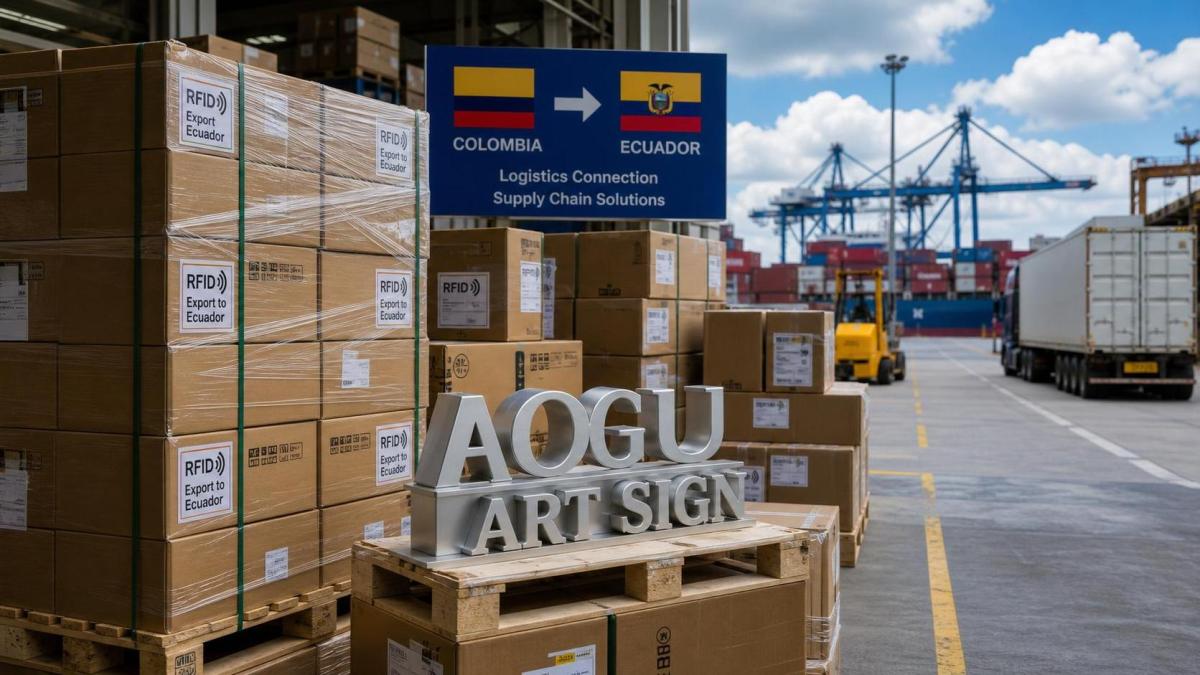
The information also indicates that this adjustment sends a positive signal for regional supply chain cooperation. It is described as indirectly favorable to products such as 3D Channel Letters & Signs and Inventory RFID Systems when they are exported to Ecuador via Colombia.
In practical terms, the provided summary points to a transit model in which Chinese companies may work with local warehouse resources in Bogotá to optimize re-export routes, with the aim of reducing exposure to high direct-export tariffs into Latin America and easing customs complexity.
Where the impact may emerge first
Transit traders may reassess route economics
From an industry perspective, companies handling indirect exports are likely to focus first on whether a Colombia-linked route now offers a more manageable cost and clearance structure than direct shipment. The potential impact is concentrated in route design, customs preparation, and delivery planning rather than in end-market demand itself.
Manufacturers of signage and RFID systems may revisit market entry tactics
For producers of 3D Channel Letters & Signs and Inventory RFID Systems, the development may affect how orders are fulfilled into Ecuador. Analysis shows that the key business question is not only product competitiveness, but whether a regional warehousing and re-export arrangement can improve execution for shipments that would otherwise face higher barriers when sent directly.
Local warehousing and supply chain service providers gain a clearer role
Service providers connected to Bogotá-based storage, consolidation, and forwarding may see stronger interest from exporters seeking more flexible delivery paths. What deserves closer attention is whether operational coordination, documentation, and handoff processes can support this transit logic efficiently.
Buyers and channel partners may focus on delivery certainty
For downstream buyers, distributors, and project-based purchasers, the possible effect is less about the tariff change in isolation and more about whether supply continuity, lead times, and customs handling become easier to manage under a Colombia transit model.
What companies should watch now
Separate the policy signal from actual execution
Analysis shows that a lower tariff does not automatically mean friction-free trade. Companies should distinguish between the policy direction reflected in the tariff reduction and the practical conditions required for successful re-export, including route design, customs procedures, and shipment timing.
Check product-category applicability carefully
Businesses dealing in 3D Channel Letters & Signs and Inventory RFID Systems should pay close attention to how their own product flows align with the route described in the provided information. The immediate issue is whether the category, documentation set, and delivery model are suitable for a Colombia-to-Ecuador transit structure.
Review warehouse and document readiness in Bogotá
If exporters plan to rely on local warehousing in Bogotá, operational readiness becomes a practical concern. This includes coordination around inventory staging, shipment transfer, and supporting trade documents, since any weakness in these steps can reduce the intended benefit of the route.
Prepare clients for possible adjustments in lead time and process
Observably, customer communication matters when a company shifts from direct export to a transit-based model. Businesses should be ready to explain how routing, customs handling, and fulfillment arrangements may differ, especially for project-driven products and system deliveries.
Why this looks more like a signal than a settled outcome
As an editorial observation, this update is better understood as an operational opening rather than a fully proven trade reset. The tariff cut is real within the provided information, but its commercial value will depend on how consistently businesses can translate that change into workable transit arrangements.
It is more appropriate to understand this as a short- to medium-term signal for regional supply chain coordination, especially for exporters considering Colombia as a staging point into Ecuador. At the same time, the situation still warrants observation because route efficiency and actual business adoption are not confirmed by the input itself.
How the industry may frame this development
In summary, the June 1, 2026 adjustment matters because it reduces, but does not remove, a major tariff burden on Colombian goods entering Ecuador. For companies connected to signage exports, RFID system supply, and cross-border logistics planning, the more relevant takeaway is the potential reopening of a more practical Colombia-linked trade path.
A neutral reading is that this is neither a minor technical change nor a definitive market shift. Current conditions make it more appropriate to treat the development as a policy and routing signal that could support selected re-export strategies, while actual commercial results still depend on execution and continued verification.
Basis of this article and follow-up points
This article is generated from the user-provided news title, event date, and event summary. The confirmed basis includes the June 1, 2026 timing, Ecuador's reduction of the security tariff on Colombian goods from 100% to 75%, and the stated indirect relevance for 3D Channel Letters & Signs, Inventory RFID Systems, and Bogotá-linked re-export planning.
For this type of development, source categories usually worth checking include official government notices, company announcements, industry association updates, authoritative media reporting, and related trade or standards documentation. No specific official source link was provided in the input, so further verification remains necessary.
Follow-up attention should remain on whether official wording changes further, how the route is applied in practice to the mentioned product categories, and whether the gap between policy intent and operational execution narrows over time.
News Recommendations
 Uniguest and Extreme Networks Partner to Simplify Digital Signage Deployment
![51a6ab95581761cc26f4318be6520c15]()
Aris Katos
Future of Carbide Coatings
 How to assess electronics compliance whitepapers for regulatory accuracy
![51a6ab95581761cc26f4318be6520c15]()
Aris Katos
Future of Carbide Coatings
 Packaging Data Hub Launches With Plastic Recycling Findings for 50 Countries
![51a6ab95581761cc26f4318be6520c15]()
Aris Katos
Future of Carbide Coatings
 How to verify an ergonomic office chair supplier's warranty terms
![51a6ab95581761cc26f4318be6520c15]()
Aris Katos
Future of Carbide Coatings
 Curion Survey: 64% Value Sustainable Beauty Packaging, but Quality Comes First
![51a6ab95581761cc26f4318be6520c15]()
Aris Katos
Future of Carbide Coatings
 Can minimalist fit out solutions make a small office feel larger?
![51a6ab95581761cc26f4318be6520c15]()
Aris Katos
Future of Carbide Coatings
 Kiosk Industry Releases IAAPA 2026 Self-Service Guide
![51a6ab95581761cc26f4318be6520c15]()
Aris Katos
Future of Carbide Coatings
 How to improve global supply chain visibility beyond tier-one suppliers
![51a6ab95581761cc26f4318be6520c15]()
Aris Katos
Future of Carbide Coatings
 Austria’s MM Group to Sell 70% of Packaging Business to KPS for $2.7 Billion
![51a6ab95581761cc26f4318be6520c15]()
Aris Katos
Future of Carbide Coatings
 How to assess delivery reliability of airport terminal seating suppliers in Europe
![51a6ab95581761cc26f4318be6520c15]()
Aris Katos
Future of Carbide Coatings
 USTR Extends China-Linked Vessel Fee Pause and 178 Product Exemptions to January 2027
![51a6ab95581761cc26f4318be6520c15]()
Aris Katos
Future of Carbide Coatings
 How to choose smart sensors for automated lighting
![51a6ab95581761cc26f4318be6520c15]()
Aris Katos
Future of Carbide Coatings
 Shanghai Retail Buyers Sign Deals at Ninth China International Import Expo
![51a6ab95581761cc26f4318be6520c15]()
Aris Katos
Future of Carbide Coatings
 Which toys are subject to EN 71 toy safety requirements?
![51a6ab95581761cc26f4318be6520c15]()
Aris Katos
Future of Carbide Coatings
 Report: Global Kraft Paper Market Forecast to Reach $20.5 Billion by 2033
![51a6ab95581761cc26f4318be6520c15]()
Aris Katos
Future of Carbide Coatings
 How to verify Zigbee compatibility when sourcing lighting sensors
![51a6ab95581761cc26f4318be6520c15]()
Aris Katos
Future of Carbide Coatings
 How do packaging customization options affect minimum order quantities in Europe?
![51a6ab95581761cc26f4318be6520c15]()
Aris Katos
Future of Carbide Coatings
 Transom to Acquire Cree LED in Commercial Lighting Ownership Change
![51a6ab95581761cc26f4318be6520c15]()
Aris Katos
Future of Carbide Coatings
 How to plan customer flow in commercial design planning
![51a6ab95581761cc26f4318be6520c15]()
Aris Katos
Future of Carbide Coatings
 USTR Urged to Permanently Suspend Fees on China-Linked Ships
![51a6ab95581761cc26f4318be6520c15]()
Aris Katos
Future of Carbide Coatings
 How to choose comparable stores for retail benchmarking
![51a6ab95581761cc26f4318be6520c15]()
Aris Katos
Future of Carbide Coatings
 How does anchoring affect modular building wind load resistance?
![51a6ab95581761cc26f4318be6520c15]()
Aris Katos
Future of Carbide Coatings
 Amazon Raises European FBA Surcharge to 2% in Ten Markets From November 2
![51a6ab95581761cc26f4318be6520c15]()
Aris Katos
Future of Carbide Coatings
 How to verify a BPA-free test report for baby products
![51a6ab95581761cc26f4318be6520c15]()
Aris Katos
Future of Carbide Coatings
 China's Mandatory Classroom Lighting Standard GB 7793-2025 Takes Effect November 1
![51a6ab95581761cc26f4318be6520c15]()
Aris Katos
Future of Carbide Coatings
 How order volume affects the price of wholesale poly mailers
![51a6ab95581761cc26f4318be6520c15]()
Aris Katos
Future of Carbide Coatings
 US Imposes 50% Tariff on Certain Canadian PET Resin Imports
![51a6ab95581761cc26f4318be6520c15]()
Aris Katos
Future of Carbide Coatings
 How to read the maximum ratings in a semiconductor datasheet
![51a6ab95581761cc26f4318be6520c15]()
Aris Katos
Future of Carbide Coatings
 University of Maryland Develops Bio-Based Packaging to Extend Avocado and Cucumber Shelf Life
![51a6ab95581761cc26f4318be6520c15]()
Aris Katos
Future of Carbide Coatings
 How to verify a cookware manufacturer's induction compatibility claims
![51a6ab95581761cc26f4318be6520c15]()
Aris Katos
Future of Carbide Coatings
 Omdia Forecasts 11.6% Annual Growth in LED Display Revenue Through 2030
![51a6ab95581761cc26f4318be6520c15]()
Aris Katos
Future of Carbide Coatings
 How to verify a pulp molding packaging factory's production capacity
![51a6ab95581761cc26f4318be6520c15]()
Aris Katos
Future of Carbide Coatings
 Curion Survey: Half of Consumers Frustrated by Sustainable Packaging
![51a6ab95581761cc26f4318be6520c15]()
Aris Katos
Future of Carbide Coatings
 How to assess the credibility of market insight content
![51a6ab95581761cc26f4318be6520c15]()
Aris Katos
Future of Carbide Coatings
 US Removes 50% Additional Tariff on Selected Canadian Packaging Products
![51a6ab95581761cc26f4318be6520c15]()
Aris Katos
Future of Carbide Coatings
 Will a waterproof dimmable LED driver work with your existing dimmer?
![51a6ab95581761cc26f4318be6520c15]()
Aris Katos
Future of Carbide Coatings
 Charter Next Generation Raises Film PCR Use 30%, Advances Food-Grade Applications
![51a6ab95581761cc26f4318be6520c15]()
Aris Katos
Future of Carbide Coatings
 How to choose a dog harness and leash for a dog that pulls hard
![51a6ab95581761cc26f4318be6520c15]()
Aris Katos
Future of Carbide Coatings
 How to respect local customs when negotiating with overseas suppliers
![51a6ab95581761cc26f4318be6520c15]()
Aris Katos
Future of Carbide Coatings