
Acrylic Sign Board OEM: Key Quality Checks Before Ordering
Time
Click Count
Before approving an acrylic sign board OEM order, quality and safety teams must look beyond visual appeal and unit price. Material grade, edge finishing, illumination safety, mounting reliability, and compliance documentation all affect long-term performance in retail, hospitality, and commercial environments. For procurement and QC managers, a structured pre-order checklist reduces rework, installation risks, and brand-image failures. This guide highlights the essential quality checks that help ensure acrylic signage meets durability, safety, and presentation standards before production begins.
Why acrylic sign board OEM quality checks matter before production
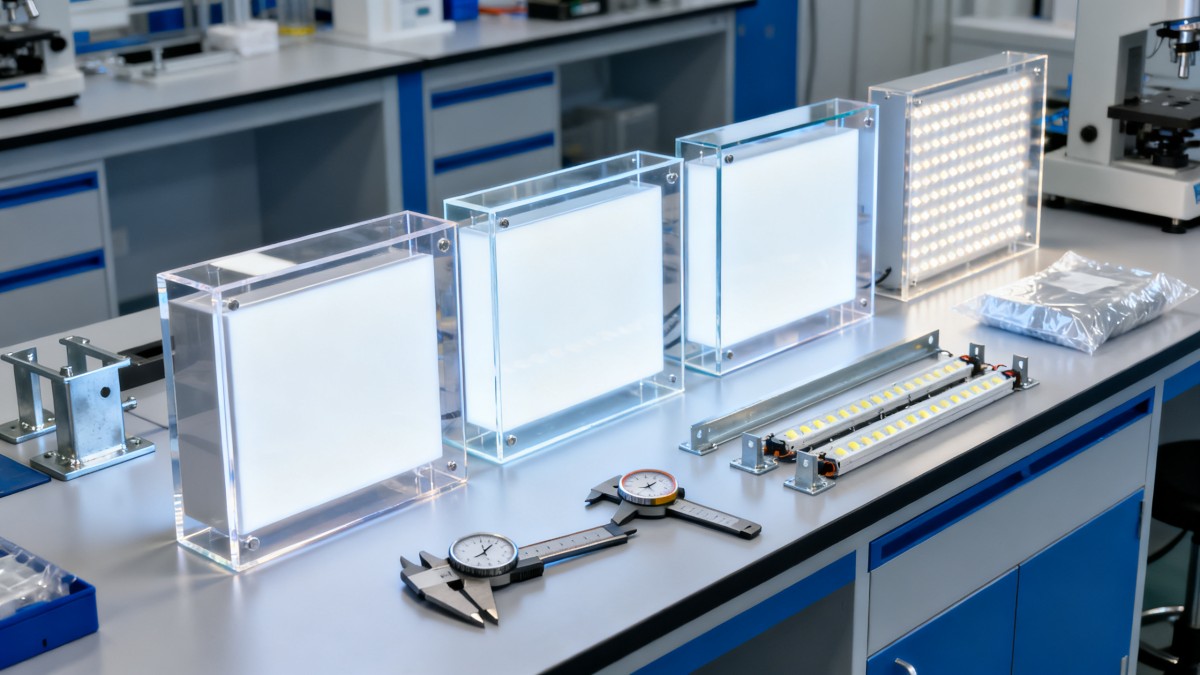
An acrylic sign board OEM project is rarely a simple decoration purchase. It becomes part of a commercial space, a safety interface, and a brand asset.
For chain stores, shopping centers, hotels, clinics, offices, and public-facing facilities, signage failure can cause installation delays, electrical risk, or inconsistent brand presentation.
QC managers often receive drawings, samples, quotations, and production schedules from different suppliers. The challenge is converting these documents into measurable acceptance criteria.
A disciplined acrylic sign board OEM review should connect material selection, fabrication process, packaging, installation conditions, and compliance evidence before mass production starts.
The main risks are not always visible
- Surface gloss may look acceptable in photos, while sheet thickness tolerance, internal stress, or poor bonding causes later cracking.
- LED modules may illuminate evenly during sampling, yet fail heat management or insulation checks during continuous operation.
- Mounting hardware may appear strong, but unsuitable anchors or weak backplates can create safety hazards in high-traffic areas.
- Packaging may protect one sample, but not withstand pallet stacking, sea freight vibration, or warehouse handling.
G-BCE approaches acrylic sign board OEM evaluation through a broader commercial ecosystem lens. Signage is assessed alongside lighting, fixtures, retail technology, and sustainable materials.
What should QC teams verify in acrylic material and fabrication?
The first checkpoint in acrylic sign board OEM sourcing is the sheet itself. Acrylic type, thickness, color stability, and fabrication method determine performance.
Cast acrylic usually offers stronger optical clarity and machining behavior. Extruded acrylic may support cost control, but it can react differently to heat and solvents.
For safety managers, the question is not only whether the sign looks correct, but whether it remains stable under cleaning, sunlight, vibration, and installation stress.
The following table helps align acrylic sign board OEM material checks with practical acceptance points before confirming a supplier sample.
This table should become part of the pre-production approval file. It also helps compare acrylic sign board OEM suppliers beyond quotation price alone.
Fabrication checks that deserve special attention
Laser cutting, CNC routing, heat bending, UV printing, silk screen printing, bonding, and metal assembly can all introduce hidden defects.
QC teams should request close-up sample photos, edge samples, bonding sections, and lighting mockups when the acrylic sign board OEM design is complex.
- Check whether bonded joints show bubbles, whitening, overflow marks, or weak contact areas after curing.
- Confirm that printed graphics match Pantone, CMYK, or approved brand color references under intended lighting.
- Inspect whether holes and slots include sufficient clearance for thermal expansion and installation adjustment.
How to evaluate illumination safety and electrical reliability
Many acrylic sign board OEM projects include LED lighting, power adapters, dimmers, or internal wiring. These components introduce electrical and thermal risk.
A bright sign is not automatically safe. Safety managers need evidence for insulation, heat dissipation, voltage suitability, and service access.
For international commercial environments, relevant references may include CE, UL component recognition, RoHS, EMC expectations, or local electrical installation rules.
Electrical review points before approving samples
- Confirm rated input voltage, output voltage, power consumption, and compatibility with the target country’s electrical infrastructure.
- Request component datasheets for LED strips, modules, drivers, adapters, switches, and connectors used in the sign.
- Check wire routing, strain relief, terminal protection, grounding logic, and separation between metal edges and live components.
- Ask for continuous illumination testing under expected ambient temperature, especially for enclosed or wall-mounted structures.
The acrylic sign board OEM factory should explain how heat is released. Acrylic can deform or discolor if the design traps heat around LEDs.
Light uniformity is also a quality issue. Hot spots, dark corners, and inconsistent color temperature can weaken premium store presentation.
Which mounting and installation checks reduce safety incidents?
Acrylic signage often fails at the interface between product and building. The board may be acceptable, while mounting assumptions are incomplete.
Before placing an acrylic sign board OEM order, safety teams should review wall type, ceiling structure, wind exposure, vibration, and maintenance access.
For malls, airports, hotels, hospitals, and high-density retail, mounting reliability can be more important than small savings in material cost.
Use the following comparison to match acrylic sign board OEM structures with installation conditions and inspection focus.
The right structure depends on site conditions. A reliable acrylic sign board OEM partner should confirm installation assumptions before finalizing production drawings.
Pre-installation documents to request
- Assembly drawings showing mounting holes, bracket dimensions, cable exits, and service access direction.
- Packing list that separates fragile panels, metal parts, electrical accessories, fasteners, and installation instructions.
- Installation notes identifying required tools, recommended anchor types, and any site conditions that need engineering confirmation.
What compliance documents should be checked before ordering?
Compliance is often treated as an after-sales issue, but it should be reviewed during acrylic sign board OEM supplier qualification.
QC and safety teams should distinguish between product-level certification, component documentation, material declarations, and factory process control evidence.
Not every sign requires the same certification. However, missing documentation can block installation, delay customs clearance, or weaken risk accountability.
The table below outlines practical compliance references for acrylic sign board OEM projects in global commercial procurement.
G-BCE encourages buyers to treat documentation as part of product quality. A low-cost acrylic sign board OEM offer may become expensive if evidence is incomplete.
How to compare suppliers without choosing only the lowest price
Budget pressure is real, especially when signage is part of a wider store fixture, lighting, or retail technology rollout.
Still, acrylic sign board OEM pricing should be compared against defect risk, replacement cost, installation labor, brand impact, and compliance workload.
A supplier with a lower unit price may use thinner sheets, weaker LEDs, limited packaging, or unclear drawings. These gaps appear later on site.
A practical supplier scoring checklist
- Sample accuracy: compare dimensions, color, finish, illumination, accessories, and logo position against approved drawings.
- Process transparency: request photos or videos of cutting, printing, bonding, assembly, lighting tests, and packing stages.
- Engineering support: confirm whether the factory can adjust drawings for installation, maintenance, and country-specific requirements.
- Delivery control: review production lead time, pre-shipment inspection schedule, spare parts plan, and packaging method.
- Communication discipline: evaluate how quickly the supplier answers technical questions rather than only confirming price.
For multi-location projects, consistent repeatability is critical. The acrylic sign board OEM partner should preserve drawings, color references, and batch records for future orders.
What should be included in a pre-production approval workflow?
A clear workflow reduces disputes between procurement, QC, safety, design, installers, and the acrylic sign board OEM factory.
The goal is not to slow the project. It is to detect design, material, and installation risks before they become shipment problems.
Recommended approval steps
- Confirm design intent, usage scenario, indoor or outdoor placement, viewing distance, lighting requirement, and cleaning method.
- Freeze drawings with dimensions, tolerances, materials, colors, electrical specifications, mounting points, and packaging requirements.
- Approve a physical sample or golden sample with signed photos, measured data, and lighting comparison records.
- Define in-process inspection points for acrylic cutting, printing, bonding, wiring, assembly, and final packing.
- Conduct pre-shipment inspection against a checklist, including quantity, appearance, function, accessories, labels, and carton protection.
This workflow is especially useful when acrylic sign board OEM orders support store openings with tight deadlines and limited installation windows.
G-BCE’s benchmarking perspective helps procurement teams connect signage checks with broader commercial hardware, lighting, fixture, and packaging performance expectations.
Common mistakes in acrylic sign board OEM purchasing
Many quality failures begin with incomplete requirements. A supplier cannot control critical risks if buyers only submit a logo and target price.
The second mistake is approving photos instead of measured samples. Photos hide thickness, edge feel, light leakage, and small scratches.
Mistakes that create avoidable rework
- Ignoring cleaning chemicals used by facility teams, which may damage printed layers or stressed acrylic edges.
- Using the same design for indoor and semi-outdoor areas without checking UV exposure, moisture, and temperature variation.
- Forgetting spare LED modules, drivers, screws, or printed replacement faces for long-term maintenance.
- Approving packaging after production, when carton strength and panel protection are already difficult to redesign.
Acrylic sign board OEM success depends on early decisions. The most effective QC teams challenge assumptions before placing the purchase order.
FAQ: acrylic sign board OEM questions from QC and safety teams
How do I know if an acrylic sign board OEM sample is production-ready?
A sample is production-ready only when dimensions, material, color, lighting, mounting, accessories, packaging, and documents match the approved specification.
QC teams should avoid approving a “visual reference only” sample for mass production unless every deviation is recorded and corrected in drawings.
What thickness is suitable for acrylic signage?
There is no single universal thickness. Small indoor panels may use thinner acrylic, while large illuminated or hanging signs need greater stiffness.
The acrylic sign board OEM supplier should recommend thickness based on size, mounting method, span, lighting layout, and expected public contact.
Should illuminated acrylic signs always require certification?
Certification needs depend on destination market, installation environment, electrical design, and local authority requirements. Component documentation is still important.
Before ordering, ask whether the acrylic sign board OEM offer includes driver certificates, material declarations, wiring details, and labels required by the project.
How long does custom acrylic sign production usually take?
Lead time depends on design complexity, sample revisions, material availability, printing process, electrical assembly, inspection, and packaging confirmation.
For tight store-opening schedules, confirm sample approval deadlines, production capacity, inspection dates, and shipping mode before releasing the purchase order.
Why choose G-BCE for acrylic sign board OEM benchmarking and sourcing support
G-BCE supports commercial teams that need more than supplier introductions. We help translate design expectations into measurable acrylic sign board OEM checkpoints.
Our work connects commercial lighting and signage with fixtures, smart retail infrastructure, consumer supply chains, and sustainable packaging considerations.
For QC managers and safety managers, this cross-sector view is valuable because signage rarely operates alone inside a commercial environment.
You can consult G-BCE for parameter confirmation, material selection, drawing review, certification requirements, sample inspection logic, packaging evaluation, and delivery-risk planning.
If your next acrylic sign board OEM order involves multiple stores, strict brand standards, or international compliance pressure, start with a structured quality review.
Contact G-BCE to discuss application scenarios, custom specifications, sample support, quotation comparison, inspection priorities, and realistic production timelines before committing to mass production.
News Recommendations
 How do packaging customization options affect minimum order quantities in Europe?
![51a6ab95581761cc26f4318be6520c15]()
Aris Katos
Future of Carbide Coatings
 Transom to Acquire Cree LED in Commercial Lighting Ownership Change
![51a6ab95581761cc26f4318be6520c15]()
Aris Katos
Future of Carbide Coatings
 How to plan customer flow in commercial design planning
![51a6ab95581761cc26f4318be6520c15]()
Aris Katos
Future of Carbide Coatings
 USTR Urged to Permanently Suspend Fees on China-Linked Ships
![51a6ab95581761cc26f4318be6520c15]()
Aris Katos
Future of Carbide Coatings
 How to choose comparable stores for retail benchmarking
![51a6ab95581761cc26f4318be6520c15]()
Aris Katos
Future of Carbide Coatings
 How does anchoring affect modular building wind load resistance?
![51a6ab95581761cc26f4318be6520c15]()
Aris Katos
Future of Carbide Coatings
 Amazon Raises European FBA Surcharge to 2% in Ten Markets From November 2
![51a6ab95581761cc26f4318be6520c15]()
Aris Katos
Future of Carbide Coatings
 How to verify a BPA-free test report for baby products
![51a6ab95581761cc26f4318be6520c15]()
Aris Katos
Future of Carbide Coatings
 China's Mandatory Classroom Lighting Standard GB 7793-2025 Takes Effect November 1
![51a6ab95581761cc26f4318be6520c15]()
Aris Katos
Future of Carbide Coatings
 How order volume affects the price of wholesale poly mailers
![51a6ab95581761cc26f4318be6520c15]()
Aris Katos
Future of Carbide Coatings
 US Imposes 50% Tariff on Certain Canadian PET Resin Imports
![51a6ab95581761cc26f4318be6520c15]()
Aris Katos
Future of Carbide Coatings
 How to read the maximum ratings in a semiconductor datasheet
![51a6ab95581761cc26f4318be6520c15]()
Aris Katos
Future of Carbide Coatings
 University of Maryland Develops Bio-Based Packaging to Extend Avocado and Cucumber Shelf Life
![51a6ab95581761cc26f4318be6520c15]()
Aris Katos
Future of Carbide Coatings
 How to verify a cookware manufacturer's induction compatibility claims
![51a6ab95581761cc26f4318be6520c15]()
Aris Katos
Future of Carbide Coatings
 Omdia Forecasts 11.6% Annual Growth in LED Display Revenue Through 2030
![51a6ab95581761cc26f4318be6520c15]()
Aris Katos
Future of Carbide Coatings
 How to verify a pulp molding packaging factory's production capacity
![51a6ab95581761cc26f4318be6520c15]()
Aris Katos
Future of Carbide Coatings
 Curion Survey: Half of Consumers Frustrated by Sustainable Packaging
![51a6ab95581761cc26f4318be6520c15]()
Aris Katos
Future of Carbide Coatings
 How to assess the credibility of market insight content
![51a6ab95581761cc26f4318be6520c15]()
Aris Katos
Future of Carbide Coatings
 US Removes 50% Additional Tariff on Selected Canadian Packaging Products
![51a6ab95581761cc26f4318be6520c15]()
Aris Katos
Future of Carbide Coatings
 Will a waterproof dimmable LED driver work with your existing dimmer?
![51a6ab95581761cc26f4318be6520c15]()
Aris Katos
Future of Carbide Coatings
 Charter Next Generation Raises Film PCR Use 30%, Advances Food-Grade Applications
![51a6ab95581761cc26f4318be6520c15]()
Aris Katos
Future of Carbide Coatings
 How to choose a dog harness and leash for a dog that pulls hard
![51a6ab95581761cc26f4318be6520c15]()
Aris Katos
Future of Carbide Coatings
 How to respect local customs when negotiating with overseas suppliers
![51a6ab95581761cc26f4318be6520c15]()
Aris Katos
Future of Carbide Coatings
 RFID Recycling Challenges Bring Paper-Based and Chipless Tags Into Focus
![51a6ab95581761cc26f4318be6520c15]()
Aris Katos
Future of Carbide Coatings
 How to choose commercial lighting for offices that reduces glare
![51a6ab95581761cc26f4318be6520c15]()
Aris Katos
Future of Carbide Coatings
 Queue Launches Fully Automated Robotic Pharmacy Kiosk for 30-Second Dispensing
![51a6ab95581761cc26f4318be6520c15]()
Aris Katos
Future of Carbide Coatings
 Can your supermarket store fixtures supplier meet your opening date?
![51a6ab95581761cc26f4318be6520c15]()
Aris Katos
Future of Carbide Coatings
 Shopify POS UI Extensions 2026-10 Adds Virtual Lists and Custom Row Templates
![51a6ab95581761cc26f4318be6520c15]()
Aris Katos
Future of Carbide Coatings
 How to assess smart office furniture suppliers’ North American support
![51a6ab95581761cc26f4318be6520c15]()
Aris Katos
Future of Carbide Coatings
 Aqara Launches Smart Lighting Range to Advance AI Spatial Intelligence
![51a6ab95581761cc26f4318be6520c15]()
Aris Katos
Future of Carbide Coatings
 How to assess demand forecasts in a lighting intelligence report
![51a6ab95581761cc26f4318be6520c15]()
Aris Katos
Future of Carbide Coatings
 Billerud推出PharmaKraft纤维基医药包装材料
![51a6ab95581761cc26f4318be6520c15]()
Aris Katos
Future of Carbide Coatings
 How to assess supplier reliability in global supply chain sourcing
![51a6ab95581761cc26f4318be6520c15]()
Aris Katos
Future of Carbide Coatings
 Omdia Forecasts 11.6% CAGR for Global LED Video Display Market in 2026–2030
![51a6ab95581761cc26f4318be6520c15]()
Aris Katos
Future of Carbide Coatings
 How to verify an LFGB testing laboratory's accreditation scope
![51a6ab95581761cc26f4318be6520c15]()
Aris Katos
Future of Carbide Coatings
 How to assess a workplace interior supplier's installation scope
![51a6ab95581761cc26f4318be6520c15]()
Aris Katos
Future of Carbide Coatings
 What records are needed for an ISO 9001 furniture factory audit?
![51a6ab95581761cc26f4318be6520c15]()
Aris Katos
Future of Carbide Coatings
 How to choose AI marketing tools that work with your existing CRM
![51a6ab95581761cc26f4318be6520c15]()
Aris Katos
Future of Carbide Coatings
 Do freight costs erase savings when buying retail fixtures wholesale?
![51a6ab95581761cc26f4318be6520c15]()
Aris Katos
Future of Carbide Coatings







































