RCEP Biodegradable Materials Platform Expands: Chinese PLA Tableware Granted Indonesia Exemption
Time
Click Count
On May 13, 2026, the RCEP Green Materials Mutual Recognition Platform (RCEP-GMP) expanded its scope to include Chinese polylactic acid (PLA) foodservice tableware in its ‘Fast Clearance White List’. This regulatory update directly affects bioplastics exporters, upstream material suppliers, contract manufacturers, and cross-border logistics providers across Southeast Asia — particularly those engaged in sustainable packaging and disposable tableware trade under the RCEP framework.
Event Overview
On May 13, 2026, the RCEP Green Materials Mutual Recognition Platform (RCEP-GMP) announced an expansion of its mutual recognition mechanism. Effective immediately, certified PLA kitchenware and home goods exported from China to Indonesia qualify for expedited customs clearance — specifically: zero physical sampling, exemption from technical review, and T+1 release — provided they are accompanied by a valid RCEP Certificate of Origin and a CNAS-accredited test report. The initiative initially covers over 1,200 enterprises located in Shenzhen, Yiwu, and Taizhou industrial clusters.

Impact on Key Industry Segments
Direct Exporting Enterprises
Companies exporting PLA tableware from China to Indonesia benefit most directly: reduced clearance time lowers inventory holding costs and improves order-to-cash cycle efficiency. However, eligibility requires both RCEP origin certification and CNAS-aligned testing — meaning firms previously relying on non-CNAS labs or informal documentation must now adjust compliance workflows.
Raw Material Procurement Firms
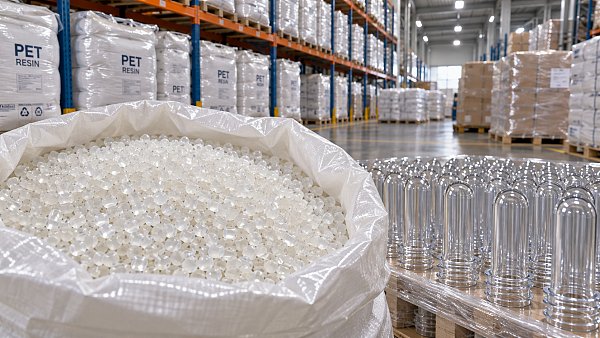
Suppliers of PLA resin and functional additives face intensified demand for traceable, specification-verified feedstock. Since Indonesian customs now accept CNAS reports as de facto technical validation, procurement teams must ensure upstream resin batches carry full chain-of-custody documentation — including polymerization batch records and migration test summaries — to support downstream certification.
Contract Manufacturing & OEM Facilities
OEM producers serving international brands must align production quality control with CNAS reporting parameters — especially for migration tests (e.g., overall migration limit, heavy metals, lactide residue). While no new safety standards are introduced, the shift to *certification-driven clearance* means internal QC data must be structured for direct CNAS lab integration, not just internal audit use.
Supply Chain Service Providers
Customs brokers, certification consultants, and third-party testing coordinators see rising demand for end-to-end RCEP-GMP readiness packages. Notably, services that bundle origin verification, CNAS report preparation, and pre-shipment document audits gain competitive differentiation — whereas generic ‘RCEP tariff advisory’ offerings alone no longer meet operational thresholds.
Key Focus Areas and Recommended Actions
Verify CNAS Lab Accreditation Scope
Not all CNAS-accredited labs cover PLA-specific migration or biodegradation testing per ISO 14855 or ASTM D6400. Exporters must confirm their chosen lab’s accreditation scope explicitly includes ‘PLA-based food contact articles’ — not just generic bioplastics or compostability.
Update RCEP Origin Documentation Protocols
RCEP origin criteria for PLA tableware require regional value content (RVC) calculation based on polymer sourcing. Firms using imported PLA resin must track origin of monomers (e.g., corn-derived lactic acid) and verify whether upstream suppliers provide supporting origin statements — otherwise, RVC thresholds may not be met.
Prepare for Potential Cascading Adoption
Indonesia’s exemption is the first RCEP-GMP implementation for PLA tableware, but Vietnam and Thailand have signaled interest in similar arrangements. Exporters should treat current Indonesia requirements as a baseline for future ASEAN-wide alignment — especially regarding harmonized test methods and digital certificate interoperability.
Editorial Insight / Industry Observation
Observably, this expansion signals a strategic pivot in RCEP implementation: away from tariff-only facilitation toward *technical barrier harmonization*. Unlike earlier RCEP gains focused on duty cuts, this move targets non-tariff measures — specifically conformity assessment bottlenecks — that historically impeded green material trade. Analysis shows the choice of Indonesia as the first adopter reflects both its growing domestic ban on single-use plastics and its relatively mature CNAS-equivalent accreditation infrastructure (KAN). However, it remains uncertain whether other RCEP members will adopt identical CNAS reliance — some may insist on local lab validation, limiting scalability.
Conclusion
This development marks more than a procedural upgrade: it represents early institutionalization of green material standards within RCEP’s governance architecture. For the bioplastics sector, it validates policy coherence between environmental regulation and trade facilitation — yet also underscores that compliance agility, not just product innovation, now defines competitive advantage. A rational interpretation is that regulatory interoperability, not market access alone, will increasingly determine export viability in sustainable materials.
Source Attribution
Official announcement issued by the RCEP Secretariat and the ASEAN Centre for Sustainable Development (ACSD), confirmed via joint press release dated May 13, 2026. Supporting technical annexes published on the RCEP-GMP Portal (https://gmp.rcep.int). Note: Implementation guidelines for CNAS report submission formats and RVC calculation templates remain pending publication — subject to ongoing monitoring.
News Recommendations
 How do packaging customization options affect minimum order quantities in Europe?
![51a6ab95581761cc26f4318be6520c15]()
Aris Katos
Future of Carbide Coatings
 Transom to Acquire Cree LED in Commercial Lighting Ownership Change
![51a6ab95581761cc26f4318be6520c15]()
Aris Katos
Future of Carbide Coatings
 How to plan customer flow in commercial design planning
![51a6ab95581761cc26f4318be6520c15]()
Aris Katos
Future of Carbide Coatings
 USTR Urged to Permanently Suspend Fees on China-Linked Ships
![51a6ab95581761cc26f4318be6520c15]()
Aris Katos
Future of Carbide Coatings
 How to choose comparable stores for retail benchmarking
![51a6ab95581761cc26f4318be6520c15]()
Aris Katos
Future of Carbide Coatings
 How does anchoring affect modular building wind load resistance?
![51a6ab95581761cc26f4318be6520c15]()
Aris Katos
Future of Carbide Coatings
 Amazon Raises European FBA Surcharge to 2% in Ten Markets From November 2
![51a6ab95581761cc26f4318be6520c15]()
Aris Katos
Future of Carbide Coatings
 How to verify a BPA-free test report for baby products
![51a6ab95581761cc26f4318be6520c15]()
Aris Katos
Future of Carbide Coatings
 China's Mandatory Classroom Lighting Standard GB 7793-2025 Takes Effect November 1
![51a6ab95581761cc26f4318be6520c15]()
Aris Katos
Future of Carbide Coatings
 How order volume affects the price of wholesale poly mailers
![51a6ab95581761cc26f4318be6520c15]()
Aris Katos
Future of Carbide Coatings
 US Imposes 50% Tariff on Certain Canadian PET Resin Imports
![51a6ab95581761cc26f4318be6520c15]()
Aris Katos
Future of Carbide Coatings
 How to read the maximum ratings in a semiconductor datasheet
![51a6ab95581761cc26f4318be6520c15]()
Aris Katos
Future of Carbide Coatings
 University of Maryland Develops Bio-Based Packaging to Extend Avocado and Cucumber Shelf Life
![51a6ab95581761cc26f4318be6520c15]()
Aris Katos
Future of Carbide Coatings
 How to verify a cookware manufacturer's induction compatibility claims
![51a6ab95581761cc26f4318be6520c15]()
Aris Katos
Future of Carbide Coatings
 Omdia Forecasts 11.6% Annual Growth in LED Display Revenue Through 2030
![51a6ab95581761cc26f4318be6520c15]()
Aris Katos
Future of Carbide Coatings
 How to verify a pulp molding packaging factory's production capacity
![51a6ab95581761cc26f4318be6520c15]()
Aris Katos
Future of Carbide Coatings
 Curion Survey: Half of Consumers Frustrated by Sustainable Packaging
![51a6ab95581761cc26f4318be6520c15]()
Aris Katos
Future of Carbide Coatings
 How to assess the credibility of market insight content
![51a6ab95581761cc26f4318be6520c15]()
Aris Katos
Future of Carbide Coatings
 US Removes 50% Additional Tariff on Selected Canadian Packaging Products
![51a6ab95581761cc26f4318be6520c15]()
Aris Katos
Future of Carbide Coatings
 Will a waterproof dimmable LED driver work with your existing dimmer?
![51a6ab95581761cc26f4318be6520c15]()
Aris Katos
Future of Carbide Coatings
 Charter Next Generation Raises Film PCR Use 30%, Advances Food-Grade Applications
![51a6ab95581761cc26f4318be6520c15]()
Aris Katos
Future of Carbide Coatings
 How to choose a dog harness and leash for a dog that pulls hard
![51a6ab95581761cc26f4318be6520c15]()
Aris Katos
Future of Carbide Coatings
 How to respect local customs when negotiating with overseas suppliers
![51a6ab95581761cc26f4318be6520c15]()
Aris Katos
Future of Carbide Coatings
 RFID Recycling Challenges Bring Paper-Based and Chipless Tags Into Focus
![51a6ab95581761cc26f4318be6520c15]()
Aris Katos
Future of Carbide Coatings
 How to choose commercial lighting for offices that reduces glare
![51a6ab95581761cc26f4318be6520c15]()
Aris Katos
Future of Carbide Coatings
 Queue Launches Fully Automated Robotic Pharmacy Kiosk for 30-Second Dispensing
![51a6ab95581761cc26f4318be6520c15]()
Aris Katos
Future of Carbide Coatings
 Can your supermarket store fixtures supplier meet your opening date?
![51a6ab95581761cc26f4318be6520c15]()
Aris Katos
Future of Carbide Coatings
 Shopify POS UI Extensions 2026-10 Adds Virtual Lists and Custom Row Templates
![51a6ab95581761cc26f4318be6520c15]()
Aris Katos
Future of Carbide Coatings
 How to assess smart office furniture suppliers’ North American support
![51a6ab95581761cc26f4318be6520c15]()
Aris Katos
Future of Carbide Coatings
 Aqara Launches Smart Lighting Range to Advance AI Spatial Intelligence
![51a6ab95581761cc26f4318be6520c15]()
Aris Katos
Future of Carbide Coatings
 How to assess demand forecasts in a lighting intelligence report
![51a6ab95581761cc26f4318be6520c15]()
Aris Katos
Future of Carbide Coatings
 Billerud推出PharmaKraft纤维基医药包装材料
![51a6ab95581761cc26f4318be6520c15]()
Aris Katos
Future of Carbide Coatings
 How to assess supplier reliability in global supply chain sourcing
![51a6ab95581761cc26f4318be6520c15]()
Aris Katos
Future of Carbide Coatings
 Omdia Forecasts 11.6% CAGR for Global LED Video Display Market in 2026–2030
![51a6ab95581761cc26f4318be6520c15]()
Aris Katos
Future of Carbide Coatings
 How to verify an LFGB testing laboratory's accreditation scope
![51a6ab95581761cc26f4318be6520c15]()
Aris Katos
Future of Carbide Coatings
 How to assess a workplace interior supplier's installation scope
![51a6ab95581761cc26f4318be6520c15]()
Aris Katos
Future of Carbide Coatings
 What records are needed for an ISO 9001 furniture factory audit?
![51a6ab95581761cc26f4318be6520c15]()
Aris Katos
Future of Carbide Coatings
 How to choose AI marketing tools that work with your existing CRM
![51a6ab95581761cc26f4318be6520c15]()
Aris Katos
Future of Carbide Coatings
 Do freight costs erase savings when buying retail fixtures wholesale?
![51a6ab95581761cc26f4318be6520c15]()
Aris Katos
Future of Carbide Coatings