FDA Adds TVOC Migration Limit for Silicone Seals in 2026 FCS List
Time
Click Count
On May 4, 2026, the U.S. Food and Drug Administration (FDA) issued the 2026 Food Contact Substance Notification List Update, introducing a new total volatile organic compounds (TVOC) migration limit of ≤0.05 mg/dm² for food-grade silicone seals used in kitchenware and home goods. The regulation takes effect immediately upon publication, with no transition period. Manufacturers, importers, and distributors of silicone sealing components—particularly those supplying to U.S.-bound kitchenware and tabletop product lines—should assess compliance implications without delay.
Event Overview
The U.S. Food and Drug Administration (FDA) published the 2026 Food Contact Substance Notification List Update on May 4, 2026. This update adds a mandatory TVOC migration limit of ≤0.05 mg/dm² for silicone seals intended for use in food-contact kitchenware and home goods. Testing must be conducted per ASTM D6886-25. The requirement is effective immediately; no grace period or phased implementation is provided.
Industries Affected by the Update
Direct Exporters & Importers of Kitchenware
These entities face immediate compliance risk if their silicone-sealed products (e.g., lids, gaskets, canister seals) lack verified TVOC migration test reports aligned with ASTM D6886-25. U.S. customs or FDA field inspections may now request such documentation at entry, potentially triggering delays or refusal of entry for non-compliant shipments.
Raw Material Suppliers (Silicone Compounders)
Suppliers providing food-grade silicone compounds to seal manufacturers must now ensure batch-level TVOC control during compounding—especially regarding residual catalysts, curing agents, and processing aids. The new limit applies to the final sealed component, but upstream material choices directly influence migration outcomes.
OEM/ODM Seal Manufacturers
Manufacturers producing silicone seals for kitchenware brands are directly responsible for verifying migration performance under simulated use conditions (e.g., elevated temperature, food simulant exposure). Process changes—including mold release agents, post-cure treatments, or packaging materials—may affect TVOC release and require revalidation.
Distribution & Brand Holders (U.S. & Global)
Brands marketing kitchenware with integrated silicone seals in the U.S. market bear regulatory responsibility under FDA’s food contact substance framework. Even if seals are sourced from third parties, brand owners must maintain documentation demonstrating compliance—not just supplier declarations, but test reports traceable to the finished article and its intended use conditions.
What Relevant Enterprises or Practitioners Should Focus On Now
Confirm applicability to current product portfolio
Identify all silicone-sealed items sold into or manufactured for the U.S. market—especially those where the seal contacts food or beverage directly (e.g., vacuum containers, blender lids, sous-vide bags with gasketed closures). Prioritize items with high surface-area-to-volume ratios or heat-exposure use cases, as these pose higher migration risk.
Validate testing methodology and lab capability
Verify whether existing test labs are accredited for ASTM D6886-25 (2025 edition), including proper calibration for low-level VOC quantification (e.g., TD-GC-MS). Note: older versions of ASTM D6886 or alternative methods (e.g., ISO 16000 series) are not accepted under this update.
Review supply chain documentation requirements
Update procurement specifications and supplier agreements to explicitly require TVOC migration test reports per ASTM D6886-25 for all relevant silicone seals. Retain full test records—including simulant type, exposure time/temperature, and sample preparation details—for FDA audit readiness.
Assess impact on product development timelines
New seal designs or material substitutions introduced after May 4, 2026 must undergo TVOC migration testing before U.S. market launch. Factor in minimum 10–14 days for standard lab turnaround when planning new product introductions or line extensions.
Editorial Perspective / Industry Observation
Observably, this update reflects FDA’s increasing emphasis on low-level chemical migration—particularly from elastomeric food-contact components previously assessed mainly for extractables and specific substances like SVHCs. Analysis shows the ≤0.05 mg/dm² threshold is significantly stricter than typical background levels observed in legacy silicone seal testing, suggesting FDA is treating TVOC as a holistic process-contamination indicator rather than a sum of individually regulated compounds. From an industry perspective, this is less a one-off adjustment and more a signal of tightening scrutiny across polymer-based food-contact parts—especially where multi-step manufacturing or additive-rich formulations are involved. Current practice suggests that while enforcement may initially focus on high-risk or complaint-driven cases, the absence of a transition period indicates FDA expects industry to treat this as an operational baseline starting May 4, 2026.
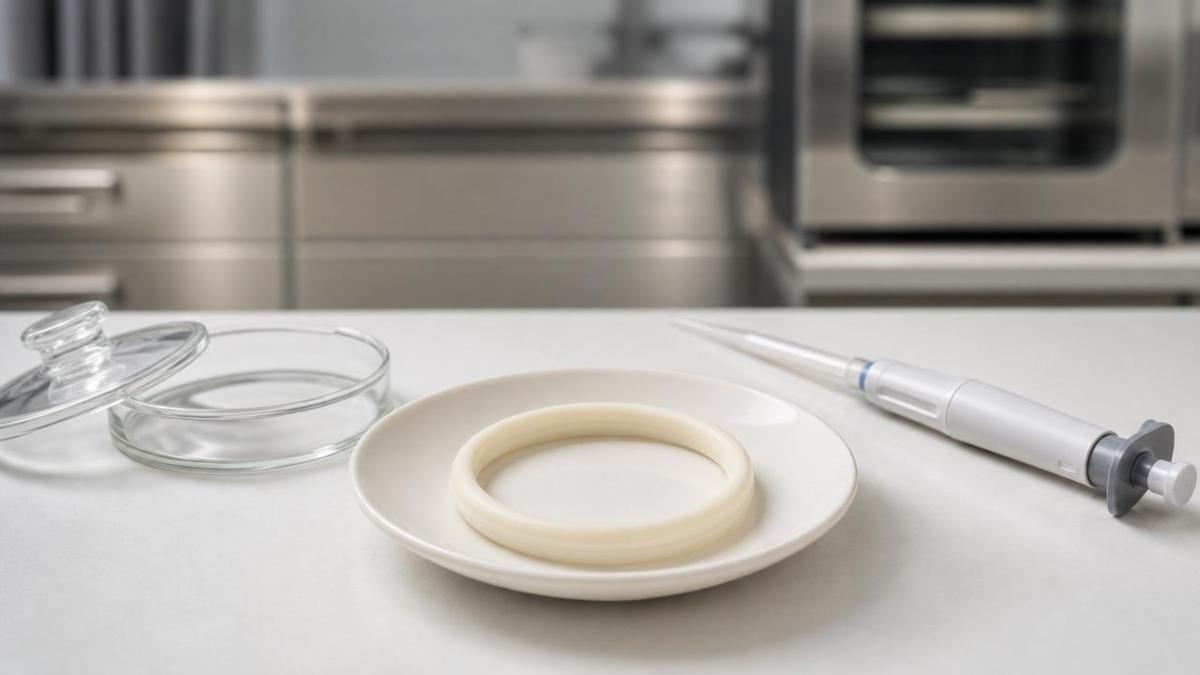
Conclusion: This FDA update does not introduce new chemical restrictions per se, but establishes a quantitative, method-specific performance benchmark for silicone seals in everyday food-contact products. Its significance lies in enforceability: it shifts compliance from qualitative declarations to standardized, laboratory-verified data. For affected stakeholders, the update is best understood not as a future risk, but as an immediate operational requirement—one that underscores the growing importance of migration testing as a core quality gate in food-contact product development and sourcing.
Source: U.S. Food and Drug Administration (FDA), 2026 Food Contact Substance Notification List Update, published May 4, 2026. Note: No further guidance documents or FAQs have been released as of publication date; ongoing monitoring of FDA’s CFSAN website is recommended for updates on enforcement interpretation or technical clarifications.
News Recommendations
 How to verify Zigbee compatibility when sourcing lighting sensors
![51a6ab95581761cc26f4318be6520c15]()
Aris Katos
Future of Carbide Coatings
 How do packaging customization options affect minimum order quantities in Europe?
![51a6ab95581761cc26f4318be6520c15]()
Aris Katos
Future of Carbide Coatings
 Transom to Acquire Cree LED in Commercial Lighting Ownership Change
![51a6ab95581761cc26f4318be6520c15]()
Aris Katos
Future of Carbide Coatings
 How to plan customer flow in commercial design planning
![51a6ab95581761cc26f4318be6520c15]()
Aris Katos
Future of Carbide Coatings
 USTR Urged to Permanently Suspend Fees on China-Linked Ships
![51a6ab95581761cc26f4318be6520c15]()
Aris Katos
Future of Carbide Coatings
 How to choose comparable stores for retail benchmarking
![51a6ab95581761cc26f4318be6520c15]()
Aris Katos
Future of Carbide Coatings
 How does anchoring affect modular building wind load resistance?
![51a6ab95581761cc26f4318be6520c15]()
Aris Katos
Future of Carbide Coatings
 Amazon Raises European FBA Surcharge to 2% in Ten Markets From November 2
![51a6ab95581761cc26f4318be6520c15]()
Aris Katos
Future of Carbide Coatings
 How to verify a BPA-free test report for baby products
![51a6ab95581761cc26f4318be6520c15]()
Aris Katos
Future of Carbide Coatings
 China's Mandatory Classroom Lighting Standard GB 7793-2025 Takes Effect November 1
![51a6ab95581761cc26f4318be6520c15]()
Aris Katos
Future of Carbide Coatings
 How order volume affects the price of wholesale poly mailers
![51a6ab95581761cc26f4318be6520c15]()
Aris Katos
Future of Carbide Coatings
 US Imposes 50% Tariff on Certain Canadian PET Resin Imports
![51a6ab95581761cc26f4318be6520c15]()
Aris Katos
Future of Carbide Coatings
 How to read the maximum ratings in a semiconductor datasheet
![51a6ab95581761cc26f4318be6520c15]()
Aris Katos
Future of Carbide Coatings
 University of Maryland Develops Bio-Based Packaging to Extend Avocado and Cucumber Shelf Life
![51a6ab95581761cc26f4318be6520c15]()
Aris Katos
Future of Carbide Coatings
 How to verify a cookware manufacturer's induction compatibility claims
![51a6ab95581761cc26f4318be6520c15]()
Aris Katos
Future of Carbide Coatings
 Omdia Forecasts 11.6% Annual Growth in LED Display Revenue Through 2030
![51a6ab95581761cc26f4318be6520c15]()
Aris Katos
Future of Carbide Coatings
 How to verify a pulp molding packaging factory's production capacity
![51a6ab95581761cc26f4318be6520c15]()
Aris Katos
Future of Carbide Coatings
 Curion Survey: Half of Consumers Frustrated by Sustainable Packaging
![51a6ab95581761cc26f4318be6520c15]()
Aris Katos
Future of Carbide Coatings
 How to assess the credibility of market insight content
![51a6ab95581761cc26f4318be6520c15]()
Aris Katos
Future of Carbide Coatings
 US Removes 50% Additional Tariff on Selected Canadian Packaging Products
![51a6ab95581761cc26f4318be6520c15]()
Aris Katos
Future of Carbide Coatings
 Will a waterproof dimmable LED driver work with your existing dimmer?
![51a6ab95581761cc26f4318be6520c15]()
Aris Katos
Future of Carbide Coatings
 Charter Next Generation Raises Film PCR Use 30%, Advances Food-Grade Applications
![51a6ab95581761cc26f4318be6520c15]()
Aris Katos
Future of Carbide Coatings
 How to choose a dog harness and leash for a dog that pulls hard
![51a6ab95581761cc26f4318be6520c15]()
Aris Katos
Future of Carbide Coatings
 How to respect local customs when negotiating with overseas suppliers
![51a6ab95581761cc26f4318be6520c15]()
Aris Katos
Future of Carbide Coatings
 RFID Recycling Challenges Bring Paper-Based and Chipless Tags Into Focus
![51a6ab95581761cc26f4318be6520c15]()
Aris Katos
Future of Carbide Coatings
 How to choose commercial lighting for offices that reduces glare
![51a6ab95581761cc26f4318be6520c15]()
Aris Katos
Future of Carbide Coatings
 Queue Launches Fully Automated Robotic Pharmacy Kiosk for 30-Second Dispensing
![51a6ab95581761cc26f4318be6520c15]()
Aris Katos
Future of Carbide Coatings
 Can your supermarket store fixtures supplier meet your opening date?
![51a6ab95581761cc26f4318be6520c15]()
Aris Katos
Future of Carbide Coatings
 Shopify POS UI Extensions 2026-10 Adds Virtual Lists and Custom Row Templates
![51a6ab95581761cc26f4318be6520c15]()
Aris Katos
Future of Carbide Coatings
 How to assess smart office furniture suppliers’ North American support
![51a6ab95581761cc26f4318be6520c15]()
Aris Katos
Future of Carbide Coatings
 Aqara Launches Smart Lighting Range to Advance AI Spatial Intelligence
![51a6ab95581761cc26f4318be6520c15]()
Aris Katos
Future of Carbide Coatings
 How to assess demand forecasts in a lighting intelligence report
![51a6ab95581761cc26f4318be6520c15]()
Aris Katos
Future of Carbide Coatings
 Billerud推出PharmaKraft纤维基医药包装材料
![51a6ab95581761cc26f4318be6520c15]()
Aris Katos
Future of Carbide Coatings
 How to assess supplier reliability in global supply chain sourcing
![51a6ab95581761cc26f4318be6520c15]()
Aris Katos
Future of Carbide Coatings
 Omdia Forecasts 11.6% CAGR for Global LED Video Display Market in 2026–2030
![51a6ab95581761cc26f4318be6520c15]()
Aris Katos
Future of Carbide Coatings
 How to verify an LFGB testing laboratory's accreditation scope
![51a6ab95581761cc26f4318be6520c15]()
Aris Katos
Future of Carbide Coatings
 How to assess a workplace interior supplier's installation scope
![51a6ab95581761cc26f4318be6520c15]()
Aris Katos
Future of Carbide Coatings
 What records are needed for an ISO 9001 furniture factory audit?
![51a6ab95581761cc26f4318be6520c15]()
Aris Katos
Future of Carbide Coatings
 How to choose AI marketing tools that work with your existing CRM
![51a6ab95581761cc26f4318be6520c15]()
Aris Katos
Future of Carbide Coatings