
Solid wood commercial grade does not always mean the same thing
Time
Click Count
In commercial interiors, the label solid wood commercial grade can signal durability, prestige, and long-term value—but it does not always reflect the same structural standards, finish quality, or VOC emission levels in furniture across suppliers. For procurement teams, designers, and operators comparing contract furniture supplier claims, understanding the real benchmarks behind materials, compliance, and performance is essential to making smarter sourcing decisions.
That gap in understanding matters across offices, hospitality, education, retail, and mixed-use projects where furniture may need to perform for 5–15 years under daily traffic, regular cleaning, and repeated movement. A product described as solid wood commercial grade by one supplier may use fully kiln-dried hardwood with contract-rated joinery, while another may rely on thinner components, softwood substitutions, or finish systems that are less stable in fluctuating humidity.
For information researchers, end users, operators, buyers, and commercial evaluators, the issue is not whether solid wood is valuable. It is whether the specification is defined in measurable terms. In global sourcing, especially when comparing Asian production capabilities with international project requirements, the real decision depends on structure, finish, emissions, maintenance profile, and compliance evidence rather than marketing language alone.
Why “commercial grade” is not a uniform material standard
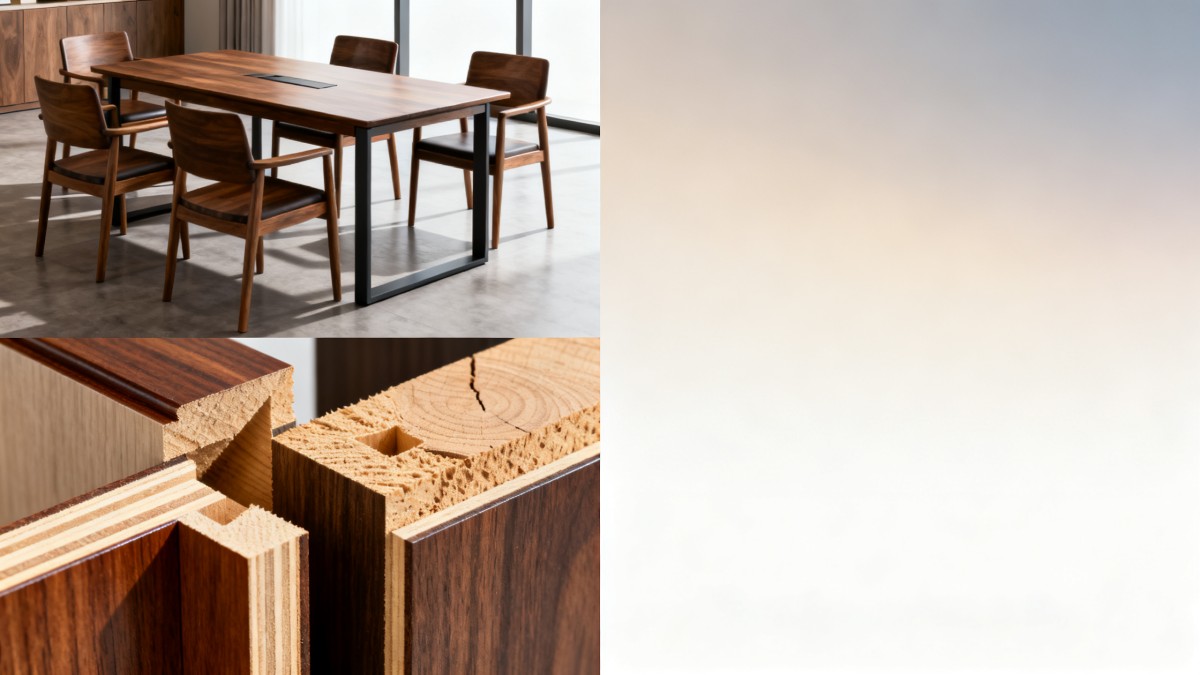
In many furniture categories, commercial grade is a market description rather than a single legally fixed definition. It often implies suitability for higher traffic and longer service cycles, but it does not automatically specify wood species, moisture content, load-bearing capacity, edge construction, or coating chemistry. That is why two products with similar visual appearance can perform very differently after 12–24 months of installation.
A reliable commercial interpretation usually combines at least 4 layers of assessment: material integrity, structural engineering, surface durability, and environmental compliance. For example, a solid wood table intended for a corporate breakout zone may need better impact resistance and more stable joinery than a decorative console in a boutique lobby, even if both are sold under a premium commercial label.
The confusion increases in cross-border procurement because regional terminology differs. In one market, solid wood may mean all exposed and internal structural parts are wood. In another, it may only describe visible surfaces or frame members. Moisture content can also vary by climate target, with common manufacturing ranges around 8%–12%, yet a mismatch between factory condition and installation environment can still create warping, cracking, or joint movement.
Common variables hidden behind the label
The term becomes meaningful only when paired with a detailed specification sheet. Buyers should ask whether the product uses oak, ash, walnut, beech, rubberwood, or mixed hardwoods; whether components are finger-jointed or single-length; and whether legs, aprons, seat rails, and tops use the same species and thickness. These details affect price, consistency, dimensional stability, and service life.
- Wood species and hardness level influence dent resistance, weight, and finishing behavior.
- Joinery method, such as mortise-and-tenon, dowel, or metal reinforcement, affects long-term stability under repetitive loading.
- Finish type, including catalyzed lacquer, water-based coating, or oil system, changes scratch resistance, VOC profile, and maintenance frequency.
- Testing evidence determines whether the product can support contract use rather than occasional residential traffic.
For sourcing teams, the takeaway is simple: commercial grade should be treated as a starting point for technical review, not the conclusion of the evaluation process.
The benchmarks that actually define performance
When solid wood furniture is specified for commercial spaces, performance should be tied to measurable benchmarks. In practical terms, that means reviewing dimensions, component thickness, moisture control, hardware strength, finish resistance, and reference standards such as BIFMA, as well as project-relevant safety or regional compliance requirements. Not every product needs the same threshold, but every product should be mapped to its real use case.
A lounge chair in a hotel suite and a dining chair in a foodservice environment face very different stress patterns. The first may prioritize tactile finish, visual warmth, and moderate load cycles. The second may require stronger joints, easier sanitation, and quicker touch-up capability because it could be moved 20–50 times per day. Without that contextual benchmark, the phrase solid wood commercial grade remains too broad to support procurement decisions.
The table below outlines core specification areas that buyers and evaluators should compare before approving samples or issuing a purchase order.
The key conclusion is that performance depends on documented inputs and repeatable manufacturing controls. A supplier that can clarify these 4 benchmark areas usually gives procurement teams a stronger basis for comparison than one relying on appearance and broad claims alone.
How standards and tests should be interpreted
Reference to standards such as BIFMA can be useful, but buyers should confirm which product category was tested and whether the construction of the supplied item matches the tested sample. A chair, work table, reception desk, and shelving unit are not evaluated in the same way. Passing one test protocol does not automatically validate all furniture forms in a collection.
Minimum documentation to request
- Material list showing species, engineered components if any, and visible versus hidden structural parts.
- Finish description with maintenance guidance and basic emissions or coating information.
- Test references, internal load data, or quality control checkpoints tied to the item category.
- Sample approval records and tolerance expectations, such as color variation or dimensional variance.
These documents do not need to be excessive, but they should be specific enough to distinguish between decorative-grade furniture and true contract-use construction.
Where procurement teams get misled during sourcing
One of the most common sourcing mistakes is assuming that solid wood automatically means premium durability. In reality, durability comes from the combination of species selection, component design, seasoning control, assembly method, and finishing system. A low-density wood with inconsistent moisture management may underperform a well-engineered hybrid construction in a demanding environment.
Another frequent issue is sample bias. A pre-production sample can look excellent under showroom conditions, yet the production batch may show wider color variation, different grain character, or inconsistent edge finishing. This matters because natural wood can vary from piece to piece, and commercial buyers often need a controlled appearance across 30, 100, or 500 units in one project phase.
Lead time assumptions also create risk. Contract-grade solid wood items often require longer production than laminated casegoods because of wood conditioning, staining consistency checks, and hand-finishing. Depending on complexity, a common cycle may range from 4–8 weeks for standard lines and 8–12 weeks for customized programs, excluding shipping and on-site coordination.
Typical sourcing risks and how to screen them
The following table summarizes risk points that frequently affect commercial furniture projects, especially when buyers compare multiple international suppliers under pricing pressure.
In practice, the best prevention tool is a structured pre-order review. Even a 6-point checklist can prevent expensive rework, rejected batches, or accelerated wear in public-facing spaces.
A practical 6-point pre-order checklist
- Confirm wood species and whether substitutions are allowed.
- Verify target moisture content and storage conditions before dispatch.
- Approve a control sample for color, sheen, and grain character.
- Match structural design to the actual usage frequency and load pattern.
- Review cleaning chemicals expected on site and finish compatibility.
- Clarify spare parts, touch-up kits, and warranty response process.
For sourcing directors and evaluators, these steps improve comparability and reduce the chance that a lower unit price later becomes a higher lifecycle cost.
How to specify solid wood furniture for different commercial environments
The right specification depends on traffic level, cleaning intensity, aesthetic expectations, and replacement strategy. A premium retail fitting may justify a more refined timber selection and hand-finished edges because customer experience is central to brand perception. By contrast, a staff dining area may require easier refinishing, stronger impact resistance, and faster replacement planning over a 3–5 year furniture cycle.
Commercial developers should also separate front-of-house from back-of-house requirements. Reception counters, hospitality host stands, and branded display tables often need tighter appearance control and better touch-point finishing. Training rooms, meeting areas, and utility zones may place greater weight on cleanability, modular repair, and budget consistency across larger quantities.
The matrix below can help align specification depth with real-world use instead of broad assumptions about what solid wood commercial grade should mean.
This comparison shows why one universal specification rarely works. The right question is not whether the furniture is solid wood, but whether its construction and finish are calibrated to the exact duty cycle of the project.
Recommended specification workflow
A practical workflow typically involves 5 stages: define use case, shortlist materials, review samples, verify compliance and testing, then finalize maintenance planning. This process often adds a few days to procurement, but it can save weeks of dispute resolution later.
Five steps for a clearer contract-grade specification
- Map each item to expected daily use, such as light, medium, or high traffic.
- Set required finish properties, including stain, abrasion, or chemical resistance.
- Request material disclosure and structural details before sample approval.
- Check regional compliance needs for indoor air quality and product safety.
- Plan post-installation care, touch-up supply, and replacement parts access.
For global chain operators, this workflow also supports standardization across multiple sites while still allowing regional adaptation in climate, code requirements, and maintenance conditions.
What G-BCE-style benchmarking adds to sourcing decisions
In a fragmented supplier market, the value of benchmarking is not limited to price comparison. A platform-oriented approach helps decision makers evaluate how material choices connect with commercial performance, compliance pathways, and long-term operating cost. This is especially relevant when sourcing teams must compare products from different manufacturing regions and reconcile design intent with technical evidence.
For procurement professionals, benchmarking can reduce ambiguity across 3 decision layers: product specification, supplier capability, and deployment risk. Instead of asking only whether a piece looks premium, the evaluation expands to whether it meets practical thresholds for traffic, emissions, assembly consistency, and after-sales support. That broader lens is critical in modern commercial ecosystems where physical environments must align with brand standards, sustainability goals, and operational resilience.
For operators and users, the benefit is equally tangible. Better material benchmarking can mean fewer touch-ups within the first 6–12 months, lower disruption during maintenance, and more predictable furniture behavior in climates with seasonal humidity swings. For business evaluators, it creates a stronger framework for balancing unit cost against lifecycle value.
FAQ for commercial buyers and evaluators
How can buyers verify whether solid wood commercial grade is credible?
Ask for a material breakdown, construction details, finish description, and any category-relevant test references. A credible supplier should be able to explain species use, moisture control, joinery method, and maintenance expectations within a few review steps rather than relying only on sales language.
Is solid wood always the best choice for high-traffic commercial spaces?
Not always. In some high-abuse settings, engineered or hybrid constructions may offer better dimensional stability or easier replacement economics. Solid wood performs well when properly specified, but the duty cycle, cleaning regime, and visual goals should drive the decision.
What delivery lead times are typical?
Standard contract furniture programs often run 4–8 weeks for production, while custom stain development, prototype approval, or larger multi-site batches may extend the timeline to 8–12 weeks. Shipping, customs, and site sequencing should be planned separately.
Which indicators matter most during final evaluation?
Focus on 4 practical indicators: structural integrity, finish durability, emissions transparency, and supplier consistency. If one of those is weak, the “commercial grade” label may not hold up in real use.
Solid wood commercial grade does not have one universal meaning, and that is exactly why informed specification matters. The strongest sourcing decisions come from translating broad marketing terms into measurable requirements for structure, finish, emissions, maintenance, and project fit.
For commercial architects, procurement teams, operators, and business evaluators, a benchmark-driven approach reduces ambiguity and improves lifecycle value across furniture programs. If you need clearer comparison criteria, tailored sourcing guidance, or deeper insight into contract furniture performance across global supply chains, contact us to discuss your project, request a customized evaluation framework, or explore more commercial solutions.
News Recommendations
 Uniguest and Extreme Networks Partner to Simplify Digital Signage Deployment
![51a6ab95581761cc26f4318be6520c15]()
Aris Katos
Future of Carbide Coatings
 How to assess electronics compliance whitepapers for regulatory accuracy
![51a6ab95581761cc26f4318be6520c15]()
Aris Katos
Future of Carbide Coatings
 Packaging Data Hub Launches With Plastic Recycling Findings for 50 Countries
![51a6ab95581761cc26f4318be6520c15]()
Aris Katos
Future of Carbide Coatings
 How to verify an ergonomic office chair supplier's warranty terms
![51a6ab95581761cc26f4318be6520c15]()
Aris Katos
Future of Carbide Coatings
 Curion Survey: 64% Value Sustainable Beauty Packaging, but Quality Comes First
![51a6ab95581761cc26f4318be6520c15]()
Aris Katos
Future of Carbide Coatings
 Can minimalist fit out solutions make a small office feel larger?
![51a6ab95581761cc26f4318be6520c15]()
Aris Katos
Future of Carbide Coatings
 Kiosk Industry Releases IAAPA 2026 Self-Service Guide
![51a6ab95581761cc26f4318be6520c15]()
Aris Katos
Future of Carbide Coatings
 How to improve global supply chain visibility beyond tier-one suppliers
![51a6ab95581761cc26f4318be6520c15]()
Aris Katos
Future of Carbide Coatings
 Austria’s MM Group to Sell 70% of Packaging Business to KPS for $2.7 Billion
![51a6ab95581761cc26f4318be6520c15]()
Aris Katos
Future of Carbide Coatings
 How to assess delivery reliability of airport terminal seating suppliers in Europe
![51a6ab95581761cc26f4318be6520c15]()
Aris Katos
Future of Carbide Coatings
 USTR Extends China-Linked Vessel Fee Pause and 178 Product Exemptions to January 2027
![51a6ab95581761cc26f4318be6520c15]()
Aris Katos
Future of Carbide Coatings
 How to choose smart sensors for automated lighting
![51a6ab95581761cc26f4318be6520c15]()
Aris Katos
Future of Carbide Coatings
 Shanghai Retail Buyers Sign Deals at Ninth China International Import Expo
![51a6ab95581761cc26f4318be6520c15]()
Aris Katos
Future of Carbide Coatings
 Which toys are subject to EN 71 toy safety requirements?
![51a6ab95581761cc26f4318be6520c15]()
Aris Katos
Future of Carbide Coatings
 Report: Global Kraft Paper Market Forecast to Reach $20.5 Billion by 2033
![51a6ab95581761cc26f4318be6520c15]()
Aris Katos
Future of Carbide Coatings
 How to verify Zigbee compatibility when sourcing lighting sensors
![51a6ab95581761cc26f4318be6520c15]()
Aris Katos
Future of Carbide Coatings
 How do packaging customization options affect minimum order quantities in Europe?
![51a6ab95581761cc26f4318be6520c15]()
Aris Katos
Future of Carbide Coatings
 Transom to Acquire Cree LED in Commercial Lighting Ownership Change
![51a6ab95581761cc26f4318be6520c15]()
Aris Katos
Future of Carbide Coatings
 How to plan customer flow in commercial design planning
![51a6ab95581761cc26f4318be6520c15]()
Aris Katos
Future of Carbide Coatings
 USTR Urged to Permanently Suspend Fees on China-Linked Ships
![51a6ab95581761cc26f4318be6520c15]()
Aris Katos
Future of Carbide Coatings
 How to choose comparable stores for retail benchmarking
![51a6ab95581761cc26f4318be6520c15]()
Aris Katos
Future of Carbide Coatings
 How does anchoring affect modular building wind load resistance?
![51a6ab95581761cc26f4318be6520c15]()
Aris Katos
Future of Carbide Coatings
 Amazon Raises European FBA Surcharge to 2% in Ten Markets From November 2
![51a6ab95581761cc26f4318be6520c15]()
Aris Katos
Future of Carbide Coatings
 How to verify a BPA-free test report for baby products
![51a6ab95581761cc26f4318be6520c15]()
Aris Katos
Future of Carbide Coatings
 China's Mandatory Classroom Lighting Standard GB 7793-2025 Takes Effect November 1
![51a6ab95581761cc26f4318be6520c15]()
Aris Katos
Future of Carbide Coatings
 How order volume affects the price of wholesale poly mailers
![51a6ab95581761cc26f4318be6520c15]()
Aris Katos
Future of Carbide Coatings
 US Imposes 50% Tariff on Certain Canadian PET Resin Imports
![51a6ab95581761cc26f4318be6520c15]()
Aris Katos
Future of Carbide Coatings
 How to read the maximum ratings in a semiconductor datasheet
![51a6ab95581761cc26f4318be6520c15]()
Aris Katos
Future of Carbide Coatings
 University of Maryland Develops Bio-Based Packaging to Extend Avocado and Cucumber Shelf Life
![51a6ab95581761cc26f4318be6520c15]()
Aris Katos
Future of Carbide Coatings
 How to verify a cookware manufacturer's induction compatibility claims
![51a6ab95581761cc26f4318be6520c15]()
Aris Katos
Future of Carbide Coatings
 Omdia Forecasts 11.6% Annual Growth in LED Display Revenue Through 2030
![51a6ab95581761cc26f4318be6520c15]()
Aris Katos
Future of Carbide Coatings
 How to verify a pulp molding packaging factory's production capacity
![51a6ab95581761cc26f4318be6520c15]()
Aris Katos
Future of Carbide Coatings
 Curion Survey: Half of Consumers Frustrated by Sustainable Packaging
![51a6ab95581761cc26f4318be6520c15]()
Aris Katos
Future of Carbide Coatings
 How to assess the credibility of market insight content
![51a6ab95581761cc26f4318be6520c15]()
Aris Katos
Future of Carbide Coatings
 US Removes 50% Additional Tariff on Selected Canadian Packaging Products
![51a6ab95581761cc26f4318be6520c15]()
Aris Katos
Future of Carbide Coatings
 Will a waterproof dimmable LED driver work with your existing dimmer?
![51a6ab95581761cc26f4318be6520c15]()
Aris Katos
Future of Carbide Coatings
 Charter Next Generation Raises Film PCR Use 30%, Advances Food-Grade Applications
![51a6ab95581761cc26f4318be6520c15]()
Aris Katos
Future of Carbide Coatings
 How to choose a dog harness and leash for a dog that pulls hard
![51a6ab95581761cc26f4318be6520c15]()
Aris Katos
Future of Carbide Coatings
 How to respect local customs when negotiating with overseas suppliers
![51a6ab95581761cc26f4318be6520c15]()
Aris Katos
Future of Carbide Coatings