
How to Choose an Air Compressors Distributor for Stable Supply
Time
Click Count
Why the Right Air Compressors Distributor Matters More Than Ever
Choosing the right air compressors distributor is not just a pricing decision.
It directly affects supply continuity, equipment uptime, and long-term procurement performance.
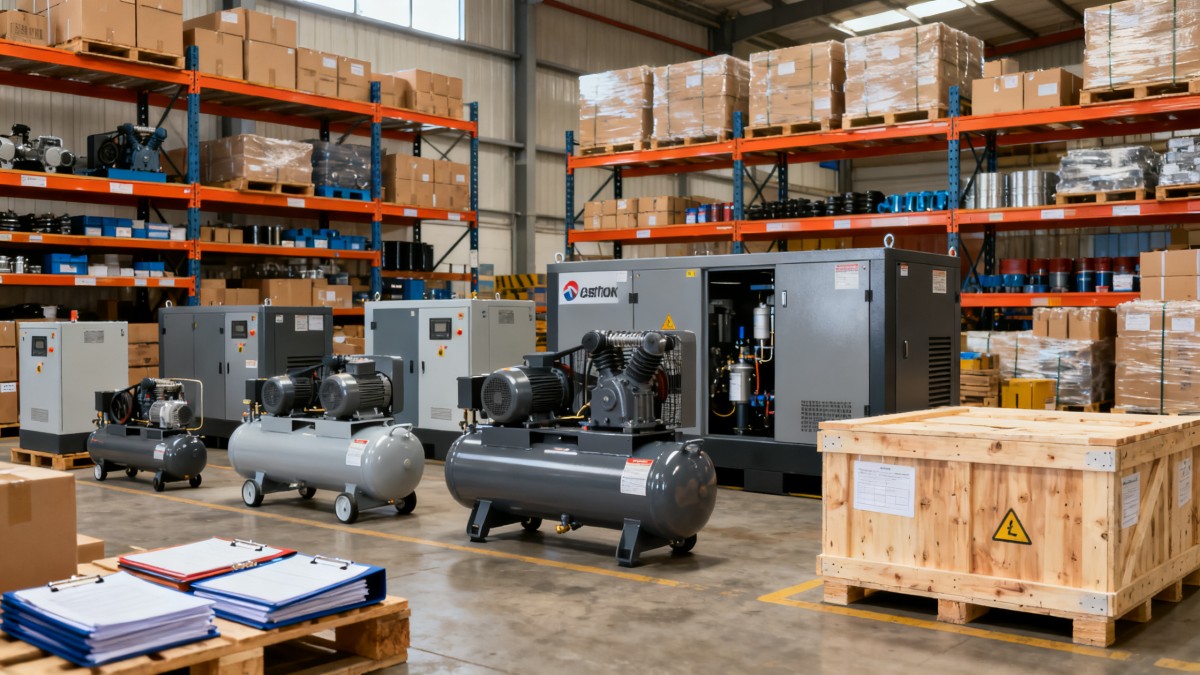
In many projects, compressor failure does not start with the machine.
It starts with an unstable distributor, poor inventory planning, or weak after-sales coordination.
That is why a reliable air compressors distributor should be evaluated like a strategic supply partner.
For procurement teams, stable supply means more than fast delivery.
It means predictable lead times, traceable quality, documentation readiness, and responsive problem solving.
A good air compressors distributor helps reduce sourcing risk before it becomes an operational issue.
This is especially important in commercial and industrial environments.
Downtime can delay production, interrupt maintenance schedules, and increase total ownership cost.
Start with Supply Stability, Not Just Unit Price
Price still matters, but it should not lead the conversation.
A low quote from an air compressors distributor can hide serious supply chain weaknesses.
In practice, the real cost appears later through delays, shortages, and inconsistent product replacement.
Start by asking how the distributor manages inventory across models, spare parts, and seasonal demand.
If the answer stays vague, that is already a warning sign.
A dependable air compressors distributor should clearly explain stock levels, replenishment cycles, and backup sourcing options.
This becomes even more important when projects require repeat orders over several quarters.
From a procurement view, supply predictability often creates more value than a small upfront discount.
Questions That Reveal Real Supply Strength
- What are the average lead times for standard and non-standard compressor models?
- Which items are stocked locally, and which rely on overseas production?
- How often do stockouts happen during peak periods?
- Can the air compressors distributor support volume forecasts and call-off orders?
- What contingency plans exist for shipping disruption or factory delays?
These questions shift the discussion from sales claims to measurable supply reliability.
Check Product Range, Technical Fit, and Certification Depth
Not every air compressors distributor can support complex sourcing needs.
Some only move popular SKUs and struggle with technical matching.
That creates problems when applications require specific pressure ranges, duty cycles, or compliance documents.
A stronger air compressors distributor should offer more than broad catalog coverage.
They should understand application fit across workshops, retail maintenance, food processing, logistics, and light manufacturing.
Technical clarity matters because over-specifying raises energy cost, while under-specifying risks performance failure.
This is where certification discipline also comes in.
An experienced air compressors distributor should supply complete and current compliance records.
Depending on the market, that may include CE, UL, ISO-related records, and test documentation.
Fast document access usually reflects a more mature internal process.
What to Verify During Evaluation
- Model coverage across oil-free, rotary screw, piston, and portable compressor categories.
- Availability of matching filters, dryers, tanks, and maintenance kits.
- Validity of certificates and whether they match the exact supplied model.
- Technical support for sizing, airflow demand, and operating environment.
- Documentation consistency across quotation, shipment, and after-sales stages.
Evaluate Service Response and After-Sales Execution
One clear difference between average and excellent suppliers is what happens after delivery.
A capable air compressors distributor does not disappear once the purchase order is closed.
Instead, they stay involved in installation support, troubleshooting, spare parts replacement, and warranty handling.
This matters because compressor systems often fail around service execution, not core design.
A delayed valve, missing manual, or unclear maintenance schedule can disrupt operations quickly.
In real business settings, response speed is a practical risk indicator.
Ask the air compressors distributor how they handle urgent failures, warranty claims, and technical escalations.
Also check whether support is handled in-house or passed to third parties.
The second option is not always bad, but it should be transparent and well managed.
Service Benchmarks Worth Comparing
Look at Supply Chain Transparency and Business Reliability
Stable supply depends on visibility.
If an air compressors distributor cannot explain where products come from, risk increases.
The same applies when sourcing paths, factories, or quality checkpoints remain unclear.
Transparency does not mean exposing every commercial detail.
It means the distributor can show a credible control process.
For example, they should clarify factory qualifications, inspection routines, and product traceability steps.
This is where platforms focused on benchmarking and supply chain intelligence add real value.
G-BCE emphasizes this cross-sector visibility because resilient sourcing now depends on verified data, not assumptions.
For buyers comparing an air compressors distributor, transparency often predicts long-term consistency better than marketing scale.
More mature distributors usually have stronger reporting discipline and fewer surprises during execution.
Useful Due Diligence Checks
- Review company history, export experience, and major served industries.
- Request sample quality records or inspection reports.
- Confirm whether serial traceability is available for shipped units.
- Assess communication speed across sales, logistics, and technical teams.
- Check whether the distributor can support audits or video factory review.
Compare Total Procurement Value, Not Isolated Quotes
Once basic qualification is clear, comparison should become more structured.
Do not compare suppliers only by the compressor base price.
A better method is to review total procurement value across supply, support, and lifecycle cost.
An air compressors distributor with slightly higher pricing may still deliver lower overall risk.
That difference becomes obvious when downtime, emergency freight, and spare part delays are included.
In practical sourcing work, procurement teams often benefit from a weighted scorecard.
This keeps decisions consistent, especially when internal stakeholders have different priorities.
Suggested Evaluation Criteria
- Supply stability and lead-time reliability.
- Technical fit and model selection accuracy.
- Certification readiness and document control.
- After-sales response and spare parts support.
- Commercial terms, payment flexibility, and communication quality.
- Long-term partnership potential and transparency level.
This approach helps identify the air compressors distributor that supports operational continuity, not just the current purchase cycle.
It also makes internal approval easier because the decision is tied to measurable business outcomes.
Final Checklist for Choosing an Air Compressors Distributor
Before making the final selection, step back and test the full picture.
The best air compressors distributor should feel reliable across both daily transactions and unexpected disruptions.
That means strong inventory planning, technical credibility, responsive service, and clear documentation.
It also means the distributor can grow with your sourcing needs over time.
- Confirm supply capacity for current and forecast demand.
- Verify certifications, model data, and accessory compatibility.
- Test communication speed before placing a larger order.
- Review service process for warranty and urgent spare parts.
- Use a scorecard instead of relying on price alone.
In the end, choosing an air compressors distributor is really about protecting business continuity.
When supply is stable, quality is documented, and support is dependable, procurement decisions become far more secure.
Use this framework to shortlist suppliers, ask sharper questions, and move toward a more resilient compressor sourcing strategy.
News Recommendations
 How to verify Zigbee compatibility when sourcing lighting sensors
![51a6ab95581761cc26f4318be6520c15]()
Aris Katos
Future of Carbide Coatings
 How do packaging customization options affect minimum order quantities in Europe?
![51a6ab95581761cc26f4318be6520c15]()
Aris Katos
Future of Carbide Coatings
 Transom to Acquire Cree LED in Commercial Lighting Ownership Change
![51a6ab95581761cc26f4318be6520c15]()
Aris Katos
Future of Carbide Coatings
 How to plan customer flow in commercial design planning
![51a6ab95581761cc26f4318be6520c15]()
Aris Katos
Future of Carbide Coatings
 USTR Urged to Permanently Suspend Fees on China-Linked Ships
![51a6ab95581761cc26f4318be6520c15]()
Aris Katos
Future of Carbide Coatings
 How to choose comparable stores for retail benchmarking
![51a6ab95581761cc26f4318be6520c15]()
Aris Katos
Future of Carbide Coatings
 How does anchoring affect modular building wind load resistance?
![51a6ab95581761cc26f4318be6520c15]()
Aris Katos
Future of Carbide Coatings
 Amazon Raises European FBA Surcharge to 2% in Ten Markets From November 2
![51a6ab95581761cc26f4318be6520c15]()
Aris Katos
Future of Carbide Coatings
 How to verify a BPA-free test report for baby products
![51a6ab95581761cc26f4318be6520c15]()
Aris Katos
Future of Carbide Coatings
 China's Mandatory Classroom Lighting Standard GB 7793-2025 Takes Effect November 1
![51a6ab95581761cc26f4318be6520c15]()
Aris Katos
Future of Carbide Coatings
 How order volume affects the price of wholesale poly mailers
![51a6ab95581761cc26f4318be6520c15]()
Aris Katos
Future of Carbide Coatings
 US Imposes 50% Tariff on Certain Canadian PET Resin Imports
![51a6ab95581761cc26f4318be6520c15]()
Aris Katos
Future of Carbide Coatings
 How to read the maximum ratings in a semiconductor datasheet
![51a6ab95581761cc26f4318be6520c15]()
Aris Katos
Future of Carbide Coatings
 University of Maryland Develops Bio-Based Packaging to Extend Avocado and Cucumber Shelf Life
![51a6ab95581761cc26f4318be6520c15]()
Aris Katos
Future of Carbide Coatings
 How to verify a cookware manufacturer's induction compatibility claims
![51a6ab95581761cc26f4318be6520c15]()
Aris Katos
Future of Carbide Coatings
 Omdia Forecasts 11.6% Annual Growth in LED Display Revenue Through 2030
![51a6ab95581761cc26f4318be6520c15]()
Aris Katos
Future of Carbide Coatings
 How to verify a pulp molding packaging factory's production capacity
![51a6ab95581761cc26f4318be6520c15]()
Aris Katos
Future of Carbide Coatings
 Curion Survey: Half of Consumers Frustrated by Sustainable Packaging
![51a6ab95581761cc26f4318be6520c15]()
Aris Katos
Future of Carbide Coatings
 How to assess the credibility of market insight content
![51a6ab95581761cc26f4318be6520c15]()
Aris Katos
Future of Carbide Coatings
 US Removes 50% Additional Tariff on Selected Canadian Packaging Products
![51a6ab95581761cc26f4318be6520c15]()
Aris Katos
Future of Carbide Coatings
 Will a waterproof dimmable LED driver work with your existing dimmer?
![51a6ab95581761cc26f4318be6520c15]()
Aris Katos
Future of Carbide Coatings
 Charter Next Generation Raises Film PCR Use 30%, Advances Food-Grade Applications
![51a6ab95581761cc26f4318be6520c15]()
Aris Katos
Future of Carbide Coatings
 How to choose a dog harness and leash for a dog that pulls hard
![51a6ab95581761cc26f4318be6520c15]()
Aris Katos
Future of Carbide Coatings
 How to respect local customs when negotiating with overseas suppliers
![51a6ab95581761cc26f4318be6520c15]()
Aris Katos
Future of Carbide Coatings
 RFID Recycling Challenges Bring Paper-Based and Chipless Tags Into Focus
![51a6ab95581761cc26f4318be6520c15]()
Aris Katos
Future of Carbide Coatings
 How to choose commercial lighting for offices that reduces glare
![51a6ab95581761cc26f4318be6520c15]()
Aris Katos
Future of Carbide Coatings
 Queue Launches Fully Automated Robotic Pharmacy Kiosk for 30-Second Dispensing
![51a6ab95581761cc26f4318be6520c15]()
Aris Katos
Future of Carbide Coatings
 Can your supermarket store fixtures supplier meet your opening date?
![51a6ab95581761cc26f4318be6520c15]()
Aris Katos
Future of Carbide Coatings
 Shopify POS UI Extensions 2026-10 Adds Virtual Lists and Custom Row Templates
![51a6ab95581761cc26f4318be6520c15]()
Aris Katos
Future of Carbide Coatings
 How to assess smart office furniture suppliers’ North American support
![51a6ab95581761cc26f4318be6520c15]()
Aris Katos
Future of Carbide Coatings
 Aqara Launches Smart Lighting Range to Advance AI Spatial Intelligence
![51a6ab95581761cc26f4318be6520c15]()
Aris Katos
Future of Carbide Coatings
 How to assess demand forecasts in a lighting intelligence report
![51a6ab95581761cc26f4318be6520c15]()
Aris Katos
Future of Carbide Coatings
 Billerud推出PharmaKraft纤维基医药包装材料
![51a6ab95581761cc26f4318be6520c15]()
Aris Katos
Future of Carbide Coatings
 How to assess supplier reliability in global supply chain sourcing
![51a6ab95581761cc26f4318be6520c15]()
Aris Katos
Future of Carbide Coatings
 Omdia Forecasts 11.6% CAGR for Global LED Video Display Market in 2026–2030
![51a6ab95581761cc26f4318be6520c15]()
Aris Katos
Future of Carbide Coatings
 How to verify an LFGB testing laboratory's accreditation scope
![51a6ab95581761cc26f4318be6520c15]()
Aris Katos
Future of Carbide Coatings
 How to assess a workplace interior supplier's installation scope
![51a6ab95581761cc26f4318be6520c15]()
Aris Katos
Future of Carbide Coatings
 What records are needed for an ISO 9001 furniture factory audit?
![51a6ab95581761cc26f4318be6520c15]()
Aris Katos
Future of Carbide Coatings
 How to choose AI marketing tools that work with your existing CRM
![51a6ab95581761cc26f4318be6520c15]()
Aris Katos
Future of Carbide Coatings







































