
Pet Grooming Tools Supplier Comparison: Quality, MOQ, and Lead Time
Time
Click Count
Choosing the right pet grooming tools supplier can directly affect product consistency, sourcing costs, and delivery reliability.
For global sourcing comparisons, quality standards, MOQ flexibility, and lead time influence inventory planning, brand reputation, and speed to market.
A structured supplier review reduces risk and supports stronger long-term commercial value across consumer product supply chains.
Core Evaluation Framework for a Pet Grooming Tools Supplier
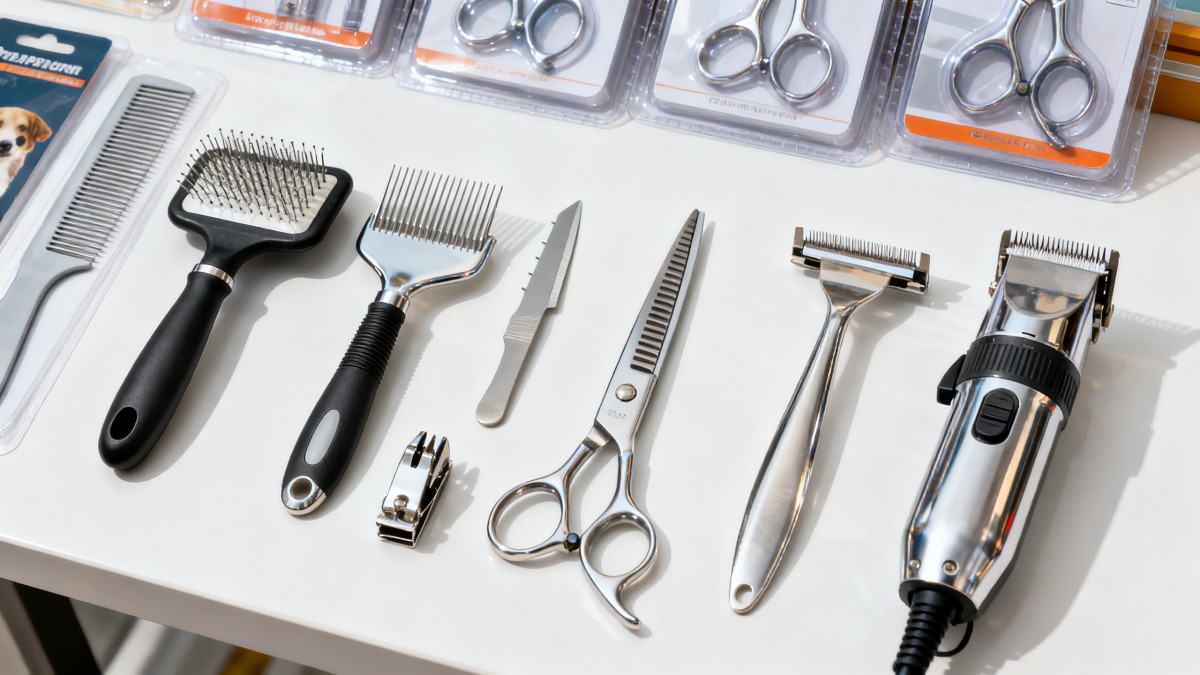
A pet grooming tools supplier usually offers brushes, combs, de-shedding tools, nail clippers, scissors, dryers, and cleaning accessories.
Comparison should go beyond unit price.
The most useful framework includes product quality, minimum order quantity, production lead time, compliance, packaging, and communication reliability.
Within a broader commercial ecosystem, these factors connect factory capability with retail expectations and consumer satisfaction.
High-performing sourcing decisions balance manufacturing precision with functional design, safe materials, and predictable replenishment cycles.
What quality means in this category
Quality in grooming tools is both visible and measurable.
Visible quality includes finish, ergonomic comfort, blade alignment, coating consistency, and branding execution.
Measurable quality includes hardness, corrosion resistance, tensile strength, drop durability, and repeated-use performance.
For a pet grooming tools supplier, stable quality often matters more than occasional premium samples.
Current Market Signals and Supplier Comparison Priorities
The market for pet care products is expanding across retail, e-commerce, grooming services, and private label channels.
As a result, every pet grooming tools supplier is being judged on responsiveness as much as manufacturing scale.
Several comparison priorities now shape vendor selection.
- Greater demand for skin-safe materials and rust-resistant metals.
- Rising interest in mixed-SKU orders for omnichannel retail launches.
- Shorter replenishment windows for seasonal promotions and digital campaigns.
- Stronger attention to packaging quality and shelf presentation.
- More private label projects requiring design confidentiality.
These signals make direct comparison more practical than relying on catalog claims alone.
Quality, MOQ, and Lead Time Comparison in Practical Terms
Quality comparison
A dependable pet grooming tools supplier should show repeatable control, not just attractive prototypes.
Look for stainless steel grade disclosure, coating details, handle material durability, and assembly tolerance control.
Scissors should open smoothly.
Brush pins should stay secure.
Clippers and trimmers should maintain stable edge performance over repeated use cycles.
MOQ comparison
MOQ often reveals how flexible a supplier is operationally.
Some factories require high volumes because tooling, packaging setup, or component sourcing is rigid.
Others allow smaller trial runs, especially for standard models with neutral packaging.
A lower MOQ can reduce market-entry risk, but it may increase unit cost.
A higher MOQ may improve pricing, but it can raise inventory pressure and slow assortment testing.
Lead time comparison
Lead time should be separated into sample lead time, bulk production lead time, and replenishment lead time.
A strong pet grooming tools supplier usually gives a realistic timeline instead of an aggressive estimate.
Reliable lead time depends on component availability, factory scheduling, packaging approval, and quality inspection capacity.
Business Value Across the Consumer Product Supply Chain
Choosing the right pet grooming tools supplier creates value beyond the product itself.
It supports pricing discipline, reduces warranty issues, and improves demand planning accuracy.
In a cross-border retail environment, supplier consistency also affects packaging timelines, compliance review, and launch coordination.
This is where technical benchmarking becomes useful.
Comparing suppliers through documented standards aligns sourcing activity with modern commercial expectations for safety, presentation, and operational resilience.
- Better quality lowers return rates and negative product feedback.
- Appropriate MOQ reduces overstock and cash tied in slow-moving items.
- Stable lead time improves promotion timing and replenishment planning.
- Clear specifications support stronger private label consistency.
Typical Supplier Scenarios and Product Category Differences
Not every category should be sourced using the same criteria.
A pet grooming tools supplier may perform well in one product family and less well in another.
Practical Review Checklist Before Final Supplier Selection
A side-by-side review is more effective when each pet grooming tools supplier is checked through the same lens.
- Request samples from at least two production batches.
- Confirm material specifications and finishing processes in writing.
- Check whether MOQ changes for custom logo, color, or packaging.
- Separate quoted lead time for sampling, mass production, and repeat orders.
- Review inspection method, defect policy, and replacement terms.
- Verify packaging durability for parcel shipping and retail display.
- Evaluate communication speed during revisions and issue handling.
This approach helps identify whether a supplier is merely competitive on paper or dependable in actual supply chain use.
Next-Step Sourcing Direction
A strong pet grooming tools supplier should match product quality targets, order structure, and timing expectations at the same time.
The best comparison method is evidence-based.
Use sample testing, MOQ mapping, and lead time verification together rather than treating them as separate decisions.
For more resilient sourcing, build a shortlist with technical benchmarks, packaging review, and replenishment planning criteria from the start.
That process creates a clearer path to stable supply, stronger product presentation, and better long-term commercial performance.
News Recommendations
 How do packaging customization options affect minimum order quantities in Europe?
![51a6ab95581761cc26f4318be6520c15]()
Aris Katos
Future of Carbide Coatings
 Transom to Acquire Cree LED in Commercial Lighting Ownership Change
![51a6ab95581761cc26f4318be6520c15]()
Aris Katos
Future of Carbide Coatings
 How to plan customer flow in commercial design planning
![51a6ab95581761cc26f4318be6520c15]()
Aris Katos
Future of Carbide Coatings
 USTR Urged to Permanently Suspend Fees on China-Linked Ships
![51a6ab95581761cc26f4318be6520c15]()
Aris Katos
Future of Carbide Coatings
 How to choose comparable stores for retail benchmarking
![51a6ab95581761cc26f4318be6520c15]()
Aris Katos
Future of Carbide Coatings
 How does anchoring affect modular building wind load resistance?
![51a6ab95581761cc26f4318be6520c15]()
Aris Katos
Future of Carbide Coatings
 Amazon Raises European FBA Surcharge to 2% in Ten Markets From November 2
![51a6ab95581761cc26f4318be6520c15]()
Aris Katos
Future of Carbide Coatings
 How to verify a BPA-free test report for baby products
![51a6ab95581761cc26f4318be6520c15]()
Aris Katos
Future of Carbide Coatings
 China's Mandatory Classroom Lighting Standard GB 7793-2025 Takes Effect November 1
![51a6ab95581761cc26f4318be6520c15]()
Aris Katos
Future of Carbide Coatings
 How order volume affects the price of wholesale poly mailers
![51a6ab95581761cc26f4318be6520c15]()
Aris Katos
Future of Carbide Coatings
 US Imposes 50% Tariff on Certain Canadian PET Resin Imports
![51a6ab95581761cc26f4318be6520c15]()
Aris Katos
Future of Carbide Coatings
 How to read the maximum ratings in a semiconductor datasheet
![51a6ab95581761cc26f4318be6520c15]()
Aris Katos
Future of Carbide Coatings
 University of Maryland Develops Bio-Based Packaging to Extend Avocado and Cucumber Shelf Life
![51a6ab95581761cc26f4318be6520c15]()
Aris Katos
Future of Carbide Coatings
 How to verify a cookware manufacturer's induction compatibility claims
![51a6ab95581761cc26f4318be6520c15]()
Aris Katos
Future of Carbide Coatings
 Omdia Forecasts 11.6% Annual Growth in LED Display Revenue Through 2030
![51a6ab95581761cc26f4318be6520c15]()
Aris Katos
Future of Carbide Coatings
 How to verify a pulp molding packaging factory's production capacity
![51a6ab95581761cc26f4318be6520c15]()
Aris Katos
Future of Carbide Coatings
 Curion Survey: Half of Consumers Frustrated by Sustainable Packaging
![51a6ab95581761cc26f4318be6520c15]()
Aris Katos
Future of Carbide Coatings
 How to assess the credibility of market insight content
![51a6ab95581761cc26f4318be6520c15]()
Aris Katos
Future of Carbide Coatings
 US Removes 50% Additional Tariff on Selected Canadian Packaging Products
![51a6ab95581761cc26f4318be6520c15]()
Aris Katos
Future of Carbide Coatings
 Will a waterproof dimmable LED driver work with your existing dimmer?
![51a6ab95581761cc26f4318be6520c15]()
Aris Katos
Future of Carbide Coatings
 Charter Next Generation Raises Film PCR Use 30%, Advances Food-Grade Applications
![51a6ab95581761cc26f4318be6520c15]()
Aris Katos
Future of Carbide Coatings
 How to choose a dog harness and leash for a dog that pulls hard
![51a6ab95581761cc26f4318be6520c15]()
Aris Katos
Future of Carbide Coatings
 How to respect local customs when negotiating with overseas suppliers
![51a6ab95581761cc26f4318be6520c15]()
Aris Katos
Future of Carbide Coatings
 RFID Recycling Challenges Bring Paper-Based and Chipless Tags Into Focus
![51a6ab95581761cc26f4318be6520c15]()
Aris Katos
Future of Carbide Coatings
 How to choose commercial lighting for offices that reduces glare
![51a6ab95581761cc26f4318be6520c15]()
Aris Katos
Future of Carbide Coatings
 Queue Launches Fully Automated Robotic Pharmacy Kiosk for 30-Second Dispensing
![51a6ab95581761cc26f4318be6520c15]()
Aris Katos
Future of Carbide Coatings
 Can your supermarket store fixtures supplier meet your opening date?
![51a6ab95581761cc26f4318be6520c15]()
Aris Katos
Future of Carbide Coatings
 Shopify POS UI Extensions 2026-10 Adds Virtual Lists and Custom Row Templates
![51a6ab95581761cc26f4318be6520c15]()
Aris Katos
Future of Carbide Coatings
 How to assess smart office furniture suppliers’ North American support
![51a6ab95581761cc26f4318be6520c15]()
Aris Katos
Future of Carbide Coatings
 Aqara Launches Smart Lighting Range to Advance AI Spatial Intelligence
![51a6ab95581761cc26f4318be6520c15]()
Aris Katos
Future of Carbide Coatings
 How to assess demand forecasts in a lighting intelligence report
![51a6ab95581761cc26f4318be6520c15]()
Aris Katos
Future of Carbide Coatings
 Billerud推出PharmaKraft纤维基医药包装材料
![51a6ab95581761cc26f4318be6520c15]()
Aris Katos
Future of Carbide Coatings
 How to assess supplier reliability in global supply chain sourcing
![51a6ab95581761cc26f4318be6520c15]()
Aris Katos
Future of Carbide Coatings
 Omdia Forecasts 11.6% CAGR for Global LED Video Display Market in 2026–2030
![51a6ab95581761cc26f4318be6520c15]()
Aris Katos
Future of Carbide Coatings
 How to verify an LFGB testing laboratory's accreditation scope
![51a6ab95581761cc26f4318be6520c15]()
Aris Katos
Future of Carbide Coatings
 How to assess a workplace interior supplier's installation scope
![51a6ab95581761cc26f4318be6520c15]()
Aris Katos
Future of Carbide Coatings
 What records are needed for an ISO 9001 furniture factory audit?
![51a6ab95581761cc26f4318be6520c15]()
Aris Katos
Future of Carbide Coatings
 How to choose AI marketing tools that work with your existing CRM
![51a6ab95581761cc26f4318be6520c15]()
Aris Katos
Future of Carbide Coatings
 Do freight costs erase savings when buying retail fixtures wholesale?
![51a6ab95581761cc26f4318be6520c15]()
Aris Katos
Future of Carbide Coatings







































