Maternity Care Products OEM: Cost Factors That Affect Margin
Time
Click Count
For financial decision-makers, maternity care products OEM is not just a sourcing model. It is a margin equation shaped by compliance, materials, packaging, labor, and scale.
Across the broader consumer goods supply chain, cost pressure is rising. At the same time, quality standards, traceability expectations, and brand differentiation demands are becoming stricter.
That shift matters because maternity products sit in a sensitive category. Safety, skin contact performance, hygiene assurance, and packaging credibility all influence total landed cost.
In this environment, understanding what truly drives cost in maternity care products OEM helps protect margin, improve forecasting, and support better long-term supply chain decisions.
Why margin pressure is becoming more visible in maternity care products OEM
The global market is moving from price-first sourcing to value-adjusted sourcing. That means buyers are comparing not only unit price, but also defect cost, certification cost, and packaging efficiency.
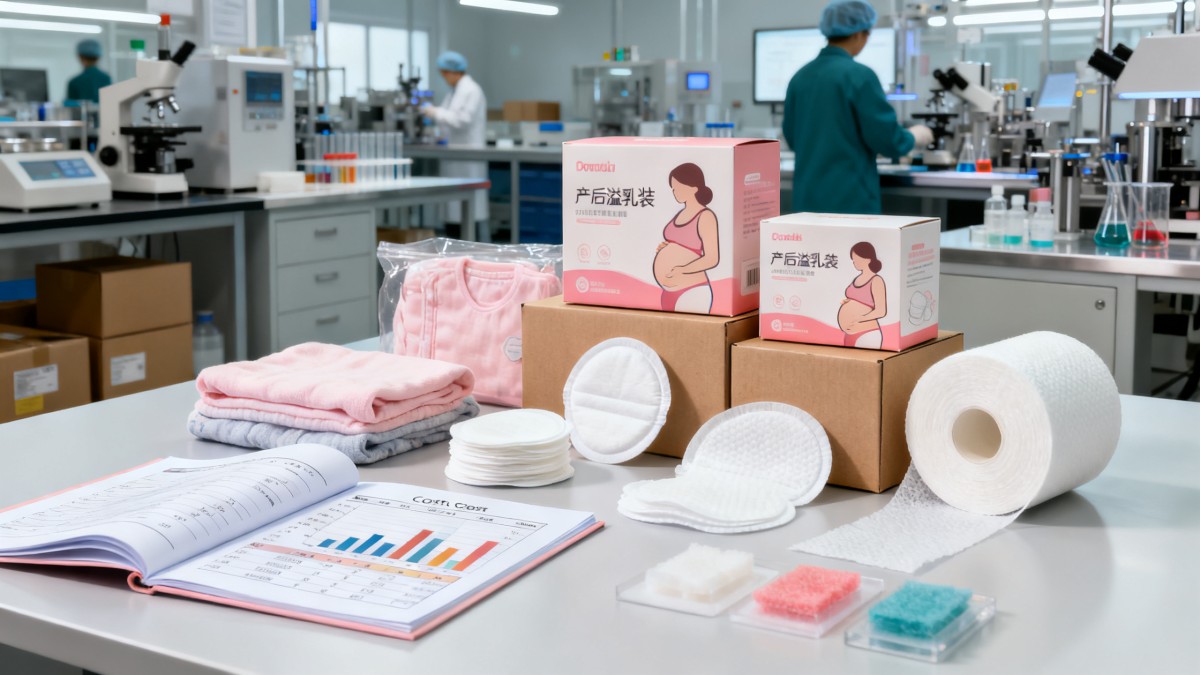
For maternity care products OEM, the shift is even stronger. Products often include nursing pads, maternity belts, postpartum care kits, breast care textiles, and hygiene accessories.
These items are influenced by soft material selection, absorbency requirements, skin safety testing, and retail presentation. Small specification changes can materially alter gross margin.
Another trend is shorter product cycles. Brands increasingly test niche assortments, private label bundles, and regional packaging versions. This creates complexity that standard cost models often underestimate.
The cost drivers behind maternity care products OEM are becoming more layered
The largest cost drivers in maternity care products OEM rarely come from one source. Margin changes usually result from several linked variables moving together.
Key cost factors and how they affect profitability
Why raw materials carry more weight than many models assume
In maternity care products OEM, material cost is not only about fabric price. It also includes softness grade, absorbent core composition, adhesive quality, dye chemistry, and barrier performance.
A lower-cost substitute may reduce invoice value, yet increase complaint rates or conversion losses. In a category linked to personal comfort, that hidden cost can erase initial savings.
Material sourcing also affects supply continuity. If a critical nonwoven or elastic supplier has limited capacity, urgent replenishment may require premium pricing or delayed shipments.
Compliance and certification are no longer secondary expenses
Testing costs are rising because regulatory expectations and retailer requirements are becoming more detailed. Skin-contact products may require chemical screening, microbiological control, and packaging label validation.
For maternity care products OEM, compliance expenses often expand after revisions. A new adhesive, fragrance-free claim, or packaging material can trigger another round of validation.
The real issue is timing. Delays in approval can create stock gaps, air freight costs, and promotional losses that are much larger than the laboratory invoice itself.
MOQ, packaging, and factory efficiency are reshaping cost visibility
Three overlooked areas often determine whether maternity care products OEM remains margin-positive at scale: order volume structure, packaging architecture, and operational efficiency on the line.
MOQ can help or hurt cash conversion
Low MOQ sounds attractive for market entry. However, small runs usually carry higher setup cost, lower material leverage, and less efficient line utilization.
High MOQ can reduce unit cost, but it may raise inventory holding risk. If sell-through underperforms, markdowns and write-offs compress margin faster than expected.
The best structure balances forecast confidence, warehouse cost, and packaging flexibility. This is especially important when SKUs differ by language, channel, or seasonal gift configuration.
Packaging often decides the final landed cost
In maternity care products OEM, packaging is both a cost center and a trust signal. Premium cartons, inserts, and bundle trays improve shelf presence, but they add board, print, and packing labor.
Packaging also affects freight efficiency. Slightly oversized dimensions can reduce carton density, increase pallet volume, and raise shipping cost across every unit shipped.
Sustainable packaging is another variable. Recyclable films or FSC-certified paper may support brand goals, yet require new suppliers, different sealing settings, or fresh validation work.
Production efficiency creates hidden margin swings
Factory efficiency affects labor time, scrap level, defect rate, and delivery consistency. These are often more important than small differences in quoted ex-works price.
Complex assembly, frequent artwork switching, and manual packing all reduce throughput. For maternity care products OEM, that can be significant when kits include multiple components.
A factory with stronger process control may quote higher. Yet the total program can still be cheaper if it reduces rework, claims, and emergency logistics.
The effects extend beyond sourcing into brand economics and supply chain resilience
Cost decisions in maternity care products OEM do not stay inside procurement files. They influence pricing power, inventory strategy, customer satisfaction, and channel expansion options.
- Lower material stability can increase returns and negative reviews.
- Weak packaging efficiency can raise landed cost in every destination market.
- Poor compliance planning can delay launches and reduce campaign ROI.
- Inefficient MOQ design can trap cash in slow-moving stock.
- Limited process capability can restrict future SKU expansion.
Within a broader commercial ecosystem, these issues also affect retailer confidence and supply chain credibility. Margin protection increasingly depends on data transparency across product, packaging, and production layers.
What deserves the closest attention in maternity care products OEM now
The current environment favors disciplined cost analysis instead of simple quote comparison. Several focus areas deserve continuous review.
- Total cost mapping: Include testing, tooling, freight, rework, packaging waste, and forecast risk.
- Material traceability: Verify upstream sources for textiles, films, absorbent layers, and skin-contact components.
- MOQ logic: Align order size with realistic demand instead of headline price targets.
- Packaging productivity: Review pack dimensions, automation suitability, and sustainability trade-offs.
- Change control: Track how every formula, artwork, or accessory revision affects compliance and cost.
- Supplier process capability: Measure yield, defect trends, and line flexibility, not only audit status.
A more reliable way to judge future margin outcomes
A practical evaluation model for maternity care products OEM should connect commercial assumptions with technical realities. That means looking at cost drivers before they become financial surprises.
This approach aligns well with modern benchmarking practice across consumer goods supply chains. It supports decisions that are both financially grounded and operationally realistic.
The next step is to turn cost visibility into negotiation strength
The strongest advantage in maternity care products OEM comes from knowing which costs are structural, which are negotiable, and which are preventable through better design.
Start by building a clean cost breakdown for one representative SKU. Then compare material grade, test scope, MOQ logic, packaging cube, and production assumptions line by line.
That analysis often reveals hidden margin leakage faster than headline quote comparison. It also creates a stronger basis for supplier discussion, portfolio planning, and capital allocation.
In a standards-driven global market, maternity care products OEM should be managed as a strategic cost system. Better visibility today leads to healthier margin tomorrow.
News Recommendations
 Which consumer goods need CE marking in Europe?
![51a6ab95581761cc26f4318be6520c15]()
Aris Katos
Future of Carbide Coatings
 Uniguest and Extreme Networks Partner to Simplify Digital Signage Deployment
![51a6ab95581761cc26f4318be6520c15]()
Aris Katos
Future of Carbide Coatings
 How to assess electronics compliance whitepapers for regulatory accuracy
![51a6ab95581761cc26f4318be6520c15]()
Aris Katos
Future of Carbide Coatings
 Packaging Data Hub Launches With Plastic Recycling Findings for 50 Countries
![51a6ab95581761cc26f4318be6520c15]()
Aris Katos
Future of Carbide Coatings
 How to verify an ergonomic office chair supplier's warranty terms
![51a6ab95581761cc26f4318be6520c15]()
Aris Katos
Future of Carbide Coatings
 Curion Survey: 64% Value Sustainable Beauty Packaging, but Quality Comes First
![51a6ab95581761cc26f4318be6520c15]()
Aris Katos
Future of Carbide Coatings
 Can minimalist fit out solutions make a small office feel larger?
![51a6ab95581761cc26f4318be6520c15]()
Aris Katos
Future of Carbide Coatings
 Kiosk Industry Releases IAAPA 2026 Self-Service Guide
![51a6ab95581761cc26f4318be6520c15]()
Aris Katos
Future of Carbide Coatings
 How to improve global supply chain visibility beyond tier-one suppliers
![51a6ab95581761cc26f4318be6520c15]()
Aris Katos
Future of Carbide Coatings
 Austria’s MM Group to Sell 70% of Packaging Business to KPS for $2.7 Billion
![51a6ab95581761cc26f4318be6520c15]()
Aris Katos
Future of Carbide Coatings
 How to assess delivery reliability of airport terminal seating suppliers in Europe
![51a6ab95581761cc26f4318be6520c15]()
Aris Katos
Future of Carbide Coatings
 USTR Extends China-Linked Vessel Fee Pause and 178 Product Exemptions to January 2027
![51a6ab95581761cc26f4318be6520c15]()
Aris Katos
Future of Carbide Coatings
 How to choose smart sensors for automated lighting
![51a6ab95581761cc26f4318be6520c15]()
Aris Katos
Future of Carbide Coatings
 Shanghai Retail Buyers Sign Deals at Ninth China International Import Expo
![51a6ab95581761cc26f4318be6520c15]()
Aris Katos
Future of Carbide Coatings
 Which toys are subject to EN 71 toy safety requirements?
![51a6ab95581761cc26f4318be6520c15]()
Aris Katos
Future of Carbide Coatings
 Report: Global Kraft Paper Market Forecast to Reach $20.5 Billion by 2033
![51a6ab95581761cc26f4318be6520c15]()
Aris Katos
Future of Carbide Coatings
 How to verify Zigbee compatibility when sourcing lighting sensors
![51a6ab95581761cc26f4318be6520c15]()
Aris Katos
Future of Carbide Coatings
 How do packaging customization options affect minimum order quantities in Europe?
![51a6ab95581761cc26f4318be6520c15]()
Aris Katos
Future of Carbide Coatings
 Transom to Acquire Cree LED in Commercial Lighting Ownership Change
![51a6ab95581761cc26f4318be6520c15]()
Aris Katos
Future of Carbide Coatings
 How to plan customer flow in commercial design planning
![51a6ab95581761cc26f4318be6520c15]()
Aris Katos
Future of Carbide Coatings
 USTR Urged to Permanently Suspend Fees on China-Linked Ships
![51a6ab95581761cc26f4318be6520c15]()
Aris Katos
Future of Carbide Coatings
 How to choose comparable stores for retail benchmarking
![51a6ab95581761cc26f4318be6520c15]()
Aris Katos
Future of Carbide Coatings
 How does anchoring affect modular building wind load resistance?
![51a6ab95581761cc26f4318be6520c15]()
Aris Katos
Future of Carbide Coatings
 Amazon Raises European FBA Surcharge to 2% in Ten Markets From November 2
![51a6ab95581761cc26f4318be6520c15]()
Aris Katos
Future of Carbide Coatings
 How to verify a BPA-free test report for baby products
![51a6ab95581761cc26f4318be6520c15]()
Aris Katos
Future of Carbide Coatings
 China's Mandatory Classroom Lighting Standard GB 7793-2025 Takes Effect November 1
![51a6ab95581761cc26f4318be6520c15]()
Aris Katos
Future of Carbide Coatings
 How order volume affects the price of wholesale poly mailers
![51a6ab95581761cc26f4318be6520c15]()
Aris Katos
Future of Carbide Coatings
 US Imposes 50% Tariff on Certain Canadian PET Resin Imports
![51a6ab95581761cc26f4318be6520c15]()
Aris Katos
Future of Carbide Coatings
 How to read the maximum ratings in a semiconductor datasheet
![51a6ab95581761cc26f4318be6520c15]()
Aris Katos
Future of Carbide Coatings
 University of Maryland Develops Bio-Based Packaging to Extend Avocado and Cucumber Shelf Life
![51a6ab95581761cc26f4318be6520c15]()
Aris Katos
Future of Carbide Coatings
 How to verify a cookware manufacturer's induction compatibility claims
![51a6ab95581761cc26f4318be6520c15]()
Aris Katos
Future of Carbide Coatings
 Omdia Forecasts 11.6% Annual Growth in LED Display Revenue Through 2030
![51a6ab95581761cc26f4318be6520c15]()
Aris Katos
Future of Carbide Coatings
 How to verify a pulp molding packaging factory's production capacity
![51a6ab95581761cc26f4318be6520c15]()
Aris Katos
Future of Carbide Coatings
 Curion Survey: Half of Consumers Frustrated by Sustainable Packaging
![51a6ab95581761cc26f4318be6520c15]()
Aris Katos
Future of Carbide Coatings
 How to assess the credibility of market insight content
![51a6ab95581761cc26f4318be6520c15]()
Aris Katos
Future of Carbide Coatings
 US Removes 50% Additional Tariff on Selected Canadian Packaging Products
![51a6ab95581761cc26f4318be6520c15]()
Aris Katos
Future of Carbide Coatings
 Will a waterproof dimmable LED driver work with your existing dimmer?
![51a6ab95581761cc26f4318be6520c15]()
Aris Katos
Future of Carbide Coatings
 Charter Next Generation Raises Film PCR Use 30%, Advances Food-Grade Applications
![51a6ab95581761cc26f4318be6520c15]()
Aris Katos
Future of Carbide Coatings
 How to choose a dog harness and leash for a dog that pulls hard
![51a6ab95581761cc26f4318be6520c15]()
Aris Katos
Future of Carbide Coatings