
IATA DGR 2026: UN3481 Declaration Required for Maternity & Pet Lithium Power Banks
Time
Click Count
On May 2, 2026, the International Air Transport Association (IATA) implemented its updated Dangerous Goods Regulations (DGR), 65th Edition. The revision introduces mandatory UN3481 classification and separate declaration for rechargeable lithium-ion battery-powered devices in the Maternity & Pet Supplies category — including portable breast pumps, smart pet feeders, and baby bottle warmers. This change directly affects air freight logistics, compliance workflows, and cost structures across multiple supply chain segments.
Event Overview
The International Air Transport Association (IATA) released the 65th Edition of its Dangerous Goods Regulations (DGR), effective May 2, 2026. Per the updated regulation, all portable devices containing rechargeable lithium-ion batteries sold under the Maternity & Pet Supplies category — such as portable breast pumps, smart pet feeders, and battery-powered bottle warmers — are now explicitly classified under UN3481 (Lithium Ion Batteries Packed with Equipment). These items must be declared separately as Class II dangerous goods, packaged independently, and labeled with the UN3481-specific hazard label. Air freight costs for affected shipments are reported to rise by an average of 18%, prompting increased interest in land-based transport alternatives.
Which Subsectors Are Affected
Direct Export/Import Trading Companies
These firms handle cross-border shipment of finished goods. Because UN3481 classification triggers mandatory dangerous goods documentation, training, and carrier coordination, trading companies exporting maternity or pet devices with integrated lithium batteries now face higher pre-shipment compliance overhead and potential delays if documentation is incomplete or misclassified.
Manufacturers & OEMs
Producers of portable breast pumps, pet feeders, or warming devices must reassess product labeling, packaging design, and technical data sheets to align with UN3481 requirements. Any device containing a rechargeable lithium-ion battery — even if embedded and non-removable — falls under this scope. Packaging must now isolate the device from other cargo, and labels must meet IATA-specified size, placement, and durability standards.
Distribution & E-commerce Fulfillment Operators
Third-party logistics providers and fulfillment centers handling inventory for online retailers must update internal hazardous materials screening protocols. Automated warehouse systems may require reconfiguration to flag and segregate UN3481-eligible SKUs during picking, packing, and carrier handover. Misclassification risks now extend beyond carrier rejection to regulatory liability under IATA’s audit framework.
Freight Forwarders & Dangerous Goods Specialists
Service providers offering air freight coordination must verify UN3481 eligibility for every Maternity & Pet Supplies SKU before tendering to airlines. Training for staff on updated DGR Section 2.9.2.2 (applicable to equipment containing lithium batteries) is now essential. Carrier acceptance policies — especially for mixed pallets or consolidated shipments — have tightened, increasing reliance on certified DG consultants for validation.
What Enterprises and Practitioners Should Monitor and Do Now
Confirm UN3481 applicability per individual SKU, not category label
Analysis shows that classification depends on battery chemistry, watt-hour rating, and integration method — not just product category. A device marketed as ‘pet supplies’ but powered by a removable 12 Wh lithium polymer cell still qualifies for UN3481; conversely, some low-energy devices may fall outside scope. Verify against DGR Table 2.9.A and Section 2.9.2.2 before assuming inclusion.
Review current air freight contracts and service-level agreements
Observably, many forwarder contracts do not yet reflect the operational impact of mandatory UN3481 segregation. Check clauses covering dangerous goods handling fees, liability for misdeclaration, and carrier rejection penalties. Update SLAs to include verification steps prior to booking — especially for new product launches in Q3–Q4 2026.
Assess feasibility of partial modal shift to road transport
From industry perspective, the reported 18% average air freight cost increase makes regional land transport more viable for time-insensitive shipments within contiguous markets (e.g., EU intra-zone, US domestic). However, note that ADR regulations also apply to lithium batteries in road transport — though classification thresholds and labeling rules differ. Cross-modal compliance mapping is required before switching.
Prepare updated training materials and internal checklists by Q2 2026
Current more relevant than broad policy review is frontline readiness: warehouse staff, customer service teams, and export coordinators need clear, visual checklists for identifying UN3481-eligible devices. Include battery marking interpretation (e.g., “Li-ion”, “Wh” value), packaging integrity checks, and label placement examples. IATA-certified DG training remains mandatory for signatory personnel.
Editor Perspective / Industry Observation
This update is better understood as a formalization of existing enforcement trends rather than a wholly new requirement. Observably, major carriers had already begun rejecting unclassified lithium-powered devices in Maternity & Pet categories since late 2025. The 2026 DGR codifies that practice into binding regulation. Analysis shows it signals tightening harmonization between IATA, ICAO, and national civil aviation authorities — particularly regarding consumer electronics embedded in non-traditional categories. It is not yet a de facto ban, but it does raise the compliance floor significantly for mid-tier exporters without dedicated DG resources. Sustained attention is warranted as regional regulators (e.g., EASA, FAA) begin aligning national guidance with the 65th Edition.
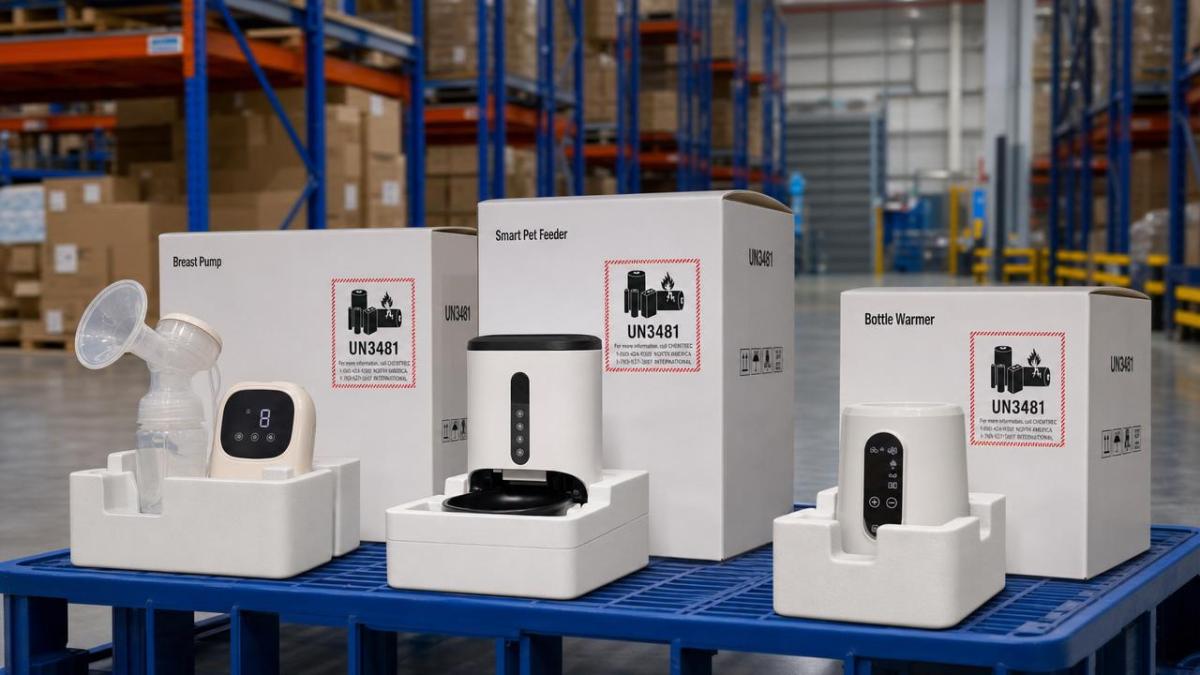
In summary, the IATA DGR 2026 revision marks a material escalation in compliance expectations for lithium-powered portable devices in consumer health and pet care verticals. Its significance lies less in introducing novelty and more in enforcing consistent, auditable classification across global air logistics networks. For affected stakeholders, the priority is not speculation about future revisions, but precise, SKU-level implementation grounded in the published DGR text — beginning with verification, documentation, and staff preparedness.
Source: International Air Transport Association (IATA), Dangerous Goods Regulations, 65th Edition, effective May 2, 2026. Note: Ongoing monitoring is advised for national civil aviation authority advisories (e.g., FAA, EASA) that may issue supplemental guidance or enforcement timelines beyond the IATA baseline.
News Recommendations
 How do packaging customization options affect minimum order quantities in Europe?
![51a6ab95581761cc26f4318be6520c15]()
Aris Katos
Future of Carbide Coatings
 Transom to Acquire Cree LED in Commercial Lighting Ownership Change
![51a6ab95581761cc26f4318be6520c15]()
Aris Katos
Future of Carbide Coatings
 How to plan customer flow in commercial design planning
![51a6ab95581761cc26f4318be6520c15]()
Aris Katos
Future of Carbide Coatings
 USTR Urged to Permanently Suspend Fees on China-Linked Ships
![51a6ab95581761cc26f4318be6520c15]()
Aris Katos
Future of Carbide Coatings
 How to choose comparable stores for retail benchmarking
![51a6ab95581761cc26f4318be6520c15]()
Aris Katos
Future of Carbide Coatings
 How does anchoring affect modular building wind load resistance?
![51a6ab95581761cc26f4318be6520c15]()
Aris Katos
Future of Carbide Coatings
 Amazon Raises European FBA Surcharge to 2% in Ten Markets From November 2
![51a6ab95581761cc26f4318be6520c15]()
Aris Katos
Future of Carbide Coatings
 How to verify a BPA-free test report for baby products
![51a6ab95581761cc26f4318be6520c15]()
Aris Katos
Future of Carbide Coatings
 China's Mandatory Classroom Lighting Standard GB 7793-2025 Takes Effect November 1
![51a6ab95581761cc26f4318be6520c15]()
Aris Katos
Future of Carbide Coatings
 How order volume affects the price of wholesale poly mailers
![51a6ab95581761cc26f4318be6520c15]()
Aris Katos
Future of Carbide Coatings
 US Imposes 50% Tariff on Certain Canadian PET Resin Imports
![51a6ab95581761cc26f4318be6520c15]()
Aris Katos
Future of Carbide Coatings
 How to read the maximum ratings in a semiconductor datasheet
![51a6ab95581761cc26f4318be6520c15]()
Aris Katos
Future of Carbide Coatings
 University of Maryland Develops Bio-Based Packaging to Extend Avocado and Cucumber Shelf Life
![51a6ab95581761cc26f4318be6520c15]()
Aris Katos
Future of Carbide Coatings
 How to verify a cookware manufacturer's induction compatibility claims
![51a6ab95581761cc26f4318be6520c15]()
Aris Katos
Future of Carbide Coatings
 Omdia Forecasts 11.6% Annual Growth in LED Display Revenue Through 2030
![51a6ab95581761cc26f4318be6520c15]()
Aris Katos
Future of Carbide Coatings
 How to verify a pulp molding packaging factory's production capacity
![51a6ab95581761cc26f4318be6520c15]()
Aris Katos
Future of Carbide Coatings
 Curion Survey: Half of Consumers Frustrated by Sustainable Packaging
![51a6ab95581761cc26f4318be6520c15]()
Aris Katos
Future of Carbide Coatings
 How to assess the credibility of market insight content
![51a6ab95581761cc26f4318be6520c15]()
Aris Katos
Future of Carbide Coatings
 US Removes 50% Additional Tariff on Selected Canadian Packaging Products
![51a6ab95581761cc26f4318be6520c15]()
Aris Katos
Future of Carbide Coatings
 Will a waterproof dimmable LED driver work with your existing dimmer?
![51a6ab95581761cc26f4318be6520c15]()
Aris Katos
Future of Carbide Coatings
 Charter Next Generation Raises Film PCR Use 30%, Advances Food-Grade Applications
![51a6ab95581761cc26f4318be6520c15]()
Aris Katos
Future of Carbide Coatings
 How to choose a dog harness and leash for a dog that pulls hard
![51a6ab95581761cc26f4318be6520c15]()
Aris Katos
Future of Carbide Coatings
 How to respect local customs when negotiating with overseas suppliers
![51a6ab95581761cc26f4318be6520c15]()
Aris Katos
Future of Carbide Coatings
 RFID Recycling Challenges Bring Paper-Based and Chipless Tags Into Focus
![51a6ab95581761cc26f4318be6520c15]()
Aris Katos
Future of Carbide Coatings
 How to choose commercial lighting for offices that reduces glare
![51a6ab95581761cc26f4318be6520c15]()
Aris Katos
Future of Carbide Coatings
 Queue Launches Fully Automated Robotic Pharmacy Kiosk for 30-Second Dispensing
![51a6ab95581761cc26f4318be6520c15]()
Aris Katos
Future of Carbide Coatings
 Can your supermarket store fixtures supplier meet your opening date?
![51a6ab95581761cc26f4318be6520c15]()
Aris Katos
Future of Carbide Coatings
 Shopify POS UI Extensions 2026-10 Adds Virtual Lists and Custom Row Templates
![51a6ab95581761cc26f4318be6520c15]()
Aris Katos
Future of Carbide Coatings
 How to assess smart office furniture suppliers’ North American support
![51a6ab95581761cc26f4318be6520c15]()
Aris Katos
Future of Carbide Coatings
 Aqara Launches Smart Lighting Range to Advance AI Spatial Intelligence
![51a6ab95581761cc26f4318be6520c15]()
Aris Katos
Future of Carbide Coatings
 How to assess demand forecasts in a lighting intelligence report
![51a6ab95581761cc26f4318be6520c15]()
Aris Katos
Future of Carbide Coatings
 Billerud推出PharmaKraft纤维基医药包装材料
![51a6ab95581761cc26f4318be6520c15]()
Aris Katos
Future of Carbide Coatings
 How to assess supplier reliability in global supply chain sourcing
![51a6ab95581761cc26f4318be6520c15]()
Aris Katos
Future of Carbide Coatings
 Omdia Forecasts 11.6% CAGR for Global LED Video Display Market in 2026–2030
![51a6ab95581761cc26f4318be6520c15]()
Aris Katos
Future of Carbide Coatings
 How to verify an LFGB testing laboratory's accreditation scope
![51a6ab95581761cc26f4318be6520c15]()
Aris Katos
Future of Carbide Coatings
 How to assess a workplace interior supplier's installation scope
![51a6ab95581761cc26f4318be6520c15]()
Aris Katos
Future of Carbide Coatings
 What records are needed for an ISO 9001 furniture factory audit?
![51a6ab95581761cc26f4318be6520c15]()
Aris Katos
Future of Carbide Coatings
 How to choose AI marketing tools that work with your existing CRM
![51a6ab95581761cc26f4318be6520c15]()
Aris Katos
Future of Carbide Coatings
 Do freight costs erase savings when buying retail fixtures wholesale?
![51a6ab95581761cc26f4318be6520c15]()
Aris Katos
Future of Carbide Coatings







































