
Custom Gift Box Factory Checklist for Export Quality Control
Time
Click Count
Choosing a reliable custom gift box factory is critical when export quality control directly affects compliance, safety, and brand reputation. For international packaging programs, quality is not limited to appearance. It also includes board strength, adhesive stability, print accuracy, odor control, transit durability, and export labeling. A practical checklist makes supplier verification more objective, reduces shipment disputes, and supports consistent performance across retail, e-commerce, promotional gifting, and premium consumer packaging. This guide explains the key questions to ask before approving a custom gift box factory for export orders and how to turn inspection points into a repeatable quality control process.
What should a custom gift box factory quality checklist include first?
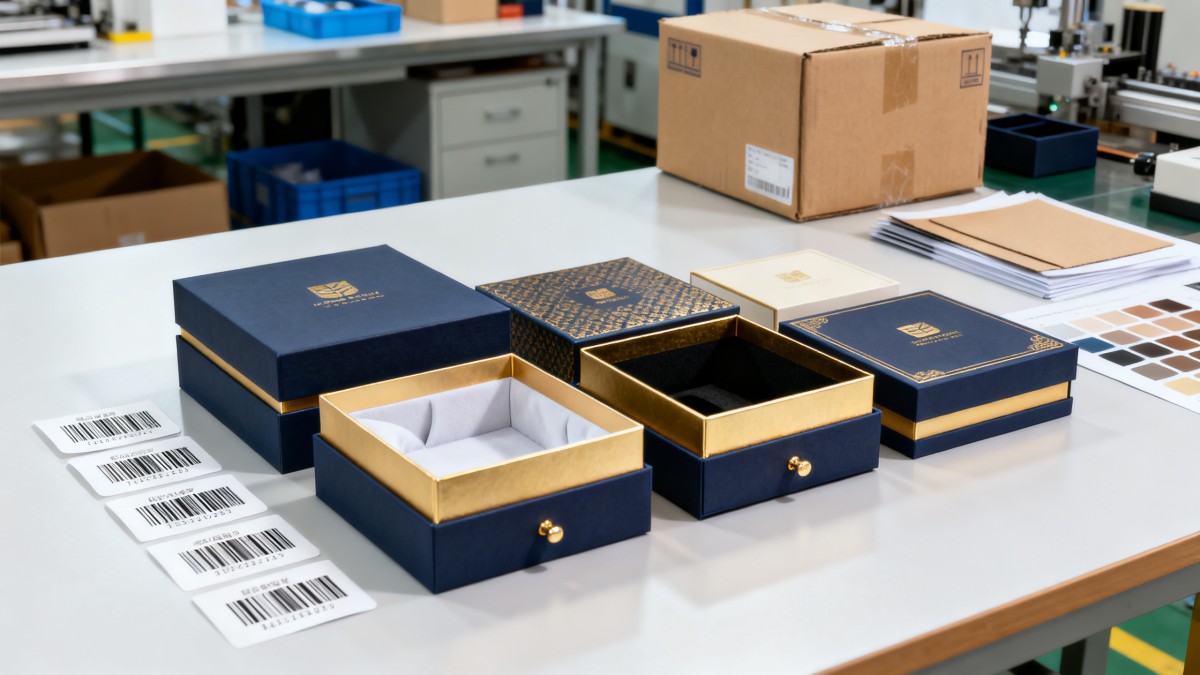
The first stage is supplier capability verification. Before checking a finished box, confirm whether the custom gift box factory can consistently control incoming materials, production settings, and export documentation. A visually attractive sample is not enough if the factory cannot maintain the same result in mass production.
Start with raw material traceability. Paperboard grade, GSM tolerance, surface paper origin, ink type, lamination film, magnet components, ribbon, foam, and inserts should all be documented. Export projects often fail not because the design is wrong, but because substitute materials are introduced without approval. A dependable custom gift box factory should provide material specifications, batch identification, and change control records.
- Board thickness, bursting strength, and compression resistance
- Color consistency against approved Pantone or master sample
- Adhesive performance under heat, humidity, and transit vibration
- Print registration, foil stamping alignment, embossing clarity, and edge finishing
- Carton marking, barcode accuracy, shipping marks, and country-of-origin labeling
- Inner and outer packaging integrity for container loading and final delivery
This first-level checklist is valuable across the broader commercial and consumer ecosystem. Luxury presentation boxes, retail launch kits, beauty packaging, confectionery boxes, electronics gifting, and seasonal campaigns all depend on repeatable manufacturing control rather than one-time sample success.
How can export buyers verify material and structural quality?
Material and structure are the foundation of export reliability. A custom gift box factory may offer many decorative options, but the real test is whether the box protects the product, keeps its shape, and arrives without corner collapse, delamination, or surface damage. This is especially important for long-distance sea freight, climate variation, and mixed-carton handling.
Structural inspection should include both dimensional accuracy and mechanical performance. Measure box length, width, height, and fit tolerance against approved drawings. Rigid boxes, folding cartons, magnetic closure boxes, drawer boxes, and shoulder-neck designs each have different critical points. Magnetic lids must align correctly, inserts must hold the product securely, and glued joints should not open under light force.
Material review should also address environmental and safety considerations. For many markets, a custom gift box factory must support testing or declarations related to heavy metals, restricted substances, recyclability claims, or FSC-related sourcing where required. If packaging is positioned as sustainable, verification should cover not only marketing claims but also actual fiber content, coating type, and separability of mixed materials.
Key structural checks before shipment
- Corner squareness and lid-body fit
- No bubbling, warping, cracking, or exposed gray board
- Stable insert placement without product movement
- Consistent magnetic pull or ribbon attachment strength
- Drop-test readiness at packed-carton level
When these checks are standardized, the custom gift box factory becomes easier to compare against alternative suppliers. It also supports better technical benchmarking, which is essential for cross-border sourcing programs that must balance visual presentation with logistics performance.
What print, finish, and labeling problems create the highest export risk?
In export packaging, many rejections come from details that appear minor at first glance. A premium-looking box can still fail if text is incorrect, barcodes do not scan, finish quality is unstable, or surface treatment rubs off during transport. That is why every custom gift box factory checklist should include both aesthetic and functional print controls.
Common visual defects include color drift, misregistered artwork, foil position shift, scratched lamination, dirty edges, glue stains, and inconsistent embossing depth. Functional defects include missing legal text, wrong SKU labeling, unreadable batch coding, and poor barcode contrast. These issues can delay customs clearance, create retail compliance problems, or trigger repacking costs at destination.
The best approach is to lock in an approved reference set: digital proof, printed color target, finishing standard, dieline, and shipping mark format. A qualified custom gift box factory should maintain in-line inspection and final AQL sampling for these points rather than relying only on end-of-line visual sorting.
How do you compare one custom gift box factory with another?
Price alone rarely identifies the right source. A lower quote can hide higher defect rates, weak carton protection, unstable lead times, or poor corrective action discipline. Comparing a custom gift box factory should involve measurable criteria across quality, speed, communication, and export readiness.
A useful comparison model includes pre-production responsiveness, sample-to-bulk consistency, inspection transparency, packaging engineering support, and documentation completeness. Ask whether the factory can provide dieline optimization, transit test recommendations, substitute risk alerts, and photo records from in-process checks. These practical details reveal whether the supplier works reactively or systematically.
It also helps to evaluate production fit. Some custom packaging suppliers are strong in handcrafted luxury boxes but weak in scaled retail replenishment. Others are efficient in volume folding cartons but less precise for premium presentation sets. The right custom gift box factory is the one whose equipment, labor model, and quality culture match the product complexity and destination market requirements.
Fast comparison checklist
- Can the factory document approved material sources?
- Does it control color and finishing from sample to mass run?
- Are carton packing methods designed for export stacking strength?
- Can it issue timely CAPA after defects are found?
- Does it understand destination labeling and compliance rules?
What are the most common mistakes during export quality control?
One common mistake is approving based only on a showroom sample. A showroom piece may be hand-finished under ideal conditions, while bulk production faces speed pressure, material lot changes, and packaging constraints. Every custom gift box factory should therefore be audited through pilot production or pre-shipment inspection, not just sample review.
Another mistake is ignoring outer carton performance. Even if the gift box itself passes visual inspection, weak master cartons, poor palletization, or insufficient void fill can damage the final shipment. Export quality control must examine the full packing chain from inner box to container loading pattern.
A third risk is unclear acceptance standards. Without defect photos, tolerances, and severity definitions, disputes become subjective. A better method is to define critical, major, and minor defects in advance. For example, wrong barcode or incorrect legal text is critical; visible glue stain on the main panel may be major; slight inner-surface mark hidden after packing may be minor. This discipline helps any custom gift box factory align production and inspection decisions with export expectations.
How should a custom gift box factory prepare for long-term export consistency?
Long-term consistency depends on process control, not one-time correction. The most reliable custom gift box factory will use approved samples, BOM control, operator training, equipment maintenance, and documented inspection checkpoints. It should also track recurring issues such as corner splitting, magnet misalignment, print rub, or odor complaints and convert them into preventive action.
For global packaging programs, it is also useful to maintain a factory scorecard. This can include on-time delivery, defect rate, claim response speed, documentation accuracy, and shipment survival performance. Over time, this data-driven method supports better sourcing resilience and aligns with broader commercial modernization goals where packaging quality influences shelf appeal, unboxing experience, and supply chain efficiency together.
In summary, selecting a custom gift box factory for export requires more than comparing price or surface appearance. The most effective checklist covers materials, structure, printing, labeling, packing, and corrective action readiness. When those controls are verified before shipment, export risk falls, supplier accountability improves, and brand presentation remains consistent across markets. Use this checklist as a practical framework for the next factory review, sample approval, or pre-shipment inspection so that every packaging run meets both aesthetic expectations and international quality standards.
News Recommendations
 How do packaging customization options affect minimum order quantities in Europe?
![51a6ab95581761cc26f4318be6520c15]()
Aris Katos
Future of Carbide Coatings
 Transom to Acquire Cree LED in Commercial Lighting Ownership Change
![51a6ab95581761cc26f4318be6520c15]()
Aris Katos
Future of Carbide Coatings
 How to plan customer flow in commercial design planning
![51a6ab95581761cc26f4318be6520c15]()
Aris Katos
Future of Carbide Coatings
 USTR Urged to Permanently Suspend Fees on China-Linked Ships
![51a6ab95581761cc26f4318be6520c15]()
Aris Katos
Future of Carbide Coatings
 How to choose comparable stores for retail benchmarking
![51a6ab95581761cc26f4318be6520c15]()
Aris Katos
Future of Carbide Coatings
 How does anchoring affect modular building wind load resistance?
![51a6ab95581761cc26f4318be6520c15]()
Aris Katos
Future of Carbide Coatings
 Amazon Raises European FBA Surcharge to 2% in Ten Markets From November 2
![51a6ab95581761cc26f4318be6520c15]()
Aris Katos
Future of Carbide Coatings
 How to verify a BPA-free test report for baby products
![51a6ab95581761cc26f4318be6520c15]()
Aris Katos
Future of Carbide Coatings
 China's Mandatory Classroom Lighting Standard GB 7793-2025 Takes Effect November 1
![51a6ab95581761cc26f4318be6520c15]()
Aris Katos
Future of Carbide Coatings
 How order volume affects the price of wholesale poly mailers
![51a6ab95581761cc26f4318be6520c15]()
Aris Katos
Future of Carbide Coatings
 US Imposes 50% Tariff on Certain Canadian PET Resin Imports
![51a6ab95581761cc26f4318be6520c15]()
Aris Katos
Future of Carbide Coatings
 How to read the maximum ratings in a semiconductor datasheet
![51a6ab95581761cc26f4318be6520c15]()
Aris Katos
Future of Carbide Coatings
 University of Maryland Develops Bio-Based Packaging to Extend Avocado and Cucumber Shelf Life
![51a6ab95581761cc26f4318be6520c15]()
Aris Katos
Future of Carbide Coatings
 How to verify a cookware manufacturer's induction compatibility claims
![51a6ab95581761cc26f4318be6520c15]()
Aris Katos
Future of Carbide Coatings
 Omdia Forecasts 11.6% Annual Growth in LED Display Revenue Through 2030
![51a6ab95581761cc26f4318be6520c15]()
Aris Katos
Future of Carbide Coatings
 How to verify a pulp molding packaging factory's production capacity
![51a6ab95581761cc26f4318be6520c15]()
Aris Katos
Future of Carbide Coatings
 Curion Survey: Half of Consumers Frustrated by Sustainable Packaging
![51a6ab95581761cc26f4318be6520c15]()
Aris Katos
Future of Carbide Coatings
 How to assess the credibility of market insight content
![51a6ab95581761cc26f4318be6520c15]()
Aris Katos
Future of Carbide Coatings
 US Removes 50% Additional Tariff on Selected Canadian Packaging Products
![51a6ab95581761cc26f4318be6520c15]()
Aris Katos
Future of Carbide Coatings
 Will a waterproof dimmable LED driver work with your existing dimmer?
![51a6ab95581761cc26f4318be6520c15]()
Aris Katos
Future of Carbide Coatings
 Charter Next Generation Raises Film PCR Use 30%, Advances Food-Grade Applications
![51a6ab95581761cc26f4318be6520c15]()
Aris Katos
Future of Carbide Coatings
 How to choose a dog harness and leash for a dog that pulls hard
![51a6ab95581761cc26f4318be6520c15]()
Aris Katos
Future of Carbide Coatings
 How to respect local customs when negotiating with overseas suppliers
![51a6ab95581761cc26f4318be6520c15]()
Aris Katos
Future of Carbide Coatings
 RFID Recycling Challenges Bring Paper-Based and Chipless Tags Into Focus
![51a6ab95581761cc26f4318be6520c15]()
Aris Katos
Future of Carbide Coatings
 How to choose commercial lighting for offices that reduces glare
![51a6ab95581761cc26f4318be6520c15]()
Aris Katos
Future of Carbide Coatings
 Queue Launches Fully Automated Robotic Pharmacy Kiosk for 30-Second Dispensing
![51a6ab95581761cc26f4318be6520c15]()
Aris Katos
Future of Carbide Coatings
 Can your supermarket store fixtures supplier meet your opening date?
![51a6ab95581761cc26f4318be6520c15]()
Aris Katos
Future of Carbide Coatings
 Shopify POS UI Extensions 2026-10 Adds Virtual Lists and Custom Row Templates
![51a6ab95581761cc26f4318be6520c15]()
Aris Katos
Future of Carbide Coatings
 How to assess smart office furniture suppliers’ North American support
![51a6ab95581761cc26f4318be6520c15]()
Aris Katos
Future of Carbide Coatings
 Aqara Launches Smart Lighting Range to Advance AI Spatial Intelligence
![51a6ab95581761cc26f4318be6520c15]()
Aris Katos
Future of Carbide Coatings
 How to assess demand forecasts in a lighting intelligence report
![51a6ab95581761cc26f4318be6520c15]()
Aris Katos
Future of Carbide Coatings
 Billerud推出PharmaKraft纤维基医药包装材料
![51a6ab95581761cc26f4318be6520c15]()
Aris Katos
Future of Carbide Coatings
 How to assess supplier reliability in global supply chain sourcing
![51a6ab95581761cc26f4318be6520c15]()
Aris Katos
Future of Carbide Coatings
 Omdia Forecasts 11.6% CAGR for Global LED Video Display Market in 2026–2030
![51a6ab95581761cc26f4318be6520c15]()
Aris Katos
Future of Carbide Coatings
 How to verify an LFGB testing laboratory's accreditation scope
![51a6ab95581761cc26f4318be6520c15]()
Aris Katos
Future of Carbide Coatings
 How to assess a workplace interior supplier's installation scope
![51a6ab95581761cc26f4318be6520c15]()
Aris Katos
Future of Carbide Coatings
 What records are needed for an ISO 9001 furniture factory audit?
![51a6ab95581761cc26f4318be6520c15]()
Aris Katos
Future of Carbide Coatings
 How to choose AI marketing tools that work with your existing CRM
![51a6ab95581761cc26f4318be6520c15]()
Aris Katos
Future of Carbide Coatings
 Do freight costs erase savings when buying retail fixtures wholesale?
![51a6ab95581761cc26f4318be6520c15]()
Aris Katos
Future of Carbide Coatings







































