
ANSI BIFMA office chair safety tests reveal more than weight limits
Time
Click Count
ANSI/BIFMA office chair safety is about far more than weight capacity: it reveals how seating performs under repeated motion, ergonomic stress, and real workplace use. For buyers comparing a gaming office chair manufacturer, contract furniture supplier, or coworking space furniture solutions, these benchmarks help connect compliance, ergonomic workplace wellness, and long-term procurement value across modern commercial interiors.
Why ANSI/BIFMA office chair safety tests matter beyond static load claims
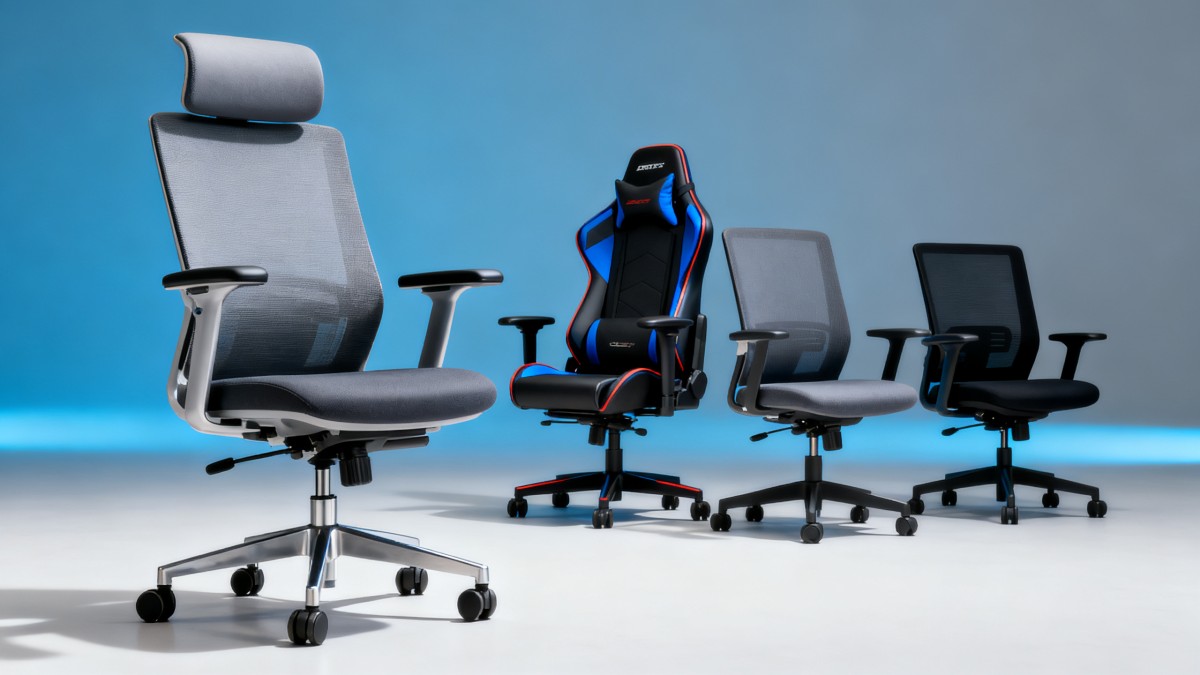
Many buyers still reduce office chair safety to a single question: how much weight can the chair hold? In commercial procurement, that approach is too narrow. ANSI/BIFMA office chair safety tests are designed to evaluate repeated use, structural endurance, stability, adjustment reliability, and user interaction over time. For operators managing offices, retail support areas, coworking lounges, and project-based workstations, these tests provide a more realistic indicator of lifecycle performance.
A chair may survive a one-time static load and still fail in daily use after 6–12 months if the tilt system loosens, the base becomes unstable, or armrests shift under normal task pressure. That is why experienced sourcing teams assess more than headline capacity. They look at repetitive seat loading, backrest durability, caster behavior, and the performance of moving parts under hundreds or thousands of cycles, depending on the test method and intended use category.
For information researchers and business evaluators, ANSI/BIFMA compliance also acts as a filtering tool. It helps distinguish between chairs built for commercial duty and chairs marketed with consumer-style claims. In mixed-use environments where staff rotate across shifts, usage frequency can exceed 8–12 hours per day. In those conditions, the gap between nominal weight capacity and real ergonomic resilience becomes highly visible.
G-BCE approaches this issue from a benchmarking perspective. Instead of treating compliance as a checkbox, we map safety and usability indicators to commercial space planning, supply chain risk, and specification consistency. That matters when global buyers must compare Asian manufacturing output, design intent, and international standard alignment across 3 core decision layers: product safety, user experience, and procurement durability.
What these tests typically help buyers judge
- Whether the chair structure can support repeated sitting, leaning, swiveling, and rolling rather than only a one-point load event.
- Whether adjustment systems such as height lift, tilt tension, and arm support remain functional through normal workplace use cycles.
- Whether the model is appropriate for executive offices, open-plan workstations, training rooms, reception back offices, or high-turnover coworking spaces.
- Whether the procurement team can justify a higher upfront cost based on lower replacement frequency across 2–5 year planning horizons.
In practical terms, ANSI/BIFMA office chair safety turns a vague product promise into a more measurable sourcing reference. For commercial furniture and fixtures, that reference improves communication among end users, specifiers, and procurement teams who need fewer surprises after installation.
Which test categories reveal real workplace durability?
When buyers compare an ergonomic task chair with a gaming office chair manufacturer offer or a lower-cost import alternative, the most useful question is not simply whether a standard is mentioned. It is which aspects of performance the testing actually covers. The most relevant categories usually relate to seat loading, back loading, base stability, arm strength, caster or mobility behavior, and the endurance of mechanisms under repeated adjustments.
This matters because different commercial environments stress chairs differently. A finance office may see 1 primary user for 7–9 hours daily. A training room may experience 20–40 users per week. A coworking operator may face constant seat turnover, intermittent misuse, and cleaning cycles that accelerate wear. The same chair specification does not perform equally well across those conditions unless its construction matches the use case.
The table below summarizes the practical meaning of common office chair safety assessment areas for commercial buyers. It is not a substitute for a formal test report, but it helps connect technical categories with procurement judgment and operational risk.
The key takeaway is that ANSI/BIFMA office chair safety gives buyers a multi-point reading, not a single pass-fail label. If the chair will be used across 2 or more flooring types, by multiple departments, or in shifts extending beyond a standard workday, these categories become central to specification quality.
How to interpret test relevance by environment
Low-rotation executive or assigned desk use
In assigned seating, comfort tuning and back support consistency often matter as much as basic safety. Buyers should verify adjustment ranges, seat depth suitability, and mechanism quality because users tend to notice long-session fatigue before they notice structural issues.
High-rotation coworking or training environments
In these spaces, repeatability and abuse tolerance become more important. Arms, casters, lift columns, and tilt systems usually face greater wear within 3–6 months than in conventional assigned office layouts.
Hybrid retail-office back-of-house settings
Here, operators often need compact footprints, easy cleaning, and stable movement on mixed flooring. A chair with suitable safety performance but poor mobility matching can still create service inefficiency or floor damage.
How should buyers compare office chairs for commercial, gaming, and coworking use?
A frequent sourcing mistake is to compare chairs only by appearance, upholstery, or quoted unit cost. In reality, contract furniture supplier proposals, gaming office chair manufacturer catalogs, and coworking space furniture solutions often target different user behaviors. The visual overlap can be misleading. The performance priorities are not identical, and ANSI/BIFMA office chair safety helps expose those differences.
Gaming-style chairs may emphasize headrest design, bold styling, and consumer appeal. Task chairs for commercial spaces usually prioritize posture variation, durability over repeated cycles, and easier maintenance across dozens or hundreds of units. Coworking chairs sit between these categories, often needing commercial endurance with broad user-fit tolerances because 1 seat may support users of different body types throughout the day.
The comparison table below is useful when procurement teams must narrow options during a 2–4 week specification review or pre-bid evaluation stage. It focuses on selection logic rather than brand-specific claims.
For business evaluators, the best choice often depends on how many users per seat are expected, whether the project prioritizes brand image or operational longevity, and how quickly replacement parts can be sourced. A lower-cost chair that needs early replacement across 50–200 units may cost more than a better-specified option over a 24–36 month period.
Three selection questions that improve comparison accuracy
- Will the chair be used by one assigned person or by 3–5 different users per week? Multi-user environments need broader adjustment tolerance and tougher components.
- Is the project image-driven, productivity-driven, or maintenance-driven? The answer changes which trade-offs are acceptable.
- Can the supplier document compliance, parts consistency, and post-delivery support in a way that matches commercial rollout risk?
This is where G-BCE adds value. We connect product benchmarking to wider commercial ecosystem decisions, helping buyers read office seating not as isolated furniture but as part of space performance, supply chain continuity, and user experience strategy.
What should procurement teams check before placing an order?
Procurement teams often face compressed timelines, uneven supplier documentation, and unclear usage forecasts. In these conditions, ANSI/BIFMA office chair safety should be one of several filters, not the only one. A practical commercial review usually includes 5 key checkpoints: compliance evidence, mechanism consistency, material suitability, maintenance planning, and delivery readiness.
Compliance evidence means more than a logo on a product page. Buyers should request the relevant test scope, identify whether the reviewed configuration matches the ordered specification, and confirm whether optional arms, base types, or upholstery changes affect the tested setup. Even small specification deviations can matter in project environments.
Material suitability is another common blind spot. Mesh, foam, PU, fabric, and frame finishes perform differently in high-contact settings, climate-controlled offices, and spaces with frequent cleaning. For example, a chair that looks acceptable in a showroom may age poorly in a 6-day-per-week shared office if the seat surface and moving joints are not chosen for turnover intensity.
Delivery readiness also deserves attention. Standard commercial lead times may range from 2–8 weeks depending on quantity, finish options, and packaging requirements. For chain projects or phased fit-outs, procurement should align sample approval, pilot placement, and bulk release into a 3-stage process rather than treating all units as a single event.
A practical procurement checklist
- Confirm the intended use profile: assigned desk, meeting room, training room, coworking zone, or mixed-use back office.
- Review ANSI/BIFMA office chair safety documentation and verify that the tested configuration aligns with the quoted model.
- Check adjustment range, especially seat height, arm movement, lumbar behavior, and tilt control usability for broad user groups.
- Match caster and base options to flooring conditions such as carpet tile, vinyl, laminate, or mixed surfaces.
- Plan post-installation support, including spare components, maintenance response, and replacement policy for project quantities.
Common sourcing misconception
A frequent misconception is that a chair rated for a certain weight automatically suits every workplace. In reality, durability depends on movement pattern, usage frequency, adjustment complexity, floor interaction, and user variability. A chair can meet a baseline requirement and still be a weak fit for a demanding commercial environment.
How do compliance, ergonomics, and total value connect in commercial interiors?
The strongest procurement decisions link ANSI/BIFMA office chair safety to broader commercial outcomes. Safety supports risk reduction, but ergonomics supports occupancy quality, workforce comfort, and daily productivity. When these two factors align, buyers are in a better position to defend budget choices to finance teams, facility managers, and project stakeholders.
In commercial interiors, value should be assessed over a realistic lifecycle window such as 24, 36, or 60 months. Upfront price matters, but so do complaint rates, replacement intervals, aesthetic retention, and whether the chair continues to support a coherent workplace experience. This is especially relevant in premium brand environments, showroom-linked offices, and customer-facing workspace concepts where furniture quality affects perception as well as function.
G-BCE’s cross-sector perspective is useful here because office chairs do not operate in isolation. They sit within a wider system of commercial furniture and fixtures, smart space planning, lighting, materials, and sourcing strategy. A chair that meets technical benchmarks but fails the visual, maintenance, or supply continuity requirements of a global rollout can still create downstream cost.
For sourcing directors and commercial architects, the most resilient decision model often combines 4 evaluation layers: standards alignment, user-fit appropriateness, operating environment compatibility, and supply chain consistency. That framework helps convert a product comparison into a business case.
FAQ: practical questions buyers often ask
Does ANSI/BIFMA office chair safety guarantee ergonomic comfort?
No. It indicates that the chair has been evaluated against relevant safety and durability criteria, but ergonomic comfort still depends on seat geometry, back profile, adjustment range, user body variation, and time spent seated. A compliant chair may still feel unsuitable if the fit range is too narrow.
Are gaming office chair manufacturer products suitable for commercial projects?
They can be, especially in themed environments, esports areas, or creative brand spaces. However, buyers should verify whether the model supports sustained commercial use, maintenance needs, and broader user demographics. Visual impact alone should not drive specification.
What is a reasonable evaluation process before a bulk order?
A practical process usually includes 3 steps: document review, physical sample assessment, and pilot deployment. For medium or large orders, a 7–15 day field check can reveal issues with mobility, comfort, and mechanism usability that are not obvious in static presentations.
How important is compatibility with flooring and cleaning routines?
Very important. Incorrect caster-floor pairing can increase noise, wear, and user effort. Frequent cleaning can also accelerate deterioration in surfaces or joints if materials are not chosen for the actual environment.
Why choose G-BCE for office chair benchmarking and sourcing evaluation?
G-BCE helps buyers move beyond isolated product claims and toward evidence-based commercial decision making. Our advantage is not limited to furniture knowledge alone. We connect office chair safety, ergonomic workplace wellness, and procurement logic to the wider modernization of commercial spaces and the optimization of global supply chains.
For information researchers, we clarify what ANSI/BIFMA office chair safety actually indicates and where its limits begin. For users and operators, we interpret how test categories relate to daily performance. For procurement teams, we help compare contract furniture supplier options, gaming office chair manufacturer offers, and coworking space furniture solutions in a structured way. For business evaluators, we translate technical details into commercial risk and lifecycle value.
You can contact G-BCE for targeted support on specification review, product selection, supplier comparison, compliance interpretation, sample evaluation, delivery planning, and project-level sourcing alignment. If you need to confirm adjustment parameters, compare tested configurations, evaluate lead time ranges, discuss custom commercial finishes, or prepare a benchmark-based quotation discussion, those are exactly the conversations we are built to support.
When office seating must satisfy safety, design, operational endurance, and supply chain reliability at the same time, generic buying shortcuts stop working. A more technical and commercially grounded review can reduce replacement risk, improve user satisfaction, and strengthen long-term project outcomes. That is where G-BCE can add immediate value.
News Recommendations
 How to verify Zigbee compatibility when sourcing lighting sensors
![51a6ab95581761cc26f4318be6520c15]()
Aris Katos
Future of Carbide Coatings
 How do packaging customization options affect minimum order quantities in Europe?
![51a6ab95581761cc26f4318be6520c15]()
Aris Katos
Future of Carbide Coatings
 Transom to Acquire Cree LED in Commercial Lighting Ownership Change
![51a6ab95581761cc26f4318be6520c15]()
Aris Katos
Future of Carbide Coatings
 How to plan customer flow in commercial design planning
![51a6ab95581761cc26f4318be6520c15]()
Aris Katos
Future of Carbide Coatings
 USTR Urged to Permanently Suspend Fees on China-Linked Ships
![51a6ab95581761cc26f4318be6520c15]()
Aris Katos
Future of Carbide Coatings
 How to choose comparable stores for retail benchmarking
![51a6ab95581761cc26f4318be6520c15]()
Aris Katos
Future of Carbide Coatings
 How does anchoring affect modular building wind load resistance?
![51a6ab95581761cc26f4318be6520c15]()
Aris Katos
Future of Carbide Coatings
 Amazon Raises European FBA Surcharge to 2% in Ten Markets From November 2
![51a6ab95581761cc26f4318be6520c15]()
Aris Katos
Future of Carbide Coatings
 How to verify a BPA-free test report for baby products
![51a6ab95581761cc26f4318be6520c15]()
Aris Katos
Future of Carbide Coatings
 China's Mandatory Classroom Lighting Standard GB 7793-2025 Takes Effect November 1
![51a6ab95581761cc26f4318be6520c15]()
Aris Katos
Future of Carbide Coatings
 How order volume affects the price of wholesale poly mailers
![51a6ab95581761cc26f4318be6520c15]()
Aris Katos
Future of Carbide Coatings
 US Imposes 50% Tariff on Certain Canadian PET Resin Imports
![51a6ab95581761cc26f4318be6520c15]()
Aris Katos
Future of Carbide Coatings
 How to read the maximum ratings in a semiconductor datasheet
![51a6ab95581761cc26f4318be6520c15]()
Aris Katos
Future of Carbide Coatings
 University of Maryland Develops Bio-Based Packaging to Extend Avocado and Cucumber Shelf Life
![51a6ab95581761cc26f4318be6520c15]()
Aris Katos
Future of Carbide Coatings
 How to verify a cookware manufacturer's induction compatibility claims
![51a6ab95581761cc26f4318be6520c15]()
Aris Katos
Future of Carbide Coatings
 Omdia Forecasts 11.6% Annual Growth in LED Display Revenue Through 2030
![51a6ab95581761cc26f4318be6520c15]()
Aris Katos
Future of Carbide Coatings
 How to verify a pulp molding packaging factory's production capacity
![51a6ab95581761cc26f4318be6520c15]()
Aris Katos
Future of Carbide Coatings
 Curion Survey: Half of Consumers Frustrated by Sustainable Packaging
![51a6ab95581761cc26f4318be6520c15]()
Aris Katos
Future of Carbide Coatings
 How to assess the credibility of market insight content
![51a6ab95581761cc26f4318be6520c15]()
Aris Katos
Future of Carbide Coatings
 US Removes 50% Additional Tariff on Selected Canadian Packaging Products
![51a6ab95581761cc26f4318be6520c15]()
Aris Katos
Future of Carbide Coatings
 Will a waterproof dimmable LED driver work with your existing dimmer?
![51a6ab95581761cc26f4318be6520c15]()
Aris Katos
Future of Carbide Coatings
 Charter Next Generation Raises Film PCR Use 30%, Advances Food-Grade Applications
![51a6ab95581761cc26f4318be6520c15]()
Aris Katos
Future of Carbide Coatings
 How to choose a dog harness and leash for a dog that pulls hard
![51a6ab95581761cc26f4318be6520c15]()
Aris Katos
Future of Carbide Coatings
 How to respect local customs when negotiating with overseas suppliers
![51a6ab95581761cc26f4318be6520c15]()
Aris Katos
Future of Carbide Coatings
 RFID Recycling Challenges Bring Paper-Based and Chipless Tags Into Focus
![51a6ab95581761cc26f4318be6520c15]()
Aris Katos
Future of Carbide Coatings
 How to choose commercial lighting for offices that reduces glare
![51a6ab95581761cc26f4318be6520c15]()
Aris Katos
Future of Carbide Coatings
 Queue Launches Fully Automated Robotic Pharmacy Kiosk for 30-Second Dispensing
![51a6ab95581761cc26f4318be6520c15]()
Aris Katos
Future of Carbide Coatings
 Can your supermarket store fixtures supplier meet your opening date?
![51a6ab95581761cc26f4318be6520c15]()
Aris Katos
Future of Carbide Coatings
 Shopify POS UI Extensions 2026-10 Adds Virtual Lists and Custom Row Templates
![51a6ab95581761cc26f4318be6520c15]()
Aris Katos
Future of Carbide Coatings
 How to assess smart office furniture suppliers’ North American support
![51a6ab95581761cc26f4318be6520c15]()
Aris Katos
Future of Carbide Coatings
 Aqara Launches Smart Lighting Range to Advance AI Spatial Intelligence
![51a6ab95581761cc26f4318be6520c15]()
Aris Katos
Future of Carbide Coatings
 How to assess demand forecasts in a lighting intelligence report
![51a6ab95581761cc26f4318be6520c15]()
Aris Katos
Future of Carbide Coatings
 Billerud推出PharmaKraft纤维基医药包装材料
![51a6ab95581761cc26f4318be6520c15]()
Aris Katos
Future of Carbide Coatings
 How to assess supplier reliability in global supply chain sourcing
![51a6ab95581761cc26f4318be6520c15]()
Aris Katos
Future of Carbide Coatings
 Omdia Forecasts 11.6% CAGR for Global LED Video Display Market in 2026–2030
![51a6ab95581761cc26f4318be6520c15]()
Aris Katos
Future of Carbide Coatings
 How to verify an LFGB testing laboratory's accreditation scope
![51a6ab95581761cc26f4318be6520c15]()
Aris Katos
Future of Carbide Coatings
 How to assess a workplace interior supplier's installation scope
![51a6ab95581761cc26f4318be6520c15]()
Aris Katos
Future of Carbide Coatings
 What records are needed for an ISO 9001 furniture factory audit?
![51a6ab95581761cc26f4318be6520c15]()
Aris Katos
Future of Carbide Coatings
 How to choose AI marketing tools that work with your existing CRM
![51a6ab95581761cc26f4318be6520c15]()
Aris Katos
Future of Carbide Coatings







































