
What High-End Brands Expect From Store Fixtures
Time
Click Count
What do high-end brands expect from store fixtures today? In practice, they are not looking for “display units” alone. They expect fixtures to protect brand image, support daily operations, integrate with retail technology, meet strict durability and compliance standards, and align with sustainability goals. For sourcing teams, store operators, and commercial project planners, this means fixture decisions are no longer only about appearance—they are about performance, risk control, lifecycle cost, and the overall customer experience.
For information researchers and operators, the key takeaway is clear: premium brands judge store fixtures by how well they combine aesthetics, function, consistency, and long-term reliability. A beautiful fixture that fails in maintenance, lighting compatibility, digital integration, or material durability will not meet high-end expectations. The real standard is whether the fixture helps create a seamless, elevated, and operationally efficient retail environment.
What high-end brands actually look for in store fixtures
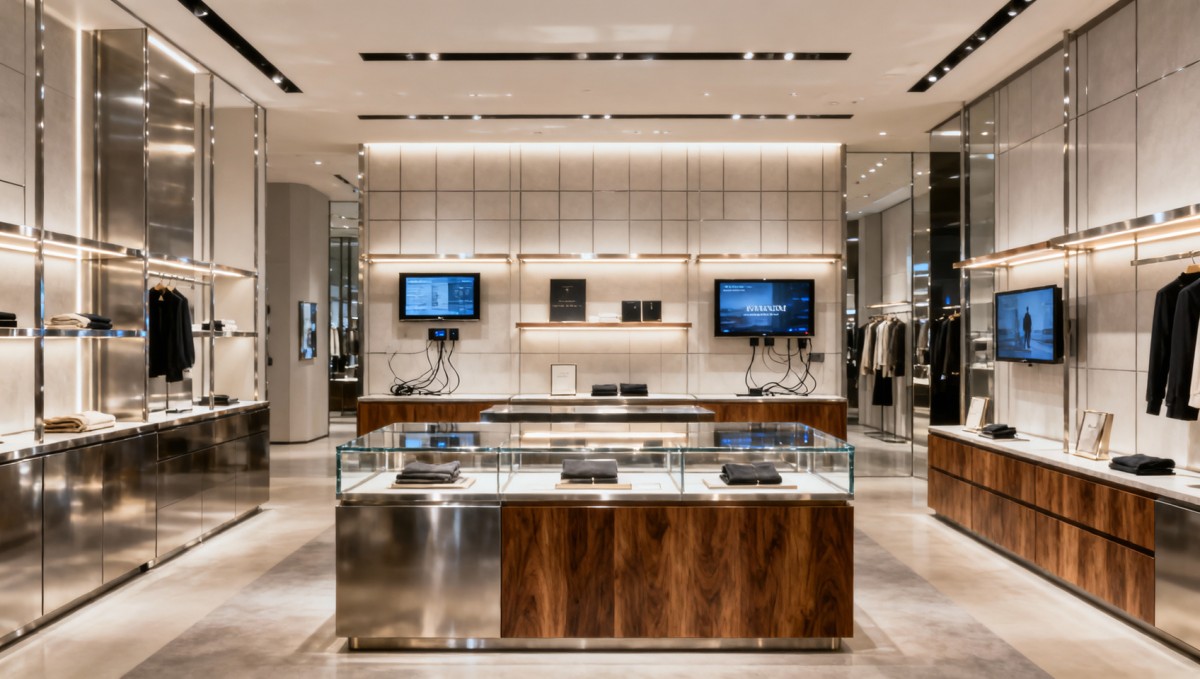
High-end brands usually evaluate store fixtures through a broader lens than many suppliers expect. They want fixtures that do four jobs at once: present the product beautifully, reinforce the brand story, improve store efficiency, and hold up under real commercial use.
In most premium retail environments, the main expectations include:
- Brand consistency: Fixtures must reflect the same visual language across locations, markets, and store formats.
- Premium material quality: Finishes, edges, hardware, textures, and joinery are closely inspected because they directly affect brand perception.
- Operational practicality: Staff need fixtures that are easy to clean, restock, adjust, and maintain.
- Technology readiness: Modern retail often requires support for POS terminals, digital signage, lighting systems, charging points, sensors, or smart inventory tools.
- Durability in high-traffic settings: Luxury does not excuse fragility. Premium brands expect strong long-term performance.
- Sustainability and compliance: Material sourcing, low-emission finishes, and adherence to standards can influence vendor selection.
This is why store fixtures for high-end brands are often treated as strategic assets rather than simple fit-out components.
Why aesthetics alone are no longer enough
Many buyers begin with appearance, but high-end brands quickly move beyond surface design. A fixture may look elegant in a showroom and still fail in a live retail environment. Premium operators know that visual quality must be supported by structural quality and day-to-day usability.
For example, a display table with a refined finish may still be rejected if it scratches easily, shows fingerprints too quickly, cannot support integrated lighting, or becomes difficult to service. Similarly, a wall fixture may look impressive but create problems if signage is hard to update or if merchandising adjustments require too much labor.
High-end brands therefore assess questions such as:
- Will the fixture still look premium after months of heavy use?
- Can store staff operate it efficiently without damaging finishes?
- Does it support changing campaigns, seasonal collections, or product launches?
- Can it integrate with lighting, digital display, or POS infrastructure without visual clutter?
In other words, premium fixture design is expected to balance beauty with resilience and flexibility.
How premium brands evaluate quality in materials and construction
Material quality is one of the fastest ways a high-end brand judges whether a fixture supplier understands premium retail. This goes beyond choosing expensive materials. Brands want materials that are appropriate, consistent, safe, and durable in real use conditions.
Common evaluation points include:
- Surface performance: resistance to scratches, stains, moisture, UV exposure, and cleaning chemicals
- Finish consistency: color matching across production batches and locations
- Touch and feel: tactile quality matters in luxury and premium environments
- Edge detailing and joinery: poor seams or visible inconsistencies quickly weaken brand perception
- Hardware reliability: hinges, fasteners, concealed supports, and mobility components must perform smoothly over time
For sourcing teams, this means samples alone are not enough. High-end brands often need benchmark data, usage testing, and confidence that the final production run will match the approved prototype. This is especially important in global retail rollouts where even small inconsistencies can disrupt a premium brand image.
Why retail technology integration matters more than ever
Today’s commercial spaces increasingly combine physical presentation with digital intelligence. As a result, store fixtures are expected to work with technology, not compete with it.
Depending on the retail format, this can include support for:
- integrated POS terminals and cable management
- digital price labels or smart signage
- embedded lighting controls
- customer interaction screens
- security sensors and anti-theft systems
- charging points or power access for staff and customers
High-end brands do not want visible wiring, awkward retrofits, or add-on technology that disrupts the store’s aesthetic. They expect fixtures to be planned from the beginning with clean technical integration in mind.
This is especially important for operators. A fixture that lacks proper access panels, ventilation, modularity, or cable routing may create expensive installation delays and maintenance problems later. In premium retail, poor technical planning can undermine both visual quality and operational continuity.
What operators care about: maintenance, usability, and lifecycle cost
For store users and operators, fixture value is often proven after installation. A premium-looking unit may create constant friction if it is hard to clean, difficult to replenish, or expensive to repair. This is why practical usability is a major part of what high-end brands expect, even if it is less visible to customers.
Important operational considerations include:
- Ease of cleaning: surfaces should resist marks and support routine maintenance
- Fast merchandising updates: shelves, holders, and display elements should be adjustable without special complexity
- Access for repair: lighting, digital elements, and hardware should be serviceable
- Part replacement: modular parts help reduce downtime and replacement cost
- Stability and safety: fixtures must perform reliably in busy retail traffic
Luxury and premium brands often think in lifecycle terms. They may accept a higher upfront cost if the fixture reduces maintenance issues, preserves its appearance longer, and avoids frequent replacement. This is an important point for procurement teams trying to balance budget pressure with long-term retail quality.
How sustainability influences fixture expectations
Sustainability has become a practical requirement, not just a branding message. High-end brands increasingly want store fixtures that support environmental targets while still meeting design and performance standards.
This may include:
- responsibly sourced wood or recycled-content materials
- low-VOC coatings and adhesives
- designs that reduce waste in manufacturing and installation
- fixtures built for disassembly, refurbishment, or partial replacement
- packaging and logistics strategies that reduce damage and shipping inefficiency
However, premium brands are rarely satisfied with vague sustainability claims. They usually want proof, traceability, and practical balance. A sustainable fixture still has to look refined, perform consistently, and fit the brand environment. The expectation is not “green at any cost,” but sustainable without sacrificing brand standards.
How to judge whether a fixture solution is truly suitable for a high-end brand
For researchers, sourcing teams, and operators, the best way to evaluate a fixture solution is to move beyond catalog images and ask structured questions. A useful assessment should cover visual fit, technical fit, commercial fit, and operational fit.
Consider the following checklist:
- Brand fit: Does the fixture reflect the intended brand positioning across markets?
- Quality control: Can the supplier deliver consistent finishes and dimensions at scale?
- Compliance: Are relevant standards, safety requirements, and material certifications addressed?
- Technology compatibility: Is the fixture prepared for lighting, signage, and POS integration?
- Operational performance: Will staff be able to clean, restock, and maintain it efficiently?
- Lifecycle economics: What are the likely repair, replacement, and maintenance costs over time?
- Sustainability credibility: Are environmental claims supported by real material and process data?
This kind of evaluation helps reduce the gap between design approval and real-world performance. It also helps buyers avoid a common mistake: choosing fixtures that look premium in concept but fail in rollout, operation, or long-term brand consistency.
Final takeaway: premium store fixtures are expected to perform, not just impress
What high-end brands expect from store fixtures is ultimately straightforward: they want fixtures that elevate the retail experience while supporting operational excellence. Appearance matters, but it is only the starting point. The real expectation is a combination of refined design, durable materials, retail technology integration, maintainability, sustainability, and reliable execution across locations.
For information researchers and store operators, this means the smartest fixture decisions come from evaluating performance as seriously as aesthetics. A successful fixture program should help the brand look premium, operate smoothly, adapt to modern retail needs, and maintain value over time. In today’s marketplace, that is what truly defines a high-end fixture solution.
News Recommendations
 How to verify Zigbee compatibility when sourcing lighting sensors
![51a6ab95581761cc26f4318be6520c15]()
Aris Katos
Future of Carbide Coatings
 How do packaging customization options affect minimum order quantities in Europe?
![51a6ab95581761cc26f4318be6520c15]()
Aris Katos
Future of Carbide Coatings
 Transom to Acquire Cree LED in Commercial Lighting Ownership Change
![51a6ab95581761cc26f4318be6520c15]()
Aris Katos
Future of Carbide Coatings
 How to plan customer flow in commercial design planning
![51a6ab95581761cc26f4318be6520c15]()
Aris Katos
Future of Carbide Coatings
 USTR Urged to Permanently Suspend Fees on China-Linked Ships
![51a6ab95581761cc26f4318be6520c15]()
Aris Katos
Future of Carbide Coatings
 How to choose comparable stores for retail benchmarking
![51a6ab95581761cc26f4318be6520c15]()
Aris Katos
Future of Carbide Coatings
 How does anchoring affect modular building wind load resistance?
![51a6ab95581761cc26f4318be6520c15]()
Aris Katos
Future of Carbide Coatings
 Amazon Raises European FBA Surcharge to 2% in Ten Markets From November 2
![51a6ab95581761cc26f4318be6520c15]()
Aris Katos
Future of Carbide Coatings
 How to verify a BPA-free test report for baby products
![51a6ab95581761cc26f4318be6520c15]()
Aris Katos
Future of Carbide Coatings
 China's Mandatory Classroom Lighting Standard GB 7793-2025 Takes Effect November 1
![51a6ab95581761cc26f4318be6520c15]()
Aris Katos
Future of Carbide Coatings
 How order volume affects the price of wholesale poly mailers
![51a6ab95581761cc26f4318be6520c15]()
Aris Katos
Future of Carbide Coatings
 US Imposes 50% Tariff on Certain Canadian PET Resin Imports
![51a6ab95581761cc26f4318be6520c15]()
Aris Katos
Future of Carbide Coatings
 How to read the maximum ratings in a semiconductor datasheet
![51a6ab95581761cc26f4318be6520c15]()
Aris Katos
Future of Carbide Coatings
 University of Maryland Develops Bio-Based Packaging to Extend Avocado and Cucumber Shelf Life
![51a6ab95581761cc26f4318be6520c15]()
Aris Katos
Future of Carbide Coatings
 How to verify a cookware manufacturer's induction compatibility claims
![51a6ab95581761cc26f4318be6520c15]()
Aris Katos
Future of Carbide Coatings
 Omdia Forecasts 11.6% Annual Growth in LED Display Revenue Through 2030
![51a6ab95581761cc26f4318be6520c15]()
Aris Katos
Future of Carbide Coatings
 How to verify a pulp molding packaging factory's production capacity
![51a6ab95581761cc26f4318be6520c15]()
Aris Katos
Future of Carbide Coatings
 Curion Survey: Half of Consumers Frustrated by Sustainable Packaging
![51a6ab95581761cc26f4318be6520c15]()
Aris Katos
Future of Carbide Coatings
 How to assess the credibility of market insight content
![51a6ab95581761cc26f4318be6520c15]()
Aris Katos
Future of Carbide Coatings
 US Removes 50% Additional Tariff on Selected Canadian Packaging Products
![51a6ab95581761cc26f4318be6520c15]()
Aris Katos
Future of Carbide Coatings
 Will a waterproof dimmable LED driver work with your existing dimmer?
![51a6ab95581761cc26f4318be6520c15]()
Aris Katos
Future of Carbide Coatings
 Charter Next Generation Raises Film PCR Use 30%, Advances Food-Grade Applications
![51a6ab95581761cc26f4318be6520c15]()
Aris Katos
Future of Carbide Coatings
 How to choose a dog harness and leash for a dog that pulls hard
![51a6ab95581761cc26f4318be6520c15]()
Aris Katos
Future of Carbide Coatings
 How to respect local customs when negotiating with overseas suppliers
![51a6ab95581761cc26f4318be6520c15]()
Aris Katos
Future of Carbide Coatings
 RFID Recycling Challenges Bring Paper-Based and Chipless Tags Into Focus
![51a6ab95581761cc26f4318be6520c15]()
Aris Katos
Future of Carbide Coatings
 How to choose commercial lighting for offices that reduces glare
![51a6ab95581761cc26f4318be6520c15]()
Aris Katos
Future of Carbide Coatings
 Queue Launches Fully Automated Robotic Pharmacy Kiosk for 30-Second Dispensing
![51a6ab95581761cc26f4318be6520c15]()
Aris Katos
Future of Carbide Coatings
 Can your supermarket store fixtures supplier meet your opening date?
![51a6ab95581761cc26f4318be6520c15]()
Aris Katos
Future of Carbide Coatings
 Shopify POS UI Extensions 2026-10 Adds Virtual Lists and Custom Row Templates
![51a6ab95581761cc26f4318be6520c15]()
Aris Katos
Future of Carbide Coatings
 How to assess smart office furniture suppliers’ North American support
![51a6ab95581761cc26f4318be6520c15]()
Aris Katos
Future of Carbide Coatings
 Aqara Launches Smart Lighting Range to Advance AI Spatial Intelligence
![51a6ab95581761cc26f4318be6520c15]()
Aris Katos
Future of Carbide Coatings
 How to assess demand forecasts in a lighting intelligence report
![51a6ab95581761cc26f4318be6520c15]()
Aris Katos
Future of Carbide Coatings
 Billerud推出PharmaKraft纤维基医药包装材料
![51a6ab95581761cc26f4318be6520c15]()
Aris Katos
Future of Carbide Coatings
 How to assess supplier reliability in global supply chain sourcing
![51a6ab95581761cc26f4318be6520c15]()
Aris Katos
Future of Carbide Coatings
 Omdia Forecasts 11.6% CAGR for Global LED Video Display Market in 2026–2030
![51a6ab95581761cc26f4318be6520c15]()
Aris Katos
Future of Carbide Coatings
 How to verify an LFGB testing laboratory's accreditation scope
![51a6ab95581761cc26f4318be6520c15]()
Aris Katos
Future of Carbide Coatings
 How to assess a workplace interior supplier's installation scope
![51a6ab95581761cc26f4318be6520c15]()
Aris Katos
Future of Carbide Coatings
 What records are needed for an ISO 9001 furniture factory audit?
![51a6ab95581761cc26f4318be6520c15]()
Aris Katos
Future of Carbide Coatings
 How to choose AI marketing tools that work with your existing CRM
![51a6ab95581761cc26f4318be6520c15]()
Aris Katos
Future of Carbide Coatings







































