SCFI Falls Below 1,200 as East China-US West Rates Drop 18%
Time
Click Count
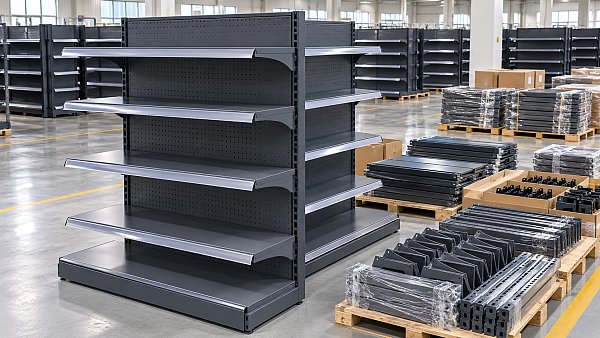
On June 26, 2026, the Shanghai Containerized Freight Index (SCFI) closed at 1,187, its lowest level since October 2025, while East China-US West Coast rates fell to $1,840/FEU, down 18.3% week on week. For exporters and overseas buyers, this is worth close attention because lower freight costs, the end of the Los Angeles port strike, and faster empty-container returns together point to a near-term shipping window for bulky, low-margin categories such as retail shelving and fixtures and gifts and lifestyle products.

What the latest freight data confirms
The confirmed facts are limited but clear. The SCFI reading on June 26, 2026 was 1,187. This marked the index's lowest point since October 2025. Within that move, the East China-US West Coast lane was quoted at $1,840/FEU, representing a week-on-week decline of 18.3%.
The available information also states that the Los Angeles port strike has ended and that empty-container returns are accelerating. Against that backdrop, the shipping window has opened for high-volume, low-margin export categories including retail shelving and fixtures and gifts and lifestyle products. The same information further suggests that overseas buyers may consider locking in early-July space to capture current low freight levels.
Where the impact is likely to be felt first
Exporters of bulky, price-sensitive goods
From an industry perspective, exporters in categories such as retail shelving and fixtures and gifts and lifestyle products are the most directly exposed to this change because freight cost is a meaningful part of their landed cost. The impact is likely to show up first in shipment timing, quotation strategy, and order release decisions. What deserves closer attention is whether companies can move quickly enough to convert lower freight into actual shipment gains rather than only theoretical cost relief.
Overseas buyers managing procurement timing
For overseas buyers, the immediate relevance lies in booking decisions. Lower rates on the East China-US West Coast route can improve purchasing economics for large-volume products, especially where product margins are thin. The practical focus is not only rate visibility but also whether space can be secured in early July at current levels, since the value of the window depends on executable bookings rather than spot indications alone.
Supply chain and freight service providers
For logistics coordinators, forwarders, and related service providers, the change matters because rate declines combined with improving container circulation can alter booking flows and customer priorities. The business effect is likely to center on space allocation, schedule coordination, and communication with cargo owners. Observably, service providers will need to track whether the lower-rate environment translates into a short burst of shipment concentration from the affected product groups.
What companies should watch in the near term
Whether low rates can actually be locked in
Analysis shows that the immediate operational question is not simply that rates have fallen, but whether buyers and exporters can secure vessel space in early July under the current pricing environment. Companies should pay attention to booking confirmation, timing discipline, and any differences between quoted market levels and executable shipment arrangements.
Which product categories benefit most from the window
The information provided points specifically to retail shelving and fixtures and gifts and lifestyle products. That matters because these are categories where freight can weigh heavily on shipment economics. Companies dealing in similar bulky and low-margin goods should focus on whether the current rate level improves shipment feasibility, customer pricing, or order conversion in the short term.
How port and equipment conditions affect delivery planning
The end of the Los Angeles port strike and faster empty-container returns are part of the current context. For businesses, that means delivery planning should be tied not only to rate movement but also to practical readiness across container availability, shipment scheduling, and coordination with customers. The key point is to distinguish between favorable market signals and cargo that is truly ready to move.
How to communicate timing with customers and partners
For exporters, manufacturers, and buyers, this is also a communication issue. If a lower-cost shipping window is being used, shipment timing, document readiness, and delivery expectations need to be aligned early. In this context, customer communication is less about broad strategy and more about confirming whether orders, bookings, and fulfillment steps can match the short-term opportunity indicated by current freight conditions.
Why this looks more like a tactical window than a settled trend
Observably, this development is best read as a short-term market signal rather than a fully established long-term shift. The facts show a sharp weekly drop in the East China-US West Coast rate and a lower SCFI reading, but they do not by themselves prove that the current freight environment will persist. Analysis shows that the most meaningful takeaway for the industry is the opening of a usable shipment window for certain cargo profiles, especially bulky and low-margin goods, while the durability of that window still requires continued observation.
How to interpret the current signal
In practical terms, this update matters because it changes near-term shipment economics for selected export categories and creates a clearer decision point for buyers and shippers. It is more appropriate to understand this as a time-sensitive operating opportunity shaped by lower freight, improving port conditions, and faster equipment circulation, rather than as a conclusive reset of the broader shipping market. Continued attention should remain on booking execution and whether present rate levels hold long enough to affect actual cargo flows.
Basis of this article and what still needs verification
This article is based on the user-provided news title, event date, and event summary. For this type of industry update, commonly relevant source categories may include official announcements, company statements, industry association releases, authoritative media reporting, and standard-setting or trade-related documents. A specific official source link was not provided in the input, so further verification is still required. The main follow-up points to watch are whether the current low freight levels remain available, whether early-July space can be locked in as indicated, and how the stated window affects actual shipments in the named product categories.
News Recommendations
 How do packaging customization options affect minimum order quantities in Europe?
![51a6ab95581761cc26f4318be6520c15]()
Aris Katos
Future of Carbide Coatings
 Transom to Acquire Cree LED in Commercial Lighting Ownership Change
![51a6ab95581761cc26f4318be6520c15]()
Aris Katos
Future of Carbide Coatings
 How to plan customer flow in commercial design planning
![51a6ab95581761cc26f4318be6520c15]()
Aris Katos
Future of Carbide Coatings
 USTR Urged to Permanently Suspend Fees on China-Linked Ships
![51a6ab95581761cc26f4318be6520c15]()
Aris Katos
Future of Carbide Coatings
 How to choose comparable stores for retail benchmarking
![51a6ab95581761cc26f4318be6520c15]()
Aris Katos
Future of Carbide Coatings
 How does anchoring affect modular building wind load resistance?
![51a6ab95581761cc26f4318be6520c15]()
Aris Katos
Future of Carbide Coatings
 Amazon Raises European FBA Surcharge to 2% in Ten Markets From November 2
![51a6ab95581761cc26f4318be6520c15]()
Aris Katos
Future of Carbide Coatings
 How to verify a BPA-free test report for baby products
![51a6ab95581761cc26f4318be6520c15]()
Aris Katos
Future of Carbide Coatings
 China's Mandatory Classroom Lighting Standard GB 7793-2025 Takes Effect November 1
![51a6ab95581761cc26f4318be6520c15]()
Aris Katos
Future of Carbide Coatings
 How order volume affects the price of wholesale poly mailers
![51a6ab95581761cc26f4318be6520c15]()
Aris Katos
Future of Carbide Coatings
 US Imposes 50% Tariff on Certain Canadian PET Resin Imports
![51a6ab95581761cc26f4318be6520c15]()
Aris Katos
Future of Carbide Coatings
 How to read the maximum ratings in a semiconductor datasheet
![51a6ab95581761cc26f4318be6520c15]()
Aris Katos
Future of Carbide Coatings
 University of Maryland Develops Bio-Based Packaging to Extend Avocado and Cucumber Shelf Life
![51a6ab95581761cc26f4318be6520c15]()
Aris Katos
Future of Carbide Coatings
 How to verify a cookware manufacturer's induction compatibility claims
![51a6ab95581761cc26f4318be6520c15]()
Aris Katos
Future of Carbide Coatings
 Omdia Forecasts 11.6% Annual Growth in LED Display Revenue Through 2030
![51a6ab95581761cc26f4318be6520c15]()
Aris Katos
Future of Carbide Coatings
 How to verify a pulp molding packaging factory's production capacity
![51a6ab95581761cc26f4318be6520c15]()
Aris Katos
Future of Carbide Coatings
 Curion Survey: Half of Consumers Frustrated by Sustainable Packaging
![51a6ab95581761cc26f4318be6520c15]()
Aris Katos
Future of Carbide Coatings
 How to assess the credibility of market insight content
![51a6ab95581761cc26f4318be6520c15]()
Aris Katos
Future of Carbide Coatings
 US Removes 50% Additional Tariff on Selected Canadian Packaging Products
![51a6ab95581761cc26f4318be6520c15]()
Aris Katos
Future of Carbide Coatings
 Will a waterproof dimmable LED driver work with your existing dimmer?
![51a6ab95581761cc26f4318be6520c15]()
Aris Katos
Future of Carbide Coatings
 Charter Next Generation Raises Film PCR Use 30%, Advances Food-Grade Applications
![51a6ab95581761cc26f4318be6520c15]()
Aris Katos
Future of Carbide Coatings
 How to choose a dog harness and leash for a dog that pulls hard
![51a6ab95581761cc26f4318be6520c15]()
Aris Katos
Future of Carbide Coatings
 How to respect local customs when negotiating with overseas suppliers
![51a6ab95581761cc26f4318be6520c15]()
Aris Katos
Future of Carbide Coatings
 RFID Recycling Challenges Bring Paper-Based and Chipless Tags Into Focus
![51a6ab95581761cc26f4318be6520c15]()
Aris Katos
Future of Carbide Coatings
 How to choose commercial lighting for offices that reduces glare
![51a6ab95581761cc26f4318be6520c15]()
Aris Katos
Future of Carbide Coatings
 Queue Launches Fully Automated Robotic Pharmacy Kiosk for 30-Second Dispensing
![51a6ab95581761cc26f4318be6520c15]()
Aris Katos
Future of Carbide Coatings
 Can your supermarket store fixtures supplier meet your opening date?
![51a6ab95581761cc26f4318be6520c15]()
Aris Katos
Future of Carbide Coatings
 Shopify POS UI Extensions 2026-10 Adds Virtual Lists and Custom Row Templates
![51a6ab95581761cc26f4318be6520c15]()
Aris Katos
Future of Carbide Coatings
 How to assess smart office furniture suppliers’ North American support
![51a6ab95581761cc26f4318be6520c15]()
Aris Katos
Future of Carbide Coatings
 Aqara Launches Smart Lighting Range to Advance AI Spatial Intelligence
![51a6ab95581761cc26f4318be6520c15]()
Aris Katos
Future of Carbide Coatings
 How to assess demand forecasts in a lighting intelligence report
![51a6ab95581761cc26f4318be6520c15]()
Aris Katos
Future of Carbide Coatings
 Billerud推出PharmaKraft纤维基医药包装材料
![51a6ab95581761cc26f4318be6520c15]()
Aris Katos
Future of Carbide Coatings
 How to assess supplier reliability in global supply chain sourcing
![51a6ab95581761cc26f4318be6520c15]()
Aris Katos
Future of Carbide Coatings
 Omdia Forecasts 11.6% CAGR for Global LED Video Display Market in 2026–2030
![51a6ab95581761cc26f4318be6520c15]()
Aris Katos
Future of Carbide Coatings
 How to verify an LFGB testing laboratory's accreditation scope
![51a6ab95581761cc26f4318be6520c15]()
Aris Katos
Future of Carbide Coatings
 How to assess a workplace interior supplier's installation scope
![51a6ab95581761cc26f4318be6520c15]()
Aris Katos
Future of Carbide Coatings
 What records are needed for an ISO 9001 furniture factory audit?
![51a6ab95581761cc26f4318be6520c15]()
Aris Katos
Future of Carbide Coatings
 How to choose AI marketing tools that work with your existing CRM
![51a6ab95581761cc26f4318be6520c15]()
Aris Katos
Future of Carbide Coatings
 Do freight costs erase savings when buying retail fixtures wholesale?
![51a6ab95581761cc26f4318be6520c15]()
Aris Katos
Future of Carbide Coatings