Retail Display Racks Factory: Key Checks Before Bulk Orders
Time
Click Count
Retail Display Racks Factory: Key Checks Before Bulk Orders
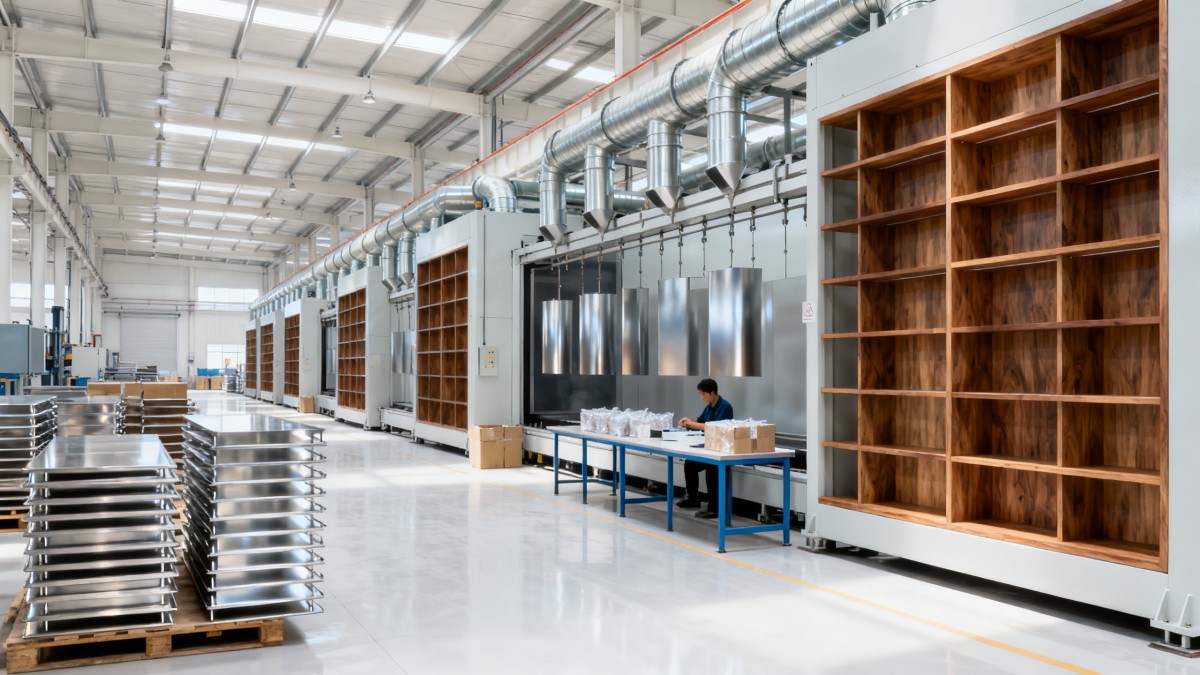
Choosing the right retail display racks factory can shape cost, timing, and store performance for years.
A poor decision often leads to delays, weak finishes, unstable structures, and expensive rework after installation.
That is why bulk buying needs more than a price comparison sheet.
In practical sourcing, the best retail display racks factory proves its value before production even starts.
Early checks on capacity, materials, compliance, engineering, and logistics reduce risk and protect margins.
They also help ensure the fixtures match brand image, product weight, and the pace of rollout.
From recent market shifts, one clear signal stands out.
Retail environments now demand stronger durability, cleaner finishes, and better integration with flexible merchandising plans.
This also means factory evaluation must go deeper than a showroom sample or a polished sales pitch.
The sections below break down the key checks before placing a large order with a retail display racks factory.
Start with Factory Capacity and Production Stability
Capacity is the first serious filter when comparing any retail display racks factory.
A supplier may produce beautiful samples but still struggle with large, multi-store programs.
Ask how many production lines are dedicated to metal, wood, acrylic, and powder coating.
Check whether the factory handles peak season orders without subcontracting critical processes.
Subcontracting is not always a problem, but hidden outsourcing often creates quality variation.
A dependable retail display racks factory should explain its monthly output in clear numbers.
It should also share lead times for sampling, pilot runs, mass production, and packaging.
In actual business, schedule reliability matters as much as unit cost.
Delayed fixtures can push back store openings and damage launch plans.
- Request monthly output data by rack type and material.
- Confirm line balancing during peak order periods.
- Ask for recent bulk order references with similar complexity.
- Check if spare capacity exists for change orders.
Review Materials, Structural Design, and Finish Quality
The next checkpoint is what the rack is actually made of.
A qualified retail display racks factory should specify steel thickness, board density, edge treatment, and coating process.
This is especially important when displays carry heavy products or support frequent shopper contact.
Thin tubing, low-density panels, or inconsistent welding can weaken the entire fixture system.
Finish quality deserves equal attention because it directly affects perceived brand value.
Look at color consistency, powder adhesion, surface smoothness, and scratch resistance.
For wood-based components, inspect veneer matching, corner sealing, and moisture performance.
A retail display racks factory with strong engineering support can also recommend load optimization.
That often reduces overdesign without sacrificing safety.
Check Compliance, Testing, and Documentation
Compliance is where many bulk orders become unexpectedly expensive.
A retail display racks factory should provide documentation that matches the target market and application.
Depending on the project, this may include UL, CE, BIFMA, or material safety reports.
If the display includes lighting, screens, or powered accessories, technical review becomes even more important.
Do not rely on generic statements such as “export standard” or “qualified material.”
Ask for test reports tied to actual material batches or validated component specifications.
More importantly, confirm whether the factory keeps version control on drawings and approvals.
That simple discipline prevents production from using outdated revisions.
- Collect test reports before deposit payment.
- Verify market-specific standards for each fixture type.
- Check drawing revision controls and sign-off records.
- Confirm labeling, carton marks, and traceability rules.
Evaluate Customization Ability Without Losing Control
Customization is often the reason buyers shortlist one retail display racks factory over another.
However, custom work also introduces engineering risk, approval delays, and cost drift.
The right factory can translate brand intent into manufacturable designs.
That means balancing aesthetics, assembly logic, material availability, and freight efficiency.
Review the supplier’s process for drawings, prototypes, finish approvals, and final sign-off.
A capable retail display racks factory should flag risks early, not after tooling begins.
This is especially useful when one fixture family must serve different store formats.
Modular design options can lower future update costs and simplify replenishment.
In many projects, that flexibility becomes a stronger advantage than the lowest opening quote.
Questions That Reveal Real Custom Capability
- Can the factory adjust dimensions without changing core structure?
- How many prototype rounds are typical before mass approval?
- Which finishes are stable at scale, not only on samples?
- Can components be packed flat for lower shipping cost?
Inspect Quality Control from Incoming Material to Final Packing
Quality control should never be treated as a final inspection only.
A strong retail display racks factory builds quality into each production stage.
Start by asking about incoming material checks, weld inspection, finish testing, and assembly verification.
Then look at how defects are recorded, corrected, and prevented from repeating.
Carton protection also matters more than many buyers expect.
Bulk orders often fail not in production, but during handling, loading, or last-mile delivery.
A reliable retail display racks factory should test packaging against real transport conditions.
This includes drop protection, corner reinforcement, part identification, and assembly hardware separation.
When possible, request pre-shipment inspection photos or third-party audits before the balance payment.
Confirm Delivery, After-Sales Support, and Total Cost Logic
The last check is where many sourcing decisions become clearer.
A low price from a retail display racks factory means little if delivery is unstable or support is weak.
Review the total cost, not just the unit price.
Include tooling, sampling, compliance tests, replacement parts, packaging, freight efficiency, and installation time.
Ask how the factory handles shortages, transit damage, and urgent replacement requests.
This matters even more for chain rollouts where one missing component can stall an entire store setup.
The best retail display racks factory usually shows discipline in communication as well.
Clear timelines, structured quotations, and fast engineering feedback are strong signs of operational maturity.
That maturity often saves more money than negotiating the final two percent off price.
A Simple Pre-Order Checklist
- Match production capacity with rollout volume and timeline.
- Verify materials, finishes, and structural specifications.
- Review compliance documents and testing records.
- Validate prototype process and customization controls.
- Inspect quality systems and packaging protection.
- Calculate total landed cost and after-sales response.
Choosing a retail display racks factory is really a risk management decision with commercial impact.
When early checks are thorough, bulk orders become more predictable, scalable, and brand-consistent.
For buyers managing complex retail programs, disciplined evaluation creates leverage long before final negotiation.
Use these checks to compare each retail display racks factory on evidence, not promises, and move into production with greater confidence.
News Recommendations
 Which consumer goods need CE marking in Europe?
![51a6ab95581761cc26f4318be6520c15]()
Aris Katos
Future of Carbide Coatings
 Uniguest and Extreme Networks Partner to Simplify Digital Signage Deployment
![51a6ab95581761cc26f4318be6520c15]()
Aris Katos
Future of Carbide Coatings
 How to assess electronics compliance whitepapers for regulatory accuracy
![51a6ab95581761cc26f4318be6520c15]()
Aris Katos
Future of Carbide Coatings
 Packaging Data Hub Launches With Plastic Recycling Findings for 50 Countries
![51a6ab95581761cc26f4318be6520c15]()
Aris Katos
Future of Carbide Coatings
 How to verify an ergonomic office chair supplier's warranty terms
![51a6ab95581761cc26f4318be6520c15]()
Aris Katos
Future of Carbide Coatings
 Curion Survey: 64% Value Sustainable Beauty Packaging, but Quality Comes First
![51a6ab95581761cc26f4318be6520c15]()
Aris Katos
Future of Carbide Coatings
 Can minimalist fit out solutions make a small office feel larger?
![51a6ab95581761cc26f4318be6520c15]()
Aris Katos
Future of Carbide Coatings
 Kiosk Industry Releases IAAPA 2026 Self-Service Guide
![51a6ab95581761cc26f4318be6520c15]()
Aris Katos
Future of Carbide Coatings
 How to improve global supply chain visibility beyond tier-one suppliers
![51a6ab95581761cc26f4318be6520c15]()
Aris Katos
Future of Carbide Coatings
 Austria’s MM Group to Sell 70% of Packaging Business to KPS for $2.7 Billion
![51a6ab95581761cc26f4318be6520c15]()
Aris Katos
Future of Carbide Coatings
 How to assess delivery reliability of airport terminal seating suppliers in Europe
![51a6ab95581761cc26f4318be6520c15]()
Aris Katos
Future of Carbide Coatings
 USTR Extends China-Linked Vessel Fee Pause and 178 Product Exemptions to January 2027
![51a6ab95581761cc26f4318be6520c15]()
Aris Katos
Future of Carbide Coatings
 How to choose smart sensors for automated lighting
![51a6ab95581761cc26f4318be6520c15]()
Aris Katos
Future of Carbide Coatings
 Shanghai Retail Buyers Sign Deals at Ninth China International Import Expo
![51a6ab95581761cc26f4318be6520c15]()
Aris Katos
Future of Carbide Coatings
 Which toys are subject to EN 71 toy safety requirements?
![51a6ab95581761cc26f4318be6520c15]()
Aris Katos
Future of Carbide Coatings
 Report: Global Kraft Paper Market Forecast to Reach $20.5 Billion by 2033
![51a6ab95581761cc26f4318be6520c15]()
Aris Katos
Future of Carbide Coatings
 How to verify Zigbee compatibility when sourcing lighting sensors
![51a6ab95581761cc26f4318be6520c15]()
Aris Katos
Future of Carbide Coatings
 How do packaging customization options affect minimum order quantities in Europe?
![51a6ab95581761cc26f4318be6520c15]()
Aris Katos
Future of Carbide Coatings
 Transom to Acquire Cree LED in Commercial Lighting Ownership Change
![51a6ab95581761cc26f4318be6520c15]()
Aris Katos
Future of Carbide Coatings
 How to plan customer flow in commercial design planning
![51a6ab95581761cc26f4318be6520c15]()
Aris Katos
Future of Carbide Coatings
 USTR Urged to Permanently Suspend Fees on China-Linked Ships
![51a6ab95581761cc26f4318be6520c15]()
Aris Katos
Future of Carbide Coatings
 How to choose comparable stores for retail benchmarking
![51a6ab95581761cc26f4318be6520c15]()
Aris Katos
Future of Carbide Coatings
 How does anchoring affect modular building wind load resistance?
![51a6ab95581761cc26f4318be6520c15]()
Aris Katos
Future of Carbide Coatings
 Amazon Raises European FBA Surcharge to 2% in Ten Markets From November 2
![51a6ab95581761cc26f4318be6520c15]()
Aris Katos
Future of Carbide Coatings
 How to verify a BPA-free test report for baby products
![51a6ab95581761cc26f4318be6520c15]()
Aris Katos
Future of Carbide Coatings
 China's Mandatory Classroom Lighting Standard GB 7793-2025 Takes Effect November 1
![51a6ab95581761cc26f4318be6520c15]()
Aris Katos
Future of Carbide Coatings
 How order volume affects the price of wholesale poly mailers
![51a6ab95581761cc26f4318be6520c15]()
Aris Katos
Future of Carbide Coatings
 US Imposes 50% Tariff on Certain Canadian PET Resin Imports
![51a6ab95581761cc26f4318be6520c15]()
Aris Katos
Future of Carbide Coatings
 How to read the maximum ratings in a semiconductor datasheet
![51a6ab95581761cc26f4318be6520c15]()
Aris Katos
Future of Carbide Coatings
 University of Maryland Develops Bio-Based Packaging to Extend Avocado and Cucumber Shelf Life
![51a6ab95581761cc26f4318be6520c15]()
Aris Katos
Future of Carbide Coatings
 How to verify a cookware manufacturer's induction compatibility claims
![51a6ab95581761cc26f4318be6520c15]()
Aris Katos
Future of Carbide Coatings
 Omdia Forecasts 11.6% Annual Growth in LED Display Revenue Through 2030
![51a6ab95581761cc26f4318be6520c15]()
Aris Katos
Future of Carbide Coatings
 How to verify a pulp molding packaging factory's production capacity
![51a6ab95581761cc26f4318be6520c15]()
Aris Katos
Future of Carbide Coatings
 Curion Survey: Half of Consumers Frustrated by Sustainable Packaging
![51a6ab95581761cc26f4318be6520c15]()
Aris Katos
Future of Carbide Coatings
 How to assess the credibility of market insight content
![51a6ab95581761cc26f4318be6520c15]()
Aris Katos
Future of Carbide Coatings
 US Removes 50% Additional Tariff on Selected Canadian Packaging Products
![51a6ab95581761cc26f4318be6520c15]()
Aris Katos
Future of Carbide Coatings
 Will a waterproof dimmable LED driver work with your existing dimmer?
![51a6ab95581761cc26f4318be6520c15]()
Aris Katos
Future of Carbide Coatings
 Charter Next Generation Raises Film PCR Use 30%, Advances Food-Grade Applications
![51a6ab95581761cc26f4318be6520c15]()
Aris Katos
Future of Carbide Coatings
 How to choose a dog harness and leash for a dog that pulls hard
![51a6ab95581761cc26f4318be6520c15]()
Aris Katos
Future of Carbide Coatings